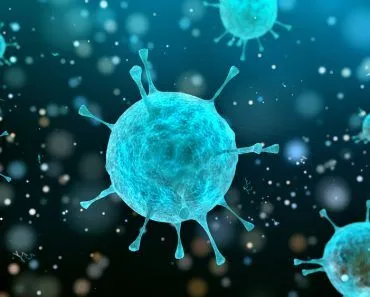
Outside a host, a virus exists as a virion, an inert particle in “switched off” mode. It can’t move, feed, or copy itself; it just drifts until it lands on a new host. Its only “job” is to protect its genetic material and stay infectious. How long it survives depends on the surface, humidity, and light, from minutes to several days.
On the eve of 2020, if we weighed the likelihood of being struck by a bolt of lightning, being eaten by a shark, or winning the lottery against the likelihood of battling a pandemic for the better part of the year, most of us wouldn’t have bet on the global pandemic. Yet, here we are years later, still living with the aftermath of a tiny virus known as SARS-CoV-2. While the emergency phase is long over (the WHO declared an end to the global health emergency in May 2023), the pandemic left people all over the world with new reasons to ask questions about viruses!
While we have the answers to questions like “Why can’t we use antibiotics against viruses?”, there are other underdeveloped areas of research that remain. For example, what do viruses do outside host bodies? If these organisms cause disease, shouldn’t it be crucial to understand how they exist when they aren’t infecting us?
As we look to our post-pandemic future, it’s important to consider the implications of certain unanswered questions.
So, before we talk about what viruses do outside and inside the body, and how they accomplish those things, let’s first talk about what viruses are.
What Is A Virus?
Essentially, a virus can be described as a microbe. The main component of this microbe is the genetic material it contains. This genetic material can either be DNA- or RNA-based.
However, viruses are exceptional exceptions. They fly carelessly in the face of the general rules of life, which is exactly why scientists still argue about whether they count as alive at all. A virus does carry genetic material, but it lacks almost everything else that living cells use to run themselves: it has no metabolism of its own, can’t generate energy, and has no ribosomes to build proteins. Most importantly, it can’t reproduce on its own. By the strictest definition of life, that places viruses in a strange gray zone, neither clearly living nor clearly non-living.
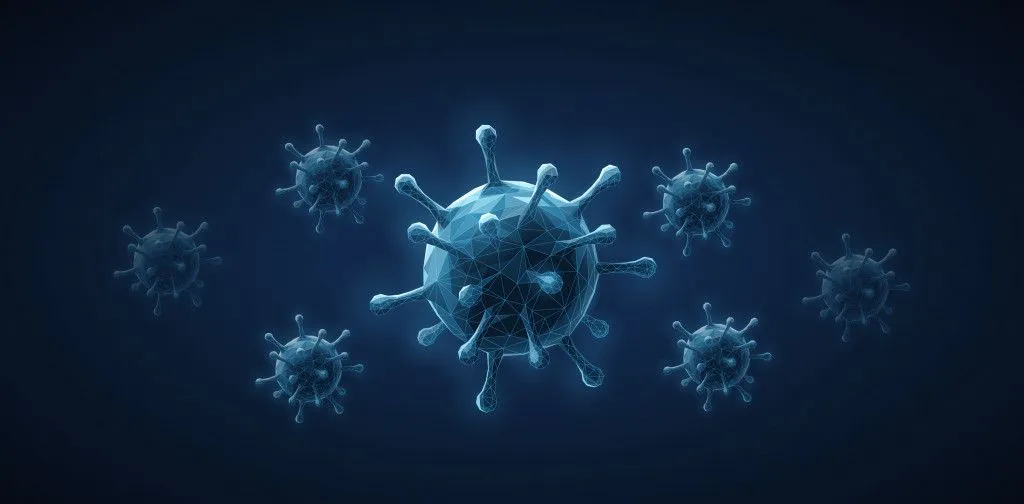
Viruses only begin their “life” when they land on or in living organisms (i.e., humans). Think of it like this: a virus drifts through the world in airplane mode until it finally lands on a compatible host it can infect. After entering the host, it hijacks the host body’s systems and machinery. By doing this, the virus manipulates the host into producing more copies of the virus. This process is called replication. When a virus begins to replicate inside a host, it infects that host and churns out more and more copies of itself.
Can Viruses Infect Every Living Organism?
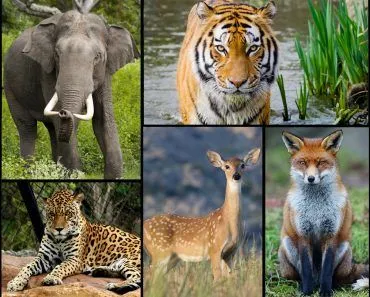
It’s easier to answer this question by attempting to classify viruses as “specialist” and “generalist” categories. Although most viruses can infect a wide range of species (generalists), many viruses are actually host-specific (specialists). This means that they have a narrower range of species they can infect.
Let’s consider the case of the dengue virus or DENV. This virus is transmitted by vector organisms, namely, various species of mosquitoes. A large proportion of the virus is transmitted specifically by female Aedes aegypti mosquitoes. This virus is a specialist virus with a narrow range of hosts it can infect, chiefly humans and other primates. (The virus has been detected in animals like dogs and pigs, but whether they act as genuine reservoirs is still unclear.)
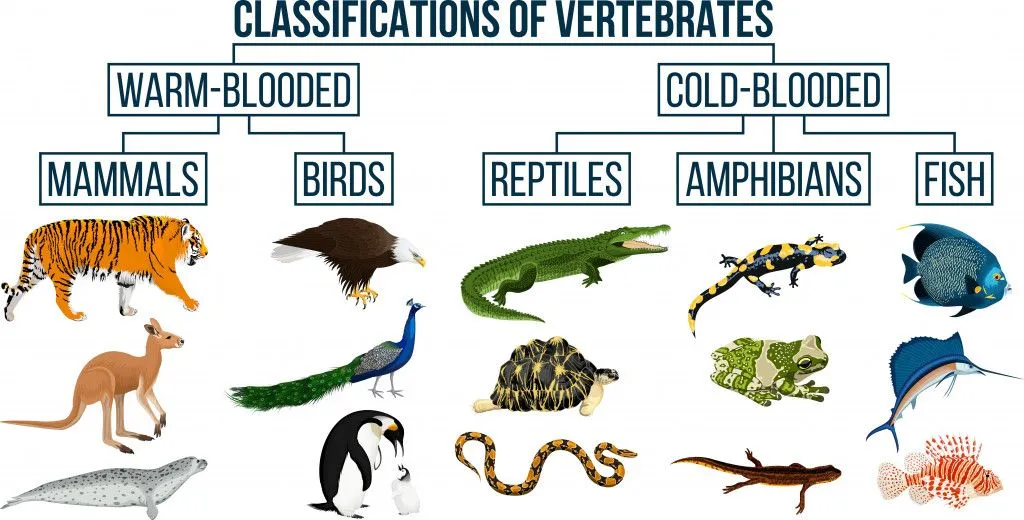
In contrast, adenoviruses sit at the more generalist end of the spectrum. As a family, adenoviruses have been found in hosts from fish and reptiles to birds and mammals, spanning nearly every major class of vertebrate. (Any individual adenovirus is still usually restricted to one species or a few closely related ones, but the group as a whole casts a far wider net than a specialist like dengue.)
Now, we know what viruses are and what they can infect, but there is one theme we still need to explore. We already know that viruses aren’t technically “living” unless they enter host bodies. The question that naturally arises is, what the heck do they do when they’re outside a body?
What Do Viruses Do Outside The Body?
Like specks of dust, viruses are incredibly tiny and float around us all over the world. A complete virus particle in this state, drifting outside any host, has its own name: a virion. The virion is the extracellular, infectious form of the virus, and it’s essentially the version of the virus we’re asking about here. When virions land on non-living or inanimate surfaces, they don’t really do much.
Viruses go into a sort of “switched off” mode while floating around outside a body or when they land on inanimate surfaces. However, viruses do need to survive outside the body, but it’s not survival in the way we think of it.
When outside a host body, viruses don’t focus on self-replication. Instead, they focus on retaining their ability to replicate.
Essentially, when a virus sets up camp in a host, the virus infects the host. Outside a host, viruses focus on retaining their ability to infect a future host. Essentially, viruses focus on protecting and retaining their infectibility outside a host body.
What Contributes To The “Infectibility” Of A Virus?
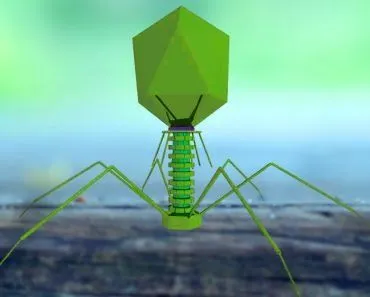
Viruses are usually covered by a special coating/layer made of several protein molecules. This coat is known as a capsid.
The capsid coating is what protects the RNA or DNA inside the virus. The genetic material inside the virus is essential for self-replication. Thus, the capsid protects the virus and helps it retain its infectibility.
If the capsid is compromised or degraded, the virus is less likely to survive, find a host, and be able to successfully replicate.
How Do Viruses Ensure Their Survival Outside Host Bodies?
Well, they can’t. Since viruses aren’t living entities, they can’t control where they land. Luck plays a huge role in whether viruses survive outside host bodies or not.
For example, if they land on a metal like copper, the viral capsid degrades at a much faster rate. Copper isn’t just a passive surface; it’s actively antimicrobial. Copper ions and the reactive oxygen species they generate attack the virus and shred its genetic material. In lab studies, SARS-CoV-2 was wiped out within about 4 hours on copper, compared with up to 72 hours on stainless steel or plastic. Similarly, if a virus lands on a soft, porous surface instead of a hard one, the capsid tends to degrade more rapidly.
This is due to the fact that viruses need moisture to survive and operate. Similarly, soft surfaces absorb water much better than hard surfaces, which makes soft surfaces terrible landing strips for viruses.
Soft surfaces refer to surfaces like paper, cardboard, wood, and cloth. They are both soft and porous, and can absorb moisture and behave like desiccants, so they would absorb the moisture into themselves, rather than hold water for the virus.
It isn’t just types of surfaces that viruses must contend with. From the humidity levels of the air they float in to the amount of light they’re exposed to, nearly everything around a virus can influence whether or not it retains its infectibility.
For example, in countries like China, banks use UV-C lights to disinfect bank notes. In fact, China uses a similar UV-C strategy to fight viruses on multiple fronts. UV-C-emitting robots mop hospital floors and public transit buses drive through UV-C light-emitting sheds to disinfect themselves.
UV-A and UV-B light also possess the ability to nullify the infectibility of a virus, but the exact exposure time required for this is not well-known.
One thing worth clearing up: a virus surviving on a surface is not the same as that surface readily infecting you. Early in the COVID-19 pandemic, there was a lot of frantic wiping down of groceries and packages, but the science has since been refined. The CDC now treats surface (or “fomite”) transmission of SARS-CoV-2 as low risk, estimating the chance of catching it from a contaminated surface at less than 1 in 10,000. Viable virus tends to vanish from porous surfaces (paper, cardboard, fabric) within minutes to hours, and from hard, non-porous surfaces within days, with the practical risk becoming minor after about 72 hours. In short, viruses can linger outside the body, but they spread far more readily through the air than off a doorknob.
Conclusion
While viruses are ruthlessly efficient inside a host body, they are at nature’s mercy outside of a host. Since viruses can’t control where they land outside the body, where they land is usually a matter of luck.
There are quite a few factors that help viruses retain their infectious state. From temperature and hardness to the cleanliness of surfaces, all of these factors contribute significantly to the survival chances of a virus.
References (click to expand)
- (2020, May). Viral survival. New Scientist. Elsevier BV.
- How Long Can a Virus “Live” Outside the Body?. McGill University
- Why do viruses survive outside the human body? | FAQ. covid19.nj.gov
- Bandín, I., & Dopazo, C. P. (2011). Host range, host specificity and hypothesized host shift events among viruses of lower vertebrates. Veterinary Research. Springer Science and Business Media LLC.
- Science Brief: SARS-CoV-2 and Surface (Fomite) Transmission for Indoor Community Environments. CDC.
- Antiviral properties of copper and its alloys to inactivate covid-19 virus: a review. BioMetals. PMC, NIH.