The 2021 Nobel Prize in Physiology or Medicine went jointly to David Julius and Ardem Patapoutian for their discoveries of receptors for temperature and touch. Julius used capsaicin, the burning compound in chili peppers, to pinpoint TRPV1, a heat-sensing ion channel that also fires at temperatures above 43 °C (109 °F).
Our tongues do not have receptors to taste chilies. Also, bitter does not define the taste of chilies, it is simply ‘hot’ to us humans. The taste we experience when eating chili peppers is due to the burning sensation they cause. This burning sensation is caused by a compound called capsaicin.
The 2021 Nobel Prize in Physiology or Medicine was jointly awarded to David Julius and Ardem Patapoutian for discovering the receptors for touch and temperature. David Julius did this with the help of capsaicin.
What Is Capsaicin?
Capsaicin is the compound that gives chilies their “hotness”. It is a pungent compound that induces a burning sensation, especially when ingested. All the capsicum varietals, chilies, and related pepper species belonging to the genus Capsicum contain capsaicin.
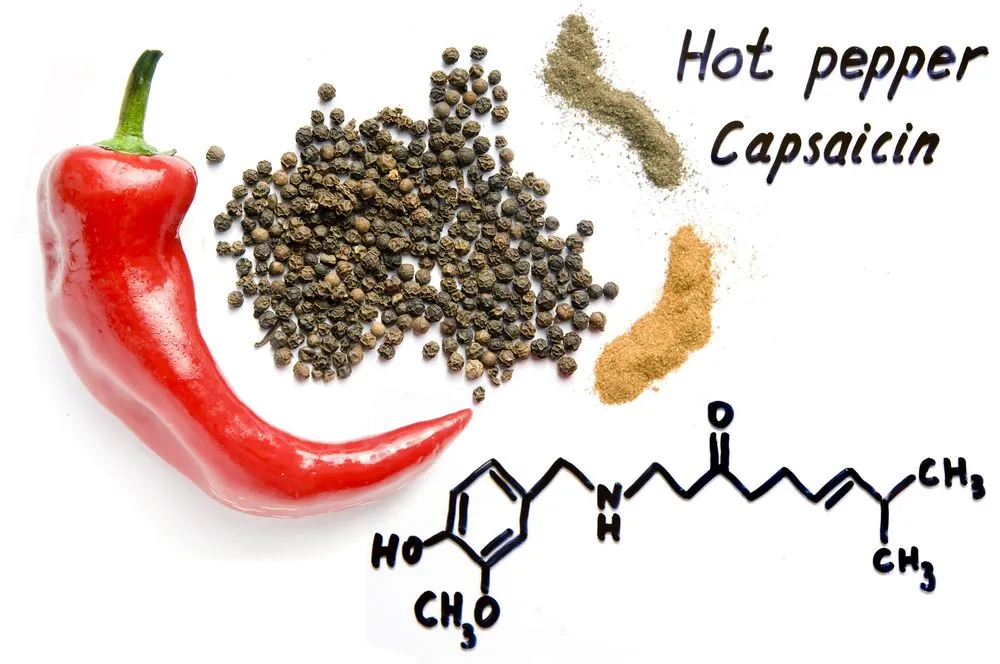
The IUPAC name of capsaicin is 8-Methyl-N-vanillyl-trans-6-nonenamide.
Capsaicin is known to have pain-reducing or analgesic features, and it can activate certain sensory neurons that convey information about its dangerous nature to the brain. Capsaicin also helps in reducing peripheral nerve pain when used on body surfaces.
Some Interesting Facts About Capsaicin
- In its pure form, capsaicin is a colorless to white, waxy crystalline solid (the red color we associate with it comes from the pepper, not the compound).
- It is insoluble in cold water.
- Capsaicin is a highly volatile compound with a pungent odor.
- The burning taste of capsaicin is detectable in ratios as low as 1 in 100,000.
- Capsaicin emits toxic fumes of nitrogen oxides when heated to decomposition.
The Nobel Prize In Physiology For 2021 Goes To…
The 2021 Nobel Prize in Physiology or Medicine was jointly shared by David Julius and Ardem Patapoutian. The official citation honored them “for their discoveries of receptors for temperature and touch”, with Julius cracking the temperature side and Patapoutian the touch side.
Any interaction with the world around us is possible due to our sense organs and the entire network of nerve fibers behind them. These interactions are essential for our awareness of our surroundings, in general, to live. These sensations also include the receptors for touch and temperature. We might take these for granted during the course of our daily lives, but their functioning is far from simple.
For his experiments and research, David Julius used capsaicin. The particular properties of capsaicin helped him identify a sensor in the nerve endings present in the skin that responds to the sensation of heat. On the other hand, Ardem Patapoutian discovered a novel class of sensors by poking individual pressure-sensitive cells one by one until he found the genes that mattered. These channels, named Piezo1 and Piezo2, sit in the skin and internal organs and let the body respond to mechanical force, with Piezo2 turning out to be essential for our sense of touch and for proprioception (our awareness of where our body parts are in space).
The Burning Sensation Of Capsaicin
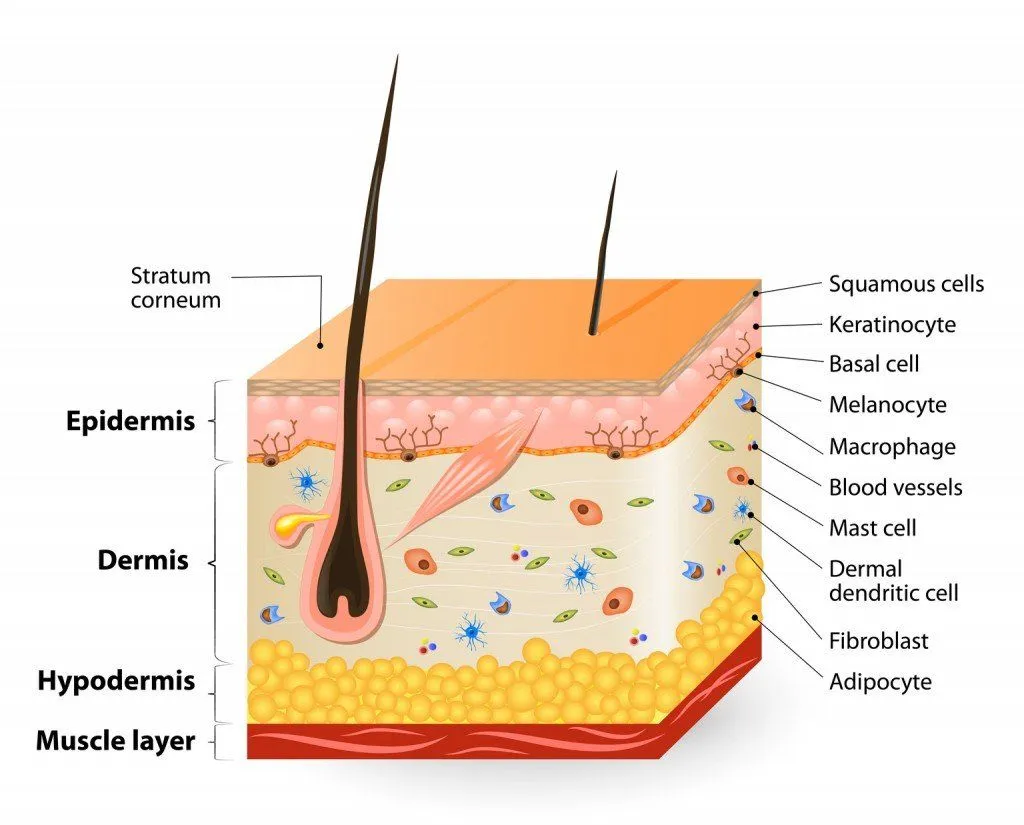
Capsaicin does not actually “burn” the cells or the tissues in the body. It simply causes our brain to feel a “burning sensation” or the thermal effects. The pain system that capsaicin activates is present everywhere in the body, thus making us feel this perception of heat or fire. This is why your fingers might “burn” after you slice a few chilis with your bare hands.
Capsaicin activates the receptors present in the skin that respond to the sensation of heat, and thus lead to the burning sensation. Called ‘nociceptors’, these are the pain-sensing nerve endings that respond to temperature, mechanical stimuli, and certain chemicals.
The key receptor capsaicin hijacks is one that normally fires only when things get genuinely hot, at temperatures above roughly 43 °C (109 °F), the point where heat starts to feel painful rather than pleasant. Capsaicin tricks it into opening at body temperature, so even though nothing on your tongue is actually heating up, the receptor sends the same “this is burning” signal to your brain. That is why a chili feels hot without raising the temperature of your mouth one bit.

How David Julius Used Capsaicin
Interestingly, David Julius got the inspiration to use capsaicin as his research material while pushing a cart in a supermarket store in the “chilies and peppers” section.
In the 1990s, Julius and his colleagues, who work at the University of California, San Francisco, conducted research and experiments to find the receptors for capsaicin in the body. They did this by isolating various DNA fragments of genes related to sensory reception, and consequently created a DNA library.
A DNA library is a collection of DNA sequences that can be used for genetic studies. These DNA fragments are cloned in different vectors, such as bacteria, to generate multiple copies for the scientists to later work on. The scientists can then detect and segregate whatever fragments they want to work with.
David Julius and his team then took cells that don’t usually respond to capsaicin and expressed the different fragments of DNA containing genes that coded for different receptors in those cells, one at a time. The cells were then exposed gradually to capsaicin. The researchers noted whether capsaicin stimulated these cells.
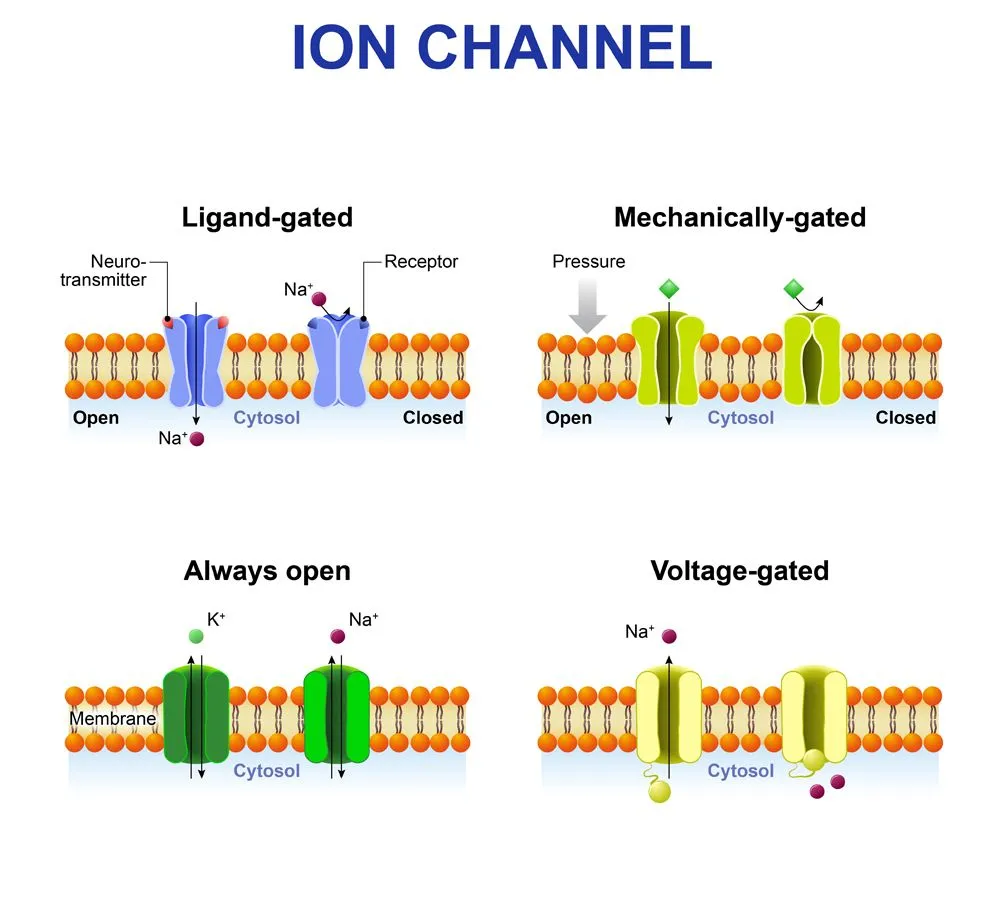
Through these experiments, they identified a gene that codes for a protein called TRPV1. This protein, present in the cell membrane of the neurons, is an ion channel that “opens its gates” to allow positively charged ions (mainly calcium, along with sodium) to rush into the nerve cell. This influx of ions stimulates the neurons, thus causing the sensation of burning. The same channel also responds to noxious heat above about 43 °C (109 °F) and to acids, which is why a chili burn and a scald can feel so similar.
Another experiment concluded that mice lacking the gene for this protein were resistant to the sensation of hot peppers.
A few years later, David Julius and his co-Nobel Prize laureate Ardem Patapoutian individually found a similar channel called TRPM8, which helps us feel cold, like the sensation of menthol. So, along with an array of other receptors, TRPV1 and TRPM8 help us sense temperature and trigger the pain that is caused by extreme heat or cold.
A Final Word
We might not notice the sense reception for various kinds of sensations that we experience, but these are what define us as ‘living’. Something as simple as a compound found in chilies (though not all of us can handle the heat), was used to discover the working mechanism of receptors present in our body. Sometimes the most insightful discoveries can come from the least likely (but most flavorful!) places.
References (click to expand)
- Capsaicin | C18H27NO3 - PubChem. PubChem
- Capsaicin - an overview | ScienceDirect Topics. ScienceDirect
- Press release: The Nobel Prize in Physiology or Medicine 2021. The Nobel Prize
- Caterina, M. J., Schumacher, M. A., Tominaga, M., Rosen, T. A., Levine, J. D., & Julius, D. (1997, October). The capsaicin receptor: a heat-activated ion channel in the pain pathway. Nature. Springer Science and Business Media LLC.
- Caterina, M. J., Leffler, A., Malmberg, A. B., Martin, W. J., Trafton, J., Petersen-Zeitz, K. R., … Julius, D. (2000, April 14). Impaired Nociception and Pain Sensation in Mice Lacking the Capsaicin Receptor. Science. American Association for the Advancement of Science (AAAS).
- 2021 Nobel Prize in Physiology or Medicine Awarded for .... Scientific American
- Hot—and cool—research wins Nobel Prize in Physiology or .... Science