Table of Contents (click to expand)
Coral reefs are built by tiny invertebrate animals called coral polyps. Each polyp secretes a cup of calcium carbonate around itself, and over centuries the stacked skeletons of countless polyps fuse into a reef. The polyps share a symbiotic relationship with single-celled algae called zooxanthellae, which power the rapid growth and the vivid colors. Most reefs form within ~50 m of the surface, where sunlight reaches the algae.
Our planet displays astonishing biodiversity. It is brimming with complex ecosystems harboring a plethora of diverse living organisms that share a unique relationship with their surroundings. This relationship is essential for a thriving ecosystem; an imbalance can result in enormous damage to the flora and fauna.
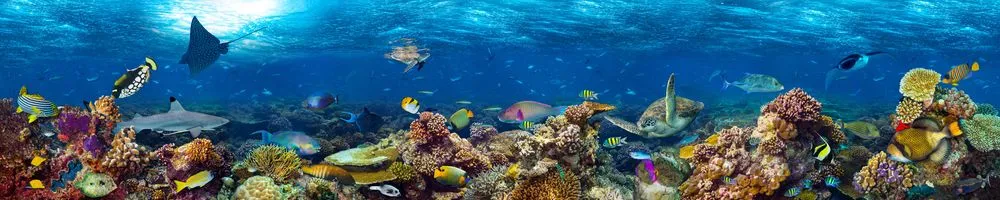
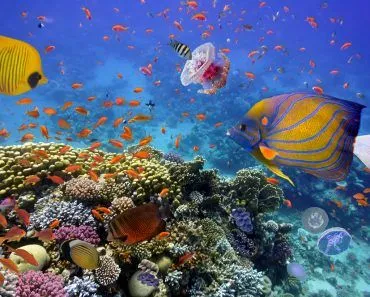
A well-balanced ecosystem provides the necessary conditions for natural evolution to create complex interdependencies between different species and enables the varying life forms we see. One particularly diverse ecosystem is found underwater, the importance of which can only be grasped in knowing that it houses 25% of all marine life, while occupying less than 2% of the ocean floor. These sub-aquatic megacities are called Coral Reefs.
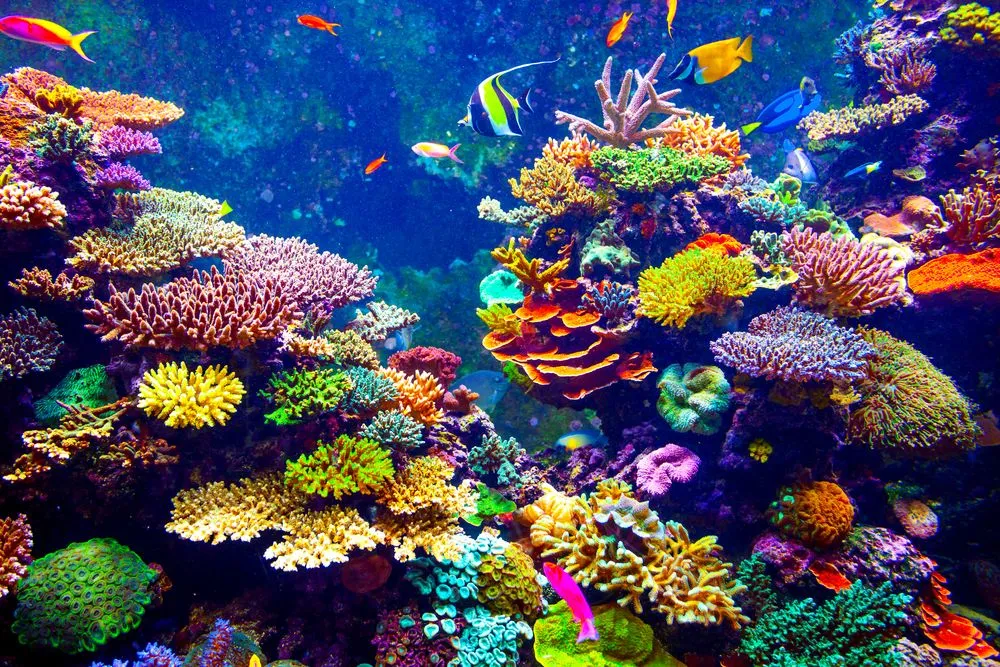
The outreach of the coral ecosystem is not restricted to those species remaining underwater, but also affects terrestrial animals, including humans. It helps in providing food, protects shorelines and creates jobs for people, whether through its natural medicines or function as a tourist attraction. The Smithsonian estimates that, globally, coral reefs deliver roughly $172 billion a year in goods and services, with tourism alone accounting for about $36 billion annually. In the United States, NOAA values the total economic contribution of domestic coral reefs at roughly $3.4 billion a year.
In return, we, the terrestrial animals, pose a great threat to the balance of this ecosystem by excessive and destructive fishing, pollution, greenhouse emissions, and endless other harmful practices. In order to protect and maintain a thriving coral ecosystem, it is imperative to understand what they are and how they’re formed, so let’s “dive” in.
What Are Corals?
Corals are invertebrate marine animals in the class Anthozoa of the Cnidaria phylum. Corals are polyps in terms of structure, much like sea anemones, to which corals are related. Polyps are elongated cylinders with vase-like bodies.
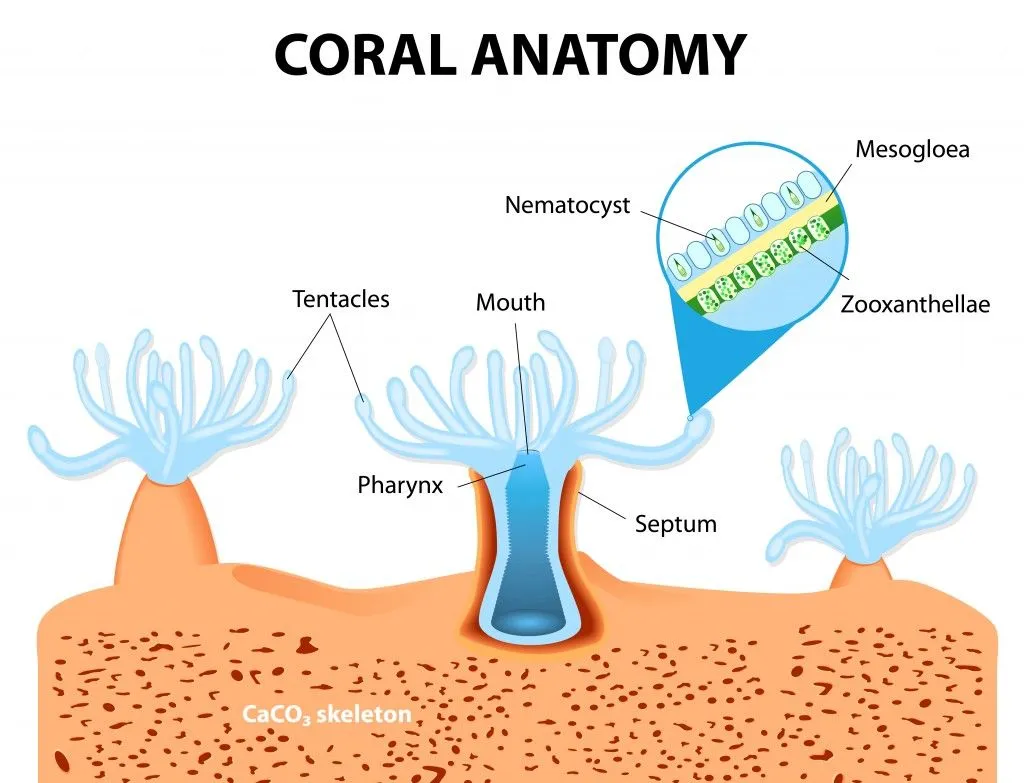
Corals live in dense colonies of elongated cylinders, which are like tin cans open on just one side. The open end of the polyp has a mouth surrounded by circularly placed tentacles. These tentacles provide a source of food due to specialized cells like nematocysts, which provide polyps the ability to capture small organisms that pass by.
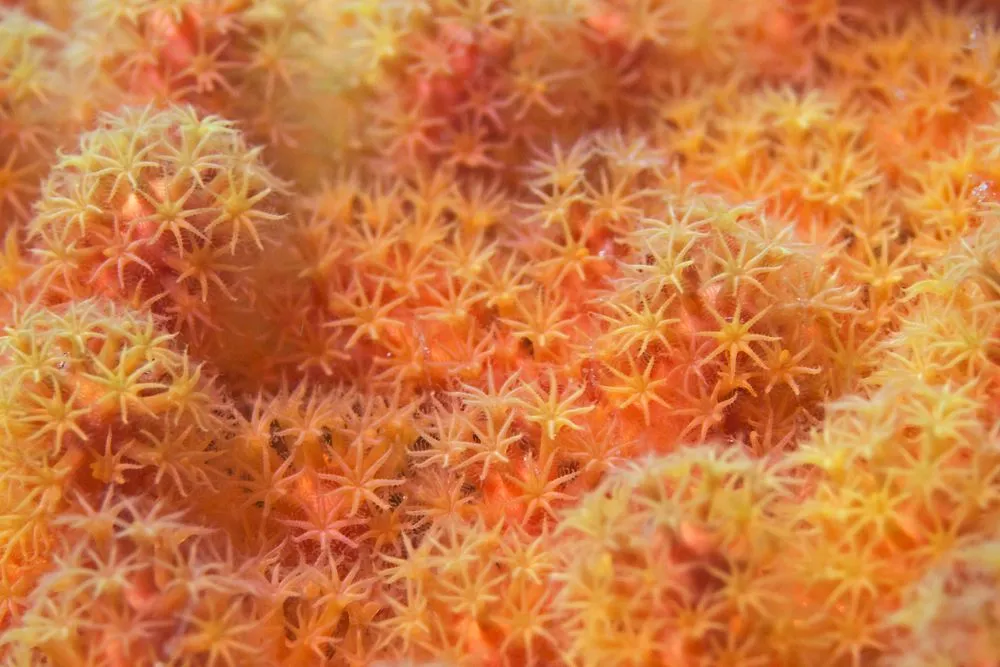
Reproduction in corals is peculiar, as they can either be male or female—or even both at the same time! Coral can also reproduce both sexually and asexually.
Their asexual reproduction is a result of cloning, through fragmentation or budding. Budding occurs when a polyp matures and divides, thus creating an identical polyp. Fragmentation takes place when an entire colony divides and creates a new, separate colony.
Sexual reproduction entails eggs getting fertilized by sperm, which could occur between different colonies, resulting in greater genetic diversity. Such fertilization results in free-swimming larvae that settle themselves on a substrate and become polyps. This could take days or weeks, but in some cases, just a few hours!
Coral builds reefs that contain the coral colonies and a framework of a hard skeleton composed of calcium carbonate. This reef building arises from a very important symbiotic relationship between corals and single-celled algae called zooxanthellae that live inside the polyp’s tissues. The algae photosynthesize and pass most of the sugars they make to their coral host; in return, the polyp supplies them with nutrients and a sheltered home. Critically, it is the coral itself — not the algae — that secretes the calcium carbonate skeleton. The zooxanthellae help by raising the pH inside the calcifying tissue, which makes mineral deposition much more efficient. That partnership is why reef-building corals grow quickly enough, over thousands of years, to construct the largest biological structures on Earth.
From Corals To Coral Reefs
Zooxanthellae use sunlight for photosynthesis to create their food and trade most of it to the coral in return for nutrients and shelter. Fuelled by that energy, the coral polyp itself deposits the calcium carbonate cup that forms the sturdy skeleton of the reef. Individual coral colonies grow at very different rates: massive brain and boulder corals add only about 0.5–2 cm (a fraction of an inch) of skeleton per year, while branching staghorn and elkhorn corals can put on 10–20 cm (4–8 inches) a year. The reef structure as a whole, averaged over time, accretes much more slowly — typically a few millimetres per year.
Most coral reefs are termed “fringe reefs”, as they are found on the fringes of a coastline to a larger landmass. This is because they primarily grow in shallow waters in close proximity to the shores of small islands or big continents.
Atoll
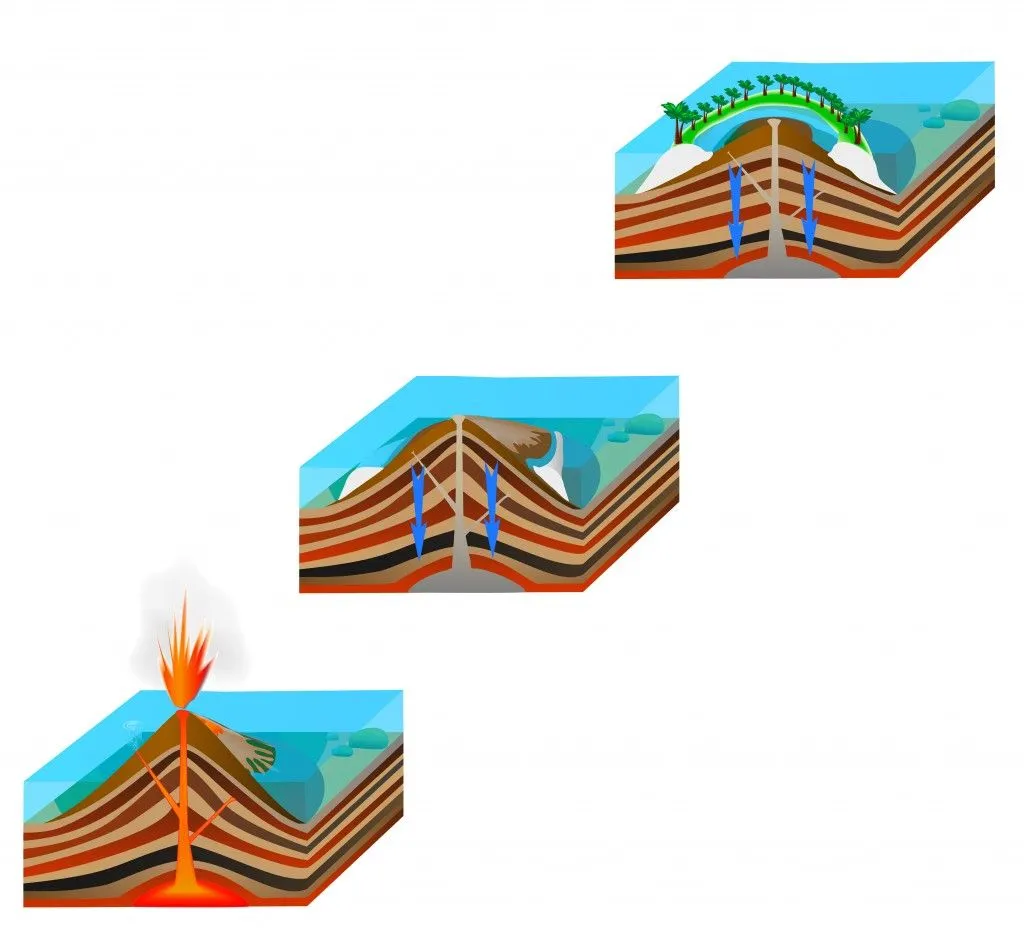
Coral reefs are also known to form near volcanic islands. At the point of the volcano’s imminent death, it sinks, whereas the coral reefs that have been growing on the surface remain exposed, often in a full or partial ring. In between the sinking island and the reef, a lagoon forms, leaving only the barrier reef the volcano had formed around itself. This is called an atoll.
As corals die, a reef will break into pieces and compact. The life of a colony can range from decades to centuries, with some surviving for more than 4,000 years! This is determined by the annual ring the reef makes, just like the rings found in trees. The largest reef in the world, The Great Barrier Reef in Australia, began growing around 20,000 years ago.
Destruction And Conservation
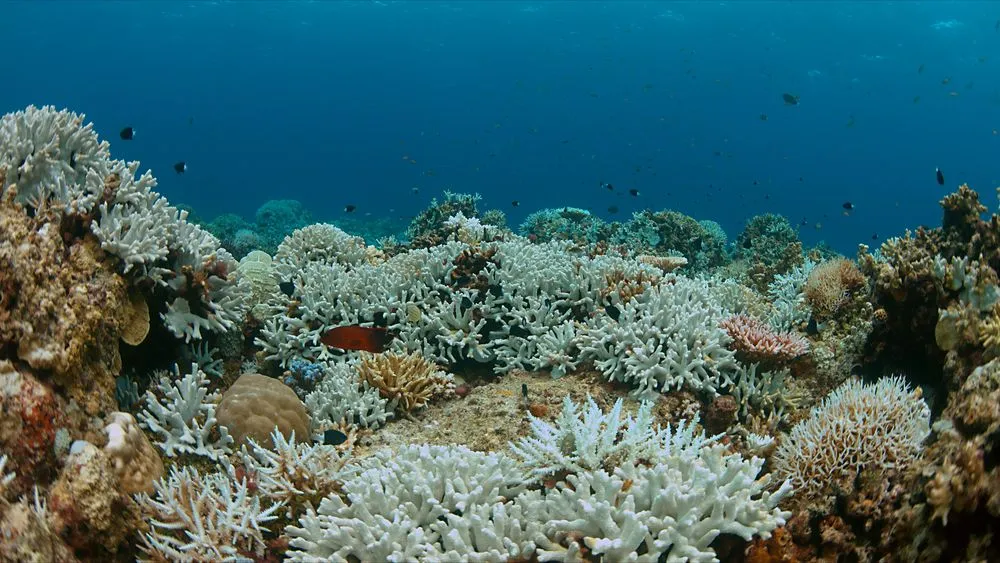
Earth’s rising carbon dioxide levels are a cause for concern, because they are doing two harmful things at once: warming the ocean and acidifying it. When sea temperatures climb just about 1 °C above the local summer average for several weeks, heat-stressed corals expel the zooxanthellae living in their tissues. Without the algae, the coral turns ghostly white — a condition called coral bleaching — and loses most of its food supply. If conditions stay too warm for too long, the colony starves and dies. Acidification compounds the problem: a more acidic ocean lowers the carbonate ions corals need to build skeletons, slowing reef growth and, at high enough levels, even dissolving existing reefs. NOAA confirmed the fourth global mass-bleaching event in April 2024; by April 2025 the agency reported that bleaching-level heat stress had hit roughly 84% of the world’s coral-reef area, making it the largest such event on record.
Along with taking the correct actions for combating climate change, it is imperative to establish healthy fishing practices to further conserve the coral reefs. Reefs inside well-managed marine protected areas consistently fare better, with denser fish populations and faster recovery from heat waves. Scientists are also tracking reef health in fine detail through the Smithsonian-coordinated Autonomous Reef Monitoring Structures (ARMS) programme — stacks of plastic plates that mimic the nooks and crannies of a reef and are left on the seafloor for one to three years. Once retrieved, the cryptic marine life that has colonised them is identified using DNA sequencing, giving researchers a standardised, global pulse-check on reef biodiversity. More direct interventions, such as coral gardening and seeding heat-tolerant strains onto damaged reefs, are also expanding in the Caribbean and on the Great Barrier Reef.
A mix of conservation and intervention is critical for coral reefs to survive; these marine structures are beautiful, colorful and teeming with diversity, and should be protected so they can be enjoyed for generations to come!