Table of Contents (click to expand)
Food waste harms the seas in several ways. Scraps that subsidize scavengers like gulls raise predation pressure on threatened fish, while pesticides and pathogens in dumped food can bioaccumulate in marine life. The nutrient runoff tied to producing wasted food also fuels eutrophication, the algal blooms that, on decaying, strip oxygen from the water and create "dead zones" where fish cannot survive.
The seas are deeper than humans have yet traversed. Their apparently bottomless depth may seem like a good solution for the literal mountains of waste we’ve created on land. Some believe that the seas will simply wash away all the uncleanliness we’ve created.
In 2016, 2.01 billion tonnes of garbage was generated in the world’s cities alone. The surmounting problem of microplastic waste in our waters and the fertilizer and pesticide runoff is causing havoc while hiding in the shadows.
The scientists, environmental champions and the media worry about the seemingly infinite amount of plastic waste around us, but in that plastic paranoia, the world often forgets about another type of waste that is a major threat to public health and the future: food waste.
Food waste doesn’t appear to be that big of an issue, because food is biodegradable. It will decay as nature ordained it to, so what’s the problem? Well, the problem lies in the fact that a McDonald’s hamburger is not within the natural diet of a fish.
Food Waste Increases Predation Pressure
In her revolutionary book Silent Spring, Rachel Carson writes, “In nature, nothing exists alone”, commenting on the interdependency of all creatures in the natural world. This is particularly true when it comes to disposing of our food waste in the sea.
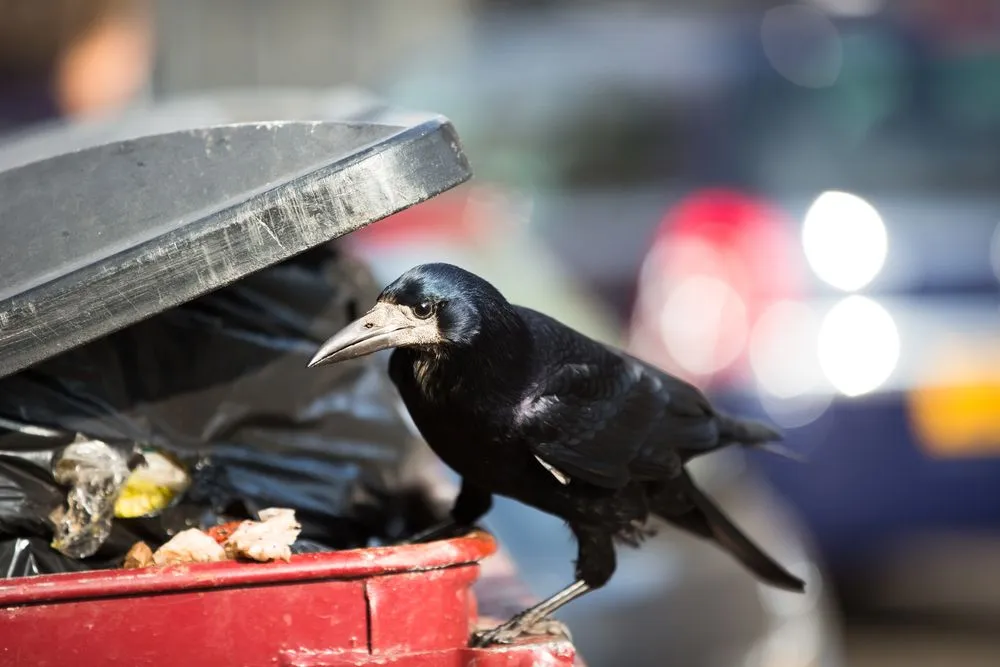
The role of food waste in landfills affecting predation is subtle. A 2015 study noted that predation pressure on imperiled steelhead by western gulls along the central California coast had increased.
Predation pressure is the pressure that predators put on the prey population. When the predator population is high, this puts a strain on the prey population. Basically, the greater the number of predators, the more they will feed on prey, causing prey populations to decline.
Because of the abundant food supply at landfills, the western gull population has increased, doubling or even quadrupling in parts of the region since the 1980s. Even though the gulls feed mostly on human refuse rather than fish, their swollen numbers translate into more predation overall.
Central California's steelhead were already in trouble, with the threatened population down by roughly 80 to 90% over the past century due to fishing and a shortage of breeding habitat. As the fish dwindled, the subsidized gulls increasingly picked off juvenile steelhead heading out to sea, taking up to 30% of them in some years. This forms a cycle where a struggling prey population is squeezed even harder, even as predator numbers climb.
This isn’t an isolated incident. Ravens and coyotes subsidized by food scraps in the Mojave Desert jeopardize the population of desert turtles. Food waste-subsidized yellow-legged gulls in the western Mediterranean threaten the populations of many other seabirds.
The obvious solution is to decrease food waste, especially fishery waste thrown into the seas. However, that might not be viable in every case. An estimated 52% of the world's seabird species now scavenge fishery discards to some degree. Abruptly cutting off this supply of food might result in some ‘unintended consequences’, e.g., predatory seabirds might start preying on other birds.
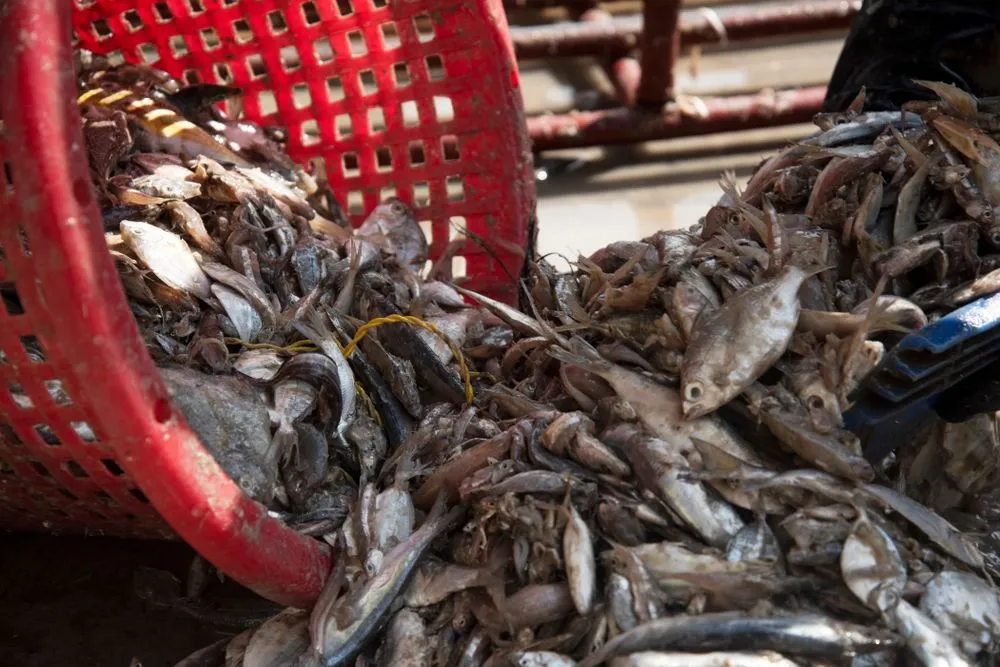
Waste generated by the seafood industry amounts to 7 million tons per year. Most of this waste generated is bycatch. Bycatch is the term for non-targeted fish that are caught or killed while fishing. Bycatch is a form of waste that can lead to declining populations and downstream effects in a marine ecosystem.
Food Waste Can Cause Bioaccumulation Of Pesticides
What food reaches the Earth’s water bodies matters as much as the amount of food that reaches it. Throwing food into the sea might not seem like a massive problem, but it is. Food does not persist as plastic does, and fish can consume a wide variety of foods, but the food that humans eat isn’t how nature packaged and prepared it. We warp food identity by cooking it and processing it in various ways.
Our food, which is often treated with pesticides or insecticides (fruits and veggies), and hormones and antibiotics (meat) has shown to cause elevated toxicity in marine life. Pesticides have also been shown to bioaccumulate.
Bioaccumulation is the accumulation of certain chemicals in an organism. It occurs when the organism cannot break down the chemical or expel it by excretion. There is also a concern regarding pathogens that might be in our meat entering the marine ecosystem.
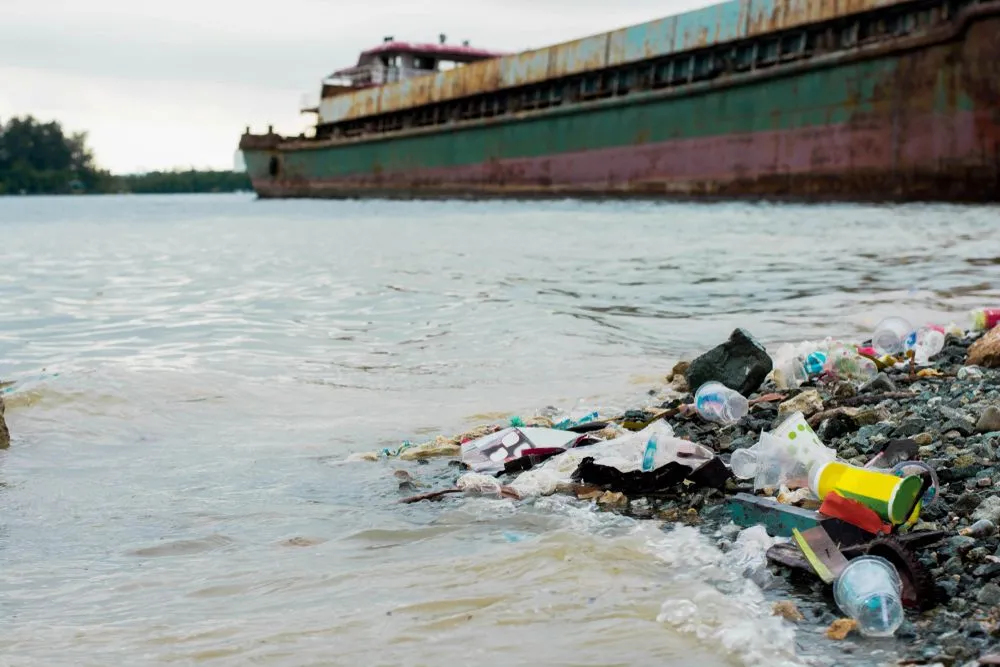
The International Maritime Organization’s MARPOL convention sets strict guidelines for garbage disposal on ships. These regulate the type and method that the food should be disposed of by. The food waste that ships are allowed to dispose of should be ground to a small enough size and adequately cleaned before disposal. Careless food waste disposal could lead to diseases in marine wildlife and damage to the ecosystem.
Food Waste Can Cause Eutrophication
Besides the effects that food waste has on larger forms of wildlife, smaller microorganisms are also affected by added nutrition in the seas. Eutrophication is the process where a high concentration of nutrients, mainly nitrogen and phosphorus, triggers explosive algal blooms. The algae themselves don't strip the water of oxygen. The damage comes later, when the bloom dies and sinks: bacteria feast on the decaying mass, and that decomposition burns through the dissolved oxygen in the water.
When oxygen drops low enough, the water becomes hypoxic and a "dead zone" forms, a stretch of sea where fish and bottom-dwelling life simply can't survive. The most notorious example sits in the Gulf of Mexico, where nitrogen and phosphorus carried down the Mississippi River fuel a summer dead zone that NOAA measured at about 17,360 km2 (6,705 sq mi) in 2024, an area roughly the size of New Jersey. Worldwide, more than 400 such oxygen-starved coastal systems have now been identified.
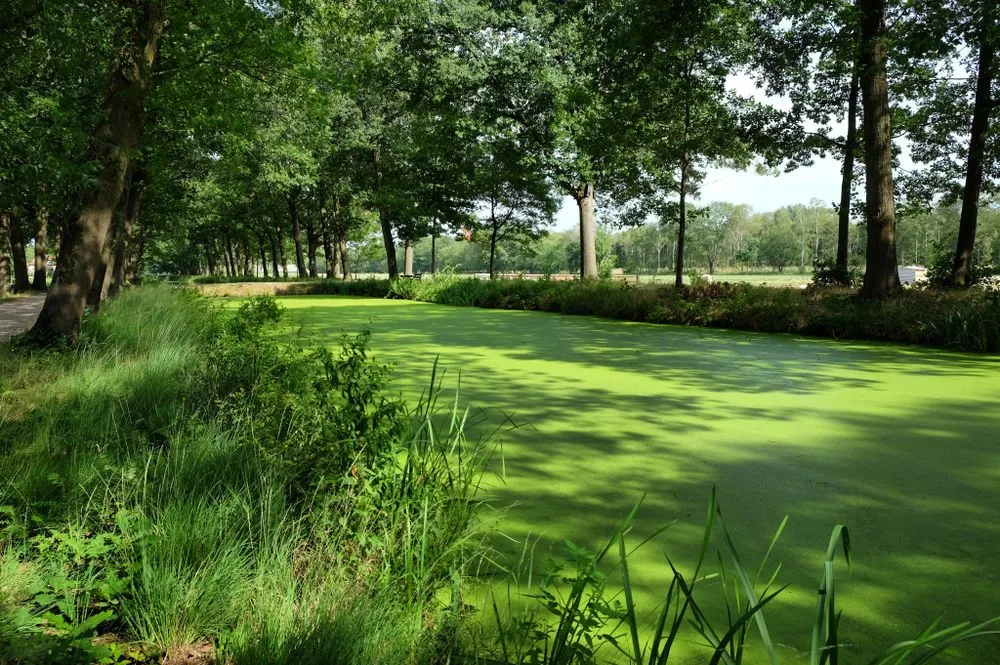
Eutrophication might not be directly caused by food being thrown into the sea, but some food items can make eutrophication more intense. What this means is that some foods cause far more nutrient runoff during their production. A life-cycle analysis in Environmental Science & Technology found that dairy products and red meat carry a much higher eutrophication potential than cereals, precisely because raising livestock releases more nitrogen and phosphorus into waterways. So when you toss out that steak or block of cheese, you are also wasting all the nutrient pollution that went into making it. Wasting foods that are eutrophication-intensive is indirectly unhealthy for the oceans.
Conclusion
With the world’s population expected to climb toward 9.7 billion by 2050 (and to peak near 10.3 billion in the mid-2080s), it’s inevitable that the amount of waste we generate will keep rising. The World Bank estimates that humans will be generating a staggering 3.40 billion tonnes of waste a year by 2050, up from 2.01 billion tonnes in 2016. A large share of that is food: the FAO’s long-standing estimate is that roughly a third of all food produced for people, about 1.3 billion tonnes a year, is lost or wasted, and UNEP’s 2024 Food Waste Index put the food binned at the retail and consumer stages alone at 1.05 billion tonnes in 2022. That waste does more than squander a meal. When it rots in landfills without oxygen, it releases methane, a greenhouse gas far more potent than carbon dioxide, and food loss and waste together account for an estimated 8 to 10% of global greenhouse gas emissions. It is imperative that we take action to prevent food wastage. All that food waste will wreak havoc on life on Earth.
The marine ecosystem always seems to be in a precarious balancing act. Rising ocean temperatures, acidification, waste and overfishing are all distressing marine life in the present day. At the moment, this distress seems isolated to the ocean, but sooner than later, it will also affect life on land. We derive a great deal from the seas, including our food security. We need to stop wasting our precious food and avoid harming life on both land and sea.
References (click to expand)
- Unnatural Balance: How Food Waste Impacts World's Wildlife. Yale Environment 360
- Osterback, A.-M. K., Frechette, D. M., Hayes, S. A., Shaffer, S. A., & Moore, J. W. (2015, November). Long-term shifts in anthropogenic subsidies to gulls and implications for an imperiled fish. Biological Conservation. Elsevier BV.
- FOODWEB -Baltic environment, food - foodweb.ut.ee
- Garbage - www.imo.org
- Xue, X., & Landis, A. E. (2010). Eutrophication Potential of Food Consumption Patterns. Environmental Science & Technology.
- The Effects: Dead Zones and Harmful Algal Blooms. US Environmental Protection Agency.
- Gulf of Mexico dead zone larger than average, scientists find. National Oceanic and Atmospheric Administration (NOAA).
- Global food losses and food waste. Food and Agriculture Organization of the United Nations (FAO).
- Turning Food Waste Prevention into a Scalable Climate Solution. UN Chronicle, United Nations.
- UN projects world population to peak within this century. United Nations.