The Gympie-Gympie (Dendrocnide moroides), nicknamed the “suicide plant”, is an Australian stinging tree native to the Queensland rainforest. Its leaves and stems are covered in tiny silica hairs that inject a family of neurotoxic peptides called gympietides, which lock open sodium channels in sensory neurons and produce some of the worst, longest-lasting pain known in nature. Severe stings have driven both animals and people to extraordinary measures to escape the pain, hence the nickname.
Australia is home to a wide variety of animals and diverse habitats—some beautiful, some cuddly and some super-deadly.
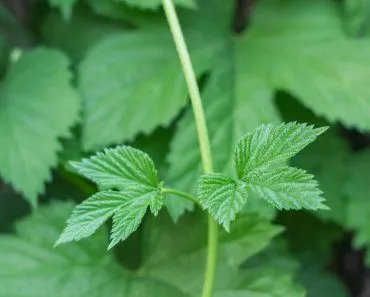
In terms of a formidable reputation, plants are no exception. Wildly thriving in Queensland, Australia is a humble-looking tree—the Gympie Gympie (Dendrocnide moroides). Don’t let its humorous name, frizzy-leafed and innocuous appearance fool you; this stinging tree can leave you in agonizing pain for months, if not for years.
What Makes This Stinger So Deadly?
Being burned by hot scorching acid and a sensation of electric shocks trickling down your spine—that’s what it can feel like when you experience this stinger, and surprisingly, you don’t even need to touch it!
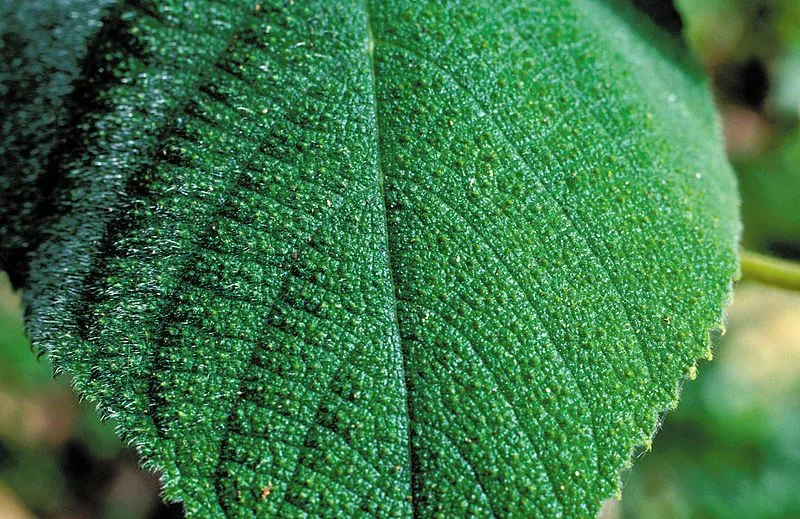
An extremely fine corsage of poisonous silica needles filled with a potent neurotoxin coat the entire plant. And if this plant couldn’t get any more intense, the things shed like a feline in the summertime, so it’s dangerously easy to get stung by a thousand of these stingers without ever touching them.
Plucking Them Off
If you’re stung by the Gimpy, you can’t just conveniently pluck the needles out, as you’d do with your hair using tweezers. Its “silica mane” is too fine and dense to be seen by the naked eye, so good luck finding and plucking them off. The only possible solution left is to rip them all out using hot wax and pray that not even a single stinger breaks off and becomes embedded in your skin. Even then, neither treatment is near perfect, and at best, it simply dilutes the pain, enough for it to not make you want to bite your arm off.
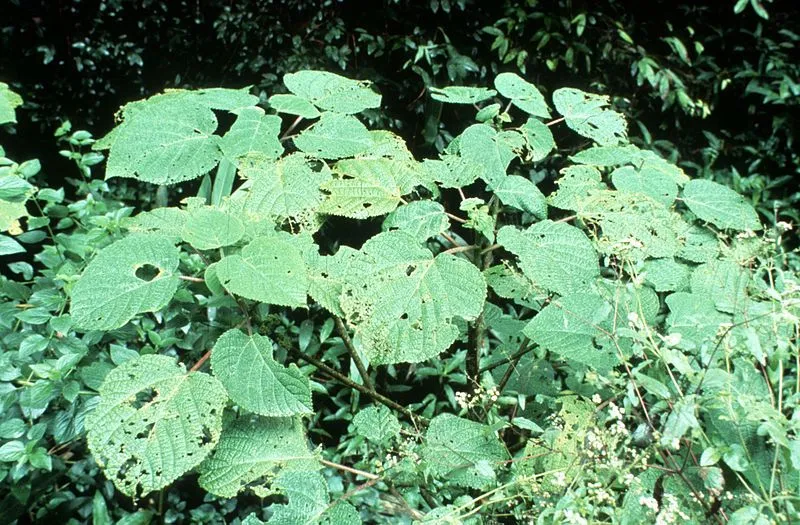
A dried-out, centuries-old Gimpy is equally harmful, as silica doesn’t wither off with the rest of the plant’s bio-molecules. For decades the active toxin was thought to be a peptide called moroidin, but in 2020 researchers at the University of Queensland’s Institute for Molecular Bioscience identified a new family of neurotoxic peptides in the plant’s venom and named them gympietides. They fold into an inhibitor-cystine-knot structure remarkably similar to toxins found in spiders and cone snails, and they keep voltage-gated sodium channels in sensory neurons stuck open — which is why the pain is both so intense and so long-lasting.
The Gimpy Tales
The sting of a Gympie Gympie has been described as “the worst pain you’ll suffer in your life”, and yet this scandalous plant leaves behind no cuts or marks on your body. Surprisingly though, the plant isn’t “deadly” at all. The toxin it possesses is nowhere near the required amount to kill a robust human being, so how do people die of its stings then?
Well, it gets scarier… the people stung by it kill themselves.
North Queensland road surveyor A.C. Macmillan was the first to document the effects of “a stinging tree” in 1866. He reported that his packhorse “was stung by a bush, got mad, and died within two hours”. In a separate, often-repeated account, Australian ex-serviceman Cyril Bromley described an officer he served with during World War II who unknowingly used a Gympie Gympie leaf as toilet paper and later shot himself, unable to bear the “deep-seated pain”. Bromley himself spent three weeks in hospital after his own encounter with the tree, with no successful treatment.
The pain can’t be that bad, right? Well, it seems appropriate to mention that the victims of the Gympie Gympie sometimes need to be fastened to chairs and beds to prevent them from tearing their skin off their bones in pain. They’d die of heart attacks and shock, otherwise.
The Gimpy’s Future
Now that you’re aware of its existence, you definitely want to keep this one out of your backyard garden, off your hiking trails and quite possibly off this planet. The Gimpy has taken a hint, because they are vanishing from the planet at an incredible rate.
In 2014, two different Gympie Gympie trees were found with all their parts seemingly intact, but without any toxin in the silica hairs of the leaves. Remove this one component, and its ability to cause pain is gone. Somehow, the plants have decreased the production of the toxin—all by themselves!
Is this the next step in its evolutionary cycle or just a necessary adaptation to pose less harm to other beings? We don’t know, but perhaps, someday, the sting of a Gympie Gympie tree will only be an agonizing legend.
What Does “Gympie Gympie” Even Mean?
The name sounds almost playful, but it isn’t a scientist’s invention, and it isn’t random. “Gympie” comes straight from gimpi-gimpi, a word from the Gubbi Gubbi (also written Kabi Kabi) language of the Aboriginal people of south-eastern Queensland. It simply means “stinging tree.” The local people knew exactly what this plant was long before any European surveyor stumbled into one.

The plant even named a town. The Queensland gold-rush settlement that sprang up in 1867 was first called Nashville, after the prospector James Nash. A year later, in 1868, it was renamed Gympie after the local stinging tree, and the town still carries that name today. So when you search for “gympie meaning,” the honest answer is that it is one of the few cases where a place is named after a plant that everyone agreed to avoid.
You’ll also meet the Gympie Gympie under a small zoo of other nicknames: the mulberry-leaved stinger (its fuzzy, heart-shaped leaves really do resemble a mulberry’s), the stinging brush, the moonlighter, and, less charmingly, the “suicide plant.” That last one is the most dramatic, and as we’ll see, the most misleading.
Has The Gympie Gympie Ever Actually Killed Anyone?
This is the question the legend is built on, so it deserves a straight answer: no confirmed human death has ever been attributed to the Gympie Gympie itself. The toxin causes ferocious, drawn-out pain, but it does not deliver a lethal dose to a healthy adult. The genuinely scary stories, the World War II soldier and the surveyor’s packhorse, are anecdotes passed down through letters and reminiscences rather than documented case files.

When toxicologists went looking for a real fatality, they found exactly one across the whole Dendrocnide genus. A 2013 review in Wilderness & Environmental Medicine traced a single recorded human death back to 1922 in New Guinea, and even that was caused by a different species (Dendrocnide cordata), not the Australian Gympie Gympie. Independent fact-checkers who chased down the viral “suicide plant” claim reached the same conclusion: the suicide stories are unverified folklore, not data. So if you came here for a “gympie-gympie death count,” the honest tally for confirmed human kills by this plant is zero.
Animals are a different matter. There are credible reports of stung horses and dogs dying, most likely from shock, exhaustion and self-inflicted injury while frantic to escape the pain, rather than from the chemistry of the venom alone. The plant lives in and beside rainforest from Queensland’s Cape York south to northern New South Wales, so livestock and pets are the ones most likely to blunder into it. The “suicide plant” label, then, is less a body count and more a measure of just how unbearable a non-lethal sting can be, a reminder of how much pain the human body can endure before it gives out.
What Should You Do If You Get Stung?
Say the worst happens on a Queensland bushwalk and you brush a leaf. The single most important rule is the most counter-intuitive one: do not rub, scratch or wipe the area. Rubbing snaps the brittle silica hairs off below the skin, where they keep releasing toxin and become almost impossible to remove. Australia’s national health service, healthdirect, is blunt about this, and notes that the sting can actually keep worsening for the first 20 to 30 minutes after contact.
Because the hairs are too fine to pluck out with tweezers, the field treatment that field stations and clinicians recommend is a hair-removal wax strip, pressed onto the skin and peeled away to lift the embedded hairs out in one go. (Crucially, you use a ready-made strip, not hot liquid wax poured straight onto the skin, which only snaps more hairs off and adds a burn to your troubles.) Some treatment protocols first dab the area with very dilute hydrochloric acid to break down the toxin coating before waxing. Gentle washing with soap and water helps clear loose hairs too.
How long does the misery last? If hairs stay embedded, the burning, itching and stabbing can flare for days to months, often re-triggered by heat, cold water or touch long after the encounter. That is exactly why hikers in stinging-tree country treat a packet of wax strips as essential first-aid kit. If you ever feel breathless or your throat tightens after a sting, that is a medical emergency, not a bushcraft problem, so get help straight away.
References (click to expand)
- Morita, H., Shimbo, K., Shigemori, H., & Kobayashi, J. (2000, March). Antimitotic activity of moroidin, a bicyclic peptide from the seeds of Celosia argentea. Bioorganic & Medicinal Chemistry Letters. Elsevier BV.
- Gympie-Gympie losing its sting? - Australian Geographic - www.australiangeographic.com.au
- Factsheet - Dendrocnide moroides - keys.trin.org.au:8080
- Queensland’s Gympie-Gympie: the world’s most painful plant - State Library of Queensland - www.slq.qld.gov.au
- Gympie (town etymology) - Wikipedia - en.wikipedia.org
- Schmitt, C., Parola, P., & de Haro, L. (2013). Painful Sting After Exposure to Dendrocnide sp: Two Case Reports. Wilderness & Environmental Medicine, 24(4), 471-473.
- Stinging plants (Gympie-Gympie first aid) - healthdirect - www.healthdirect.gov.au
- Botanical Briefs: Australian Stinging Tree (Dendrocnide moroides) - PubMed - pubmed.ncbi.nlm.nih.gov
- Touching this plant doesn’t cause suicide, but is extremely painful to touch - Africa Check - africacheck.org