Table of Contents (click to expand)
Cosmic dust is made of tiny grains of silicate minerals and carbon compounds, often coated in ice, that float through space. Forged in dying stars and supernovae, it seeds the formation of new stars and planets. Roughly 5,200 tonnes of it settle onto Earth’s surface every year.
When we look up at the night sky, it appears quiet and clean, but the reality of space is far from empty. In fact, it’s surprisingly full of dust. One might wonder why and how so much dust ended up in space, considering that it seems like a vast vacuum. Believe it or not, this cosmic dust plays a crucial role in the cosmos and comes from various sources, with intriguing implications for the universe in which we live. In this article, some of the reasons why the universe is filled with cosmic dust will be explored.
Cosmic Dust: What Is It?
Cosmic dust consists of tiny particles that float through space. Most of these grains are astonishingly small. The interstellar variety typically measures less than a micrometer across (a fraction of the roughly 70 micrometers spanned by a human hair), while the chunkier interplanetary particles that drift through our solar system tend to run from a few micrometers up to a few tens of micrometers. Either way, they’re not your ordinary household dust. Scientists once assumed that this cosmic dust came mostly from asteroids and comets. That was a reasonable theory, but recent discoveries have revealed a more surprising picture.
Cosmic dust is made of various ingredients, chiefly silicate minerals and carbon-rich compounds, often coated with ices and seasoned with trace metals.
Another thing worth noting is that these micro-particles land on every square meter of Earth; they can be found on your clothes, on the streets, and on every roof in the world. In fact, a 2021 study of pristine Antarctic snow estimated that roughly 5,200 tonnes (about 5,700 US tons) of this micrometeoritic dust reaches Earth’s surface every year, even though several times that amount enters the upper atmosphere and burns up before it can settle.
Sources Of Dust In Space
Birthplace Of Stars And Planetary Bodies
A huge portion of cosmic dust originates from places in space called stellar nurseries. These are regions where new stars are born. As a star forms from a swirling cloud of gas and dust, some of that material fails to get incorporated into the star itself. Instead, it lingers as dust particles.
Over time, this dust can accumulate and become part of the interstellar medium, which is the formal name for the space between stars. Closer to home, an unexpected source of dust turned out to be the planet Mars. In 2021, scientists analyzing data from NASA’s Jupiter-bound Juno spacecraft found that grains striking the probe on its journey were most likely dust shed by Mars, the very particles thought to produce the faint glow of zodiacal light seen from Earth.
Dust also comes from the outer layers of celestial bodies, such as comets, asteroids and planets. These objects are continually bombarded by micrometeorites and cosmic rays, which chip away at their surfaces, creating dust that then floats away into space.
Supernova Explosions
Stars don’t just peacefully shine on forever; they also end their lives in spectacular explosions known as supernovae.
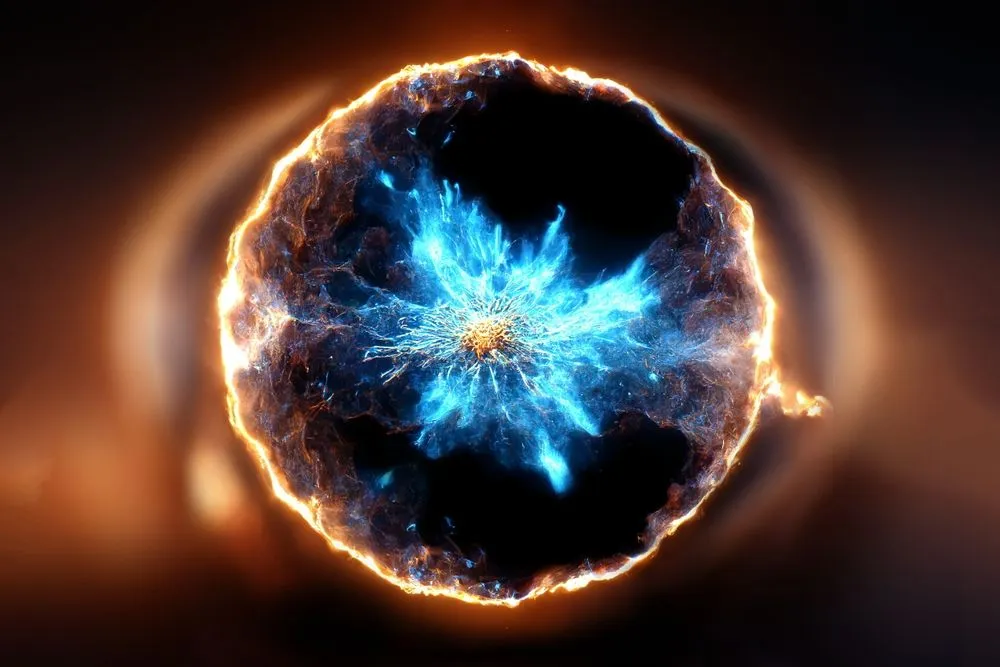
When a star explodes, it releases a tremendous amount of energy and throws its outer layers, including a massive amount of dust, into space.
This dust then disperses throughout the galaxy and beyond. Heavy elements like iron and nickel are forged in the intense heat and pressure of the blast, and these freshly minted elements become the building blocks for future generations of stars and planets. Some of these grains are so tough that they survive intact for billions of years. Tiny specks of this “stardust,” made of minerals such as silicon carbide and graphite, have been recovered from meteorites, and their unusual chemical fingerprints show they condensed around dying stars long before the Sun ever existed.
Accretion Mechanisms
As tiny dust particles collide and stick together due to forces like gravity and electrostatic attraction, they form larger clumps. These clumps can eventually grow into asteroids, planets, and even moons. So, in a way, cosmic dust is the raw material of the universe! Accretion is a continuous process that operates on different scales, from the gradual growth of planets to the formation of entire galaxies.
Why Does Cosmic Dust Matter?
Star Formation And Planet Formation
Dust plays a pivotal role in the birth of new stars. It acts as a protective shield, blocking some of the intense radiation and heat emitted by young stars. This allows the surrounding gas to cool and collapse, ultimately forming new stars and planetary systems.
Dust particles are essential ingredients in the formation of planets. They clump together to create planetesimals (minute planets), which then grow into fully formed planets. Without cosmic dust, Earth and the other planets in our solar system wouldn’t exist.
Chemical Complexity And Travelers In The Interstellar Medium
Cosmic dust contains a wide variety of elements and molecules, some of which are the building blocks of life as we know it. Organic molecules have been found on dust grains, raising intriguing questions about the possibility of life elsewhere in the universe.
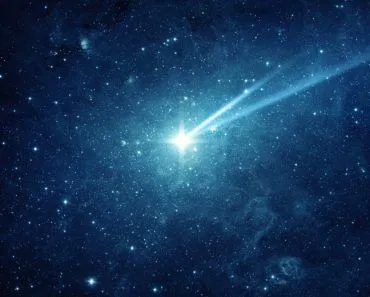
Dust particles don’t stay confined to one place in space; they travel far and wide, and a steady stream of them drifts into our own solar system. The shooting stars we watch streak across the night sky are a vivid reminder of this. Most are caused by meteoroids no bigger than a grain of sand or a small pebble, bits of rock and metal that burn up in a brilliant flash as they slam into Earth’s atmosphere at tens of kilometers per second. So in a very real sense, those fleeting streaks of light often are little more than cosmic dust meeting a fiery end.
Cosmic Obscuration And Astronomy
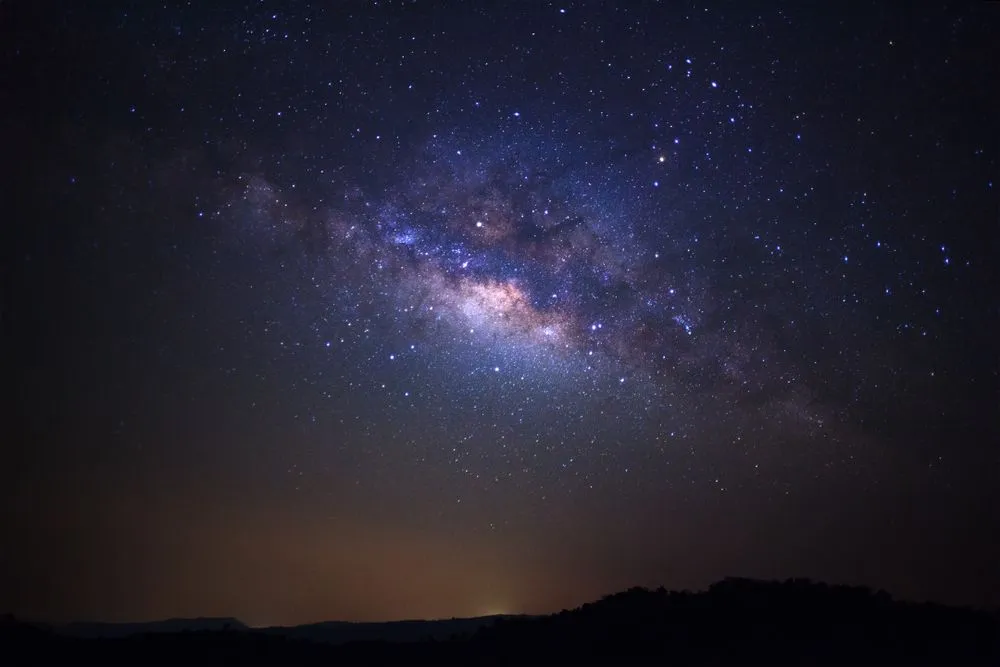
Cosmic dust can sometimes obscure our view of distant celestial objects. However, it also scatters starlight, creating beautiful phenomena like the Milky Way’s diffuse glow. Astronomers use the study of cosmic dust to understand more about the universe’s composition and history.
In conclusion, cosmic dust may be small, but it plays an enormous role in the overall Universe. It’s the stuff that stars and planets are made of, and it holds clues to the origins of life and the universe itself. So, the next time you gaze at the night sky, remember that the perceived emptiness is actually filled with tiny particles that have shaped the universe in profound ways. Cosmic dust is a reminder that even in the vastness of space, every particle has an important role to play!
References (click to expand)
- Brownlee, D. E. (1985, May). Cosmic Dust: Collection And Research. Annual Review of Earth and Planetary Sciences. Annual Reviews.
- Zinner, E. (2011). Stardust in meteorites. Proceedings of the National Academy of Sciences. PMC, NCBI.
- Antarctic Study Shows How Much Space Dust Hits Earth Every Year. Scientific American.
- Serendipitous Juno Spacecraft Detections Shatter Ideas About Origin of Zodiacal Light. NASA.
- Meteors & Meteorites: Facts. NASA Science.
- 10 Things: Dust in the Wind (on Mars and Well Beyond). NASA Science.