Table of Contents (click to expand)
Space debris affects Earth in two main ways. When defunct satellites and rocket bodies burn up on re-entry (a record 490 tonnes in 2024), they release nitric oxide and metal oxides such as aluminum oxide that can erode the stratospheric ozone layer. The bigger near-term risk, however, is in low Earth orbit itself: with more than 11,000 active satellites and tens of thousands of tracked fragments, a single collision can trigger a chain reaction known as the Kessler Syndrome.
If you’ve ever left your house uncleaned for more than a few weeks, you know how much dirt and debris can gather in the corners, tolerable only for so long. Once the dust bunnies begin organizing their own unions, you inevitably drag out the vacuum and get your house back in order.
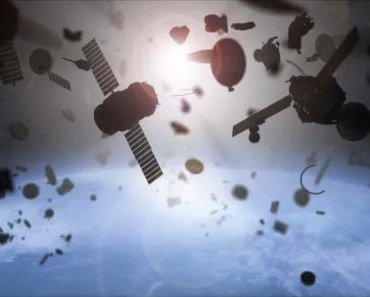
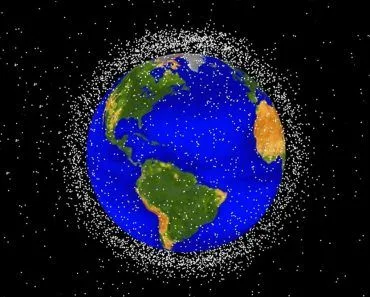
Now, imagine if you let thousands of tons of garbage pile up over the course of decades… it would be a pretty difficult mess to clean up! While thousands of tons of garbage probably won’t build up in your family room, the same can’t be said about outer space. When you look up at the stars, you won’t see the hundreds of thousands of pieces of space junk and debris circling the planet, but it’s out there!
As this issue has come into clearer focus in recent years, it has become a point of concern for environmentalists as much as astrophysicists. The question is hotly debated… what environmental impact does all of this space debris have on our planet?
What Is Space Debris?
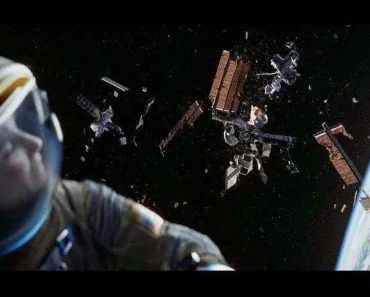
Even though humans have only been putting satellites into orbit since Sputnik in October 1957, the area around our planet has become a veritable junkyard for space debris, ranging from pieces as small as a paint fleck to much larger objects orbiting at incredible speeds, posing a potentially dire threat to other satellites. If you’ve ever seen the movie Gravity, you will understand just how destructive that debris can be if it comes in contact with anything else out there in the vacuum of space.
While our forays into space have only been going for a limited amount of time, we have poured trillions of dollars and millions of man-hours into launching increasingly complex machinery into space. As of 2026, there are more than 11,000 active satellites orbiting Earth (over 10,000 of them belonging to SpaceX’s Starlink constellation alone), alongside thousands of defunct payloads and rocket bodies waiting to eventually re-enter the atmosphere. Thousands of other satellites have already come back down to Earth the hard way. In fact, “large” pieces of space debris re-enter the atmosphere every few days, but since most of this planet is uninhabited, i.e., the oceans, we don’t often see large re-entries or find their final resting places.

If you’ve ever seen a shooting star, there is a good chance that you were witnessing the re-entry of some small piece of space debris as it streaked back into the atmosphere at nearly 18,000 miles per hour, burning up to nothing. According to ESA’s 2025 space environment report, there are roughly 39,000 objects larger than 10 cm in the active tracking catalogue, an estimated 1.2 million pieces between 1 and 10 cm in size, and more than 130 million pieces smaller than 1 cm. Space agencies closely monitor the tracked objects to keep other satellites and launches safe. The smaller pieces move so fast and are so tiny that they’re basically invisible, but a paint fleck moving at orbital velocity still hits like a bullet.
Now, there are plenty of considerations that researchers and scientists must make in terms of space debris when they’re launching rockets or charting potential orbital patterns, but this article is more concerned about what all of that space junk might be doing to our environment. What happens to those pieces of debris that burn up in the atmosphere, and what about the pieces that make it back through and come plummeting to Earth?
Space Debris And Earth’s Environment
According to ESA’s 2025 space environment report, a record 490 tonnes of space debris re-entered Earth’s atmosphere in 2024 (up sharply from a long-running average of around 100 tonnes a year), driven largely by the planned end-of-life deorbiting of first-generation Starlink satellites. Most of that mass burns up in the atmosphere or falls into the oceans without anyone noticing. Unfortunately, just because something burns up doesn’t mean that it disappears. The intense heat caused by friction may break down these pieces of debris and melt them, but the compositional chemicals are still being released into the atmosphere. Some composite metals and polymers actually consume ozone when they push back through the atmosphere and burn up, experiencing chemical reactions that produce nitric oxide, which can deplete ozone.
Fortunately, our planet is quite large, and space is absolutely massive, so even with that many pieces of debris crashing back into Earth’s atmosphere every year, the impact that it currently has on the environment in negligible. The activities of mankind on the planet have a far more negative effect on the ozone and climate change than a few thousand small impacts of small pieces of space junk.

Some people fear that a satellite may fall from the sky and land on their house, but frankly, the odds of any individual being struck by falling space debris are astronomical. In nearly seven decades of spaceflight, there is still only one well-documented case of a person actually being hit: in 1997, Tulsa, Oklahoma resident Lottie Williams was grazed by a small piece of charred metal from a Delta II rocket re-entry. Strikes on property are slightly more common (in March 2024, a 1.6-pound metal stanchion from an ISS-jettisoned battery pallet punched through the roof of a Florida home in Naples, narrowly missing the homeowner’s son), but your everyday risk from a rocket booster is far lower than the risk from lightning, sharks or, honestly, just driving to work.
Space Debris And The Low Earth Orbit Environment
Even though the presence of space debris doesn’t pose an immediate threat to our terrestrial environment, we cannot ignore the impact it is having on the astral environment. In some circles, it is believed that humanity’s fate lies among the stars, but one of the basic prerequisites for that is leaving the planet. As more and more space debris accumulates and swirls around the planet, it will become more difficult to safely launch rockets into space. Charting appropriate trajectories is already a critical part of mission safety, but the problem may become exponentially more difficult in the coming years.
There are a number of large telecommunication companies who are seeking to deploy mega-constellations of communications satellites into space in the coming decades, in an effort to increase/improve coverage and provide internet and digital service to remote areas of the world. While this is a noble goal, in some ways, adding thousands more small satellites into Low Earth Orbit will significantly increase the risk of collisions, and in the next half-century, it could even lead to a theorized catastrophe called the Kessler Syndrome. In this situation, a single collision will lead to a huge amount of additional pieces of debris, which will then strike more satellites, resulting in a devastating chain reaction. While this is believed to be impossible for a number of decades, these new proposals for mega-constellations of satellites are worrying to some theorists.
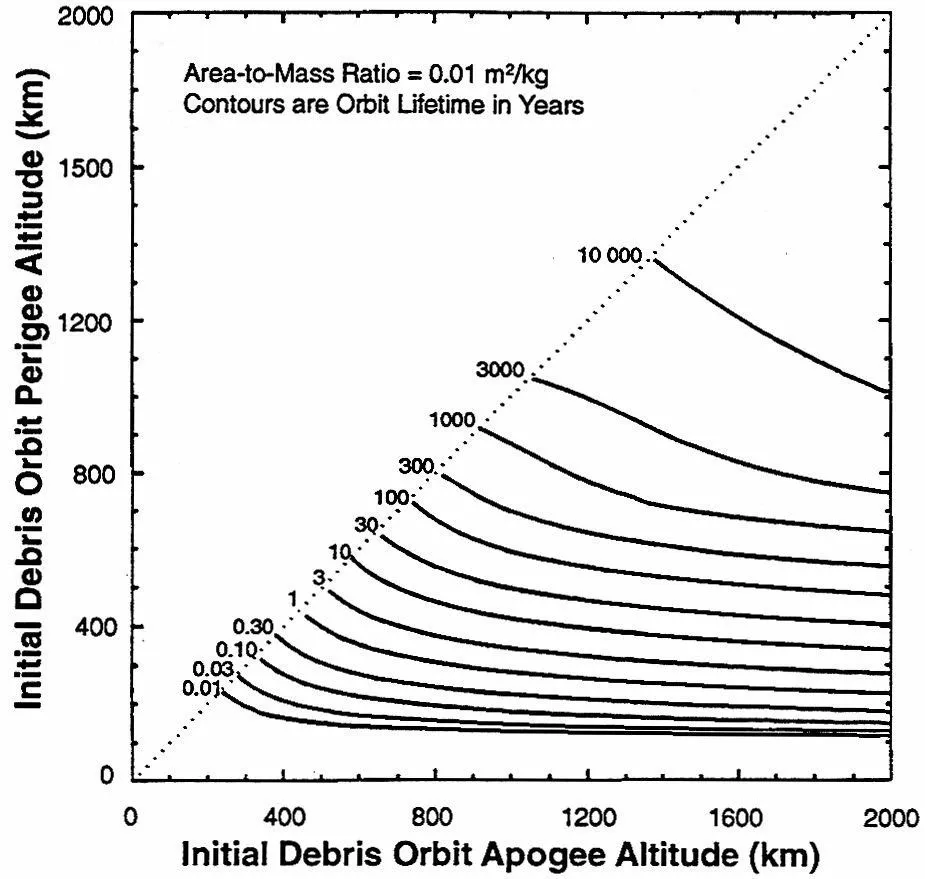
 Additionally, climate change may not be visibly affected by space debris, but it is quietly changing the orbital environment itself. Rising CO2 in the upper atmosphere radiates heat efficiently above about 60 km, which cools and contracts the mesosphere and thermosphere; NASA has measured roughly 1.3 km of contraction between 2002 and 2019. Thinner air at orbital altitudes means less atmospheric drag, so space debris falls more slowly, leaving more of it to fling dangerously around in space for longer (decades and even centuries). A 2025 MIT study estimated that under high-emission scenarios, the safe carrying capacity of low Earth orbit could be cut by 50 to 66 percent by 2100.
A Final Word
As is true for so many of humanity’s current problems, space debris presently feels like an annoyance, something that scientists seem concerned about, but it’s definitely not a crisis. Even so, as we extrapolate forward in time, and imagine how many more countries will want to join the space-going community, think of how many more satellites, exploratory missions, refueling rockets and future spaceships will need to be launched. If we don’t find a way to clean up that space junk, this problem will only get more serious in the decades and generations to come. The good news is that the international community has started to act: ESA launched the Zero Debris Charter in 2023, with the goal of making space activities debris-neutral by 2030, and twelve countries plus more than 100 organizations had signed on by 2024.
References (click to expand)
- Space Littering Can Impact Earth's Atmosphere. Space.com
- ESA Space Environment Report 2025. European Space Agency
- The Zero Debris Charter. European Space Agency
- NASA Satellites See Upper Atmosphere Cooling And Contracting Due To Climate Change. NASA
- Does the debris around Earth affect the atmosphere?. BBC Science Focus
- Space debris - Wikipedia. Wikipedia
- Climate change will reduce the number of satellites that can safely orbit in space. MIT News (2025)
- Klinkrad, H. (2010, December 15). Space Debris. Encyclopedia of Aerospace Engineering. John Wiley & Sons, Ltd.
- Laštovička, J., Akmaev, R. A., Beig, G., Bremer, J., & Emmert, J. T. (2006, November 24). Global Change in the Upper Atmosphere. Science. American Association for the Advancement of Science (AAAS).