The multiverse in Everything Everywhere All at Once, the 2022 film that won seven Oscars including Best Picture, borrows from real quantum physics. It draws on Hugh Everett’s many-worlds interpretation, in which every quantum outcome spawns its own branch, plus the related ideas of superposition and Schrödinger’s cat.
“In another life, I would’ve really liked doing just laundry and taxes with you”, said Waymond Wang, oblivious to the fact that this “other life” he imagined was much more than just a dream.

Everything Everywhere All At Once is being touted as one of the greatest science-fiction films ever made. It explores the depths of human emotions using the story of a family and their journey through multiple universes. At the March 2023 Academy Awards, it swept seven Oscars, including Best Picture, Best Director, and a Best Actress win for Michelle Yeoh, the most of any film that night.
However, the concept of a multiverse isn’t exactly new to audiences.
Iconic films such as Back to the Future, 12 Monkeys, and MCU films have explored the concept in great detail.
So, what sets EEAAO apart from this growing crowd?
EEAAO’s Unique Multiverse
EEAAO’s multiverse is based on the theory that every choice you make, or every event that happens in the universe, creates a branch of its own within the universe. This is known as the Many-Worlds theory.
For instance, upon flipping a coin, the two basic possibilities are that it lands on either heads or tails. Consequently, there’s going to be at least one universe where this coin lands on heads and another one where it lands on tails.
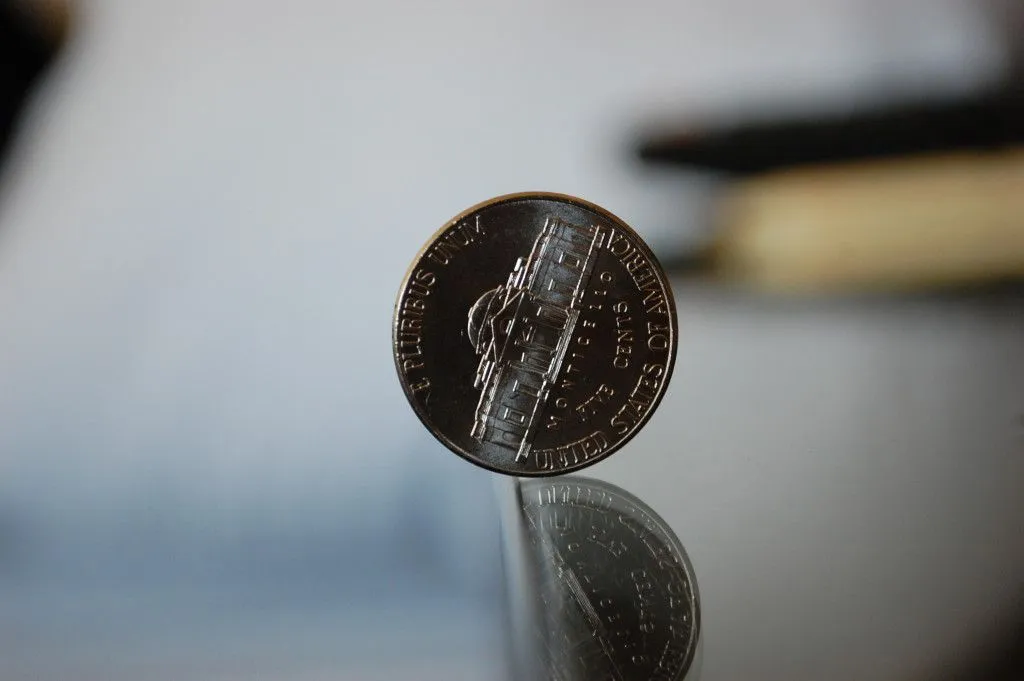
Now, just because the coin lands on heads in our universe doesn’t mean that the coin didn’t land on tails anywhere else. It means that we could see it only in the universe where it landed on heads. Sound familiar? Does this remind you of a particularly popular cat, perhaps?
Schrödinger’s Cat: An Analogy For The Multiverse
Erwin Schrödinger, in a now-legendary 1935 thought experiment, imagined a cat sealed in a box with a flask of poison and a radioactive source. If an atom in that source decays, it shatters the flask and kills the cat. If no atom decays, the cat lives. Since radioactive decay is a random quantum event, until we open the box there is no way to know which has happened.
Here’s the strange part. Quantum mechanics says that, until it is observed, the atom is in both states (decayed and not decayed) at once. Follow that logic up to cat-sized scale and the cat would be both dead and alive at the same time. Schrödinger actually cooked this up to mock that idea, to show how absurd it sounds when you stretch quantum weirdness to everyday objects.
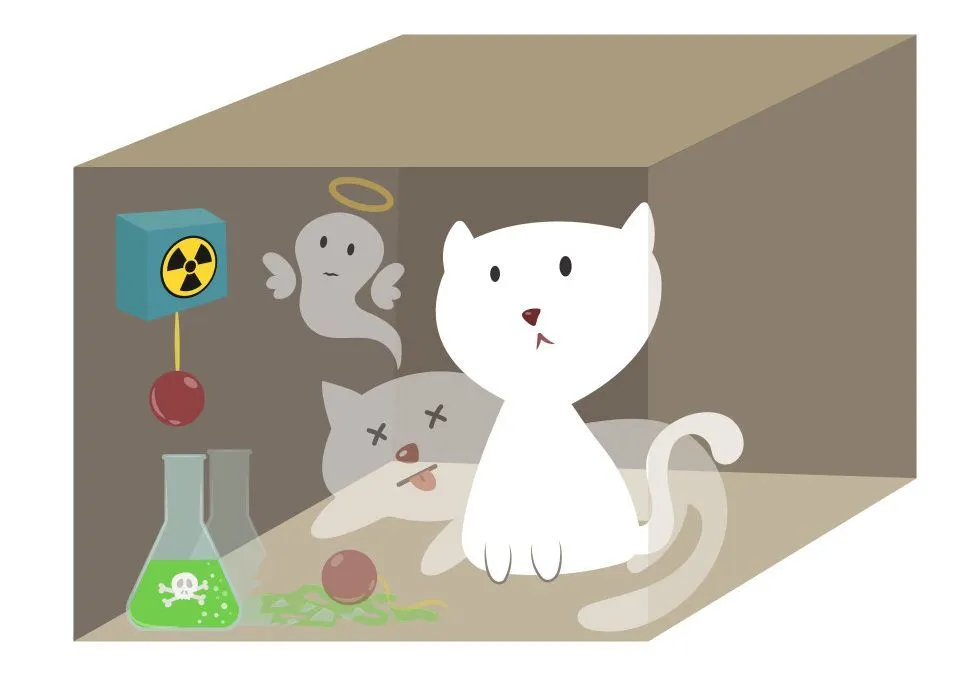
The cat is Schrödinger’s way of dramatizing what happens to subatomic particles. In the standard ‘Copenhagen interpretation of quantum mechanics’, the act of observing forces the system to settle into a single outcome, and the box hides a cat that is genuinely neither here nor there until you look.
That brings us to quantum superposition, the idea that a quantum particle holds all of its possible states at the same time until it is measured. This is exactly how Evelyn Wang gets to be a laundromat owner, a chef, a movie star, and (in one universe) married to Deirdre instead of Waymond, all at the same time! Everything is happening everywhere… all at once.
The Many-Worlds Theory
Copenhagen says the cat ends up either dead or alive once you look. The Many-Worlds theory takes a bolder route. In 1957, physicist Hugh Everett proposed that nothing ever collapses at all. Instead, every time a quantum event could go more than one way, the universe itself splits into separate, non-communicating branches that cover every outcome. In one branch the cat lives, in another it dies, and both are equally real. (The catchy name "many-worlds" was actually coined later by Bryce DeWitt.) This is the version of the multiverse EEAAO runs with.
EEAAO depicts multiple such universes: one where the conditions on Earth can’t sustain life; one where humans possess sausages for fingers; one where Evelyn lives out the life of Michelle Yeoh herself, etc.
However, only the inhabitants of a universe called the Alpha-Verse know about the existence of other universes.
One might think, “How are sausage-fingered humans biologically possible?” This is where the explanation for this multiverse lies.
Traversing The Multiverse
The Alpha-Verse’s inhabitants discovered the existence of the multiverse and figured out how to travel to the other universes within it. However, it’s not possible for humans to physically break the space-time continuum, i.e., the continuity of time in the universe. Instead, they travel to other universes by tapping into the minds of the versions of themselves that live in those universes.
This is done by making a choice so bizarre that it leads the maker of this choice into the consciousness of their alternate selves from another universe. Each universe has its own unique path in the form of a choice.
Examples of such choices, as presented to Evelyn throughout the movie, include wearing her shoes on the wrong feet, peeing her pants, professing her love to the woman trying to bash her head in, and more. Each choice is so bizarre that it helps its maker transcend their own universe.
However, these choices represent something even more bizarre: Nothing shown in Everything Everywhere All At Once is a scientific impossibility.
Where Does EEAAO Meet Real-world Science?
A quantum particle in superposition is described by a wave, and the different possibilities that make up that wave can overlap and combine, reinforcing each other in some places and canceling out in others. That overlap is called quantum interference, and it only works as long as the possibilities keep a steady, locked-together phase relationship. Physicists call that locked-together state quantum coherence. The moment a particle loses coherence (it bumps into its surroundings and the phases scramble) it stops behaving like a smear of possibilities and settles into one definite outcome.
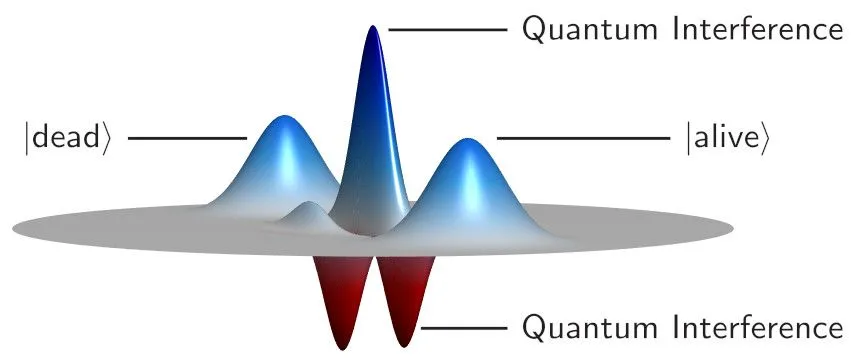
This concept of quantum coherence is what forms EEAAO’s multiverse. These sausage-fingered humans wouldn’t thrive in our universe, which is why they exist in a universe of their own. In their universe, human evolution led to fingers existing in the form of sausages because that’s what their universe required for survival.
Similarly, in the universe where Evelyn is a rock and there are no human beings, there was no evolution, since there were no humans to evolve in the first place. Human life wasn’t coherent with this universe, so rocks inhabit that version of Earth.
The Beauty Of EEAAO’s Multiverse
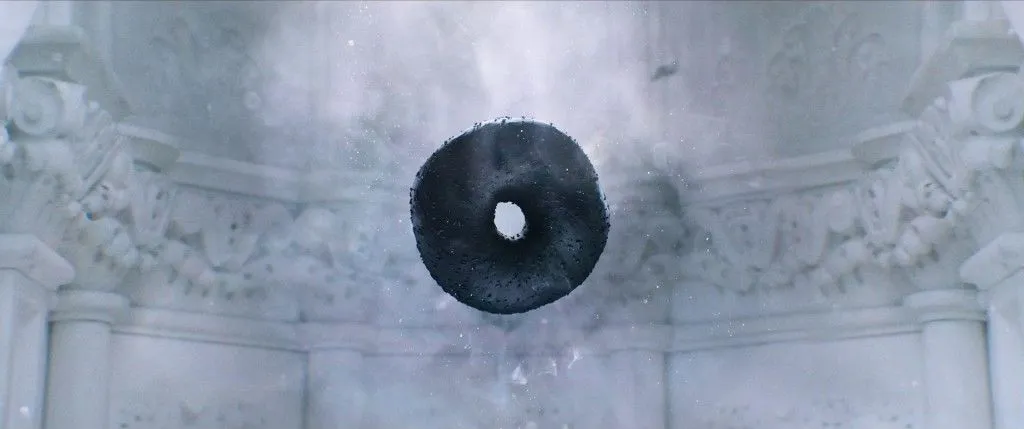
While Everything Everywhere All At Once may be a bit fantastical in its characterization of Jobu Tupaki and the “everything-bagel” it places at the center of its multiverse, the science used in the film is based very much on real-world scientific principles. It manages to blend quantum mechanics and human behavior to tell a story of how maybe life is a sum of all its parts; how even the positioning of a single atom can drastically change how our lives and timelines will play out.
The story of Evelyn Wang shows us how, whether through the coherence of the quantum particles within us or the coherence of the choices we make throughout our lives, each one of us truly is everything everywhere all at once!
References (click to expand)
- The Many-Worlds Theory, Explained. MIT Press
- What did Schrodinger's Cat experiment prove? West Texas A&M University
- Schrödinger, Erwin (1887-1961). University of Virginia
- JR Brown. (1996) Thought Experiments - Stanford Encyclopedia of Philosophy. Stanford University
- What is a space time continuum? - Gravity Probe B. Gravity Probe B
- Quantum Interference of Light. University of Texas at Austin
- Quantum Coherence and Dynamics | Rosenbaum Lab - Caltech. California Institute of Technology
- Everything Everywhere All at Once. Encyclopaedia Britannica