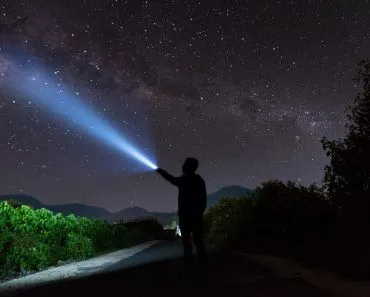
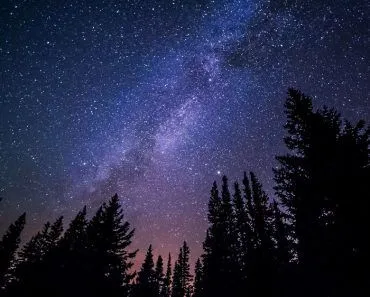
Real stars have no corners or sides. They are perfectly spherical balls of plasma, just like our Sun. Stars only look pointy because light from them gets diffracted by tiny Y-shaped suture lines inside our eye lenses (and by the support struts inside telescopes). The 5-pointed star we draw is a cultural symbol that goes back more than 5,000 years to ancient Egypt and Mesopotamia, not a literal copy of how stars actually appear in space.
When thinking back to my childhood, one of the things I remember most was that the stars we got on our homework were highly prized. Those five-armed pointy shapes drawn on our notebooks by the teacher had the potential to keep us swollen with pride for an entire day. It was at that point, I think, that I learnt how to draw stars for myself. However, as I grew up, I realized that everyone’s stars basically looked the same… more or less.
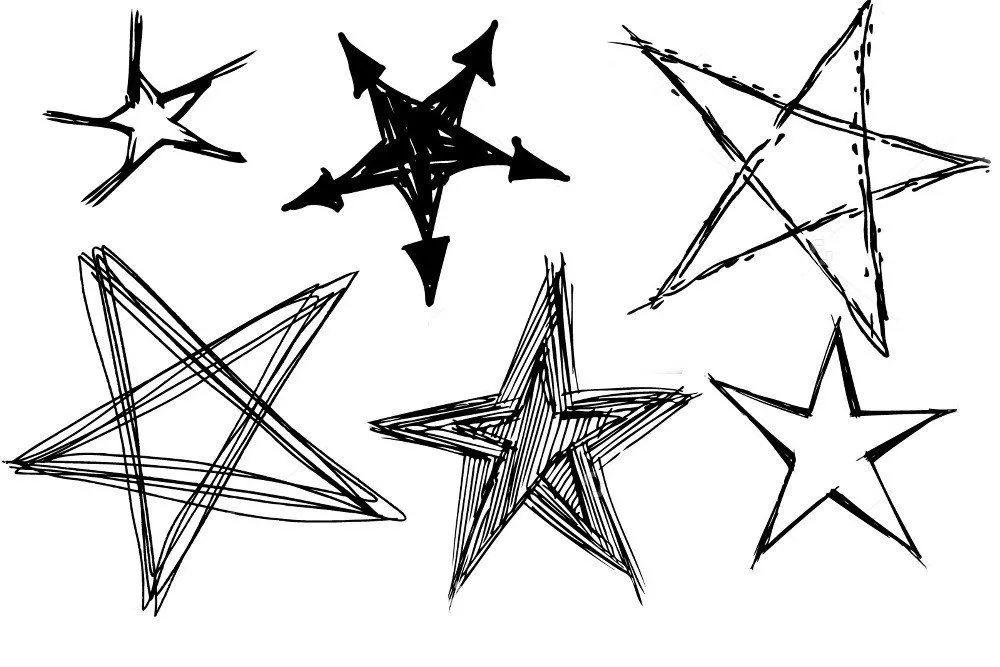
What’s the reason for this? Since all of us know that real stars are actually spherical in shape, why does everyone commit the same universal folly when drawing stars?
The Way Stars Appear To Us
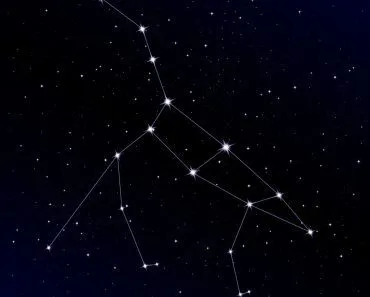
It’s pretty straightforward, isn’t it? Humans draw stars, and everything else, precisely the way they appear to them. Now, it’s true that stars do appear pointy, with a few extended arms when we look up at the night sky. Therefore, this is the universally accepted image of stars. The real question is why stars appear that way at all, since we all know that stars are actually spherical in shape, which is far from the image that we draw of them.
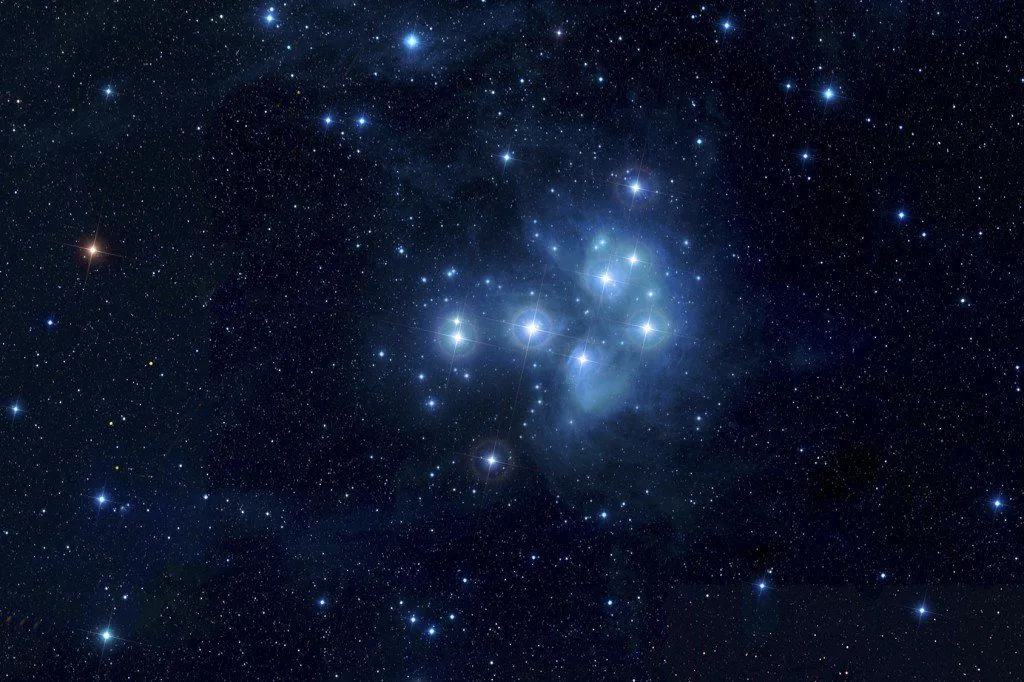
It’s interesting to note that humans are not alone in perceiving stars that way; practically every creature with eyes sees stars the same way! Furthermore, even many high-power telescopes see distant stars as pointy objects. In a telescope, the spikes you see around bright stars are caused by light bending around the thin support struts (called spider vanes) that hold the secondary mirror in place. The famous 8-pointed stars in James Webb Space Telescope images, for instance, come from its 18 hexagonal mirror segments plus its tripod-like secondary support. This strange phenomenon is due to the inherent nature of light.
Light behaves in a way that establishes itself as both a wave and a particle. Sometimes, it behaves like a particle (known as a photon) and is thus able to travel in straight paths, but at other times, it travels like a wave. Although it doesn’t make much sense to us intuitively, there is conclusive evidence for light’s duality, named the wave-particle duality of light by scientists.
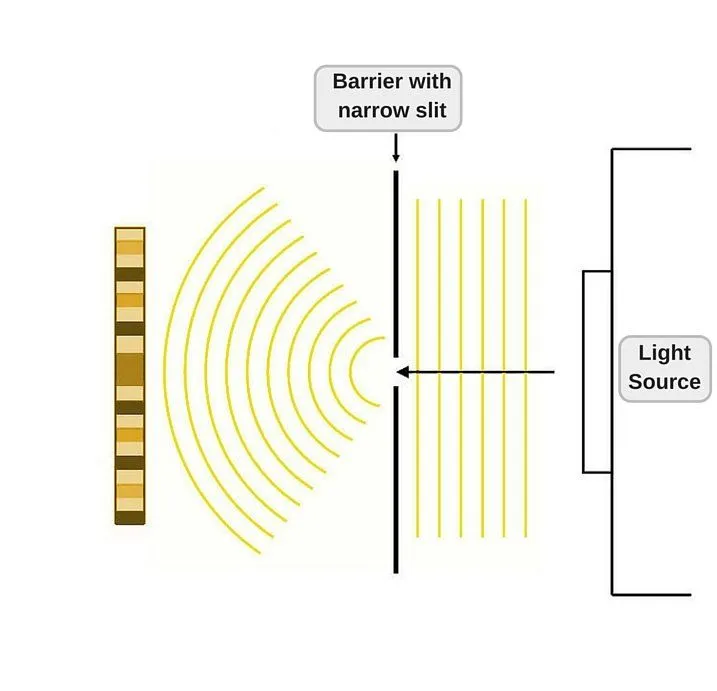
Thanks to these wave-like characteristics, when light emitted from a distant object reaches another object or opening, its waves are bounced or bent slightly around the object and interfere with each other to produce various patterns on whatever they ultimately fall on. For example, light passing through a slab with a tiny slit leaves its imprint in the form of a perpendicular series of dashes.
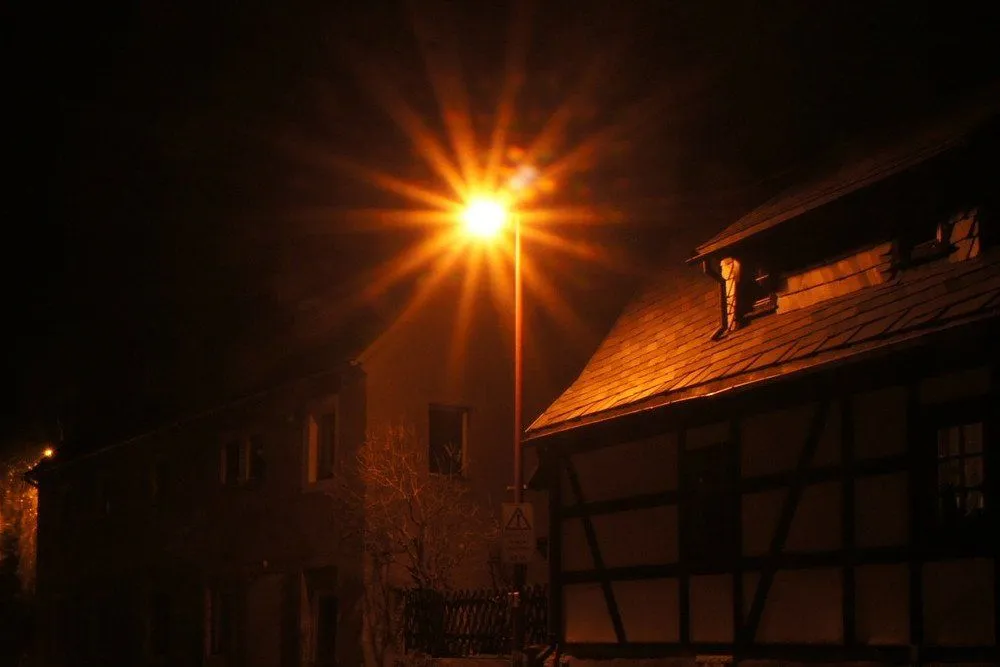
This is the reason why any light source appears to sparkle with pointed corners when you squint your eyes.
Suture Lines In Eyes
Now we know that since light acts like a wave, it gets diffracted around openings and objects to create imprints. However, this only covers one part of the explanation. The other part has to do with our eyes, or rather, certain imperfections in our eyes.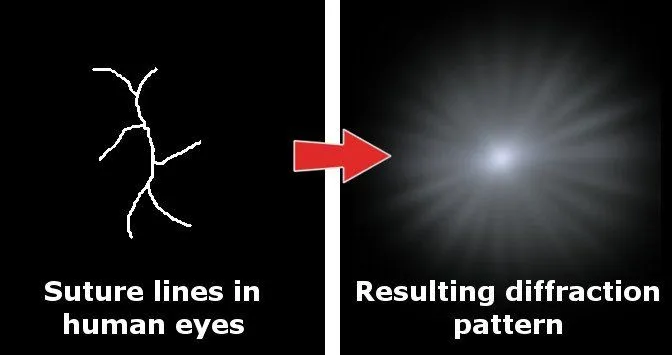
The fibers that make up our eye lenses meet at certain points, resulting in very small structural imperfections called suture lines. Light, upon passing through the lens, interacts with these lines and consequently leaves a very distinct impression of a star, making it look like a pointy, five-armed toy.
It’s interesting to note that the way these suture lines are formed vary from one creature to another (yes, animals also have suture lines and therefore see pointy stars). That means it is somewhat unlikely for two people to see a star in exactly the same way, i.e. there will be some difference in the way a particular star appears to different individuals. Even your own eyes will show slightly different images of the same star when the other eye is closed!
Here’s a very interesting video explaining the physics behind the ‘star-shape’ of stars:
How Many Points, Sides, And Corners Does A Star Have?
Let’s set the physics aside for a moment and look at the star we actually draw on paper. The classic shape is a five-pointed star, also called a pentagram when you draw it in one continuous stroke without lifting your pen. So how many points, sides, and corners does it have?
The answer depends on what you count. The star has 5 points (the sharp tips). It is bounded by 10 straight edges, since each of the five points is made of two line segments. And it has 10 corners, or vertices: the 5 outer ones at the tips and 5 inner ones where the lines cross to form a small pentagon in the middle. So when someone asks “how many sides does a star have,” the tidy answer is 5 points but 10 sides and 10 corners.

There’s a neat bit of geometry hiding here too. If you measure the angle at each of the five points and add them all up, the total is always 180°. Remarkably, this holds for any five-pointed star, whether it’s a perfectly symmetric one or a lopsided doodle, because those five tips are really the “far” angles of triangles that fold back into a single triangle, and a triangle’s angles always sum to 180°. In a regular star, the five points share that total equally, so each tip measures 180° ÷ 5 = 36°. That 36° angle, and the central pentagon it builds, is also why the five-pointed star is tied to the golden ratio that turns up so often in nature.
What Is The Real Shape Of A Star?
Now back to space. The real shape of a star is nothing like the pointy toy we sketch. A star is essentially a giant sphere of hot, glowing gas (plasma), and our own Sun is the nearest example. As NASA puts it, a star is simply “a sphere of gas held together by its own gravity.”

Why a sphere and not a cube or a pancake? Gravity pulls every bit of a star’s material toward its center of mass, and it pulls equally hard in every direction. A star is so massive that gravity easily overwhelms whatever lumps or bumps the gas might otherwise hold, so the material settles into the one shape where every point on the surface sits the same distance from the center: a ball. That inward pull is balanced by the outward push of heat and radiation from the nuclear fusion in the core, a standoff astronomers call hydrostatic equilibrium. As long as those two forces stay matched, the star holds its round shape.
Strictly speaking, most stars are not perfect spheres. A spinning star bulges slightly at its equator, the same way our own planet does (which is why Earth isn’t a perfect sphere either). The bright star Altair spins so fast, completing a full rotation in under 9 hours versus about 25 days for the Sun, that it is flattened into an oblate spheroid with its equator more than 20% wider than the distance between its poles. But even Altair is a smooth, gravity-rounded ball, with not a single pointy corner anywhere on it.
Where Did The 5-Pointed Star Symbol Come From?
If stars are really spheres, why does almost every culture draw them with five points? The honest answer is that the five-pointed star is a cultural symbol far older than any modern understanding of astronomy, and we inherit it the same way we inherit the alphabet: by copying it from everyone around us.
The five-pointed star is genuinely ancient. Some of the earliest known examples appear on Sumerian pottery from the city of Ur in Mesopotamia, dated to roughly 3500 BCE, where the symbol was at various times linked to the goddess Ishtar and the god Marduk. Centuries later, the followers of the Greek mathematician Pythagoras (around the 6th century BCE) adopted the pentagram as a private badge of recognition and a sign of good health. In medieval Europe, Christians read the same five points as the Five Holy Wounds of Christ, and the poem Sir Gawain and the Green Knight famously paints a pentangle on Gawain’s shield as a token of his virtues.
So the star we draw isn’t a mistaken sketch of a real sun. It’s a symbol that has been passed down for more than 5,000 years, reinforced today by flags, military insignia, gold stickers on homework, and the “star” rating beside almost everything we buy online. We draw five points because, quite simply, that is the shape humanity agreed a star should be, long before anyone knew what a star actually was.
References (click to expand)
- Why stars are star-shape? | SiOWfa16: Science in Our World. The Pennsylvania State University
- Diffraction spike - Wikipedia
- Five-pointed star - Wikipedia
- Stars - Imagine the Universe! NASA Goddard Space Flight Center
- Ask Astro: Why are planets and stars round? - Astronomy Magazine
- Angles in a Star - The Math Doctors
- Pentagram - Wikipedia