The Big Freeze (also called the Big Chill or the heat death of the universe) is the leading hypothesis for how our universe will end. As the universe keeps expanding, it cools toward absolute zero, entropy reaches its maximum, and no more usable energy is left to drive stars, planets or any process. The cosmos becomes a dark, near-empty soup of cold photons and isolated particles. Most current cosmological models put this end-state at least 10100 years from now.
Also called the “heat death” of the universe or the ‘Big Chill’ hypothesis, the ‘Big Freeze’ hypothesis refers to a particular state of the universe with no free thermodynamic energy. It is often called the ultimate destination of the universe. In physical terms, when the entire universe reaches thermodynamic equilibrium, the Big Chill sets into motion. Despite the name, the phenomena is not related to a certain temperature.
It is a continuous state of the universe that would ultimately decrease the temperature to such a point that no energy can be derived from the work done.
The very idea of heat death owes to the concept of the loss of mechanical energy in nature, also called the “theory of heat”, provided by Lord Kelvin.
Idea Of Heat Death
The primary motive that drives this theory is the Second Law of Thermodynamics, which equates the entropy of an isolated system with the consequent heat that is produced.
Therefore, if the universe is viewed as an isolated system that will exist for a saturated period of time, then a state of equilibrium is bound to be reached wherein the heat in the form of energy is equally distributed with no discrepancies. Jean Sylvain Bailly put forward a similar physical and chemical constraint on heat, but framed it in terms of planets.
He said that while Jupiter is too hot to sustain life, our moon is far past the optimum warmth level and is too cold for life to exist on it. Taking from these examples, he theorized that every object cools off to a point where no life can exist.
Heat Death, Big Chill And Cold Death: Are They Different?
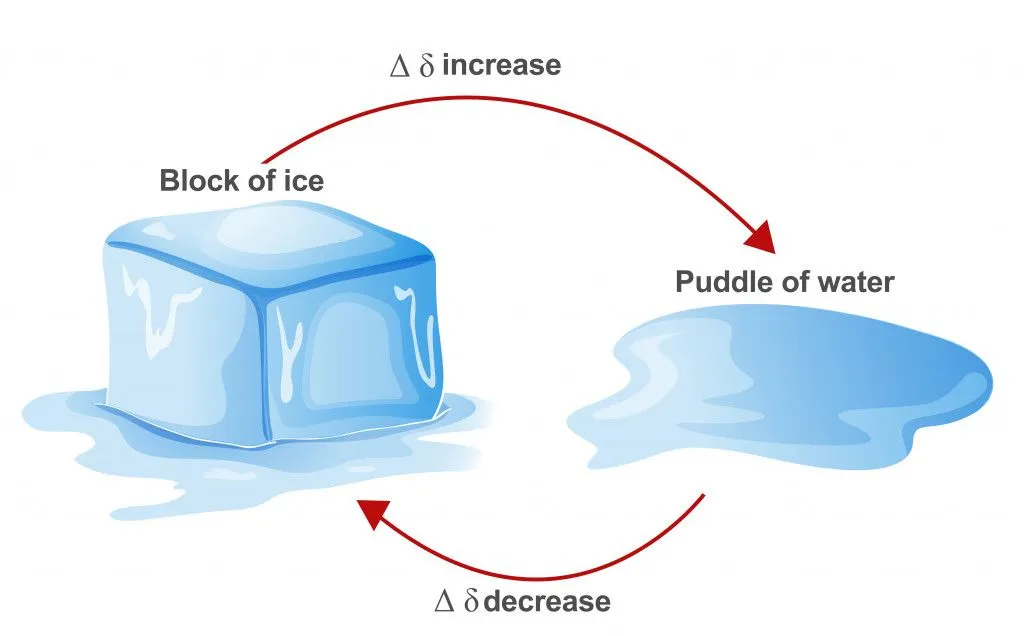
This is where the names trip people up. The heat death, the Big Freeze, the Big Chill and what some writers loosely call a cold death are not rival theories competing with one another. They are simply different labels for the very same fate: a universe that keeps expanding, cools toward absolute zero (0 K, or about -273 °C / -460 °F) and gradually runs out of usable energy.
The confusion comes from the word “heat”. In “heat death”, heat does not mean the universe burns up. It refers to the death of usable heat, the temperature differences that let energy flow from a hot place to a cold one and do useful work. A hot cup of coffee can warm your hands only because it is warmer than the room. Once the entire universe settles to a single uniform temperature, no heat flows anywhere, no work can be extracted, and entropy sits at its maximum. That flat, frozen equilibrium is the heat death, which is exactly why it is also nicknamed the Big Freeze or Big Chill.
So the Big Freeze does not have a separate “cold” twin that opposes it. Its real rivals are two completely different endings, the Big Crunch and the Big Rip, which we will line up next.
How Else Could The Universe End? Big Crunch Vs Big Rip
Which ending wins comes down to a tug-of-war between gravity, which pulls the universe together, and dark energy, the mysterious pressure that pushes it apart. Cosmologists usually sketch three possible outcomes.

The Big Crunch. If the universe held enough matter, gravity would eventually overcome the expansion, halt it, and drag everything back inward until the cosmos collapsed to a single hot point, a near-mirror image of the Big Bang. Some versions of the idea imagine that collapse “bouncing” into a fresh expansion.
The Big Freeze. If dark energy keeps the upper hand, the expansion never stops. Galaxies drift ever farther apart, stars burn out, and the temperature creeps toward absolute zero. This is our heat death.
The Big Rip. This is the most violent option. If dark energy strengthens over time (what physicists call “phantom” dark energy), the acceleration grows without limit until it overpowers gravity, then the electromagnetic and nuclear forces, shredding galaxies, then stars and planets, and finally atoms and nuclei themselves at a definite moment in the future.
For now the evidence points firmly at the Big Freeze. Measurements from NASA's WMAP and ESA's Planck satellites show that the universe is geometrically flat and that its expansion is accelerating, with dark energy making up roughly 70% of everything there is. With expansion speeding up rather than slowing down, gravity looks far too weak to ever stage a Big Crunch.
Concept Of Entropy
At some time in the future, all the possible reactions will have already taken place. This would result in a clash between the heat transfer, as only the core particles of matter would be left, with no scope for work. All reactions that occur after this would result in a supposed decrease of entropy, which is again contradictory to the laws of thermodynamics. The universe would simply cease to exist.
The concept of entropy has no relevance at the molecular level, as reactions observed at this level can proceed equally in the forward and reverse directions. The result of both the reactions would be the same.

When Will It Occur?
As of now, all the matter (both ordinary and dark) is concentrated in the stars, galaxies, planets etc., so there is no scope for a thermodynamic equilibrium. The work done on certain objects and by certain other objects will proceed with ease for quite some time.
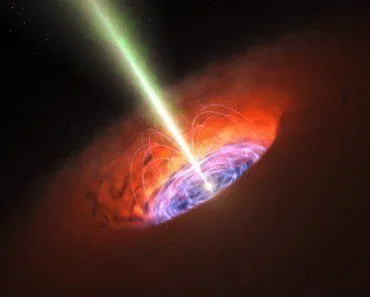
The estimation of the time frame for the death of the universe is taken from the termination time of a supermassive blackhole, which is 10100 years, due to Hawking radiation. After this, only fundamental particles like leptons and photons would remain, giving rise to frail energy levels and stretched time scales. Another possible outcome of the heat death is the consequent birth of another universe, starting from the very lowest levels of energy and entropy.
The Universe's Long Goodbye: Five Cosmic Eras
The Big Freeze is not a single event but an unimaginably slow fade. In their 1997 review for Reviews of Modern Physics, physicists Fred Adams and Gregory Laughlin mapped the deep future into a sequence of cosmic “eras”, each one dimmer than the last.
- The Stelliferous Era. The age of starlight, the one we live in now. New stars keep forming, but once the raw gas runs low, the smallest and longest-lived stars (the cool red dwarfs) will finally gutter out after roughly 1014 years, around 100 trillion years from now.
- The Degenerate Era. With the stars gone, the universe is left with their corpses: white dwarfs, neutron stars, brown dwarfs and black holes. If protons are themselves unstable, as some theories predict, even these dead remnants slowly evaporate over something like 1034 years or more.
- The Black Hole Era. Eventually black holes are the only large objects left. They too leak energy, glowing extremely faintly through Hawking radiation, until the most massive of them finally evaporate around 10100 years from now.
- The Dark Era. After the last black hole pops, almost nothing is left but a thin, cold drizzle of photons, neutrinos and stray electrons and positrons, drifting through an ever-darkening void. This is the heat death in its purest form.
Whether anything follows is genuinely unknown. A few speculative models suggest that an empty, maximum-entropy cosmos might one day seed a brand new universe, but there is no firm evidence for such a rebirth, and most physicists treat the Dark Era as the real end of the line.
Can It Be Prevented?
The prevention of the heat death lies in the regeneration of hydrogen atoms from matter around us. This will compensate for the undying “wearing out” of matter into energy. The primary idea behind this is to make equal the matter energy available as is spent in converting matter into energy. This way, there should never be an actual deficit to set the ‘Dark Era’ into motion.
Conclusion
The world around us flows in one particular direction and entropy acts as the arrow for this very forward flow. On a day-to-day basis, we have absolutely no confusion in figuring out the flow of time, and this forward flow also establishes a symmetry and order in the universe. The eventual outcome of all these theories is hard to pinpoint, but the universe will reach its end at some point. The state of equilibrium will be reached no matter what we attempt… all we can do is try to delay the process!
References (click to expand)
- Researcher looks at comet as potential trigger of 'Big Freeze'.
- latest news - www.mnu.edu
- Can Science Survive the Death of the Universe?.
- Bressette, A. R. (2000, June). The Big Freeze: Water and the Scientific Process. The Chemical Educator. Springer Science and Business Media LLC.
- The Fate of the Universe. Imagine the Universe! NASA Goddard Space Flight Center.
- Entropy and heat death. Thermodynamics. Encyclopaedia Britannica.
- Adams, F. C., and Laughlin, G. (1997). A Dying Universe: The Long-Term Fate and Evolution of Astrophysical Objects. Reviews of Modern Physics.
- Caldwell, R. R., Kamionkowski, M., and Weinberg, N. N. (2003). Phantom Energy and Cosmic Doomsday. Physical Review Letters.
- The beginning to the end of the universe: The Big Crunch vs. the Big Freeze. Astronomy Magazine.