The first law of thermodynamics states that the change in a system’s internal energy (ΔU) equals the heat added to it (Q) minus the work it does on its surroundings (W): ΔU = Q − W. It is the law of conservation of energy applied to heat: energy is never created or destroyed, only converted from one form to another.
What happens when you switch on a lamp? The electrical energy coming through the wires is converted into light. When you crank up the ignition of your vehicle, the energy stored in the gasoline sets you in motion. All the daily activities that you do happen because of the calories that you eat in your food. Energy is converted from one form to another all the time! We see it happening at every moment of our conscious life.
In the realm of physics, there is a law for everything that happens in the world. The law that governs this phenomenon is the law of conservation of energy. The law states that energy can neither be created nor destroyed. It can only change from one form to another.
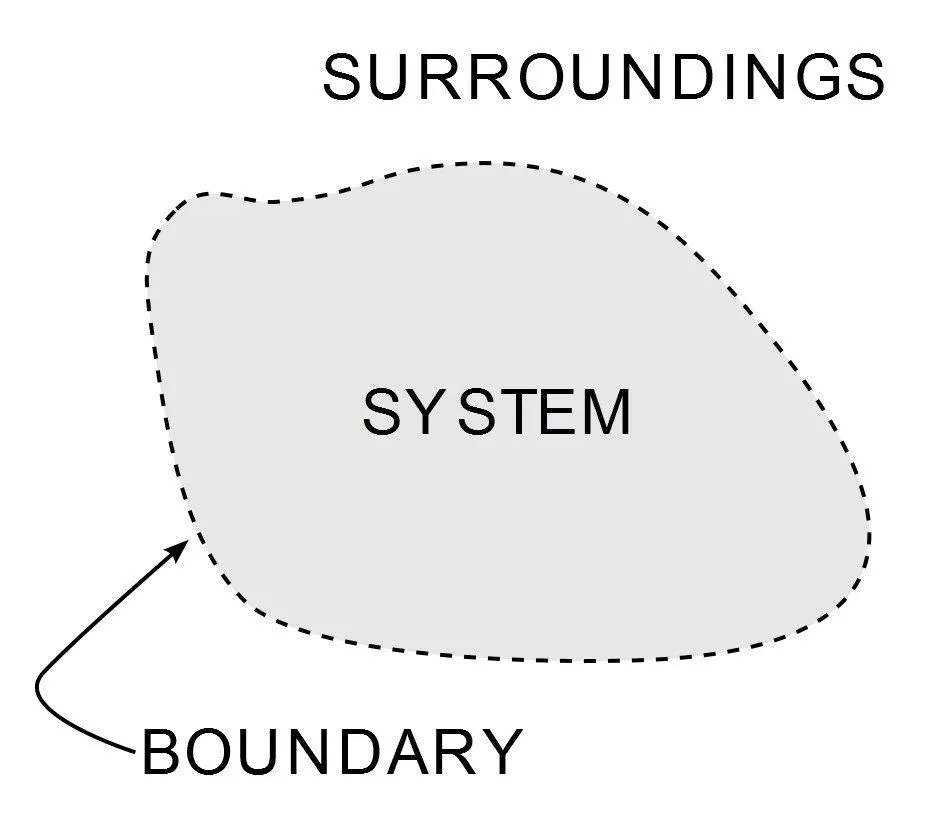
Thermodynamics is a branch of physics that deals with heat energy and its relationship with work and other forms of energy. The first law of thermodynamics is a version of the law of conservation of energy that relates to heat energy. The laws of thermodynamics define how work, heat, and energy affect a system. A system is any region in the Universe that is finitely bounded, across which energy is transferred. Everything outside this boundary is its surroundings.
What Is The First Law Of Thermodynamics?
The first law of thermodynamics states that the change in internal energy of the system (ΔU) is equal to the amount of heat provided to the system (Q) minus the amount of work done by the system (W):
ΔU = Q − W
In some places, you can find it as:
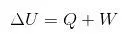 The difference between the two equations is that in the first one, W is work done by the system, whereas in the second one, it is the work done on the system. If the system does some work, then the first equation can be used, but if work is done on the system, then the second equation can be used.
Why Are There Different Equations?
Although the law remains the same, the equations vary depending on the events occurring in the system. The first equation with a -W was defined by physicists dealing with internal combustion engines. In their case, the heat provided to the system expands the gas, which moves the piston or “does some work.” It was the equation that was used by Clausius, the scientist who first stated the law in its full form.
Chemists use the second equation with a +W because they mostly deal with systems where a process happens when work is done on the gases. This form is the IUPAC convention and is standard in chemistry, while the −W form is still the norm in physics and engineering. Either way, the physics is identical; only the bookkeeping of the work term’s sign changes.
Examples Of The First Law Of Thermodynamics
Internal Combustion Engine
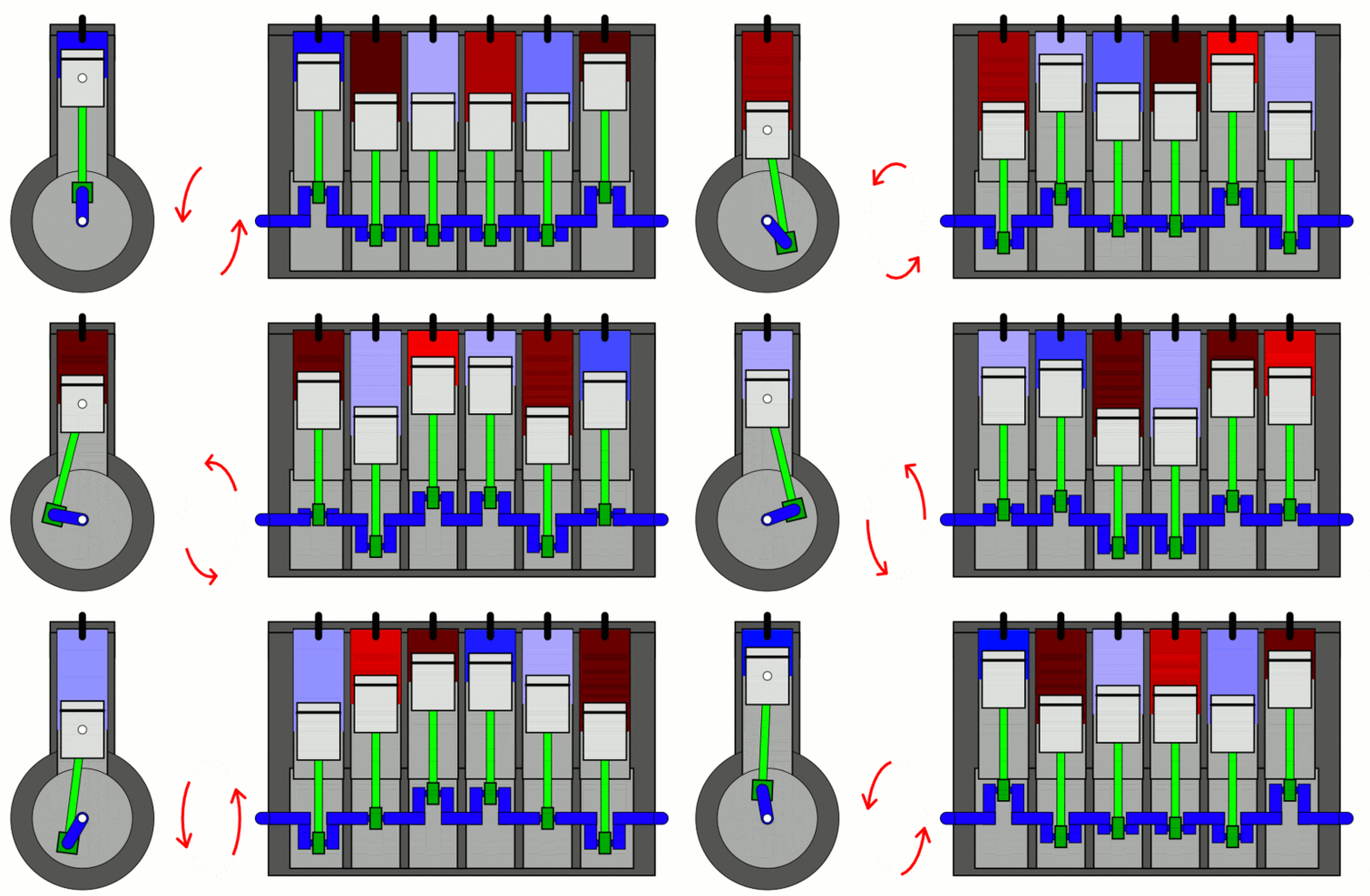
The classic example used to explain the first law of thermodynamics is the internal combustion engine. In an IC engine, a spark ignition combusts a mixture of air and gasoline. The combustion causes the gases inside the engine to expand. This expansion pushes the piston outwards, thus moving a vehicle forward, which is mechanical energy. In the process, the engine also gets heated up and loses some energy as heat energy.
If we put this in the equation, burning the air-gasoline mixture releases the fuel’s chemical energy as heat (Q) into the gas inside the cylinder. That gas pushes the piston, doing mechanical work (W) on the surroundings. The change in the gas’s internal energy (ΔU) is simply what is left over: ΔU = Q − W. In practice, a good deal of Q never becomes useful work and escapes as waste heat through the exhaust and cooling system, which is why no engine is anywhere near 100% efficient.
Melting Ice Cube

Keep an ice cube on a plate and leave it. In a few minutes, it will melt into water. The ice absorbs heat from the surrounding air, the air becomes cooler, and the ice changes into water. Here the state of the matter is changing because heat is being absorbed. Almost no work is done (the volume barely changes), so the heat (Q) flowing in goes almost entirely into raising the system’s internal energy (ΔU), breaking the bonds that hold the ice crystal together. Melting 1 kg of ice at 0 °C takes about 334 kilojoules (the latent heat of fusion of water), and the temperature stays at 0 °C the whole time until the last of the ice is gone. Leave the puddle for long enough and that water will absorb still more heat and turn into vapor. At every step, the first law of thermodynamics governs the flow of energy.
History Of The First Law Of Thermodynamics
The need to define such laws was first felt by humans when they invented the first engine. It became imperative to establish a relationship between heat and work. They wanted to increase the industrial output, so it was essential to define and improve the efficiency of the heat engines.
It took roughly a decade and inputs from many physicists to come up with the first law. In the 1840s, Julius Robert von Mayer and James Prescott Joule independently showed that heat and mechanical work are interconvertible, and Hermann von Helmholtz set out the broader principle of energy conservation in 1847. Each came close, but the law was first stated in full, with the concept of internal energy, by Rudolf Clausius and William Rankine in the year 1850.
Read More: