Table of Contents (click to expand)
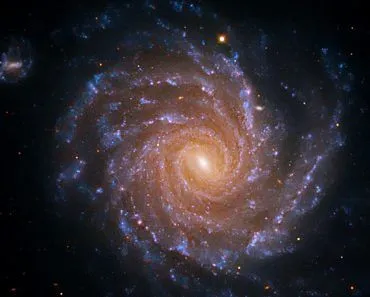
The universe has been expanding since the Big Bang, roughly 13.8 billion years ago, when space itself began stretching outward. That expansion is now speeding up, driven by a mysterious repulsive force called dark energy that makes up about 68% of the cosmos. Galaxies do not fly through space so much as space grows between them.
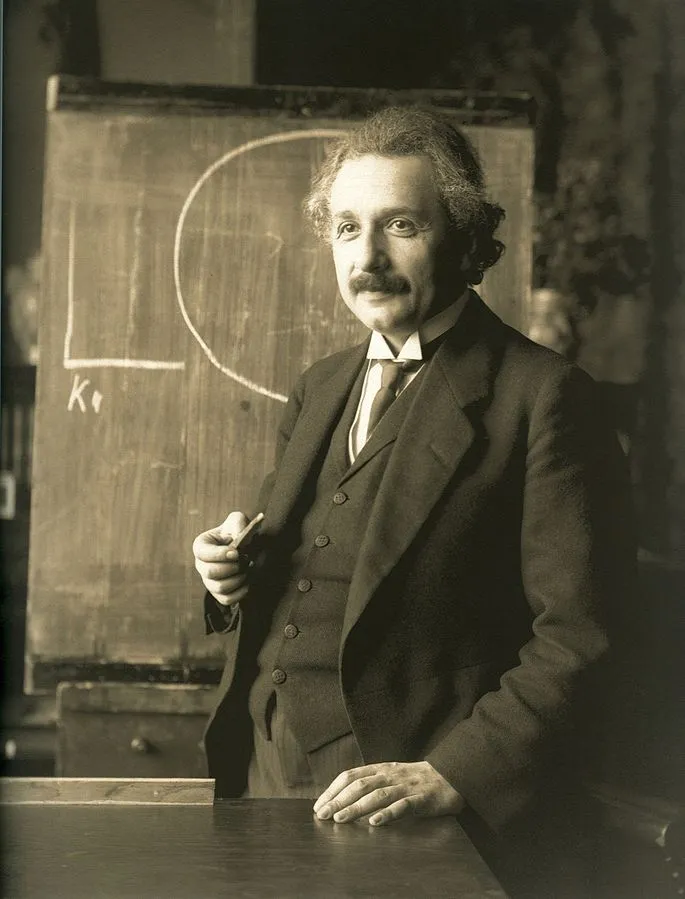
Einstein believed that the Universe was an infinitely large, all-encompassing blimp. His General Theory of Relativity suggested a model of a Universe that was homogenous, spatially curved and dominated by a single force, gravity. However, if gravity alone sculpts the structure of the Cosmos, then all matter in it must be impelled to be mutually attracted towards each other rendering the Universe to crumble under its own weight.
Clearly, this is not the case. To account for the Universe’s apparent stability, Einstein included a constant in his equations, a constant that would neutralize the inexorable pull of gravity. He called this the cosmological constant. The resulting Universe was a place that neither contracted nor expanded. This was Einstein’s infamous static Universe.
Red Shift
As it turns out, he was wrong, albeit not entirely. There’s an old legend according to which Einstein discarded his static Universe after Hubble observed that our neighboring galaxies are moving away from us. Hubble witnessed how the wavelengths of light emitted by these galaxies were stretched and elongated as they moved further from us, a phenomenon known as red-shifting.
The truth, however, is a bit more complex. Before Hubble’s revolutionary discovery, based on the dissonance in various astronomical observations and his equations, Einstein was prodded by several of the most brilliant astrophysicists of his generation to modify his current model. Obstinate, he adopted an expanding Universe theory after nearly 14 years.
However, not only is the Universe expanding, but its expansion is accelerating. This means that galaxies further away from us are receding at a much faster velocity than galaxies nearer to us. So… what mysterious force is driving this extraordinary expansion?
Dark Energy
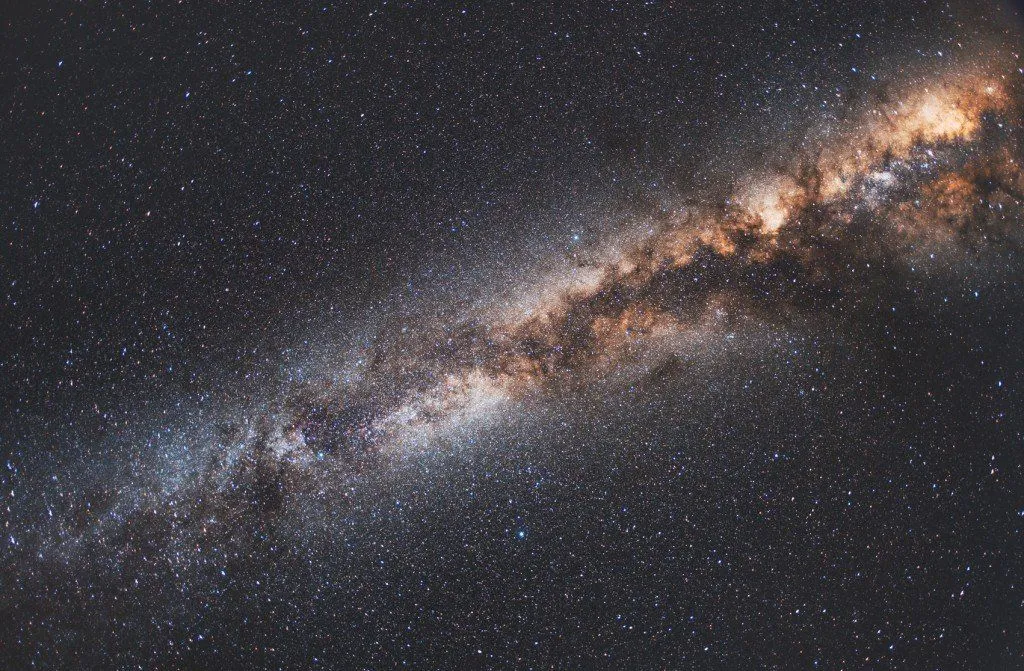
Hubble’s discovery is one of mankind’s seminal discoveries. The expansion implies that there are not one, but two, large-scale forces dominating the structure of the Universe: the inward pulling force of gravity and the mysterious repulsive force that is shoving matter apart. The rate of that expansion is captured by Hubble’s constant, which measures how fast a region of space recedes from us with distance (one megaparsec is about 3.26 million light years). Measurements currently place it somewhere between roughly 67 and 73 km/s/Mpc (about 42 to 45 miles per second per megaparsec). Tellingly, the value derived from the early Universe (about 67) disagrees with the value measured from nearby exploding stars (about 73), a stubborn gap cosmologists call the Hubble tension. At this rate, the distance between distant cosmic objects will roughly double in another 10 billion years!
However, while gravity is an attractive force that works on objects, the repulsive force works on space instead. The distribution of chocolate chips on a brittle cookie provides a good analogy to understand these forces of nature. If the cookie represents all the space in the Universe and the chocolate chips are its galaxies, then gravity is a force that impels every chip to move towards every other chip, whereas the repulsive force expands the cookie itself. Despite being in the same place, the chips appear to be vastly separated due to the extension of the cookie-space between them.
Mysterious is a fitting term to describe this force. Cosmologists refer to it as Dark Energy. The most perplexing characteristic of this energy is its source. Einstein’s most famous equation, the one people most immediately associate with him, E = MC², showed that mass and energy are interchangeable, that they are different forms of the same entity. It is the conversion of mass into energy inside the Sun’s core that fuels its copious radiation.
But what about dark energy? Its work on space or vacuum implies that space harbors an enormous amount of energy, even when it’s devoid of all matter or radiation. How is this possible? Some speculate that vacuum isn’t empty, but rather teeming with particles that incessantly pop in and out of absolutely nowhere. Apparently, quantum mechanics allows this (why am I not surprised). It may be this constant boiling that so powerfully energizes space.
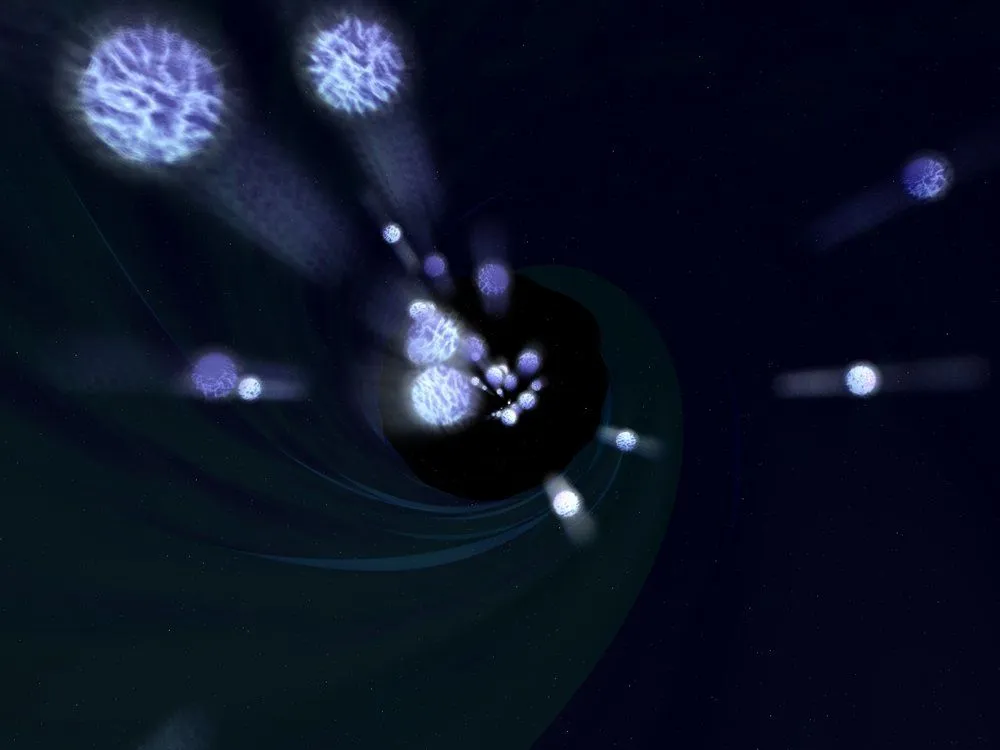
Or, it could be an exotic new force that eludes detection, perhaps because our understanding of the absurd laws of the Universe is incomplete. Currently, dark energy is believed to be the personification of Einstein’s cosmological constant, which is why he was wrong, albeit not entirely. The notion of dark energy is particularly terrifying because it constitutes about 68% (an indomitable majority) of all the energy and matter in the Universe. Roughly another 27% is dark matter, an unseen substance we detect only through its gravity, and a mere 5% or so is the ordinary, visible matter that makes up stars, planets and people. Basically, we have very little clue what most of our Universe is made of.
Even dark energy itself may not be the fixed quantity it was long assumed to be. Beginning in 2024, the Dark Energy Spectroscopic Instrument (DESI), which has mapped tens of millions of galaxies, found tentative hints that dark energy may have been weakening over the past several billion years rather than staying constant. If those results hold up, they would overturn the simplest picture of a steady cosmological constant and reshape predictions for how the Universe ends.
The Repulsive Conclusion
The Cosmic Microwave Background Radiation (CMBR) is an almost uniform background of microwaves spread across the entire Universe. It is the leftover heat from the Big Bang and paints the entire sky. It is also the oldest light we can see. The CMBR provides us with a picture of the infant Universe, about 380,000 years after its birth, when it had finally cooled enough for atoms to form and for light to travel freely.
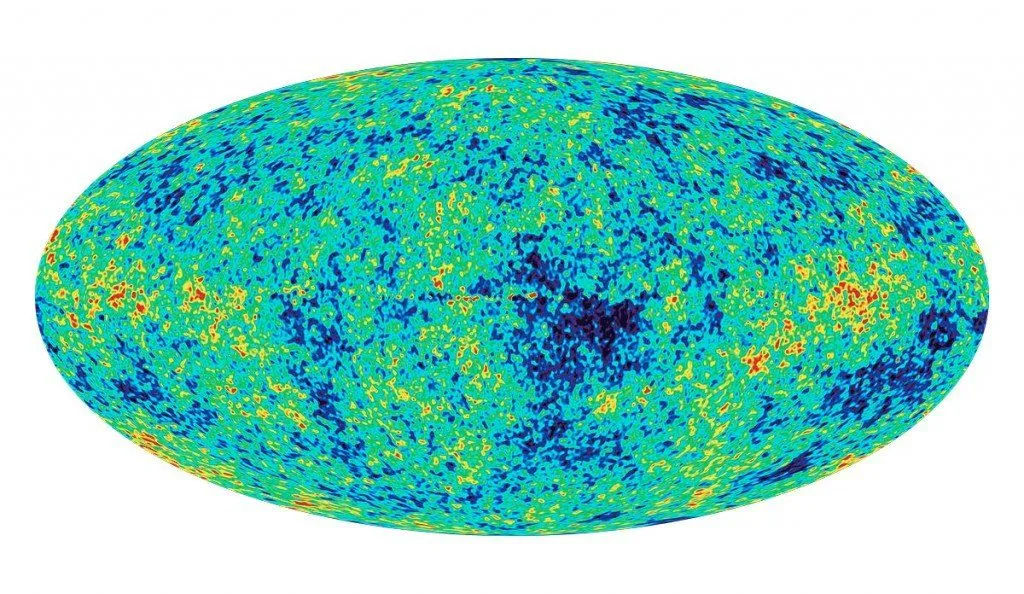
The CMBR, an indelible proof of the Big Bang, also gives us insight on how the Universe might end. The tiny differences in temperature, and thus density, help cosmologists determine the shape of the Universe. For instance, if the shape of the Universe was ‘closed’, then at some point the expansion would eventually be triumphed by contraction, causing the Universe to gradually collapse into itself. On the other hand, if it was ‘open’, the Universe would keep expanding forever.
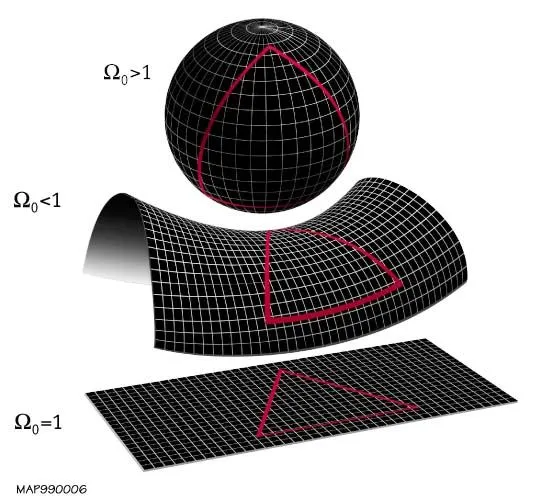
However, the shape of our Universe, as the CMBR limned, was ‘flat’. For the first several billion years, gravity acted as a brake and the rate of expansion gradually slowed down. Then, around 5 billion years ago, dark energy gained the upper hand and the expansion began to accelerate, a stunning discovery made in 1998 by Saul Perlmutter, Brian Schmidt and Adam Riess, who studied distant exploding stars and shared the 2011 Nobel Prize in Physics for it. This profound discovery, however, entails a repulsive conclusion. Currently, the Universe and modern cosmology are in their honeymoon phase; the expansion has neither driven the neighboring galaxies too far to be out of our reach, nor are they too close to render us incapable of discerning any vital difference.
If the expansion continues at this rate, our neighboring galaxies will soon recede to the extent that cosmological equipment would be no more useful than a scissor with one blade. The expansion would elongate and eventually completely placate the CMBR as well. This would render subsequent generations oblivious to the occurrence of the Big Bang. Cosmologists look forward to making the best of these times and accrue as much data as this era of expansion bestows. The stars could not have aligned in a better way!
References (click to expand)
- Einstein's conversion from a static to an expanding universe. Phys.org
- Universe Overview. NASA Science
- What does it mean when they say the universe is expanding?. The Library of Congress
- DESI 2024: Is Dark Energy Weakening? Dark Energy Spectroscopic Instrument (Berkeley Lab)
- Accelerating expansion of the universe. Wikipedia