Table of Contents (click to expand)
Quantum mechanics is the branch of physics that describes how matter and energy behave at the scale of atoms and subatomic particles, where energy comes in discrete packets (quanta) and particles show wave-particle duality. "Quantum physics" and "quantum mechanics" are used interchangeably for this same theory, the foundation of modern physics.
Legendary Nobel Prize-winning physicist Richard Feynman famously quipped that if you think you understand quantum physics, you don’t understand it at all. Although it was said in jest, we have since come a long way in our understanding of quantum mechanics. It is due to this understanding that we have been able to make significant technological leaps, such as the invention of the computer, lasers, digital cameras and nuclear power plants, just to name a few. Without a sound understanding of quantum mechanics, could we have even dreamed of controlling something as unpredictable as nuclear power? To dive into a deeper understanding of quantum mechanics, let’s first look at the three fundamental pillars upon which quantum mechanics is built.
The Three Pillars
Quantum Mechanics is a subject that was developed slowly, over many decades. Its origins began with a set of controversial mathematical explanations for controversial experiments that did not fit within the capabilities of good old classical mechanics to explain. In the early 20th century, around the same time Albert Einstein was releasing his theory of relativity, a separate mathematical revolution was taking place in the physics realm. While relativity describes the very large and the very fast, this new revolution concerned the very small, the behavior of matter and energy at the scale of atoms and subatomic particles, where the familiar rules of classical mechanics break down. Unlike the theory of relativity, the birth of Quantum Mechanics cannot be attributed to one person. It was a combination of multiple scientists who laid down the three foundational pillars of QM (an abbreviation of Quantum Mechanics).
The first of these principles is Quantized Properties. Quantized properties give the position, speed, color and other properties of a particle that can sometimes only occur in specific set amounts and instances. This was very different from the notion of classical mechanics of that time, which said that such properties should exist in a smooth continuous spectrum. This was something that scientists found to be unique and soon coined the term quantized particles. The next pillar of the field was the particle nature of light. The notion that light could be a particle was initially met with colossal criticism, as it ran contrary to the well-established line of thought that light behaved in the form of waves, which scientists had concluded after numerous experiments proving the wave nature of light. The wave nature of matter is the final conceptual pillar on which Quantum Physics was built. Whether you can wrap your head around it or not, matter also tends to show wave-like properties. Again, this was a surprise for most people, as this was contrary to all scientific experiments conducted up to that point. Now, let’s take a look at these three pillars of quantum physics in more detail.
Quantized Properties
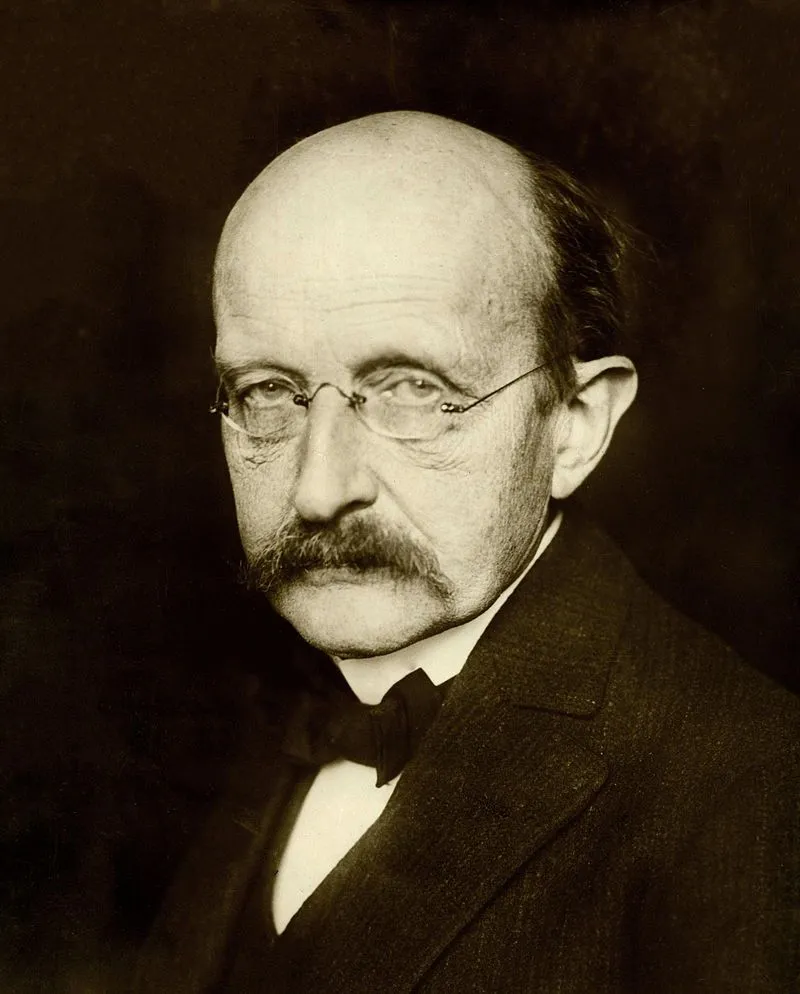
In 1900, German Physicist Max Planck wanted to explain the distribution of the colors emitted over the spectrum in the glow of red-hot and white-hot objects. A classic example of this relates to light bulb filaments. In the course of working out an equation to describe this glow, Planck went on to mathematically explain the distribution of the colors. Planck realized that this distribution implied that combinations of certain colors (albeit a considerable number) were emitted. The colors that were emitted also showed a strange peculiarity, wherein the emitted colors were a multiple of a base value. Somehow, the colors appeared to be quantized!
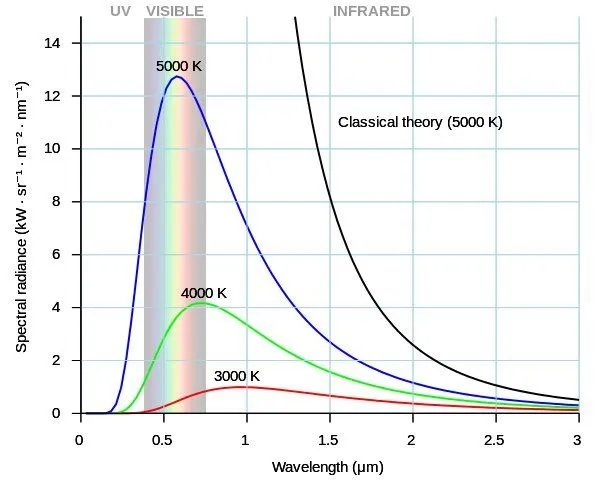
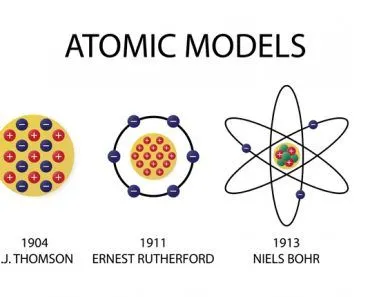
This was unexpected and quite contradictory, as light had previously been considered as a wave, which meant it had to be continuous. This also suggested that colors should be a continuous spectrum, and not quantized. Planck’s equation also contained a significant number, now widely known as Planck’s Constant. Quantization not only proved to be a pillar of QM, but also served as the substrate for other theories in physics. Einstein used Planck’s hypothesis of quantization to explain why the temperature of a solid changed by different amounts if you put the same amount of heat into a material, but changed the starting temperature. Niels Bohr also used it to refine the planetary model of the atom, building a model in which electrons could occupy only certain quantized orbits and had to absorb or release a precise packet of energy to jump from one orbit to another.
Particles Of Light
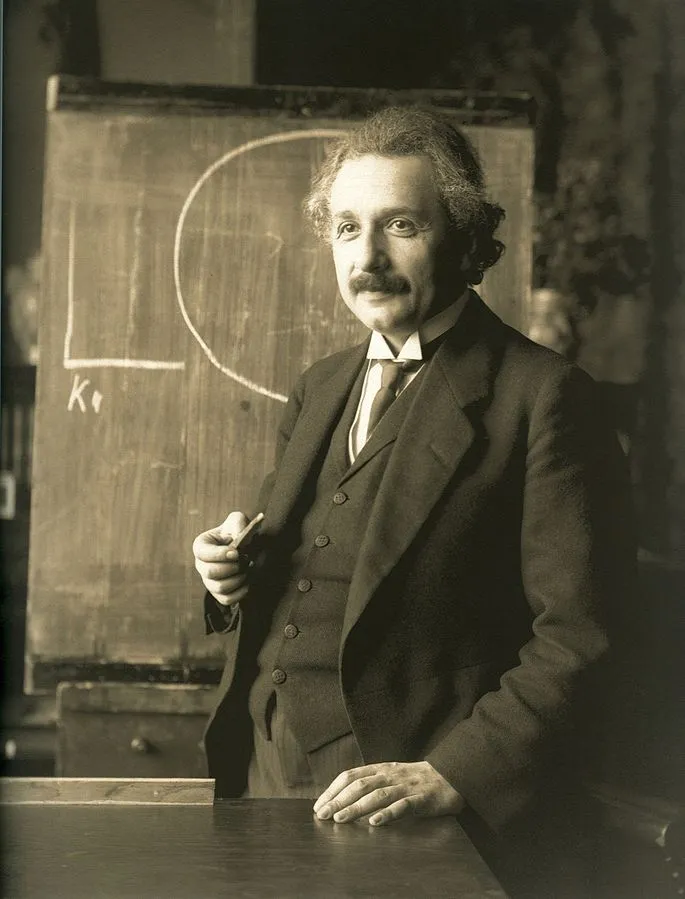
In 1905, Einstein wrote a revolutionary paper in which he envisioned light not as a continuous wave, but as a stream of discrete energy packets known as quanta (later called photons). Einstein hypothesized that such a packet of energy could either be generated or absorbed whole, specifically, by an electron when it jumps from one state to another. With this new way of envisioning light, Einstein was able to explain several phenomena that had puzzled physicists, including the spread of colors that Planck had grappled with in the glow of the light bulb filament.

Using the particle nature of light, Einstein explained how electrons were able to eject from the surfaces of certain metals, which went on to become the photoelectric effect. It was due to this knowledge of the photoelectric effect that he was given the Nobel Prize in 1921. It was nearly two decades later, in 1923, that Einstein’s hypothesis was confirmed by a scientist named Arthur Compton. He showed that when X-rays scatter off electrons, the scattered radiation shifts to a longer wavelength, exactly as it would if light were made of particles colliding with the electrons. This Compton effect proved that light truly carries momentum like a particle, cementing the particle nature of light in terms of quanta. In today’s age, the dual nature of light (exhibiting both wave and particle-like qualities) is a widely known fact and has become the foundation of QM.
Waves Of Matter And Heisenberg’s Uncertainty Principle
It was only after the discovery of the electron in 1897 that the line of thought that matter could be of particle nature began. After the experimental proof that the nature of light is dual, being both a wave and a particle, scientists were even more inclined to move towards the notion that matter could also be dual. The first scientist who was able to make significant headway in this direction was Louis De Broglie. In 1924, de Broglie used Einstein’s theory of Special Relativity to argue that particles exhibited a wave-like nature, just as waves had been shown to exhibit a particle-like nature.
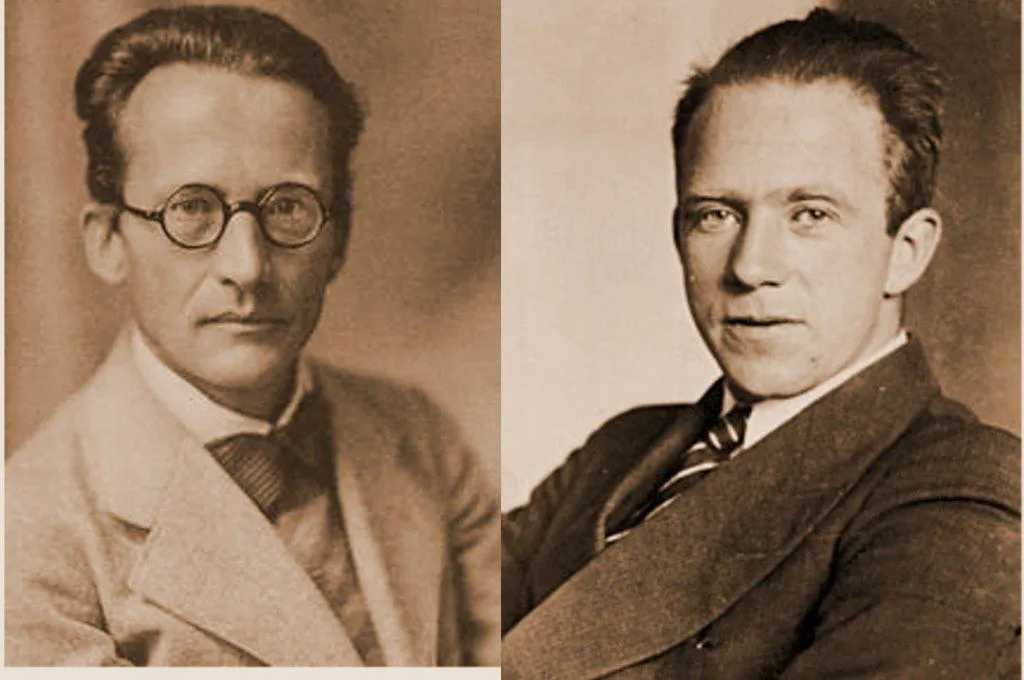
Then, in 1925, two scientists working independently and using separate lines of mathematical thinking went on to explain how electrons whizzed around the atom. The movement of the electron that must be noted here was something that classical mechanics had hopelessly failed to explain. The German physicist Werner Heisenberg achieved the proof through a mathematical method called Matrix Mechanics. A second Austrian physicist, Erwin Schrodinger, developed a technique called wave mechanics. In 1926, Schrodinger proved that these two methods are mathematically equivalent. The Heisenberg-Schrodinger model of the atom ended up replacing the Rutherford-Bohr model of the atom. The central idea of the new model was that the electron is described by a wave, so rather than tracing a definite path it is smeared out into a cloud of probability around the nucleus. In this model of the atom, the electron follows a wave function and occupies orbitals, not orbits. Unlike the circular orbits of the Rutherford-Bohr model, atomic orbitals have a variety of shapes, ranging from spheres to dumbbells and daisies.
Also in 1927, Heisenberg made another contribution to QM. He reasoned that since matter behaves as a wave, certain pairs of properties, such as an electron’s position and speed, are complementary to one another. To break that down into simpler terms, there is a limit up to which each property of the electron can be simultaneously measured with precision. This went on to be known as Heisenberg’s Uncertainty Principle. The more precisely you measure the position of the electron, the less precisely you can know its speed, and vice versa.
Bringing It All Together
The principle of quantization, wave-particle duality and the uncertainty principle ushered in the new era of QM. In 1927, Paul Dirac applied the quantum understanding of electric and magnetic waves to give rise to Quantum Field Theory (QFT). QFT treated all particles, such as photons and electrons, as excited states of the underlying physical world. However, work could not further progress because there was a roadblock in QFT; many results were pointing towards infinity, which did not make any quantifiable physical sense.
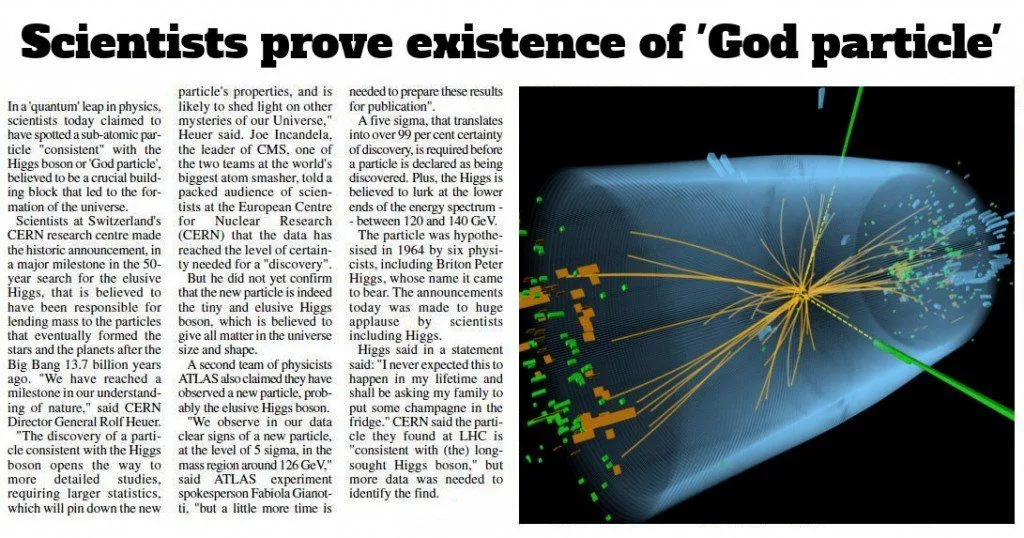 After a decade of stagnation, Hans Bethe made a breakthrough in 1947 using a technique called renormalization. Here, Bethe realized that all infinite results related to two phenomena (specifically “electron self-energy” and “vacuum polarization”), such that the observed values of electron mass and electron charge could be used to make all the infinities disappear. Since this breakthrough, QFT has been able to serve as the foundational explanation for electromagnetism and the weak and strong nuclear forces. The first insight provided by QFT was a quantum description of electromagnetism through “quantum electrodynamics” (QED), which made great strides in the late 1940s and early 1950s. Next came a quantum description of the weak nuclear force, which was unified with electromagnetism to build “electroweak theory” (EWT) in the 1960s. Finally, a quantum treatment of the strong nuclear force emerged using “quantum chromodynamics” (QCD) in the 1960s and 1970s. The theories of QED, EWT and QCD together form the basis of the Standard Model of particle physics. Unfortunately, QFT has yet to produce a quantum theory of gravity. That quest continues to this day in the popular studies of string theory and loop quantum gravity.