Table of Contents (click to expand)
Red wine glasses are bigger and wider than white wine glasses because red wine is fuller bodied and richer in tannins and aroma compounds. A larger, rounder bowl gives more surface area and headroom for swirling and aeration, so those aromas can open up. White wine has a subtler aroma and is served colder, so it suits a smaller, narrower glass.
Wine glasses come in various shapes and can be broadly grouped into red and white wine glasses. Now, have you ever wondered why red wine glasses are larger and wider, whereas white wine glasses are smaller and narrower?
Well, wine connoisseurs will tell you that the same wine served in two different glasses will taste and smell notably different. It seems that wine glasses are not just any glasses… there is more happening here than meets the eye… or the tongue… or the nose.
The Wine Glass
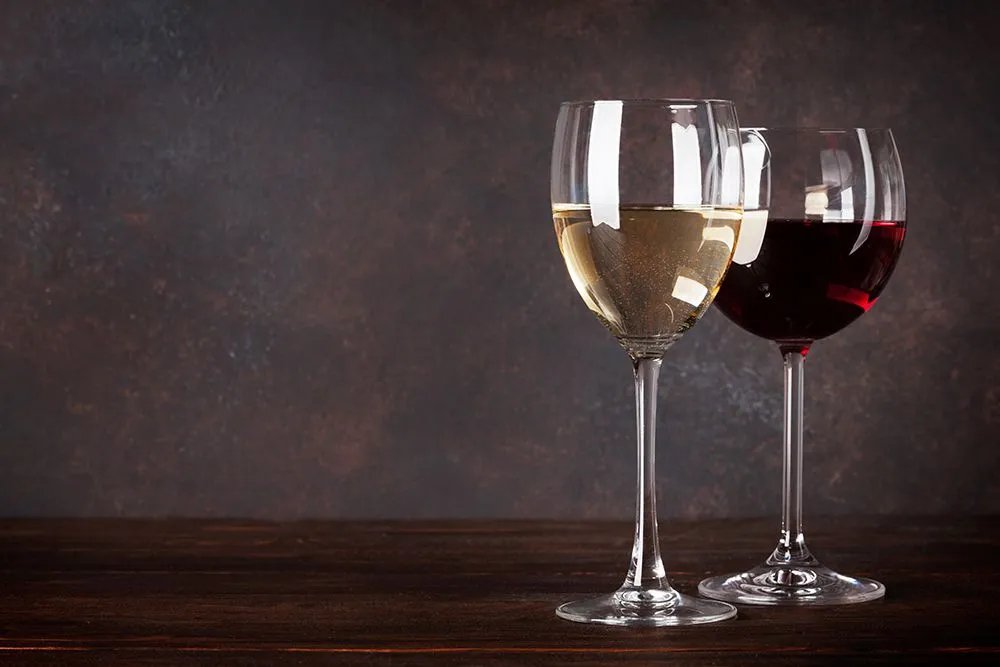
Wine glasses usually have three parts:
- A base or foot that keeps the glass standing upright.
- A long narrow stem that keeps the base separated from the wine.
- A bowl on top into which wine is poured.
Most wine glasses are top heavy, so the foot is important to keep the glass stable. A wider base means that the glass is less likely to fall over.
The stem is where we hold the glass, and it ensures that our body heat doesn’t change the temperature of the wine in the bowl. It also keeps our bodily scents away from the aroma of the wine.
The shape and size of the bowl influence the aroma and taste that we perceive.
Wine glasses are usually very thin (and break easily!). A thin rim helps the drinker enjoy the volatiles better.
Stemless wine glasses are also available. In this case, the shape of the bowl distinguishes a stemless red wine glass from a stemless white wine glass. Stemless red wine glasses are larger, with an open bowl shape. Stemless white wine glasses are narrower and smaller.
The Wine Experience
Wines contain a complex mixture of volatile and aromatic compounds, which determine our sensory experience. When wine, especially red wine, comes in contact with air, the volatile compounds mix with the air and ‘open up’. This softens the harsher edges (the bite of alcohol and tannins) and releases the pleasant aromas, so when we sniff the wine, we experience a fuller mix of scents.
In general, red wine, especially those with a high tannin content, should be aerated in the glass for about 15-20 minutes before you drink it.
The aroma volatiles gather in the center of the glass, near the rim, allowing us to inhale them while drinking the wine. The ethanol vapors gather away from the center so that we can experience the aromas with less of the alcohol. Both the temperature and the shape of the glass influence this sensory experience.
For example, researchers found that at 13°C (55°F), a ring of higher alcohol vapor forms near the rim of the wine glass, leaving a lower-alcohol zone toward the center. When the wine is served warmer, or in a non-wine glass such as a straight tumbler, this ring-shaped vapor does not appear.
Why is this important?
Well, when the ring-shaped vapor forms, wine lovers get to enjoy the wine aroma with far less of the harsh alcohol vapor getting in the way.
Shape Of The Bowl
Different types of glasses and different temperatures may lead to completely different perceptions and experiences of the same wine. In general, red wine is served in a glass with a larger and rounder bowl than white wine.
Red wine is more ‘full bodied’, which means that it is thicker and more viscous than white wine. Red wine also has more complex volatile compounds.
The larger and rounded bowl ensures that the wine has more surface area in contact with the air, allowing the red wine flavors to open up. With a more visible surface area, we can see the viscosity of the wine when we swirl the glass. Swirling also brings more wine in contact with the air, helping to open up the aroma even further. A larger bowl means more space to swirl the wine and more space above the wine for the volatiles to accumulate.
When you swirl wine, the ethanol vapors gather in the center of the glass and the aroma volatiles gather in the upper part of the bowl for us to sniff. That is why wine is poured only up to one-third of the glass or up to the widest part of the glass, leaving an ideal amount of space for the volatile compounds to gather.
All Red Wine Glasses Are Not The Same
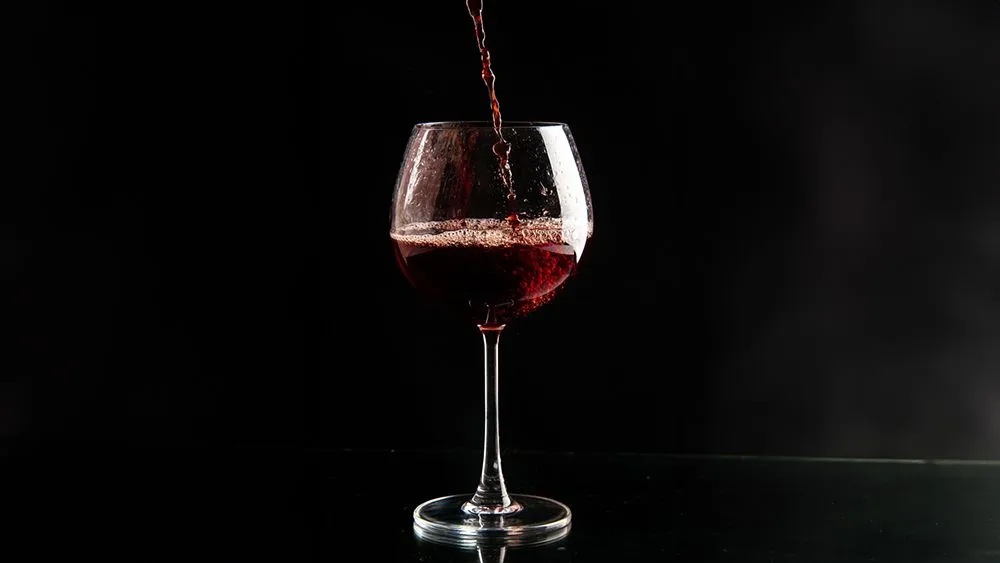
There are different types of glasses for different types of red wine.
A Bordeaux glass is large with a tulip-shaped bowl. There is ample space between the wine and the nose of the drinker. As a result, the ethanol vapors escape out and the drinker can experience the aromatic compounds of the wine with minimal interference from alcohol vapors. Since the opening is large, the wine flows into the entire palate, leading to a better tasting experience. Bordeaux glasses are meant for “full-bodied, boldly aromatic wines made from grapes like Cabernet Sauvignon, Merlot and Zinfandel”.
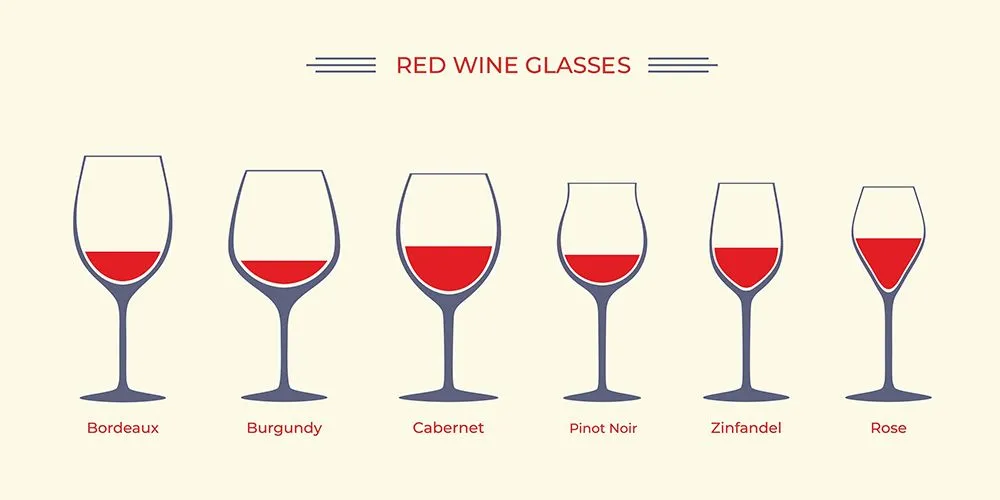
Medium-bodied red wine glasses are smaller. They retain some ethanol vapors and soften the flavors of the wine. They are suited for lighter red wines, such as Chianti.
A Burgundy glass has a wider bowl that narrows at the top, thus allowing the delicate aromatic vapors to concentrate on the top. This type of glass is suited for “more delicate wines like Pinot Noir because they bring out their aromas.”
Red wine is served at 12-18°C (54-64°F), close to cellar temperature rather than ice cold. Because reds are served this warm, a little extra heat from the hand does no real harm (and can even help a young, tight red open up), which is why reds are forgiving in stemless glasses.
White Wine Needs Less Aeration
White wines have a more subtle aroma and need less aeration. Therefore, white wine glasses are U-shaped and upright, with smaller bowls and narrower openings. Since the glass is narrower, more of the wine comes closer to the nose of the drinker, who is then able to enjoy the subtle volatiles.
White wine glasses come in two types. Glasses for full-bodied wines are larger and have wider openings (but are narrower than red wine glasses). They are suited for wines like Chardonnays. Glasses for highly acidic wines are smaller, which directs the wine to the middle of the palate. This balances the acidic qualities. This type of glass is suited for crisp, high-acid wines like Sauvignon Blanc.
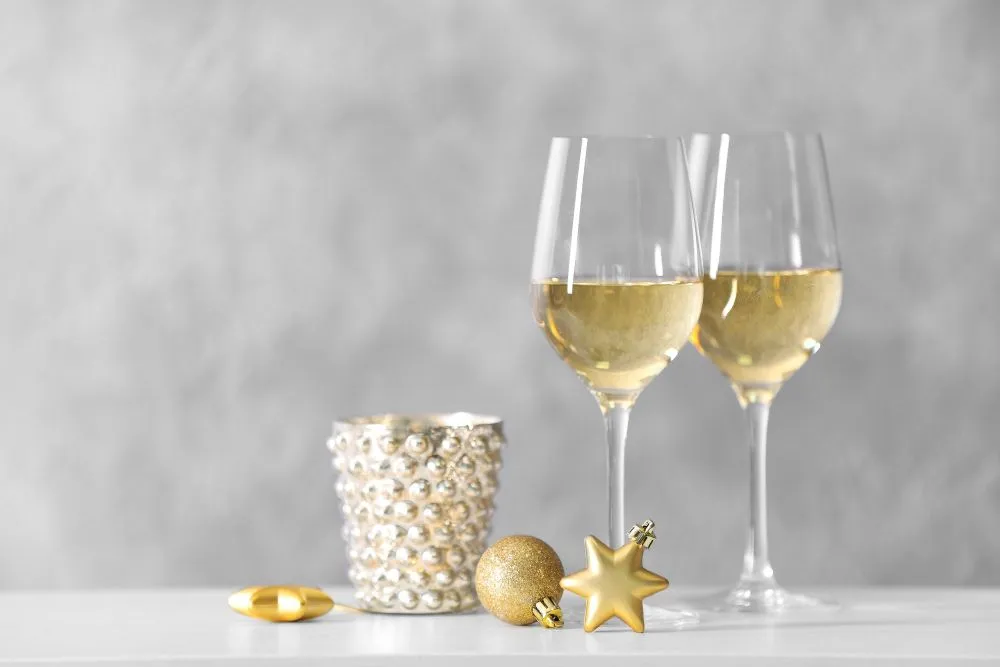
White Wine Glasses Have A Longer Stem Than Red Wine Glasses
White wine is served well below room temperature (around 10-13°C, or 50-55°F, for full-bodied whites, and cooler still for lighter, crisper styles). A longer stem puts more distance between the hand holding the glass and the wine, so the wine does not warm up from the drinker’s body heat.
Conclusion
The shape of a wine glass, including depth and shape of the bowl, how thin/thick the glass is, how wide the opening is, and the length of the stem, all affect our wine drinking experience. To truly appreciate the complex aromatic profile of our chosen wines, we need to serve them in the right glass and at the right temperature.
References (click to expand)
- Wine Snobs Are Right: Glass Shape Does Affect Flavor.
- Arakawa, T., Iitani, K., Wang, X., Kajiro, T., Toma, K., Yano, K., & Mitsubayashi, K. (2015). A sniffer-camera for imaging of ethanol vaporization from wine: the effect of wine glass shape. The Analyst. Royal Society of Chemistry (RSC).
- It's Just a Wineglass. Wine Spectator.
- The Difference Between Red and White Wine Glasses. Wine Enthusiast.