Table of Contents (click to expand)
Women reach a higher blood alcohol concentration (BAC) than men after drinking the same amount, so alcohol affects them more strongly. Women's bodies hold less water to dilute alcohol (about 50–55% water versus roughly 60% in men), carry proportionally more fat, and break down far less alcohol in the stomach before it enters the blood.
One evening, Sam and Sally went to a bar. They both ordered a glass of beer and began their conversation. Two hours and 4 glasses of beer later, Sally started to feel a bit tipsy, while Sam was still quite sober.
They both weigh around 68 kgs (150 pounds) and chugged the same amount of alcohol – 4 servings of 354ml (12oz) beer – in 2 hours. Yet, the effects of alcohol were visible only on Sally.

Why does a drink consumed in the same quantities affect the two sexes differently? What role does our biology play in creating this difference?
The Role Of Blood Alcohol Concentration
Ideally, Blood Alcohol Concentration (BAC) should be the same for individuals consuming the same amount of alcohol. However, that’s not the case. In reality, the amount of alcohol in the blood tends to be higher in females who consume the same amount of alcohol over the same period of time as men.
Sally’s BAC was approximately 0.10%, whereas Sam’s BAC was only about 0.08%. Generally, by the time you reach 0.08–0.10% BAC (the level that already makes it illegal to drive in most places), you start to feel drunk and experience a loss of judgment and coordination. Your speech might begin to slur and you may notice delays in reaction time.
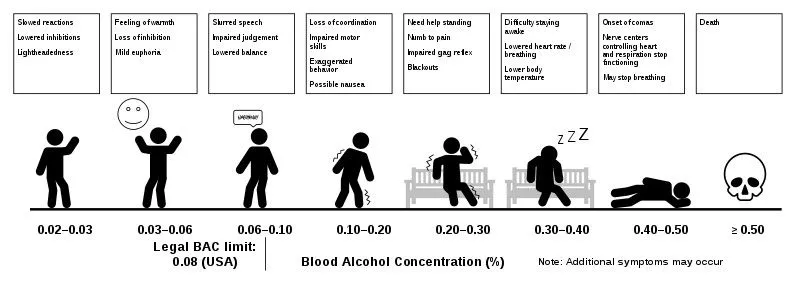
The difference in the level of blood alcohol concentration is due to 4 major factors:
- Body Size
- Water content in the body
- Ability to metabolize alcohol
- Hormones
Body Size
The size of your body determines your ability to dilute alcohol within the body. This is because a person with a smaller body build will have less space to dilute the alcohol than a person with a larger body build.
Additionally, the ratio of muscle to fat in an individual also comes into play during the process of alcohol diffusion. The amount of water that is available for alcohol to dilute itself is higher in muscles than in fats. This is because ~76% of muscle tissue contains water, which is significantly more than fat tissues. Thus, when alcohol-carrying blood flows through the body, muscle tends to absorb more alcohol than fat.
Generally, men have a greater muscle-to-fat ratio than women, and their muscle tissue has a large amount of blood flowing through it. The large volume of blood flowing through muscle tissues helps men dilute their alcohol more efficiently than women.

On the other hand, fat allows a much smaller amount of blood to flow through it. Thus, the higher fat percentage in females causes alcohol to become more concentrated in their blood, which increases their BAC.
Therefore, despite consuming the same amount of alcohol, Sally, who has a smaller body build as compared to Sam, will have a higher BAC.
Water Content
Imagine adding 3 teaspoons of sugar to a glass with 250 ml (about 8 oz) of water and another glass with 500 ml (about 17 oz) of water. Which of the two will have a higher concentration of sugar? The one with less water, right? The same principle applies to our body when it comes to the concentration of alcohol.
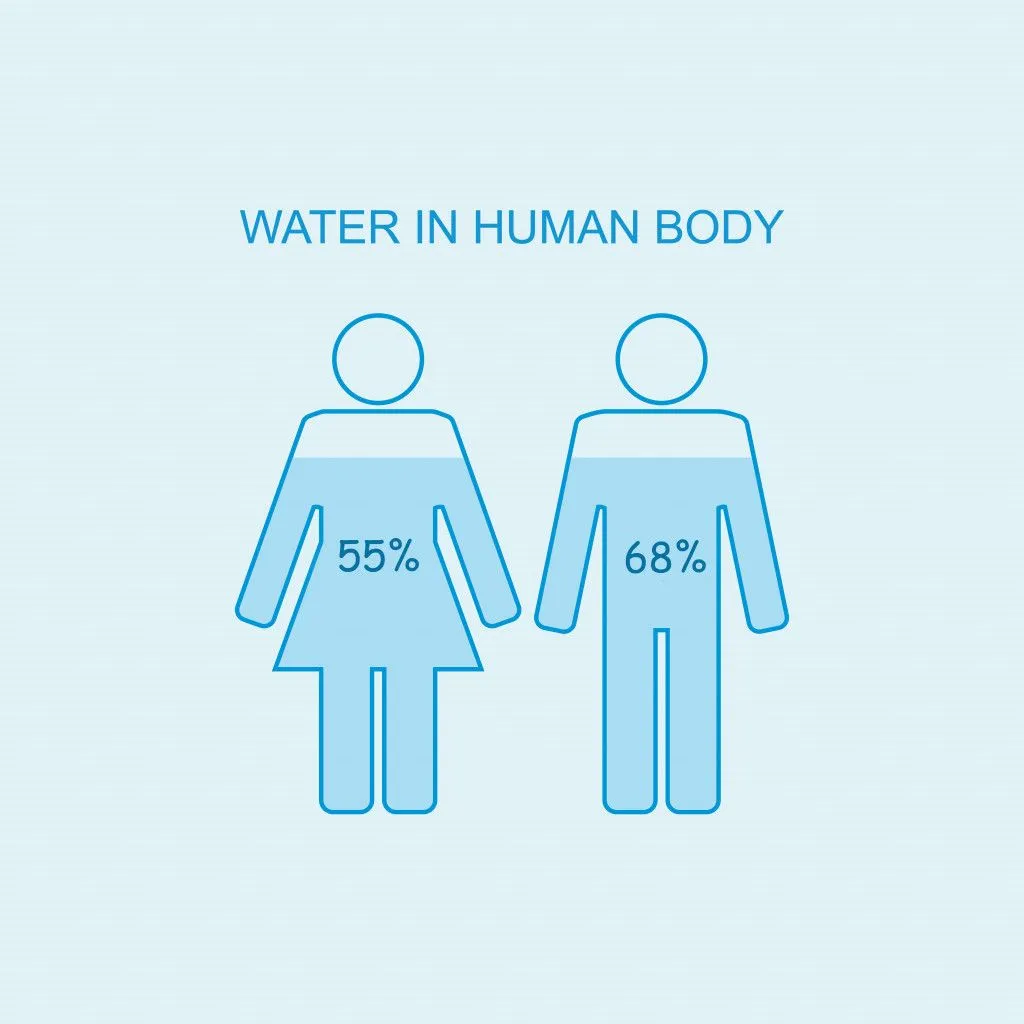
Alcohol is soluble in water, so it tends to move into the water spaces of our body, like the bloodstream, along with intracellular and extracellular spaces. On average, a woman’s body is roughly 50–55% water, while a man’s is around 60%. The extent of alcohol dilution is therefore greater in men than in women. Due to this difference in the water content of the body, Sally’s BAC will be higher than Sam’s.
The Alcohol Dehydrogenase Enzyme (ADH)
When you drink any liquid, it first passes through your gastrointestinal (GI) tract. The stomach is the first site of alcohol metabolism, where it absorbs the alcohol passing through it into the bloodstream. The capillaries then carry the alcohol to the liver via portal veins.
The liver is the primary site of alcohol metabolism, although some alcohol is metabolized in the stomach. The liver cells produce an enzyme called alcohol dehydrogenase (ADH), which acts as a catalyst for the oxidation of ethanol. Some level of ADH is also found in the stomach and is known as gastric ADH. While the majority of alcohol metabolism occurs in the liver, gastric ADH also oxidizes a small portion of alcohol.
ADH converts ethanol into acetaldehyde, a relatively toxic compound. This is the reason behind the undesirable effects of alcohol, such as nausea and headaches. Acetaldehyde is further oxidized by another enzyme called acetaldehyde dehydrogenase (ALDH) to form acetate (acetic acid), which is far less harmful. The cells in our body eventually break this acetate down into carbon dioxide and water.
Although the mechanism of alcohol metabolism remains the same for both sexes, what creates a big difference in how we respond to alcohol is the amount of active ADH present. Males have highly active ADH in both their stomach and liver, which metabolizes alcohol rapidly, whereas females have a less efficient form of ADH in their liver and barely any active ADH in their stomachs.
Thanks to that extra ADH in the male stomach, men break down a meaningful share of alcohol before it ever reaches the bloodstream (this so-called first-pass metabolism can cut the absorbed dose by roughly 30%). Because the ADH in the female liver is not as efficient and the stomach barely contributes, women absorb more of what they drink. This results in higher BACs for women compared to men who drink exactly the same amount.
Hormones
On top of having less active ADH, shifting hormone levels may nudge things further. Some studies suggest that during the days just before menstruation, when estrogen and progesterone fluctuate, alcohol can be absorbed a little faster and peak BAC can run slightly higher. Women taking oral contraceptives have also been found to clear alcohol from the blood more slowly. That said, the evidence here is mixed: a systematic review found no consistent link between menstrual-cycle phase and how alcohol behaves, so hormones appear to play a much smaller role than body water and ADH.
Conclusion
Even though biology has tipped the scale in men’s favor when it comes to how alcohol affects our bodies, that doesn’t necessarily mean that women can’t enjoy alcohol. There is a way around this problem. Women simply need to adjust their alcohol intake to account for the difference. Roughly speaking, if Sam can have 4 servings of 354 ml (12 oz) beer and land near 0.08%, Sally would reach a similar BAC on about 3 servings, so dialing back by a drink helps close the gap.

The less efficient metabolism of alcohol in women also means a greater chance of experiencing impairment after drinking. Women who drink are more prone to the short- and long-term consequences of alcohol consumption than men. At comparable intake, they face a higher risk of liver and heart disease, alcohol-related neurotoxicity, and memory blackouts.
References (click to expand)
- Women and Alcohol. National Institute on Alcohol Abuse and Alcoholism (NIAAA)
- Blood Alcohol Concentration (BAC). University Health Services, The University of Texas at Austin
- Gender and Blood-Alcohol Content. University of Puget Sound
- High Blood Alcohol Levels in Women: The Role of Decreased Gastric Alcohol Dehydrogenase Activity and First-Pass Metabolism. New England Journal of Medicine (via PubMed)
- Sex Differences in Alcohol Metabolism. Women's Health Research Institute, Michigan State University
- Gender Differences in Alcohol Metabolism. The Alcohol Pharmacology Education Partnership, Duke University