Table of Contents (click to expand)
Sand has a very low heat capacity, so it warms up fast under the midday sun — and loses that heat just as fast once the sun sets. Because desert air is dry (little water vapor) and the sky is usually cloudless, almost nothing traps that escaping heat, so temperatures can plummet 40 °C (75 °F) or more between day and night.
If you have ever seen Lawrence Of Arabia—a Hollywood movie from 1962 based on the life of a British lieutenant—then you may recall the scenes where the protagonist travels for days through vast deserts. He doesn’t know whether he will make it to his destination or if he will get lost and perish in the seemingly endless desert.

During his travels through vast stretches of arid desert, he often rests at night covered in a blanket under the starlit sky. As I watched that scene in the movie, I couldn’t help but wonder… “Why does he have a blanket? Aren’t deserts supposed to be brutally hot?”
While deserts are famous for being cruelly hot during the daytime, many people don’t realize that they get surprisingly cold at night!
But why does this happen?
Sand Heats The Air Above It
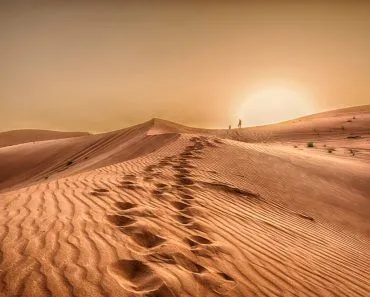
Sand is quite an interesting substance. It is dry, yet slippery, and its particles are larger than other types of soil, which is primarily why it doesn’t absorb water well. Sand has a very low specific heat capacity, which means a small amount of solar energy raises its temperature dramatically. That’s why an exposed desert surface can climb above 70 °C (158 °F) by midday.
When the sun beats down on a desert, the sand absorbs solar energy and then radiates it back as infrared heat, warming the air just above the surface. Other terrains (forests, lakes, plains, mountains) don’t get as hot during the day because their water content — in plants, soil moisture, lakes — soaks up a lot of that energy and releases it slowly.
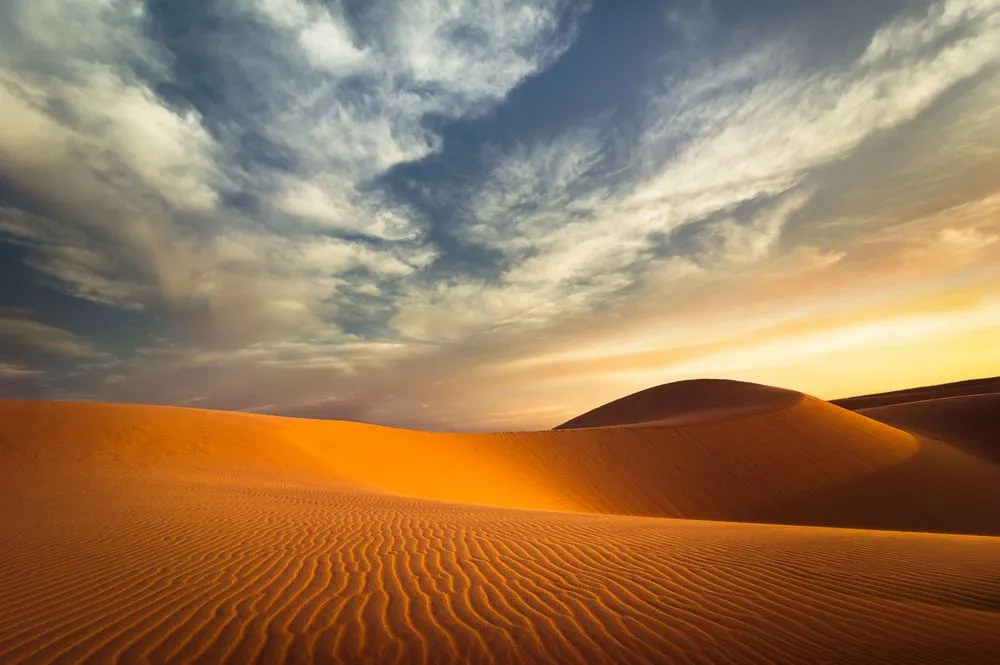
So, now you understand the hotness of deserts during the daytime, but what about the chilly conditions at night?
Desert Air And Humidity
As you may know, water is very good at capturing and retaining heat. In regular terrain, when the sun heats the ground, the ground absorbs a lot of heat. At night, when there’s no sun in the sky, the heat radiated by the ground is captured by the water content (or moisture) present in the air above the ground (because the air is humid in those places).
In deserts, however, the story is quite different.
When the sun sets and the ground loses its heat through radiation, the air above the ground cannot retain or ‘arrest’ this heat, as that air is not humid. This is why that heat is so rapidly lost, causing temperatures to drop dramatically at night.
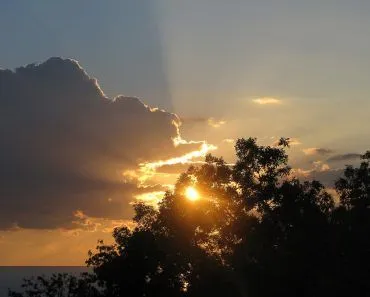
Furthermore, deserts don’t have much cloud cover, which makes it even more difficult to retain heat above the ground. The heat from the ground escapes, leaving behind an unforgiving cold.
How Cold Do Deserts Get At Night?
So we know why the temperature falls, but how far does it actually go? According to NASA, a typical hot desert climbs to an average of about 38 °C (100 °F) during the day and then sinks to an average of roughly −3.9 °C (25 °F) at night. That is a swing of nearly 42 °C (about 75 °F) from afternoon to the small hours, which is why those nights feel so brutal even when the day nearly cooked you.

The exact numbers depend on which desert you are standing in, the season, and how high above sea level you are. In the Sahara, the dry subtropical air can carry afternoon highs past 38 °C (100 °F) and still drop toward freezing on a clear winter night. Closer to home, the U.S. National Park Service notes that the Sonoran Desert of Arizona routinely tops 40 °C (104 °F) in summer and frequently reaches 48 °C (118 °F), yet sees diurnal swings of 15 °C (about 27 °F) or more in any season, because the dry atmosphere and sparse vegetation let the daytime heat radiate straight back out overnight.
That is the same effect dressed up in numbers: with almost no water vapor in the air and few clouds overhead, there is nothing to catch the escaping infrared heat, so the mercury keeps falling long after sunset. A summer night in the desert can still call for that blanket Lawrence of Arabia was wrapped in.
Not All Deserts Get Cold At Night
Deserts becoming cold at night has a lot to do with humidity, clouds and even wind, but contrary to popular belief, not all deserts lack humidity. A lack of moisture in the air in deserts is actually not a given!
Places like Kuwait and the UAE are more humid than other deserts (e.g., some parts of the Sahara desert). Therefore, these deserts don’t get as cold at night, because their humid air retains some of the heat radiated by the ground.
Not All Deserts Are Hot
When you think of the word ‘desert’, the first thing that often comes to mind is an endless stretch of land covered with sand, but what if I told you that the following is also a picture of a desert?

Although you may not associate penguins with a desert, the picture shown above is indeed an arctic desert!
The low amount of rain or other forms of precipitation (i.e., snow, sleet) is what characterizes a desert. So, by that definition, Antarctica, which is covered in ice and where temperatures regularly drop below −60 °C (and once hit a record low of −89.2 °C at Vostok Station), is technically a desert. It gets very little snow and rain throughout the year, making it one of the biggest and driest deserts on the planet.
If you plan on camping in a desert, do your research beforehand regarding the area’s weather profile. You don’t want to pack and carry a warm blanket, only to realize that the desert you’re camping in doesn’t actually get cold at night!
References (click to expand)
- Desert Biome - Ask A Biologist |. Ask A Biologist
- The World's Biomes: Deserts - UCMP Berkeley. The University of California Museum of Paleontology
- Causes of Aridity, and Geography of the World's Deserts. The University of Nevada, Las Vegas
- Mission: Biomes - Desert. NASA Science
- Climate - Sonoran Desert Network. U.S. National Park Service