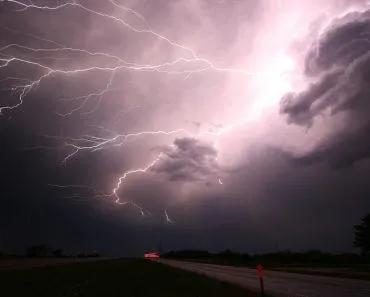
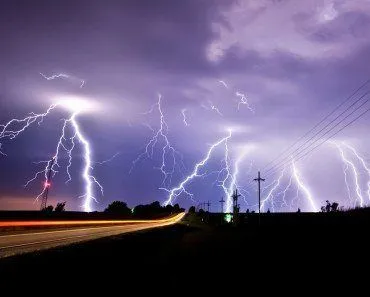
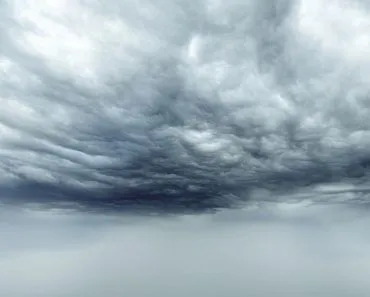
Thunderstorms peak in the late afternoon and early evening because by then the ground has stored a full day of solar heating. The warm, moist air at the surface rises into cooler air aloft, and that temperature contrast (atmospheric instability) is the engine that drives a thunderstorm. Combined with the extra water vapour the warmth has evaporated through the day, the result is a build-up of towering cumulonimbus clouds that finally release as rain, lightning, and thunder. Storms can certainly happen at other times (overnight storms are common across the central US, where elevated low-level jets keep feeding moisture in after dark), but afternoons are when the atmosphere is most primed.
There are some weather events that seem to have rather unusual characteristics. For instance, you have probably heard the adage that there is silence before a storm. Although this is not true in every case, it certainly turns out to be true in some.
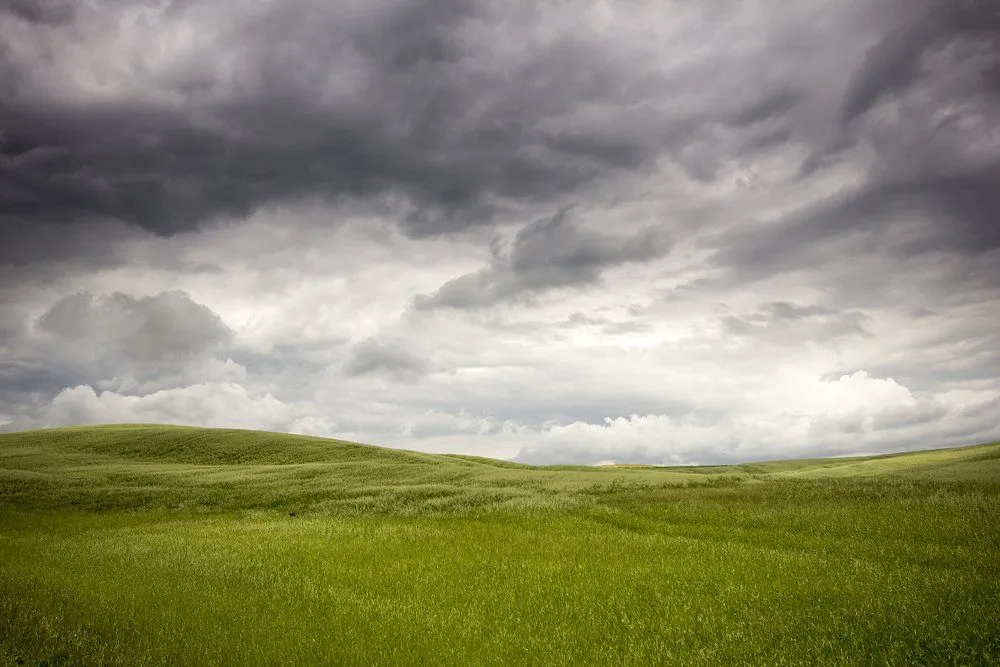
Similarly, you may have noticed that most thunderstorms occur in the later part of the day, i.e., at night, in the evening or even during late afternoon. It’s not that they can’t occur in the mornings, it’s simply that thunderstorms usually strike during the latter parts of the day. Why is that?
Before we get to that, we need to understand how thunderstorms occur in the first place.
What Is A Thunderstorm?
A thunderstorm is simply a rain shower that is accompanied by lightning and loud thunder. Also referred to as a lightning storm, electrical shower or thundershower, it is characterized by strong winds and heavy rains.
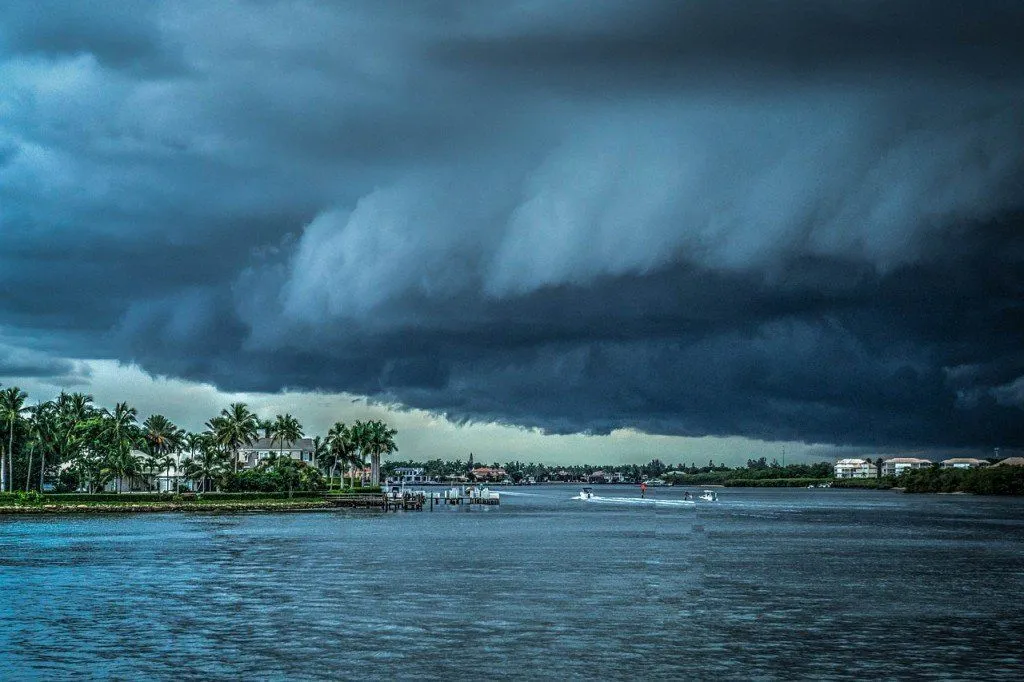
Some thunderstorms may not include any precipitation at all (known as dry thunderstorm), while others may be accompanied by snow, sleet (ice pellets) or even hail.
How Do Thunderstorms Form?
Thunderstorms form as a result of warm air rising and cold air sinking within the atmosphere. Thunderstorms are broadly classified into a few types, but any kind of thunderstorm requires three basic ingredients to form – a source of moisture, an unstable atmosphere (i.e., rising hot and sinking cold air), and a mechanism to trigger a thunderstorm updraft, either through heating or forced lifting.
When the ground is heated by the sun’s radiation, the air immediately above it becomes hot (due to conduction) and begins to move up in the atmosphere (the conjunction of wet/dry and warm/cold air in areas like hills or mountains can trigger a rising motion). The warm, less-dense air continues rising within the atmosphere until it’s lighter than the air surrounding it.
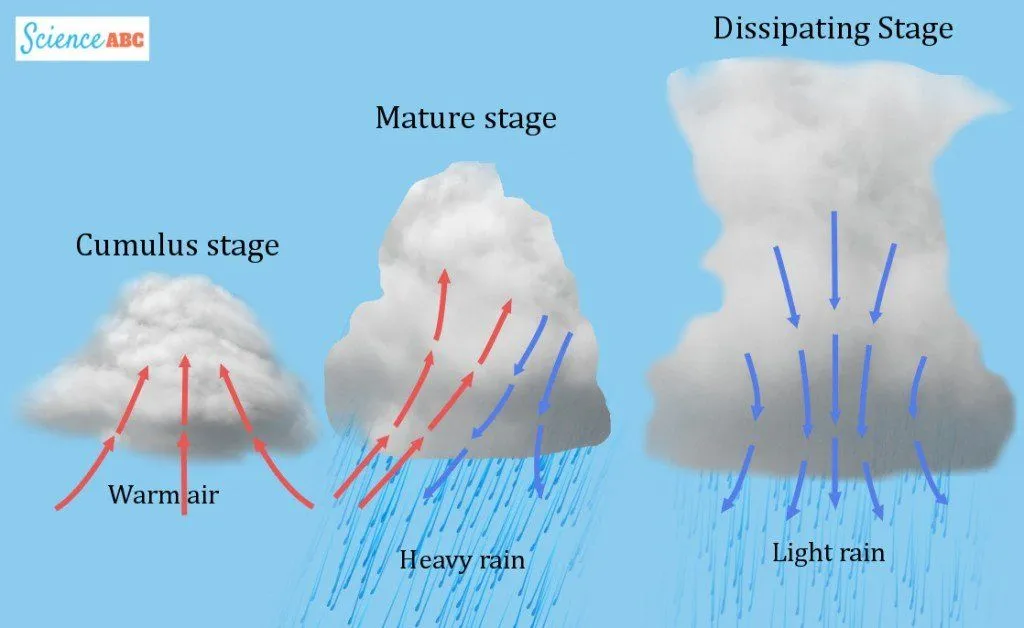
The rising air, which also carries a lot of water vapor, constantly transfers its heat to the upper levels of the atmosphere (due to convection). As a result, the heat is steadily lost and the water vapor it carries begins to cool down, subsequently turning into a cloud.
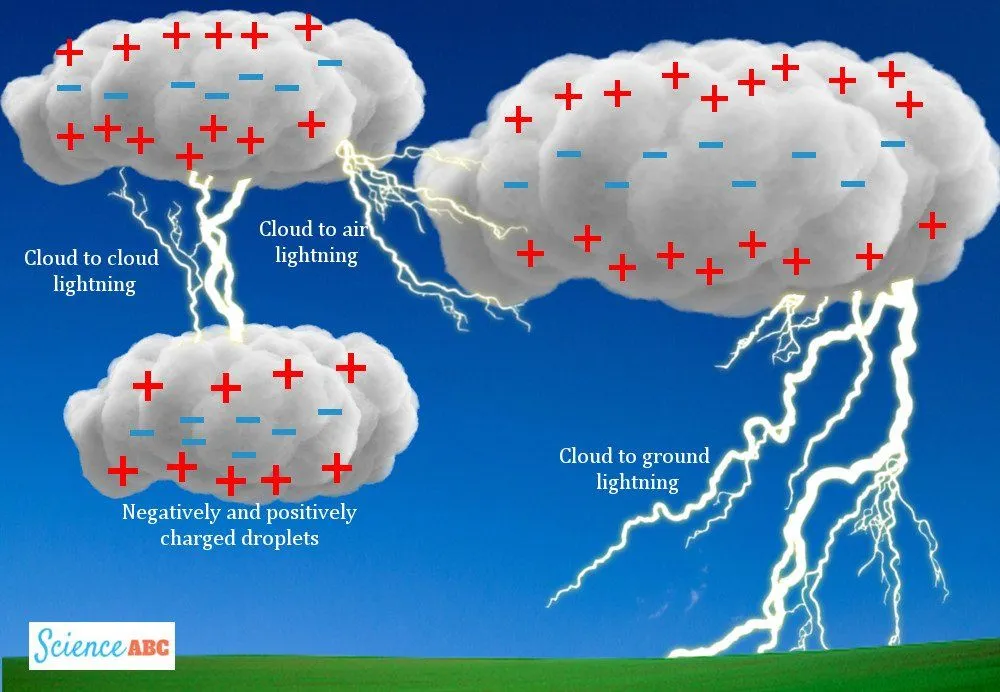
This cloud travels to the upper levels, where the temperature is still lower, and becomes host to a ton of small ice particles (which are actually just frozen liquid drops). These ice particles sometimes bump and rub against one another, gaining some net electric charge. Large regions of electric charges eventually cause lighting and loud cracks of thunder, the classic signs associated with a thunderstorm.
Now that we have discussed what thunderstorms are and how they actually form, let’s address the question we posed at the beginning of this article.
Why Does It Seem Like Thunderstorms Occur Later In The Day?
Although thunderstorms can (and do) occur at all hours of the day, it’s true that they ‘mostly’ occur later in the day.
As mentioned earlier, there are three key ingredients to form a thunderstorm, namely moisture in the air, large changes in the air temperature with increasing height, and some process that forces the air to rise. During the day, i.e., when the sun is shining brightly in the sky, the Earth’s surface gets heated up pretty thoroughly until late afternoon. This is why the air close to the ground becomes less dense and rises so easily.
Furthermore, daytime heating also enhances the air’s capacity to evaporate water vapor. This allows for greater amounts of moisture to be present in the rising air, causing more instability within the atmosphere, which further boosts the likelihood of a thunderstorm forming.
As two of the three essential factors required for the creation of a thunderstorm are at their highest point in the late afternoon, most thunderstorms occur during that prime part of the day.
Why Do Thunderstorms Happen At Night?
If daytime heating is what primes the atmosphere, you would expect storms to fizzle out once the sun goes down. Across most of the world, they do. Yet over the central United States, and especially the Great Plains, some of the biggest storms of the summer fire up after dark. These nighttime storms are no minor curiosity: according to NASA, large overnight thunderstorm systems can supply more than 40% of the annual rainfall in some parts of the Plains, making them an essential water source for the region’s farms.

So how do storms form when the ground is busy cooling down? The answer is that nighttime storms do not rely on heat rising off the surface at all. After sunset, the lowest layer of air cools and turns stable, which would normally smother a storm. But sitting just above that cool, calm layer is a fast ribbon of wind called the nocturnal low-level jet. During the day, friction with the ground drags on the lower atmosphere and keeps the near-surface wind slow. Once the sun sets and the surface cools, that frictional grip relaxes, the wind aloft speeds up, and the jet typically peaks in the small hours of the morning at roughly 25 to 50 knots (about 45 to 95 km/h, or 30 to 60 mph).
Thanks to the Coriolis effect, this jet blows from the south, sweeping warm, moisture-rich air up from the Gulf of Mexico and along the eastern foot of the Rocky Mountains. That warm, humid air rides up over the cool surface layer, a process meteorologists call elevated convection: the rising parcels begin their journey above the ground rather than from it. With a fresh nightly supply of fuel, individual storms can merge into sprawling clusters known as mesoscale convective systems that drift across whole states overnight, dumping heavy rain and crackling with the same thunder and lightning you would see by day. The mechanism was studied intensively during the PECAN (Plains Elevated Convection At Night) field campaign of June and July 2015 across Kansas, Oklahoma, and Nebraska, which deployed research aircraft and mobile radar to crack the puzzle of how storms thrive in the dark.
References (click to expand)
- How do Scientists Forecast Thunderstorms? - littleshop.physics.colostate.edu
- Scientists tackle mystery of thunderstorms that strike at night | UCAR - University Corporation for Atmospheric Research - www2.ucar.edu
- Thunderstorms - www.indiana.edu:80
- What's With Weather Fronts? | Center for Science Education. The University Corporation for Atmospheric Research
- Severe Weather 101: Thunderstorm Basics. The National Severe Storms Laboratory
- 10 things to know about thunderstorms that strike at night | NSF. The National Science Foundation
- Thunderstorms Rumble over the Great Plains. NASA Global Precipitation Measurement Mission
- The Low Level Jet. NOAA National Weather Service
- Elevated Convection. NOAA National Weather Service
- PECAN: Plains Elevated Convection At Night. NOAA National Severe Storms Laboratory