Lakes don't dry up because water leaves and arrives at roughly the same rate. Evaporation off such a large surface is constant, but it is slow compared to the lake's volume, and the water that leaves is continually replaced through the water cycle - rain, snowmelt, and inflows from streams, rivers, and groundwater. Lakes also don't simply seep away because most sit on naturally impermeable clay or rock, and the surrounding soil becomes saturated, so it can't absorb any more water from above.
You probably remember something known as ‘evaporation’ from your high school science class. To put it simply, evaporation is the process by which a liquid turns into gas due to a change in its temperature and/or pressure. There are dozens of examples of evaporation in everyday life; wet clothes will dry in the sun, soaked ground dries up after a while, and wet hair loses its moisture in the sunshine in no time.
All of these examples are evidence that water evaporates if kept in the sun for too long, so why doesn’t the water in lakes evaporate?
Why Don’t Lakes Evaporate?
As mentioned earlier, water evaporates in the presence of heat. Since the sun is the most readily available and consistent source of heat on the planet, why doesn’t it cause lakes to evaporate, or at least drastically reduce the water levels?
Here’s a simple experiment to explain this phenomenon: fill a glass with water up to the brim and keep it in the Sun. After a few hours, you’ll notice that the level of water has decreased a good deal.
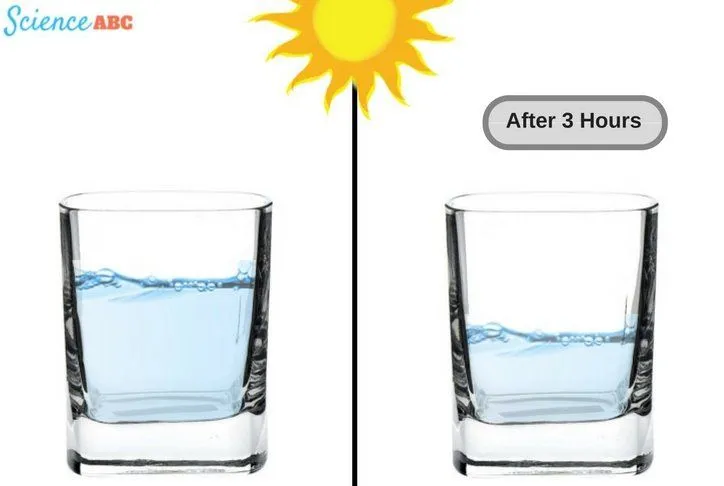
As you might have already guessed, this happens due to the heat of the sun. The same thing happens when it comes to large water bodies, and water does evaporate from them. However, we hardly notice any difference in the water level of lakes.
There are two main reasons for this: first, the amount of water present in lakes and large water bodies is huge (at least compared to what you might have in a beaker/tub). Therefore, the process of evaporation is quite slow, which is why you don’t notice the difference in their water levels.
Having said that, in theory, lakes and ponds should (and do) dry up after a certain period, ranging from a couple weeks to a few months, depending on how large the water body is. Fortunately, that doesn’t happen too often, thanks to the water cycle!
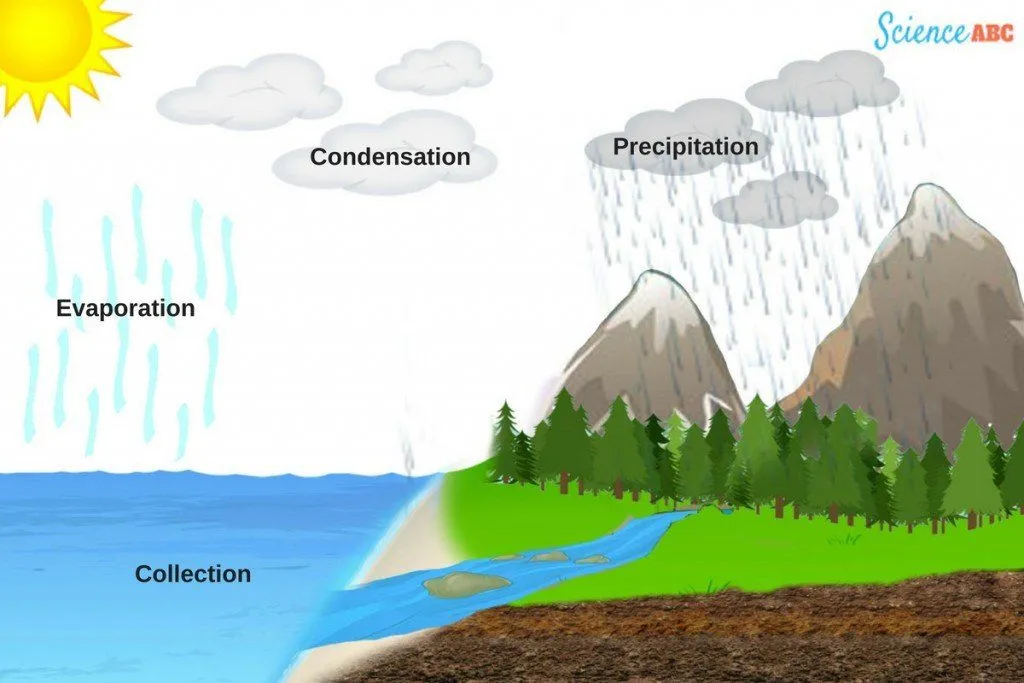
You almost certainly studied the water cycle a number of times in high school. Also referred to as the hydrological cycle, it’s the process through which water first evaporates from lakes, rivers and oceans, rises through the atmosphere and then returns to the surface as precipitation (e.g., rain, snow, hail etc.).
What this means is the water that ponds and lakes lose via evaporation is naturally deposited back in them through rain and other water access points. There are a few methods (recharging through rivers, streams, constructing dams etc.) through which water in lakes can be replenished, which ensures that a lake doesn’t just disappear! Having said that, there are numerous freshwater bodies that do dry up over a period of time if this rate of replenishment is terribly skewed.
Why Doesn’t The Water Seep Into The Ground?
Now, it’s clear that the water level of a lake cannot drop drastically due to evaporation, but what stops it from seeping into the ground instead? Why doesn’t it just do that?
Well, it does, but there’s a catch…
You see, this seepage depends on the ground on which the lake ‘sits’. If a lake is too deep, then it usually has naturally impenetrable clay or rocks at the bottom, which means that water cannot seep through. Furthermore, soil also has a ‘saturation limit’. We say that something is saturated when it can’t consume/hold any more of a certain thing. For example…

Since there’s a constant supply of water from above, the ground beneath lakes becomes saturated with water to the point where it can’t absorb water anymore. You should note that various types of soils have different ‘filtration rates’. The larger the soil particle, the greater the seepage (like sand). Furthermore, since many natural lakes form in low elevations, they actually receive water input, thanks to underground water, which is another plus.
In a nutshell, water does seep through the ground, but after a certain limit, the ground at the bottom becomes saturated, preventing any more seepage of water. The water just has to sit there, and be slowly evaporated – and then replaced.
All in all, if a water body has enough water and has figured out various ways to get itself refilled regularly, there’s no way it’s going to disappear any time soon!
Why Don’t The Oceans Just Reabsorb The Water That Evaporates?
This one shows up as a popular brain-teaser, and it trips people up because it sounds like it should have a clever twist. It doesn’t. The oceans do reabsorb the water that evaporates from them, and they do it constantly. Picture this: evaporation lifts water vapor off the sea surface, that vapor condenses into clouds, and the clouds drop it back as rain. According to NASA, the oceans, seas, lakes and rivers between them supply nearly 90% of the moisture in our atmosphere, so the sea is by far the biggest contributor to that vapor in the first place.

Here’s the subtle part. On a global basis, evaporation roughly equals precipitation, but the books don’t balance perfectly in every place. Over the oceans, evaporation actually runs ahead of precipitation, while over the continents the reverse is true and rain beats evaporation. As NASA puts it, that continual excess of evaporation over precipitation would eventually leave the oceans empty if they were not being replenished by additional means. The extra water that rains down on land doesn’t just stay there, though. It drains back to the sea through rivers, streams and groundwater flow, which is exactly the runoff that tops the oceans back up. So nothing is lost; the ocean simply gets its water back the long way around.
Can Water Ever Actually Disappear?
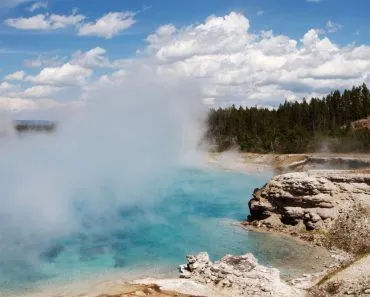
If you have ever watched a puddle vanish or a glass of water empty itself overnight, it can genuinely feel like the water has ceased to exist. It hasn’t. Water doesn’t disappear; it changes its state and changes its address. When that puddle “vanishes,” the liquid has turned into water vapor and drifted into the air, still made of the same H2O molecules. We just can’t see it anymore, because water vapor is an invisible gas. The white plume you see rising off a kettle or a hot lake is not the vapor itself, it’s tiny droplets that have already condensed back into liquid.

Zoom out, and the same logic holds for the whole planet. The water cycle moves water between the ocean, the atmosphere, the land and underground, but it doesn’t create or destroy it; the total amount of water on Earth stays essentially the same as it shuffles between these reservoirs. A given molecule spends very different lengths of time in each: NASA estimates the atmosphere’s entire stock of water vapor is recycled roughly 40 times a year, so a molecule’s stint in the sky is short, while water can linger in the ocean or deep underground for a very long time. The water in your glass today has very likely been a cloud, a river, and a stretch of ancient sea before, and it will be again. So no, water can’t simply disappear; it just keeps moving.