Table of Contents (click to expand)
- High Pressure Does Not Mean High Temperature In Every Case
- Pressure Does Not Increase Temperature; Compression Does
- Water At The Surface Becomes Cold Due To Evaporation
- How Cold Is It At The Bottom Of The Ocean (And Why Doesn’t It Freeze)?
- How Much Pressure Is There At The Bottom Of The Ocean?
- If Earth’s Core Is So Hot, Why Doesn’t It Warm The Deep Ocean?
The bottom of the ocean is cold (typically 0–3 °C / 32–37 °F, regardless of season or latitude) because cold water is denser than warm water and sinks. The sun only warms the top ~200 m of the ocean, and that surface water cools through evaporation, gets denser, and drops to the bottom. Pressure does not warm the deep ocean, since water is nearly incompressible. Earth’s geothermal heat flowing up through the seafloor is far too small to offset all this cold sinking water.
Cold water is denser than warm water, so it sinks into the depths, while the latter remains close to the surface. Also, water at the surface becomes cold primarily due to evaporation, after absorbing thermal energy from the sun. As water becomes cold, it sinks and is replaced by warm water. Plus, the sun’s radiation does not heat the lower levels of the ocean (it is almost completely absorbed within the top 200 m or so).
The inner parts of the Earth are constantly being heated up due to the leaking of thermal energy from the radioactive decay of long-lived isotopes (uranium, thorium and potassium-40) in the planet’s mantle and crust, plus residual heat left over from the planet’s formation. Crude logic would dictate that, as a result of this internal heating, the water temperature at the ocean floor should rise too.
Also, it’s a well-known fact that pressure increases proportionally as one goes deeper into an ocean.
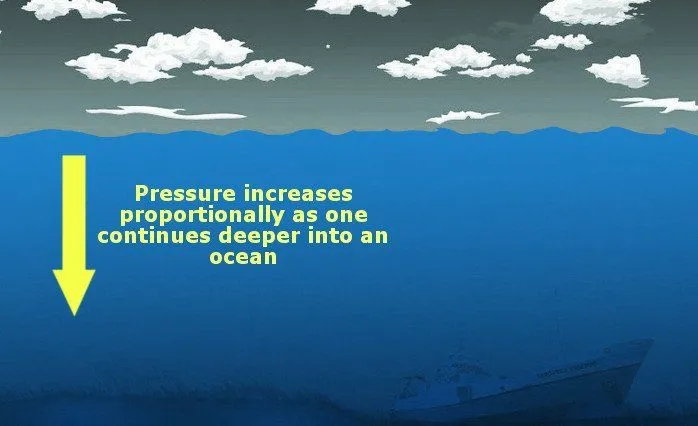
One would also logically say that this increased pressure should warm up the ocean water to insanely high temperatures at great depths, but interestingly enough, nothing of the sort happens. In fact, the reality is the exact opposite of what one would assume. The water at the bottom of oceans is very cold (typically 0–3 °C / 32–37 °F, just a few degrees above freezing). All of this begs the question: why does ocean water become increasingly cold as one goes deeper?
High Pressure Does Not Mean High Temperature In Every Case
Let me start by stating a very common misconception regarding the relation between the pressure and temperature of a fluid: high pressure causes high temperature. The idea that increasing the pressure of a fluid always increases its temperature, regardless of whether it’s a gas or a liquid, is fairly common, but it’s not true!
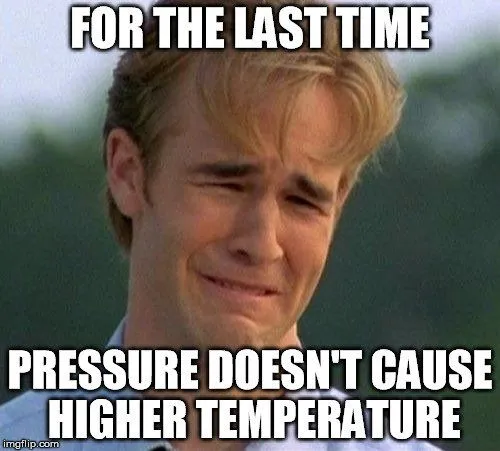
This misconception most likely stems from the ideal gas law, or rather, from its oversimplification.
The ‘ideal gas law’ states that for a given quantity of an ideal gas, the product of the pressure and volume is proportional to the absolute temperature. The ideal gas equation is written as:
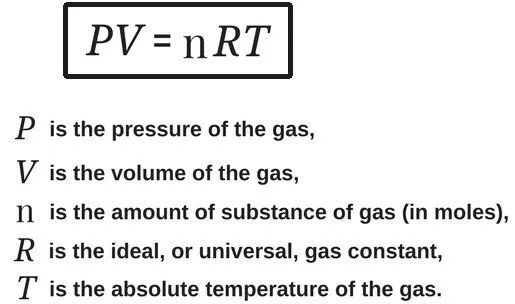
In simple words, the above equation states that increasing the pressure of an ideal gas, while keeping its volume constant, will increase its temperature.
Although the equation provides a good approximation of many gases under various sets of conditions, it holds absolutely true only for an ideal gas. For starters, an ideal gas is a hypothetical gas (it does not exist in reality), which consists of randomly moving particles that undergo perfectly elastic collisions, i.e., particles that interact with each other without losing their kinetic energy.

An ideal gas is perfectly compressible. In contrast, water is mostly an incompressible liquid, so it’s nothing like an ideal gas. Hence, the ideal gas law doesn’t apply to water.
Pressure Does Not Increase Temperature; Compression Does
It’s not so much pressure, but rather compression, that increases the temperature of a given fluid. In other words, forcing more and more stuff into the same volume generates heat (by increasing the kinetic energy of molecules) in the system.
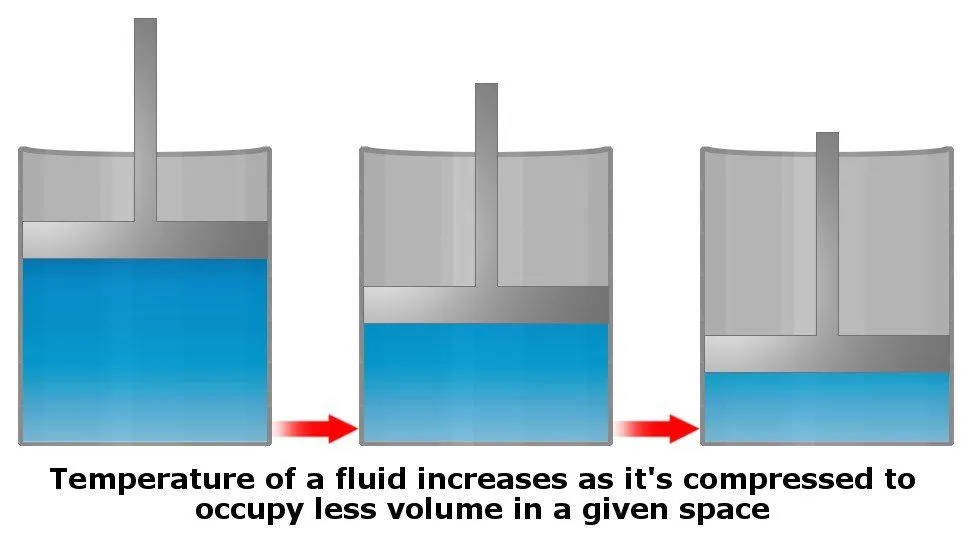
However, as mentioned earlier, water is generally an incompressible fluid. Still, the temperature of water at the bottom of an ocean could potentially increase if its pressure were to increase all of a sudden, but the water at the bottom does not experience pressure variations (as pressure is basically constant at that depth), and therefore does not compress, which is why it does not heat up.
Water At The Surface Becomes Cold Due To Evaporation
The sun’s radiation heats up the water at the oceans’ surface. Evaporation ensues and the water nearer the top loses some of its heat and begins to cool down.
As it becomes cold, water becomes denser and starts to sink, and is then replaced by the sub-surface layers of water. The thin, distinct layer of water where temperature changes rapidly is known as a thermocline.
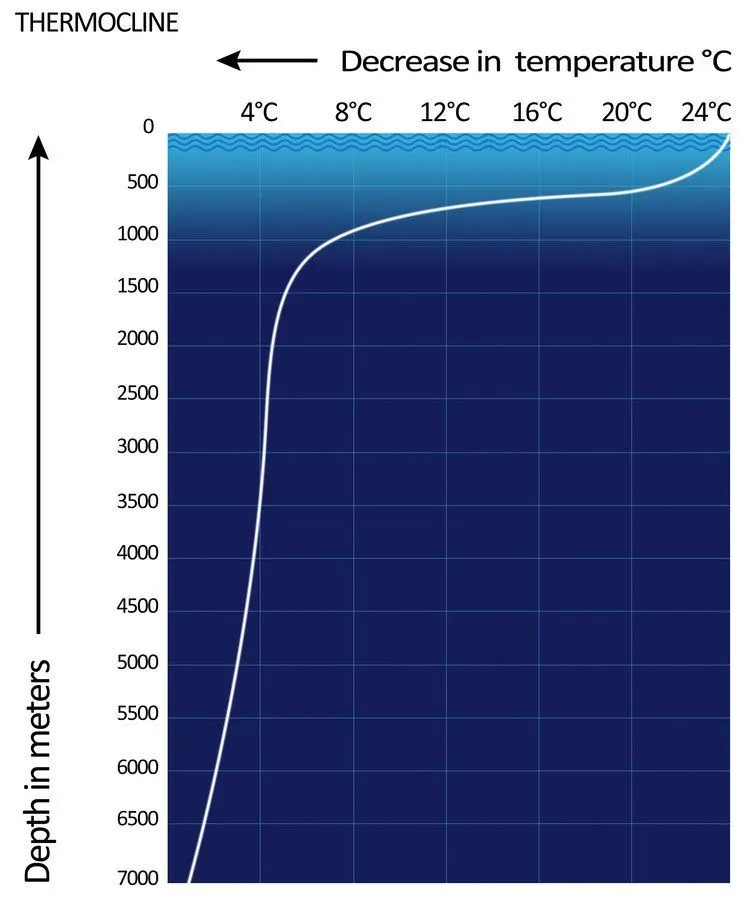
In this way, warm water always remains on the surface, while colder water constantly travels downward. That’s why the water at the bottom of the ocean is so cold.
In terms of the geothermal heating of the ocean floor due to the leaking of heat energy from Earth’s core, the actual amount of heat generated in this way is so small that it’s nowhere near the amount of energy required to globally warm ocean waters.

The average geothermal heat flux through the ocean floor is only about 0.1 watts per square meter (roughly a ten-thousandth of the solar energy that hits the surface). At that trickle, it would take well over a year to warm even a meter-thick layer of bottom water by 1 °C, and that’s without ocean currents constantly replenishing the cold deep with more cold water from the poles!
How Cold Is It At The Bottom Of The Ocean (And Why Doesn’t It Freeze)?
Below a depth of roughly 200 meters, the ocean settles into a permanent chill. The deep sea has an average temperature of about 4 °C (39 °F), and the closer you get to the seafloor, the colder and steadier it becomes. At a seamount 5,000 meters down, NOAA has clocked the water at 2.2 °C (36 °F). In the very deepest trenches, such as the Challenger Deep nearly 11 kilometers down, it hovers between about 1 and 4 °C (34–39 °F) all year round, no matter the sunny weather far overhead.
Here’s the part that trips people up: if the water is that close to zero, why doesn’t it freeze solid? The answer is salt. Dissolved salt lowers the freezing point of water, so seawater at a typical salinity of 35 parts per thousand doesn’t freeze until it reaches roughly −1.8 °C (28.8 °F), not the 0 °C you might expect. Deep water sitting at 1–4 °C is still comfortably above its own freezing point.
Salt plays a second, sneakier trick too. Fresh water is densest at 4 °C, but for seawater saltier than about 24.7 parts per thousand (which covers nearly all of the ocean), the water keeps getting denser right down to its freezing point. That means chilled surface water never stops sinking, so the cold is continually carried down to the bottom instead of forming an insulating cap on top.
How Much Pressure Is There At The Bottom Of The Ocean?
Pressure builds astonishingly fast as you descend. As a rule of thumb, it climbs by about one atmosphere (roughly 14.6 pounds per square inch) for every 10 meters of depth. Drop to 5,000 meters and the water is already pressing in at around 500 atmospheres.

Go all the way to the bottom of the Challenger Deep, about 10,935 meters (35,876 feet) down, and the water column overhead bears down at more than 16,000 pounds per square inch, over a thousand times the pressure you feel at sea level. That’s roughly 8 tons bearing down on every single square inch. It’s the same force that makes your ears ache during even a shallow dive underwater, only thousands of times stronger.
None of this, though, has anything to do with temperature. All that crushing weight is simply the mass of the water above pushing down, and because water barely compresses, it does not translate into heat. The deep ocean is squeezed to an extreme, yet it stays just a few degrees above freezing.
If Earth’s Core Is So Hot, Why Doesn’t It Warm The Deep Ocean?
This is the puzzle at the heart of the question. Earth’s interior is blisteringly hot, yet the water resting on the seafloor is near freezing. The reason is distance and insulation. The core sits beneath thousands of kilometers of rock, and rock is a poor conductor of heat, so only a feeble trickle actually reaches the seabed. As mentioned earlier, that geothermal leak amounts to roughly 0.1 watts per square meter, thousands of times weaker than the sunlight warming the surface. You can read more about what lies inside Earth’s core and just how hot it gets.

There are spots where the planet’s heat does punch through. Along mid-ocean ridges, where molten rock rises close to the seafloor, seawater seeps into the crust, gets superheated, and jets back out through hydrothermal vents. The fiercest of these, the “black smokers,” spew mineral-laden water at around 350–400 °C (660–750 °F), hot enough to melt lead. It doesn’t boil only because the immense pressure raises water’s boiling point far above those temperatures.
So why doesn’t all that heat warm the ocean? Because the vents are pinpoint hot spots scattered along the ridges. The near-freezing water around them, sitting at about 2 °C, quenches the plume over a very short distance. These vents warm their immediate neighborhood, not the vast cold ocean that surrounds them.
References (click to expand)
- Deep ocean water - Wikipedia. Wikipedia
- Thermocline - Wikipedia. Wikipedia
- Ideal gas law - Wikipedia. Wikipedia
- Why does the ocean get colder at depth?. The National Ocean Service
- How does the temperature of ocean water vary?. NOAA Ocean Exploration
- Science of Sea Ice. National Snow and Ice Data Center
- Sea ice: an overview. Met Office
- Ocean Pressure. NOAA Pacific Marine Environmental Laboratory
- Seven miles deep, the ocean is still a noisy place. NOAA
- What is a hydrothermal vent?. NOAA National Ocean Service
- Deep-Sea Hydrothermal Vents. National Geographic