Table of Contents (click to expand)
Latent heat is the energy a substance absorbs or releases to change phase (melt, freeze, boil or condense) without any change in temperature. ‘Latent’ means hidden, because the heat goes into rearranging molecular bonds instead of warming the substance. For water it takes about 334 kJ/kg to melt ice and 2260 kJ/kg to boil it.
While heating a kettle of water for your morning coffee, have you ever wondered what happens to the heat provided to it? Have you ever pondered about the bubbling that takes place or the steam that accumulates if you place a lid over a pot of boiling water? If not those, then you have surely seen an ice cube melt when you take it out of the freezer. But what scientific principles are behind these regular occurrences? Let’s find out!
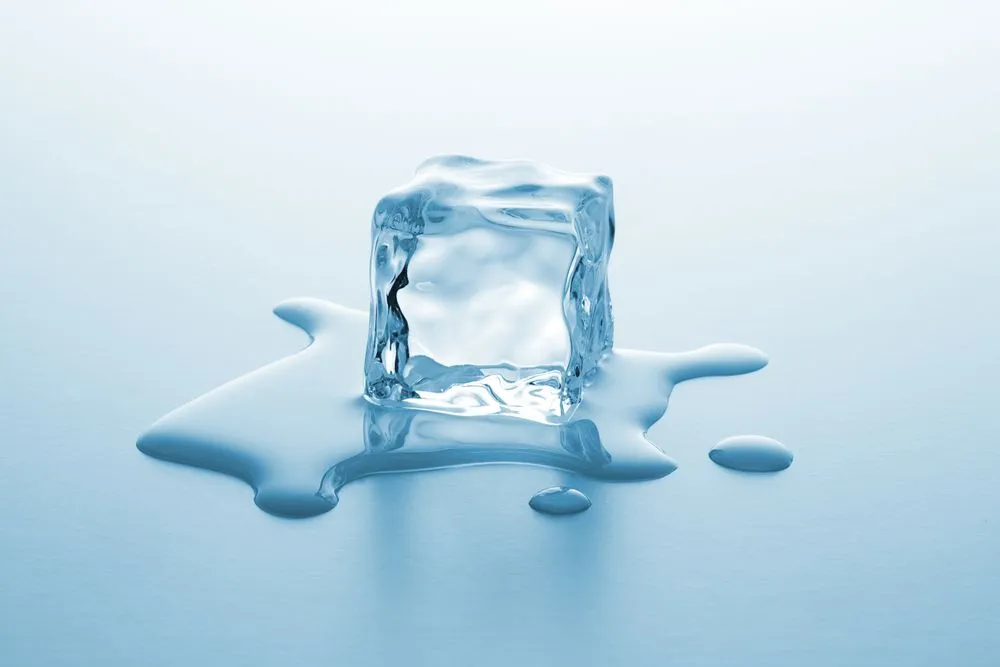
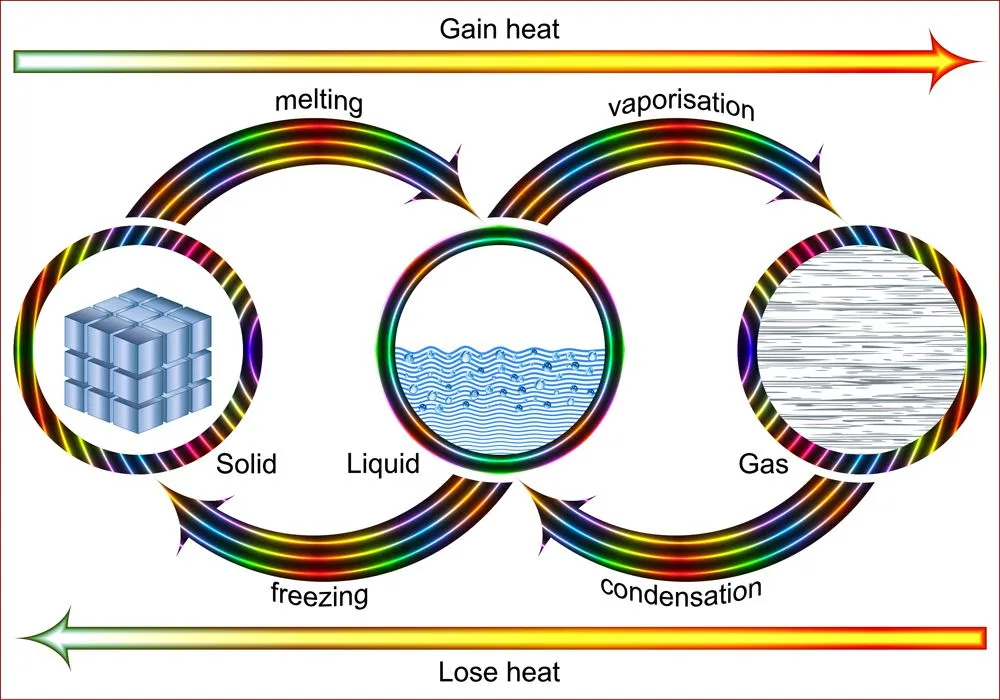
Latent heat is related to a change in the phase of a substance. In specific terms, it can be defined as the energy released or absorbed from a substance when the phase changes between a solid, gas, or liquid. It is also the hidden energy that is supplied to or extracted from a substance without raising the temperature of the entire system.
What Is Latent Heat?
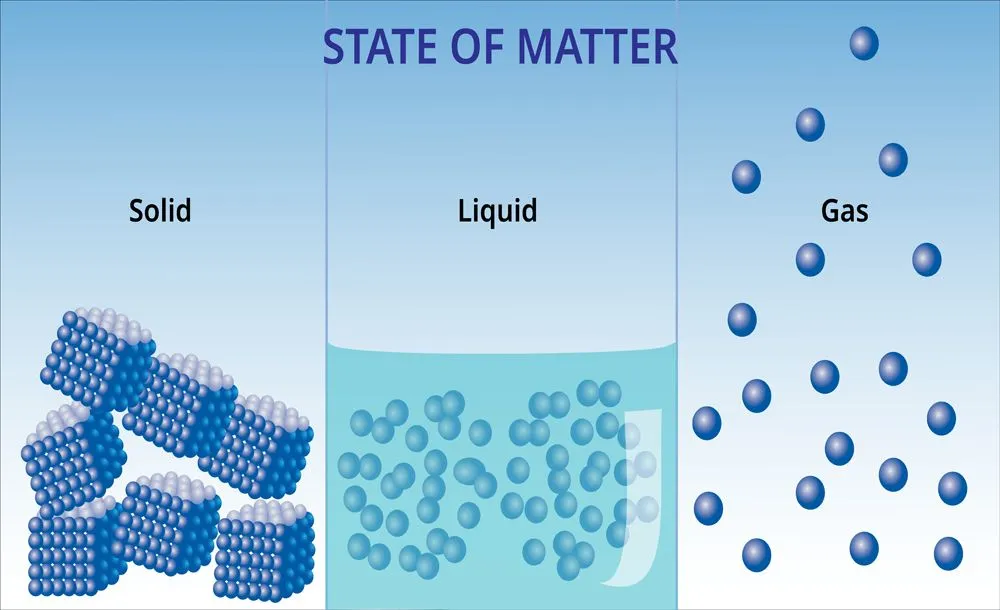
Before diving into the details of latent heat, let’s first take a look at energy itself. Every substance, whether solid, liquid or gas, is composed of two types of energy. One is kinetic energy, which is due to the motion of the particles, while the other is potential energy, which corresponds to the position of these particles in the system.
Another exciting thing about different substances is that their structure varies according to their phase.
For instance, let’s consider water. In its solid phase, it is known as ice, whereas in a gaseous form, it is known as vapor. The molecules of water in ice are very close to each other, which corresponds to its definite shape. Moreover, because the molecules in ice are bonded to each other with a higher degree of strength, the kinetic energy is also minimal. On the other hand, the molecules of water are very far apart in its vapor form, so the kinetic energy of the molecules in the vapor phase is at a maximum.
The heat required to change the phase of a substance without raising its temperature is called latent heat. The word comes from the Latin latere, meaning “to lie hidden,” which is exactly what this energy does: instead of speeding the molecules up (and pushing the temperature higher), it goes into breaking the bonds that hold them in place. In other words, latent heat is stored as potential energy, tied to the positions of the molecules, rather than as the kinetic energy you would feel as a rise in temperature. That is also why people call it “hidden heat”: a thermometer simply doesn’t register it while the phase change is underway.
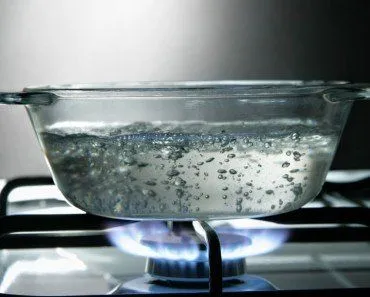
This is what sets latent heat apart from sensible heat, the heat you actually can sense. Sensible heat warms a substance and shows up on a thermometer; latent heat changes its state and doesn’t. If you’ve paid attention, in the case of water, heat is enough to cause a phase change. When you pour water in a pan and switch the gas stove on, water doesn’t begin boiling instantly. Instead, after a few minutes have passed, you will notice bubbles beginning to form, and if you put a lid on the pot, it will soon be covered in steam.
Latent Heat Of Fusion
Consider two glasses of soda. If glass A has cold soda while glass B has soda with ice cubes in it, which one will stay chilled for a longer time? Obviously, glass B. This is where the latent heat of fusion comes into play. It is defined as the heat required to convert solid into liquid, and vice versa. One important point to mention is that this change also takes place without changing the temperature.
When one attempts to convert a solid into a liquid, heat needs to be provided to the system. On the other hand, when liquid is to turn into a solid, the latent heat of fusion is given off.
The numbers make this clear. Melting one kilogram of ice at 0 °C (32 °F) takes about 334 kJ of latent heat, yet the specific heat of liquid water is only about 4.18 kJ per kilogram for every 1 °C. In other words, the energy an ice cube swallows just to melt could otherwise warm the same mass of water by roughly 80 °C. Because the ice soaks up so much heat without warming up itself, it keeps a beverage cool for far longer than chilled water alone would. That same large value of latent heat is also why a snowbank melts slowly on a sunny afternoon instead of vanishing all at once.
Latent Heat Of Vaporization
Have you ever wondered why your mom always warned you never to bend over a pan of hot boiling water? Obviously, she didn’t want you to burn yourself! However, what does that have to with latent heat? Interestingly, the latent heat of vaporization is the amount of energy required to convert the liquid into vapor and vice versa.
As mentioned above, water can hold an immense amount of latent heat. Boiling away one kilogram of water at 100 °C (212 °F) takes roughly 2260 kJ, nearly seven times the energy needed to melt the same mass of ice. That is precisely why steam burns are considered so much more dangerous than burns from hot water at the same temperature. When steam touches a person’s skin and condenses back into liquid, it dumps that entire 2260 kJ per kilogram of latent heat into the skin, on top of the heat the hot water itself delivers. Plain hot water has no such phase change to release, so a steam burn is far worse than a scald from liquid water alone.
If The Temperature Doesn’t Change, Where Does The Applied Heat Go?
That is a very logical question! Throughout the article, we have stated that latent heat doesn’t bring about a change in temperature, so when we heat a pan of water, why doesn’t the temperature rise immediately?
The most straightforward answer is that the heat you apply is first spent on loosening or breaking the bonds between molecules so the substance can change phase. While those bonds are giving way, the energy is being stored as potential energy in the new molecular arrangement rather than being converted into faster molecular motion. Since temperature is simply a measure of that motion, the thermometer holds steady. Only once the phase change is complete (all the ice melted, or all the water boiled away) does additional heat start raising the temperature again. So the heat hasn’t gone missing at all. It is locked away as the latent, hidden energy of the new phase.