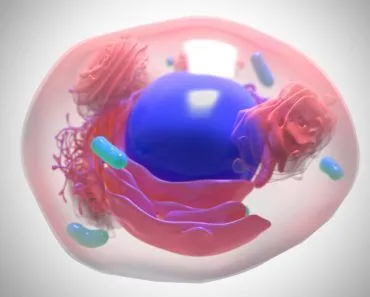
Centrioles are small, cylindrical organelles found in animal cells, each built from nine triplets of microtubules. They organize the mitotic spindle that pulls chromosomes apart during cell division, and they also act as the basal bodies that seed cilia and flagella. Most plant cells and all prokaryotes lack them.
The cell is a very complex entity. It is the smallest known entity capable of sustaining life in itself. The entire dogma of biology and its related fields revolves primarily around the study of this basic building block of life. As you might expect, a lot of research has gone into understanding the cell, its functions and its organization. As such, today we know about all the different sub-units present in the cell. Centrioles are one of the lesser-known of these.
So, what is a centriole and what is it doing inside the human cell? What role does it play in the cell division process? Can a cell survive in the absence of centrioles? These are some of the questions that we will be trying to answer below.
What Are Centrioles?
The cell is composed of many different organelles. To understand these concepts better, consider the cell like the human body, and the organelles are like the organs. Just like every organ inside of us, the organelles present in cells each have their own unique functions and characteristics. These micro-units are highly specialized and their structure directly corresponds to the tasks being performed by them.
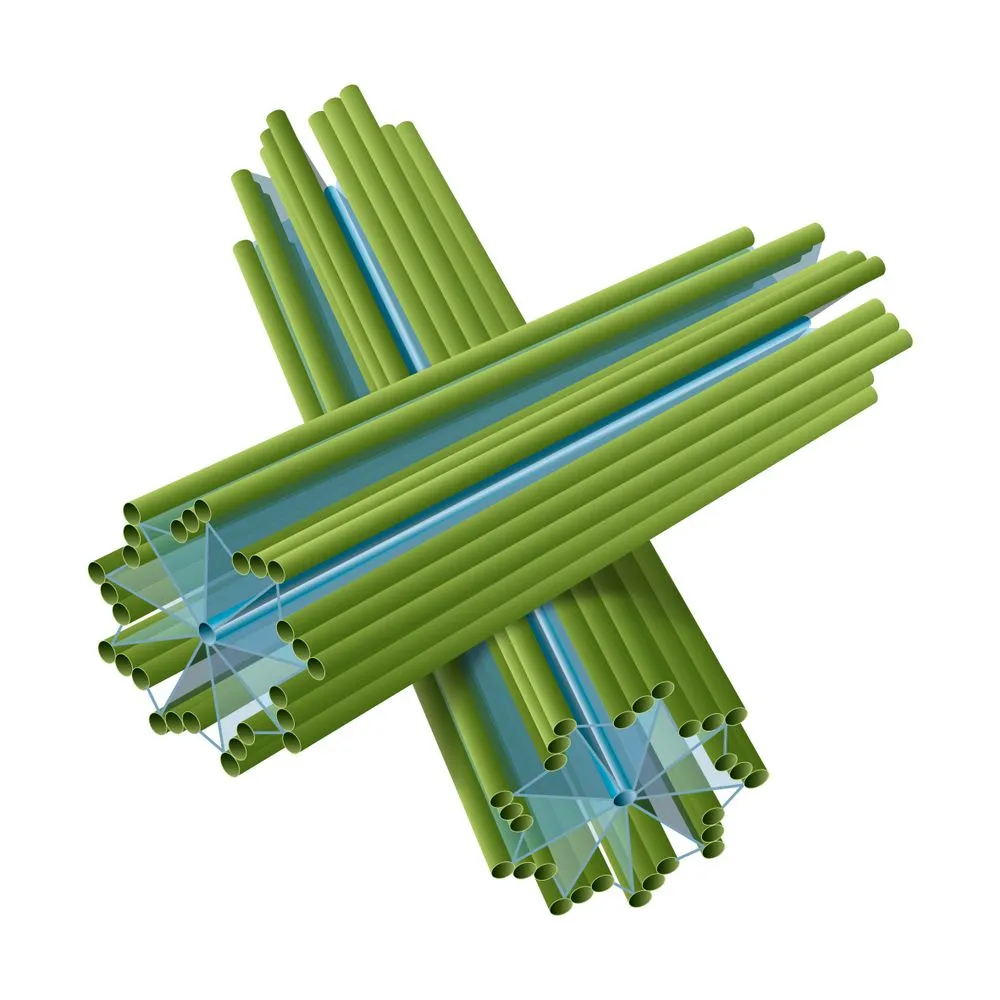
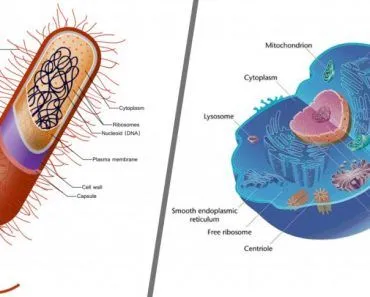
Centrioles are one of the many organelles present inside a eukaryotic animal cell. They are cylindrical in shape with ridges present all over their surface. They are mainly composed of a globular protein called tubulin, which has two major components, α- and β-tubulins.
These two types of proteins bundle around each other and polymerize in a specific manner to form microtubules, which basically constitute centrioles. Microtubules, as their name suggests, are small tubes that group together and form centrioles. Each centriole is built from nine triplets of microtubules arranged in a ring (the so-called 9+0 pattern), and a typical human centriole measures roughly 500 nm long by 200 nm wide. As with every other cell organelle, this structure is closely tied to what centrioles do, and we’ll come back to that shortly.
Outside of cell division, an animal cell normally carries a single pair of centrioles sitting at right angles to each other. As the cell prepares to divide, each centriole templates the growth of a new daughter centriole alongside it, so by the time mitosis begins the cell has four centrioles bundled into two centrosomes (one for each pole of the future spindle).
This cycle continues throughout the life of the organism. Centrioles are considered part of a larger organelle called the centrosome. The centrosome is the cell’s main microtubule-organizing center, and it helps regulate the cell-division cycle.
Why Are Centrioles Important For Cells?
Centrioles play a very important role in the cell division of animal cells. Cell division is perhaps one of the most important biological phenomena occurring around us (and within us) that has led to the evolution and continuity of life. Cell life is pretty similar to ours.
When a new daughter cell is about to be born, it has no idea about the world or its upcoming duties. Thus, the mother cell provides it with manuals that have all the information about a cell’s life, structure and functions. The scientific name of these manuals is ‘chromosomes’.
However, once a mother cell replicates into a daughter cell, all of its resources are halved, and it is as new to the world as its daughter. Henceforth the mother cell is also called a daughter cell (only directly after the completion of the cell division process) and it also requires chromosomes in order to function. This is where centrioles come in.
How Do Centrioles Help In Cell Division?
Centrioles help the cells divide the chromosomes or the genetic material (material that holds information about the genesis of the cell’s life) equally between the two daughter cells.
During cell division, the two centrosomes (each containing a pair of centrioles) move to opposite ends of the cell. From these poles, they nucleate the mitotic spindle, sending out spindle fibers (microtubules) that grow towards the center of the cell. Fibers coming from the two opposite poles meet in the middle and form a structure that looks something like this:
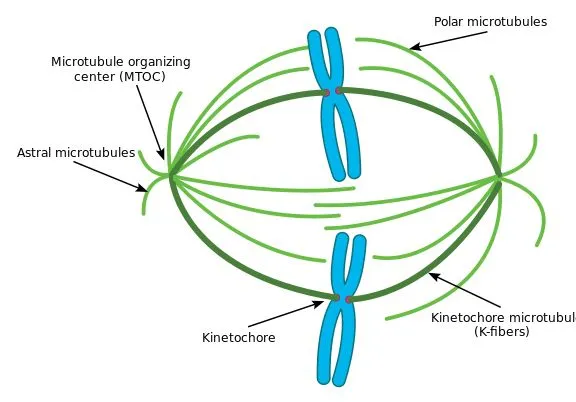
The chromosomes that have already duplicated (each chromosome contains two sister chromatids) join the spindle fibres via a disc-shaped protein structure called a kinetochore during metaphase of the cell cycle. In the next phase, the centrioles start to wind up the fibres by recalling them, pulling the chromatids apart.
As the sister chromatids are separated from each other, they travel to the two opposite ends of the cell, which later go on to separate into two different entities. In this manner, the genetic information and the code of life are passed on from one cell to another.
What Is Ciliogenesis And Why Are Centrioles Important For It?
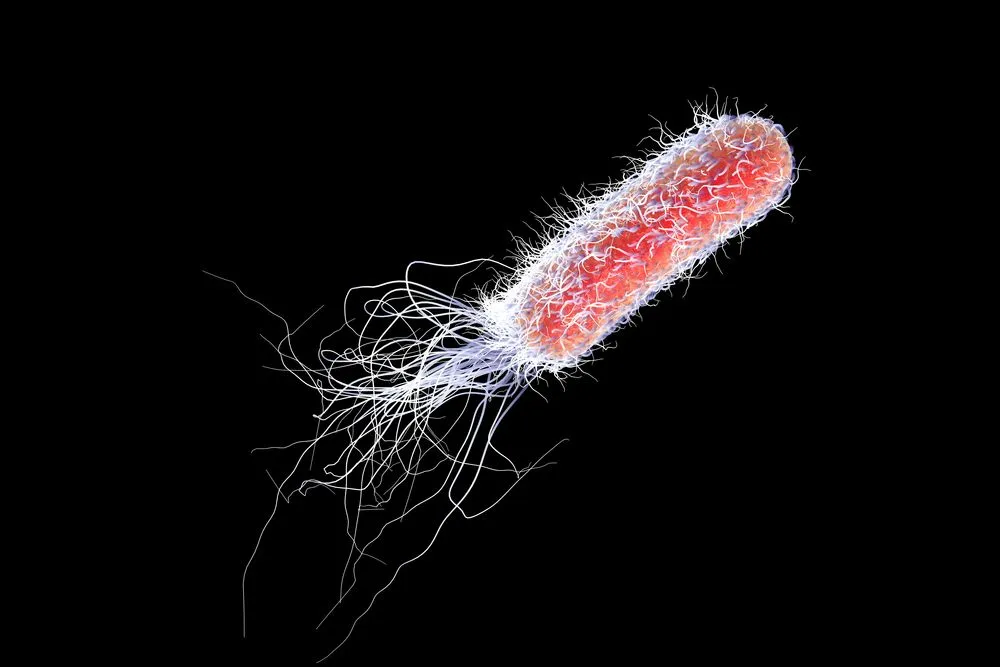
Many cells carry hair-like projections called cilia (short and numerous) and flagella (long and few). In humans these line the airways and brain ventricles, propel sperm, and act as tiny antennae on almost every cell type; in single-celled eukaryotes such as Paramecium they handle swimming and feeding. The process of building them is called ciliogenesis, and the projections only work when they are anchored in precise positions on the cell surface. (A side note: bacterial flagella, like the ones on Pseudomonas, look superficially similar but are built from completely different proteins and do not involve centrioles at all.)
In eukaryotic cells, the mother centriole (the older of the pair) migrates to the cell surface and turns into a basal body, which acts as the anchor and template from which the cilium or flagellum grows. For most organisms that depend on these projections, centrioles are an absolute necessity, since without a basal body there is no cilium to nucleate. Without cilia and flagella, swimming, feeding, and sensing would all break down, and survival would look pretty bleak.
Can We Do Without Centrioles?
The indispensable role of the centrioles in the cell is to organize the spindle during cell division and ensure a smooth division of the genetic information. Other than that, they also finalize the general flow of microtubule growth and control the protein traffic. However, biologists have shown that the surrounding pericentriolar material, together with non-centrosomal microtubule pathways, can take over some of these jobs, which makes centrioles not quite as indispensable as they once seemed.
In a landmark Drosophila study, Renata Basto and colleagues showed that fruit flies whose centrioles were genetically removed could still develop into adults, because their somatic cells managed to build mitotic spindles without a centrosome. The flies died early, though, because their neurons (nerve cells) could not assemble the sensory cilia they needed to function.
Human cells tell a similar story. In 2015, Andrew Holland and Karen Oegema’s teams used a drug called centrinone to block the kinase PLK4 and effectively erase centrioles from cultured cells. Cancer cells kept dividing without missing a beat, while normal, non-transformed cells eventually arrested and stopped proliferating. So whether a cell can do without its centrioles depends a lot on which cell it is.
That leaves us with two big open questions. If we could somehow build cilia and flagella without centrioles, would we get by without them at all? And since plenty of cell types already manage without centrosomes, how do they organize their microtubules in the first place? These remain active areas of research, but the picture is shifting: centrioles look less like an absolute requirement for life and more like a tool that some cells lean on heavily and others quietly do without.
References (click to expand)
- Centriole. National Human Genome Research Institute (NIH) Genetics Glossary.
- Centriole. Encyclopedia Britannica.
- Sluder, G. (2014). One to only two: a short history of the centrosome and its duplication. Philosophical Transactions of the Royal Society B: Biological Sciences.
- Badano, J. L., & Katsanis, N. (2006). Life without Centrioles: Cilia in the Spotlight. Cell.
- Wong, Y. L., et al. (2015). Reversible centriole depletion with an inhibitor of Polo-like kinase 4. Science (open access via PMC).