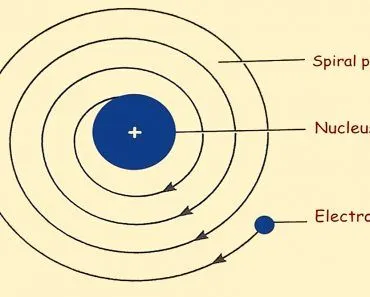
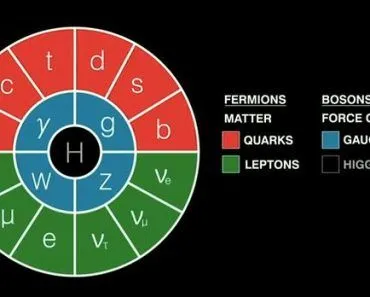
The Dalton atomic model—also known as the billiard ball model—was proposed by English chemist John Dalton in 1803. Built on the laws of conservation of mass, definite, multiple, and reciprocal proportions, it pictured atoms as tiny, indivisible spheres unique to each element. The model was later overturned by the discovery of the electron (1897), the nucleus (1911), and other subatomic particles.
For someone to think beyond the constructs and limits of their intellect is difficult, but for a person to conceive something that has never been imagined by any other human mind is a feat that belongs to the brain of a genius. That is precisely what John Dalton did. Much of the Dalton Atomic Model has been disproven, but he is still considered the man who laid the foundation for the atomic theory we celebrate today. Before we dive into the Dalton atomic model, let’s take a brief overview of the atomic theory that had been established before it.
The Basic Laws Of Atomic Theory
The first thing we will be looking at is the Law of conservation of mass. It was a law founded by Antoine Lavoisier in 1789. The law of conservation of mass states that the net change in the mass of the reactants and the products after a chemical reaction is zero. This implies that mass can neither be destroyed nor created. This implies that mass always remains constant in a chemical reaction. A few inaccuracies were noted in this law later, due to the fact that during some reactions, the mass can interconvert with heat and bond energy.
The second law is the Law of constant proportions (also called the law of definite proportions). It states that any given chemical compound always contains its constituent elements in the same fixed proportion by mass. The significance of this law is that a sample of a compound has the same elements in the same proportions regardless of where the compound was made, how it was obtained or how much of it you have.
The next law is the law of multiple proportions, which states that when two elements form two or more compounds between them, the ratio of the masses of the second element in each compound can be expressed in the form of small whole numbers. The law was proposed by Dalton himself after studying the previous two laws.
The fourth and final law is the law of reciprocal proportions, which states that when two different elements combine separately with the same fixed mass of a third element, the masses in which they do so bear a simple ratio to the masses in which they combine with each other. Jeremias Benjamin Richter proposed this law in 1791.
John Dalton Atomic Model
Based on the above laws that were laid down, Dalton formulated his idea on the fundamental nature of matter, which is how he came up with the concept of atoms. After studying the laws above with great scrutiny, he came up with the following postulates:
- Matter is made of very tiny particles called atoms.
- Atoms are indivisible structures that can neither be created nor destroyed during a chemical reaction (based on the law of conservation of mass).
- All atoms of a particular element are similar in all respects, including their physical or chemical properties.
- Inversely, atoms of different elements show different properties, having different masses and different chemical properties.
- The relative number and kinds of atoms in a given compound are always in a fixed ratio (based on the law of definite proportions).
 Based on the above postulates, Dalton was able to come up with one of the first models for the atom. Another name for his model is the billiard ball model. He defined atoms as tiny indivisible spherical objects that cannot be divided any further. He was unaware at the time (as was everyone, for that matter) of the concept of the nucleus, protons or electrons. If you had asked Dalton to draw an atom, he would have simply drawn a circle!
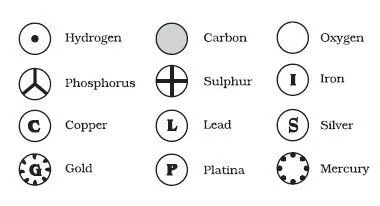
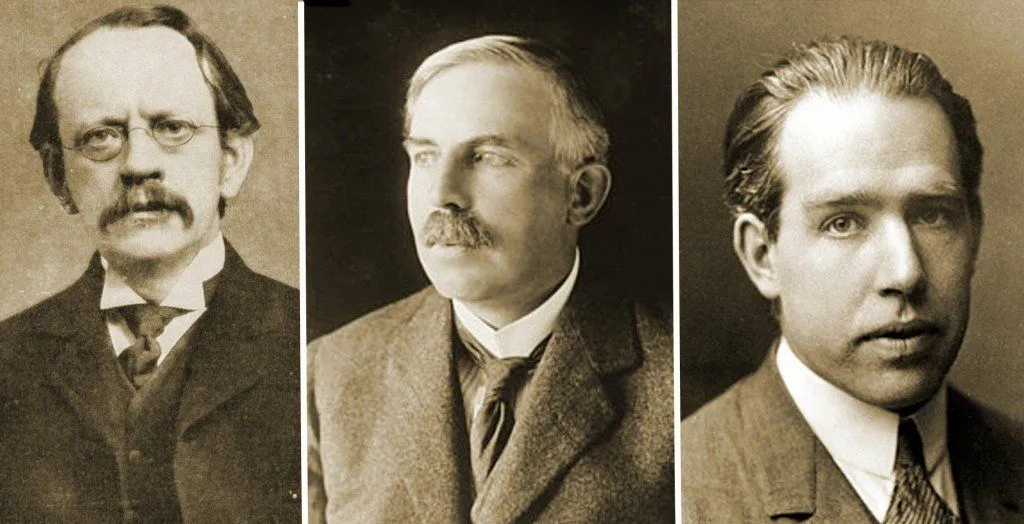 He did try to classify the atoms and was the first scientist to assign symbols to different elements. However, despite his best efforts, many discrepancies and fallacies crept into the very foundation of his theory. The second postulate could eventually no longer be accepted: J.J. Thomson’s discovery of the electron in 1897, followed by Rutherford identifying the nucleus in 1911 and the proton a few years later, and finally Chadwick uncovering the neutron in 1932, showed that atoms are themselves built from smaller subatomic particles—and so are not indivisible after all. The third postulate was also found to be false, as isotopes are atoms of the same element that share the same number of protons but have different numbers of neutrons. Finally, the fourth postulate was proven wrong by the existence of isobars—atoms of different elements that share the same mass number (the same total of protons and neutrons) but have different atomic numbers.
After J.J. Thomson announced his plum-pudding model of the atom, it reinforced what was still true in Dalton’s remaining postulates—that elements are built from atoms with characteristic properties. A few years later, Rutherford’s gold-foil experiment overturned the plum-pudding distribution of charge and led to his 1911 nuclear model, in which a tiny, dense, positively charged nucleus is surrounded by orbiting electrons. Niels Bohr then refined this picture in 1913 with quantized electron orbits, and the fully quantum-mechanical atom we know and admire today—with electrons described as probability clouds (orbitals) rather than fixed orbits—was developed shortly after by Heisenberg (1925) and Schrödinger (1926)!
Why Is It Called The Billiard Ball Model?
Dalton never actually used the phrase “billiard ball model” himself; teachers and textbooks pinned that nickname on his idea long afterwards. It stuck because it is such a good fit. Dalton pictured every atom as a tiny, hard, solid sphere that could not be split, created, or destroyed, and that kept a fixed mass no matter what it collided with. The closest everyday object with all of those properties is a billiard (pool) ball: round, uniformly dense, and essentially unchanged after it bounces off another ball. For that reason the model is also called the solid sphere model.

The analogy was not just a mental picture. To make the invisible scale of atoms tangible for his pupils, Dalton had his engineer friend Peter Ewart build him a set of wooden ball models in Manchester around 1810. The spheres were drilled with different numbers of holes so that they could be pegged together to show how atoms of different elements combine into compounds. A few of those original wooden “atoms” still survive in the Science Museum Group collection today, a tangible reminder of how early chemists tried to picture something they could never see.
How Would You Draw Dalton’s Model Of The Atom?
This is the part most students actually search for, and the answer is refreshingly simple. Because Dalton knew nothing about the nucleus, protons, or electrons, his atom has no internal parts to draw. A faithful sketch of a Dalton atom is just a plain, filled circle (a solid sphere) with nothing inside it: no orbits, no smaller particles, no charges. To show that different elements are different, you draw spheres of different sizes, since Dalton held that each element had its own characteristic atomic weight.

Dalton himself went a step beyond a blank circle. In the first part of his 1808 book A New System of Chemical Philosophy, he gave every known element its own symbol: a small circle marked with a dot, a line, or a letter (an empty circle for oxygen, a circle with a central dot for hydrogen, and so on). Placing these circular symbols side by side represented a compound. Assuming the simplest possible formula, Dalton drew water as a single hydrogen atom joined to a single oxygen atom (we now know water is actually H2O). His pictorial symbols were soon replaced by the letter-based notation of Swedish chemist Jöns Jacob Berzelius, the ancestor of the H, O, and C we still write today, but the idea of one labelled solid sphere per element was all Dalton’s.
What Is A Dalton (Da), The Unit Named After Him?
If you searched for “what is a dalton”, you may have been after a unit rather than the man. The dalton (symbol Da), also called the unified atomic mass unit (symbol u), is the standard unit for the mass of atoms and molecules, and it is named in John Dalton’s honour. One dalton is defined as exactly one-twelfth of the mass of a single carbon-12 atom, which works out to roughly 1.66 × 10⁻²⁷ kilograms (about the mass of one proton or one hydrogen atom).
On this scale a carbon-12 atom is exactly 12 Da, and biochemists routinely quote the mass of large molecules such as proteins in kilodaltons (kDa). The name is surprisingly recent: the International Union of Pure and Applied Chemistry (IUPAC) proposed “dalton” in 1993, and the physics union (IUPAP) endorsed it in 2005. It is a fitting tribute, because Dalton was the first person to publish a table of the relative weights of atoms, taking hydrogen as his reference of 1.
References (click to expand)
- Dalton's Atomic Model | Brilliant Math & Science Wiki. Brilliant.org
- Atomic theory - Wikipedia. Wikipedia
- Dalton's atomic theory (article) | Khan Academy. Khan Academy
- Wooden Atomic Models used by John Dalton, 1800-1844. Science Museum Group Collection
- Today in Chemistry History - John Dalton's Chemical Symbols. Compound Interest
- Dalton (unit) - Wikipedia. Wikipedia
- John Dalton - Wikipedia. Wikipedia