A zygote is the single, diploid cell formed when a sperm fertilizes an egg, the very first cell of a new organism, carrying a full set of 46 chromosomes (in humans), 23 from each parent. It is totipotent, meaning it can divide and develop into every cell of the resulting body. About 24–30 hours after fertilization the zygote begins cleaving by mitosis; once it has divided into two or more cells, it is called an embryo.
Imagine that you’ve gone to a flea market with your folks and it’s extremely crowded. Have your parents ever said to you, “It’s alright if you get lost in the crowd, we’ll get another kid just like you!” This probably hasn’t happened because (a)– your parents love you, and (b) – there’s no one else like you in the world; you are a unique, one-of-a-kind individual. You are composed of half your dad and half your mom, and no one else in the world has the same combination of genes as you. The beginning of this uniqueness starts from a single cell called the zygote.
What Makes A Zygote?
The simple answer to that question is fertilization. We’re all made from gametes derived from our mother and father. The female gamete (from the mother) is the egg or oocyte, while the male gamete (from the father) is called the sperm.
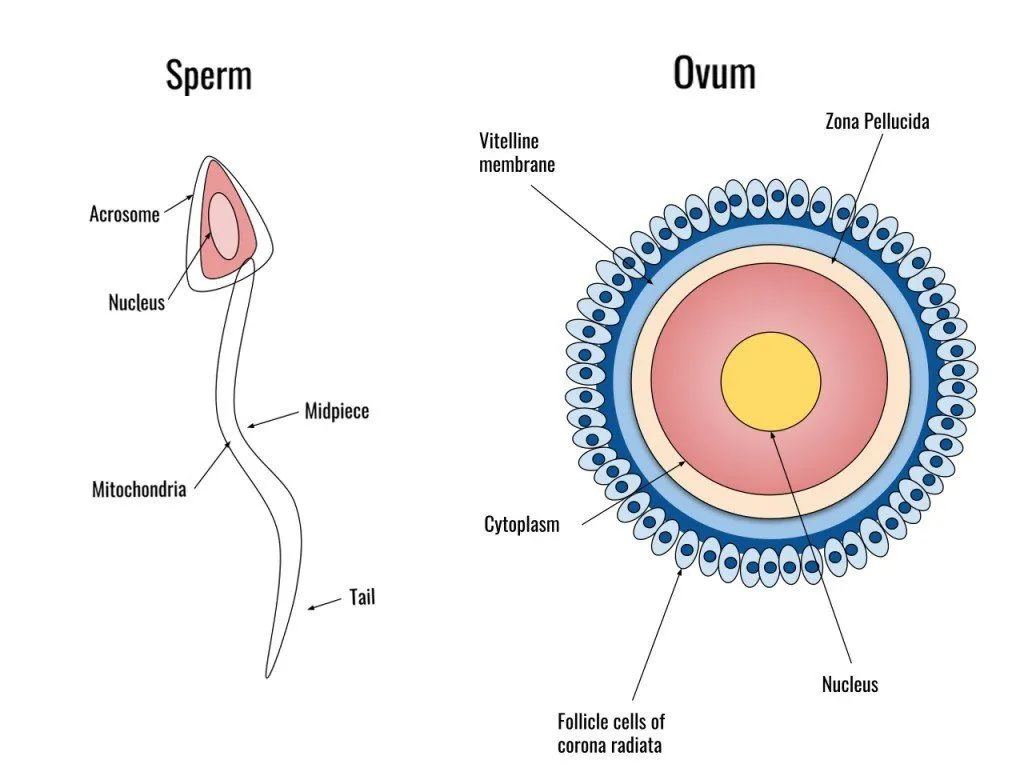
Eggs are large, symmetrical and non-motile cells, whereas sperm are small, asymmetrical, motile cells with a tail, mid-piece and head. During her reproductive years, a female releases one egg each month from her ovaries, which passes down the Fallopian tube and moves towards the uterus. If a sperm happens to meet the egg in the Fallopian tube, the fusion of these two gametes takes place in the following four stages:
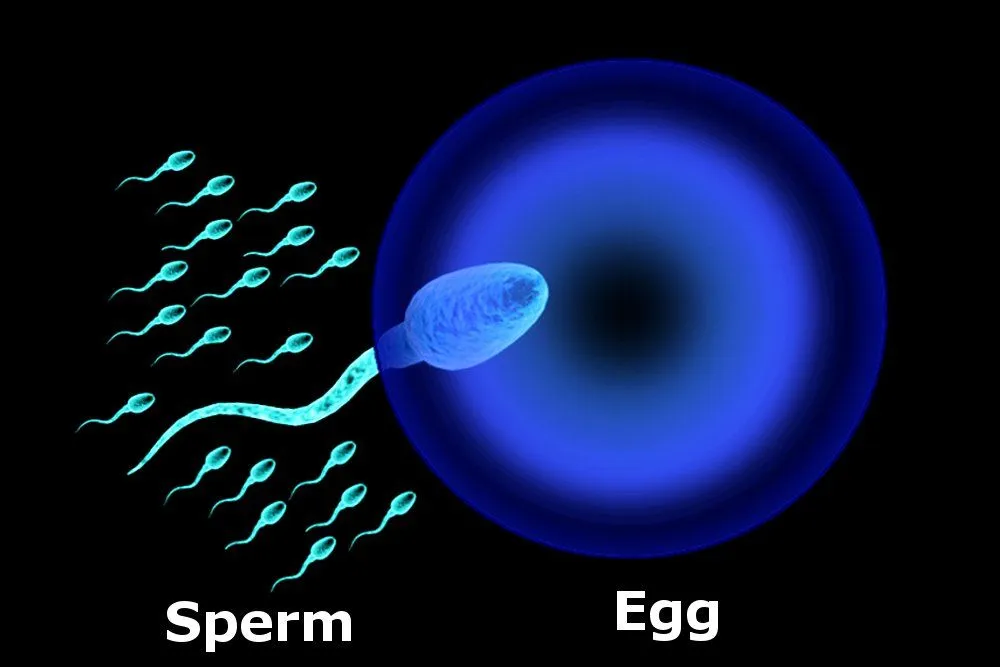
- Sperm penetration of the egg.
- Sperm-egg binding
- Sperm-egg fusion
- Activation of the zygote
Thus, human development starts with the process of fertilization, the process by which the male and female gametes unite and give rise to a zygote. This moment of zygote formation is considered to be the beginning or starting point of human development, and it takes place on the very first day of fertilization.
How Is A Gamete Different From A Zygote?
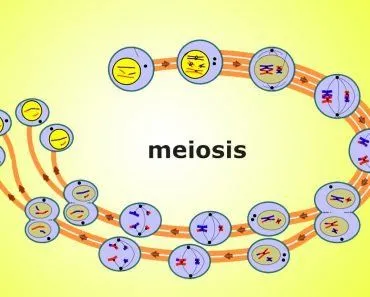
You may have noticed that we keep using two words that sound related but mean very different things: gametes and the zygote. So what exactly sets them apart? A gamete is a sex cell, either the egg from the mother or the sperm from the father. What makes gametes special is that they are haploid, meaning each one carries only a single set of chromosomes. In humans, that works out to 23 chromosomes per gamete. Gametes are produced through a special type of cell division called meiosis, which halves the usual chromosome number so that the egg and sperm each contribute exactly half of the genetic material.

The zygote, by contrast, is what you get when those two gametes fuse together during fertilization. The instant the sperm and egg combine, their two sets of chromosomes come together in one cell, and that cell is diploid, carrying a full complement of 23 pairs, or 46 chromosomes in total. So the difference really comes down to this: gametes are the haploid ingredients, and the zygote is the finished diploid product. A gamete on its own can never grow into a baby, but the moment two of them merge into a zygote, the complete genetic blueprint for a brand new individual is in place.
What Does A Zygote Look Like?
If you could shrink down and peek at a newly formed zygote under a microscope, what would you actually see? For starters, it is round and, by the standards of your body's cells, surprisingly large. A human egg, and therefore the zygote it becomes, measures roughly 0.1 millimeters across, about the width of a human hair. That still sounds tiny, but it makes the egg one of the largest cells in the entire human body. A typical body cell is only about 10 to 20 micrometers wide, roughly ten times smaller.

Wrapped around the zygote is a tough, transparent coat of glycoprotein called the zona pellucida. It cushions the cell and, once a single sperm has entered, hardens to lock every other sperm out. Look inside during the first hours after fertilization and you would not find one nucleus, but two. These are the pronuclei, one holding the mother's set of chromosomes and the other the father's. They drift toward each other and sit side by side before merging into a single nucleus, a fusion known as syngamy. Off to one side you might also notice one or two tiny cells pinched away from the main cell. These are the polar bodies, small packets of surplus chromosomes discarded while the egg was maturing, and they take no further part in building the new individual.
What Happens Next?
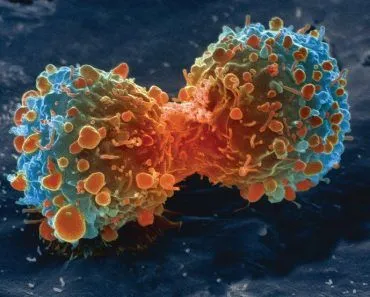
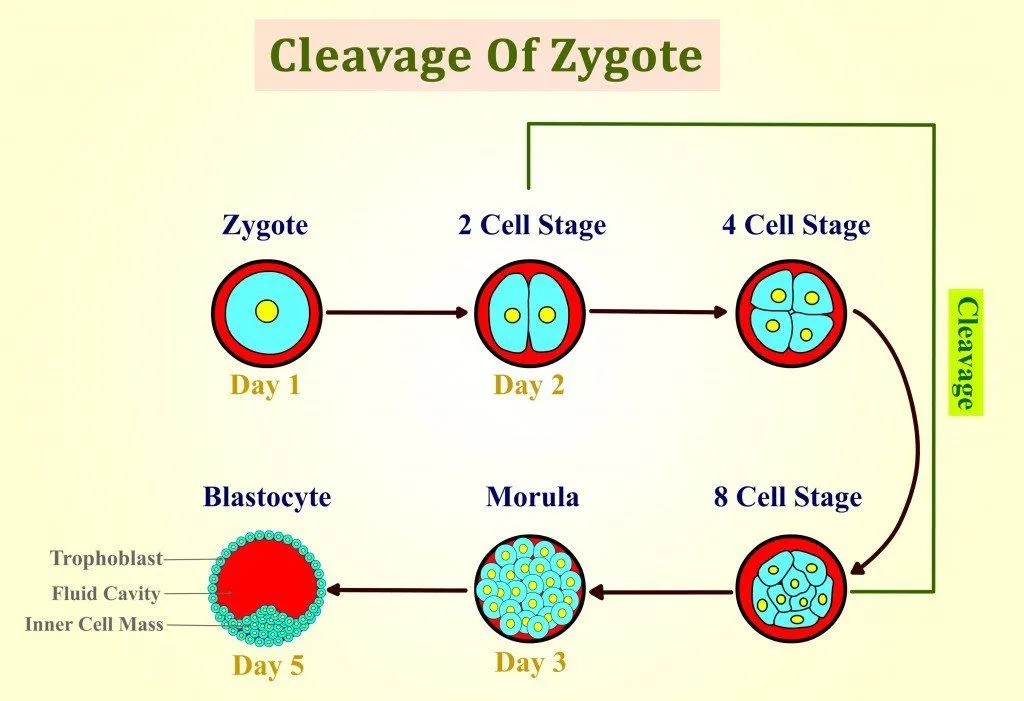 A zygote is the simplest form of life, so once a zygote is formed, it proceeds to split and divide into new cells that organize and form more complex structures. Around 30 hours after the zygote is formed, the process of mitosis (cell division) begins, which increases the number of cells without any increase in the zygote’s total size. This is possible because, with every division, the size of the cells becomes smaller and the number continues to double. This process is called “cleavage” and the cells of the dividing zygote are called “blastomeres”. At this stage, the zygote is covered with an outer covering called the zona pellucida.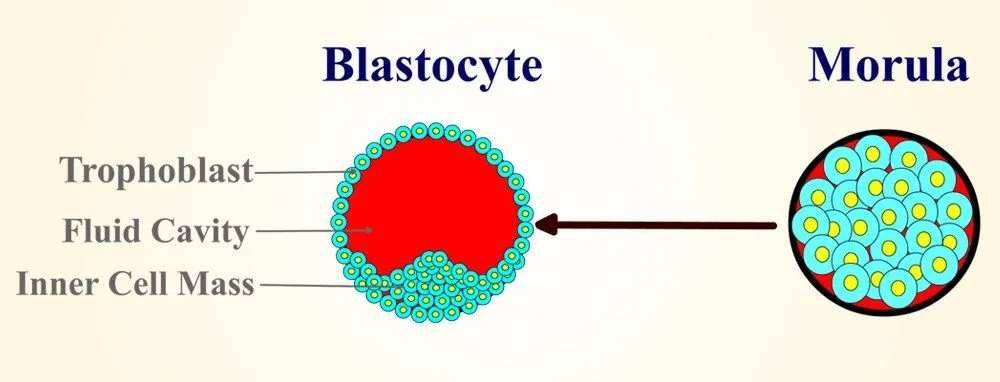
Once the zygote reaches the eight-celled stage, the blastomeres arrange themselves tightly against each other; this is called “compaction”. When there are 12 to 32 blastomeres present, the structure resembles a mulberry and is now called a “morula”. The cells of the morula give rise to the cells of the embryo, as well as cells that form the structures supporting the developing embryo. Four days after fertilization, the morula moves into the uterus and a fluid-filled cavity is formed. This structure is called the “blastocyst”. As the fluid in the fluid-filled blastocyst increases, two types of cells are seen: the “embryoblasts” (cells that give rise to the embryo) and “trophoblasts” (cells that give rise to the supporting structures of the embryo). These are the very earliest stages of how you were formed!!
Zygote vs Embryo: What's The Difference?
This brings us to a question that trips up a lot of people, and it is right there in the title of this article: what is the difference between a zygote and an embryo? The two words describe the same continuous journey, just at different points along it. The zygote is strictly the single cell that exists right after fertilization, before it has divided even once. It is the very first stage of human development, which embryologists label Carnegie stage 1.

That single-celled stage does not last long, only about a day. Roughly 24 to 30 hours after fertilization, the zygote makes its first cleavage division and splits into two cells called blastomeres. The moment it becomes two or more cells, it is no longer called a zygote; it is now an embryo. The simplest way to remember it is this: a zygote is a one-celled embryo-in-waiting, and once it divides, the embryo has begun. (You will occasionally see the zygote itself described as the earliest embryo, and both usages are in circulation, but developmental biology usually reserves the word "zygote" for that single-cell stage.)
From there, the embryo keeps dividing into the morula and then the blastocyst as it travels down the Fallopian tube toward the uterus, exactly as we saw above. It holds on to the name embryo throughout the first eight weeks of development. From the ninth week onward, once the major organs have taken shape, it earns a new name: the fetus.
What’s So Special About The Zygote?
Now, we know that the first cell that led to us is the zygote, but there are a few things that make the zygote really special. Let’s take a look at those characteristics below.
Genetically Unique Zygote – The Reason For Variety In The Human Race!!
Have you ever wondered why you have brown hair, but your sibling’s hair is black? Or perhaps why you have hazel-colored eyes, but your mom’s eyes are blue? Why is your dad balding, but your uncle isn’t? Physical traits like hair color and the color of your eyes are all determined by the genes that we inherit from our parents. These genes exist on strands of chromosomes; we all have 23 pairs or 46 chromosomes as a part of our normal genetic makeup. Once fertilization takes place and a zygote is formed, it inherits half of its chromosomes from the mother and half from the father, but these chromosomes come together in a new pattern that isn’t present in the mother or father, which makes it entirely unique. During meiosis in each parent, homologous chromosomes pair up and physically swap segments (a process called crossing over), so every sperm and every egg already carries a unique reshuffling of the parent’s genes. The zygote then combines two of those one-of-a-kind chromosome sets, producing an individual unlike any other. This mechanism forms the basis of biparental (from 2 parents) inheritance and brings about such miraculous variation in the human species. This shuffling of genes in the zygote makes you unique and truly one of a kind!
The Totipotent Zygote – It Creates Everything From Nothing!
We all know that humans are multicellular organisms with specialized cells that are grouped together to form different organs that carry out various functions. However, we now know that before we develop this giant machine of cells, we were just a single cell called the “zygote”. Just imagine that a single-celled zygote divides countless times to form more and more cells to turn us into giant humans! A zygote has the unique ability to make any kind of cells; your heart, nerves, muscles… you name it and it comes from this tiny zygote. This potential of the zygote to develop into any kind of cell found in the human body is called totipotency, and is why a zygote can create an entire organism from a single cell.
To summarize, it’s safe to say that the zygote is the first cell that gives rise to an entire individual. The unique genetic makeup of this tiny zygote makes us different from the billions of other humans that exist on Earth!
References (click to expand)
- 1. FERTILIZATION.
- Sadler T. W. (2006). Langman's Medical Embryology. Lippincott Williams & Wilkins
- Moore K. L., Persaud T. V. N.,& Torchia M. G. (2020). The Developing Human: Clinically Oriented Embryology. Elsevier
- Zygote - Embryology.
- Webster S.,& Wreede R. D. (2016). Embryology at a Glance. John Wiley & Sons
- Eggs. Molecular Biology of the Cell. NCBI Bookshelf
- Embryology, Week 1. StatPearls. NCBI Bookshelf
- Meiosis and Fertilization. NCBI Bookshelf
- Embryology, Weeks 6-8. StatPearls. NCBI Bookshelf