Table of Contents (click to expand)
A holobiont is a host organism — usually a eukaryote like a coral, plant, or human — together with all of the microorganisms that live on or inside it (bacteria, archaea, fungi, viruses, and other microbes), treated as a single ecological unit. Examples include the human-microbiome system, coral reefs (coral + symbiotic algae + microbiome), and individual plants with their root and leaf microbiota.
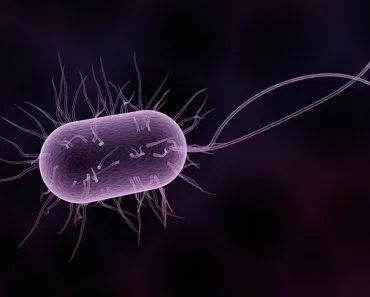
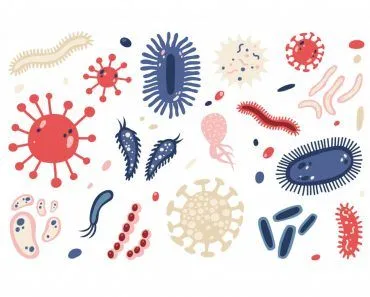
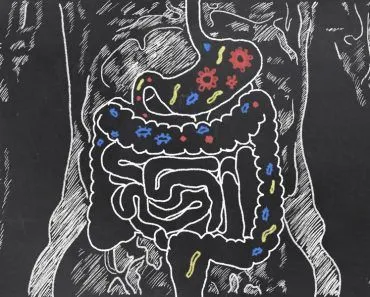
When you look at a human being, you think of it as an individual organism from a single species, but if you zoom in a few million times, you will find that there are many other species living on and inside every human being. We have an entire microbiota of bacteria living on our skin alone — current NIH Human Microbiome Project estimates put it at roughly 1,000 species across 19 phyla. The gut hosts an even richer community, roughly 1,000-1,500 bacterial species in any given individual, alongside the many viruses that may be present in our system (collectively, the virome). There is also an estimated 80 or so genera of fungi found on the human body, with the richest fungal diversity living between the toes!
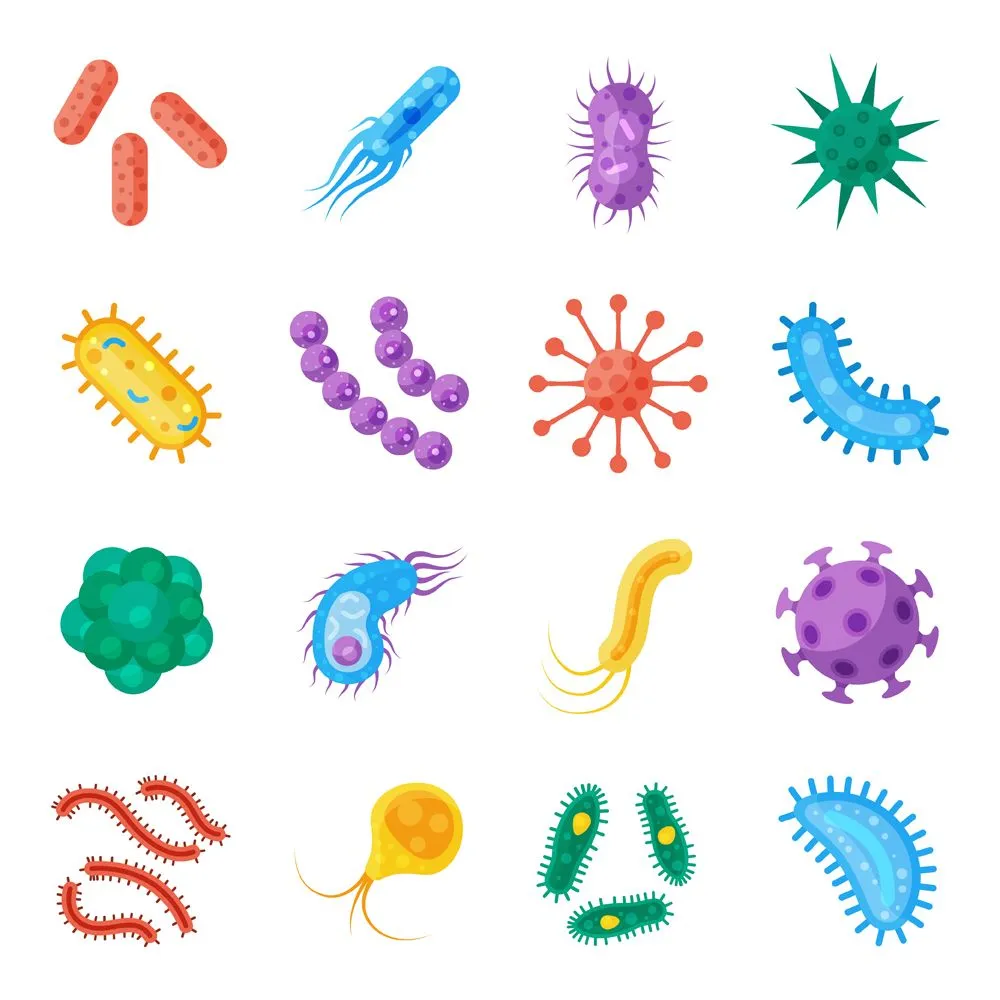
Clearly, a human being is intimately connected to plenty of other microscopic species, some of which are dangerous, while others are essential for keeping us healthy and balancing our microbiome. Together, human beings (as the host) and the many microscopic species living in and on the body (bionts) can be called a holobiont!
What Is A Holobiont?
Human beings might be the most widely studied holobiont, but it is surely not the only example. A holobiont is any agglomeration of a host, microbiome, virome, and other related organisms that each function together as a whole. The term has a longer history than people often realize: German biologist Adolf Meyer-Abich first used it in 1943, but the modern, evolutionary meaning was popularized by Lynn Margulis in her 1991 essay Symbiogenesis and Symbionticism. It was initially applied to limited partnerships, such as various fungi and algae that combine in lichen-covered rocks, and other common symbiotic relationships, but was soon applied to much more complex ecological units, such as coral reefs!
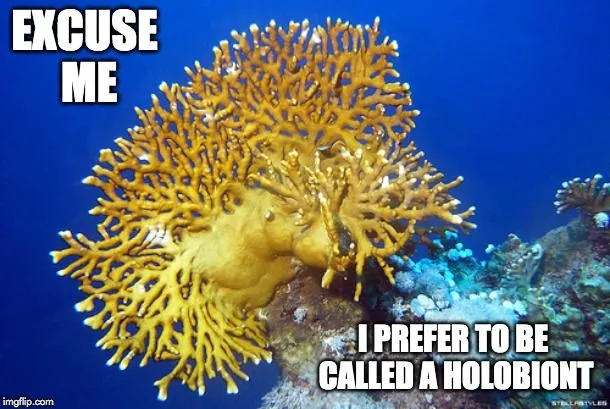
A reef comprises the coral animal itself, the algal symbionts that grow and function on the coral, as well as all the bacterial and microbial bionts relying on these other organisms to survive and thrive. The idea of a holobiont also inspired the concept of a hologenome, meaning the combined genomes of the host and all its symbionts. The hologenome theory of evolution, formally proposed by Eugene Rosenberg and Ilana Zilber-Rosenberg around 2007-08, views the holobiont as a unit of selection — the host and its microbes evolving partly together rather than purely as separate entities.
In some cases, this may be the case, as symbiotic relationships often result in coevolution, and such progress may be present in specific host-biont pairs, but some holobionts comprise hundreds of different microorganisms and species, all of which interact in different ways. For clarity, a hologenome includes: 1) the host and symbiont genes that alone or together affect a holobiont genome; 2) the coevolved host and symbiont genes that affect the holobiont phenotype; and 3) host and symbiont genes that don’t affect the holobiont phenotype.
Every symbiont and biont has a slightly different method of interaction with the host, ranging from parasitic to mutualistic, and may also have very different levels of partner fidelity (which must be very strong for coevolution). Some of these relationships may be temporary, or antagonistic, or established in broadly differing ways. The idea that all of these individual genomes will consistently evolve as a holobiont unit is unlikely; in other words, natural selection will work at different levels, and at different rates, for constituent members of the holobiont.
Holobiont Examples
Some of the most widely studied examples of holobionts are human beings and coral reefs, but in fact, all animals and plants are holobionts, as every species we know of maintains some sort of microbiome and close-knit relationships with other microorganisms. In the past two decades, a significant amount of research attention has shifted to studying holobionts and the effects of such complex arrangements on fitness, illness, selection, and survival.
Holobiont Vs. Symbiote Vs. Microbiome Vs. Superorganism
Given that holobiont is a relatively new concept in biology, it is only natural that some people confuse or conflate it with other related concepts. For example, a microbiome is the collective name for the ecological communities that live on, in or near an organism, including pathogenic, commensal and symbiotic partners. This term, therefore, does not include the host itself, which is typically a eukaryotic organism. A symbiont (sometimes "symbiote") is one organism in a symbiotic relationship — and despite popular usage, symbiosis is the catch-all term for "living together" and can be mutualistic (both partners benefit), commensal (one benefits, the other is unaffected), or parasitic (one benefits, the other is harmed). A holobiont contains all of these types of partnerships among its dozens or hundreds of constituent members.
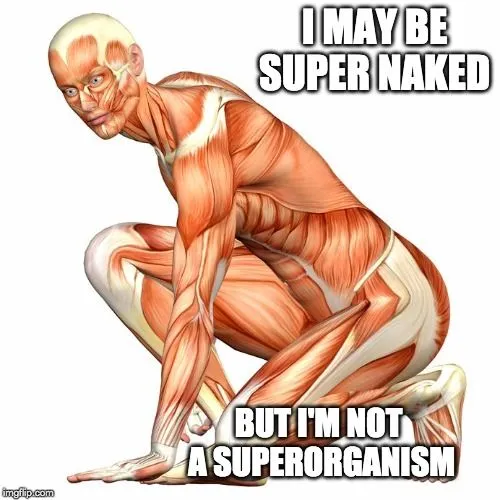
Holobionts are often confused with superorganisms as well, but there is a very clear difference between them. A superorganism tends to consist of many individual members, such as an ant colony or beehive. These individuals work together, with different types performing specialized functions, much like the cells of a traditional organism. Typically, a very small percentage is responsible for reproduction, and the failure of one area/specialization of the superorganism will likely result in the failure of the remainder, similar to a spreading cancer in a single organism.
A Final Word
The concept of holobionts is a perfect example of how our understanding of biology continues to evolve. Although these interwoven relationships have existed for billions of years, the significance of treating them as one evolutionary unit is only now being seriously explored. The coral holobiont, in particular, has become a flashpoint: warming oceans trigger mass bleaching events (most recently the 2023-24 fourth global coral bleaching event documented by NOAA) by breaking the partnership between coral animals and their algal symbionts. Not to be confused with superorganisms, microbiomes, or basic symbiotic relationships, a holobiont is an ecological community of interconnected members built around a host and a nearly limitless cast of microbial partners.
References (click to expand)
- Haag, K. L. (2018, March 1). Holobionts and their hologenomes: Evolution with mixed modes of inheritance. Genetics and Molecular Biology. FapUNIFESP (SciELO).
- I, holobiont. Are you and your microbes a community or ....
- Douglas, A. E., & Werren, J. H. (2016, May 4). Holes in the Hologenome: Why Host-Microbe Symbioses Are Not Holobionts. (M. J. McFall-Ngai & R. J. Collier, Eds.), mBio. American Society for Microbiology.
- Vandenkoornhuyse, P., Quaiser, A., Duhamel, M., Le Van, A., & Dufresne, A. (2015, February 5). The importance of the microbiome of the plant holobiont. New Phytologist. Wiley.
- Role of microorganisms in the evolution of animals and plants: the hologenome theory of evolution (Zilber-Rosenberg & Rosenberg, FEMS Microbiol Rev 2008)
- Confirmation of the 4th Global Coral Bleaching Event (NOAA Coral Reef Watch)