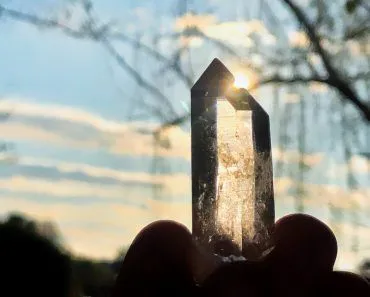
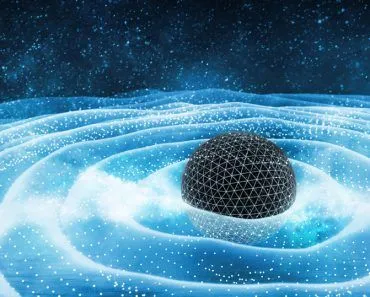
A time crystal is a phase of matter whose atoms repeat a pattern in time, the way an ordinary crystal repeats a pattern in space. First theorized in 2012 by Nobel laureate Frank Wilczek and Alfred Shapere, the discrete kind was finally built in 2017 (and on Google’s quantum computer in 2021). Nudged into motion, its spins flip in an endless rhythm, yet it stores no useful energy, so it is no perpetual motion machine.
They sound like something straight out of a science fiction movie, right?
However, believe it or not, time crystals are a reality. The story of time crystals is a beautiful example of how progress often happens when different strands of thought merge, combining ideas and theories, revising laws and fundamentals, and not limiting them to their primitive/previous understandings.
If you plan to continue this article, let me begin by saying… This is not a fairy tale or science fiction. There won’t be a sorcerer’s recipe for a time traveling portal at the end. This article instead discusses a rather intricate and delicate understanding of human intellect and excellence in realms of the physical understanding of matter.
First, we’ll take a look at the two, highly distinct forms of crystals. Unlike the segregations made based on chemical bondings, crystal lattices and configurations, we choose to make a quantum distinction.
Space Crystals
This is just a rather frivolous name for “normal crystals”.
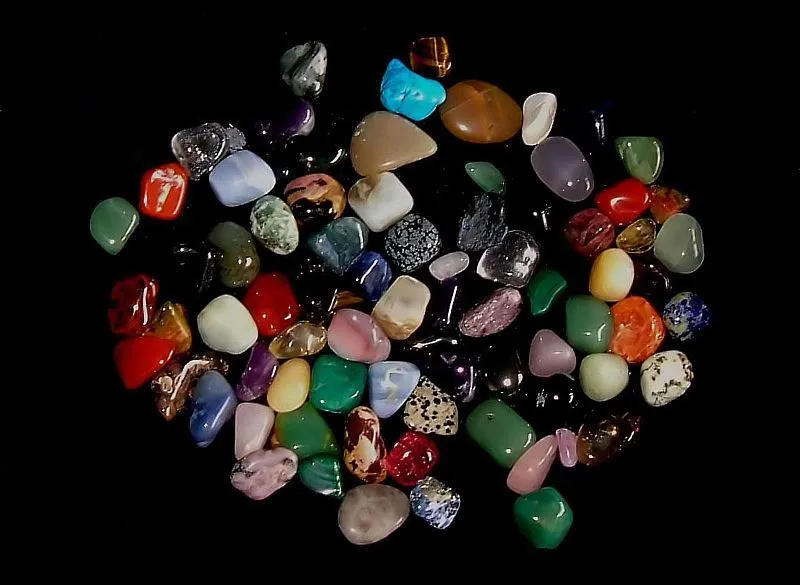
Snowflakes, diamonds, rubies, opals, jade, sapphire, pearls and even humble common salt are all examples of these normal crystals. You might have the names of a hundred more gemstones and semi-precious rocks that you can add to this list. Nature is the original and greatest artist on Earth, a marvelous creator of complex, yet splendid entities.
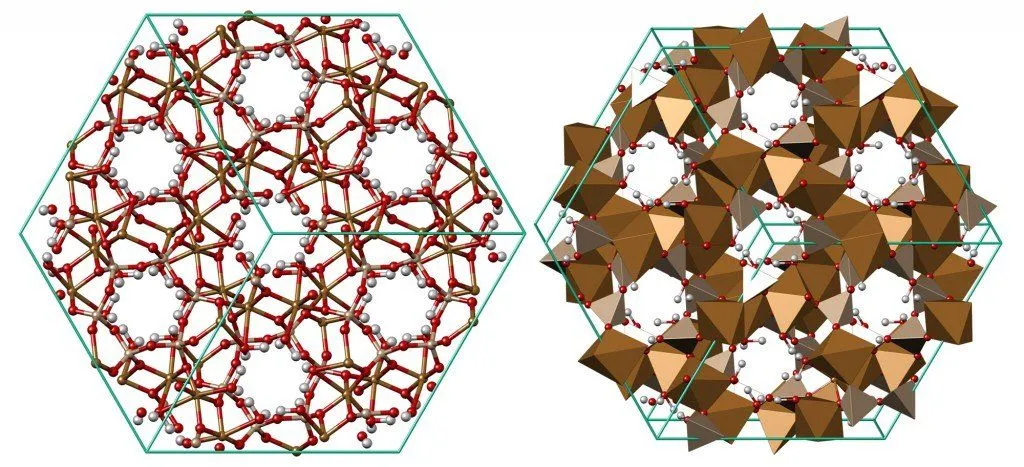
These crystals might be particularly attractive thanks to their translucent hues or radiance, but their true worth can only be observed microscopically. Crystalline solids are composed of intricate, geometrically oriented structures of adjoining atoms, ions or molecules. These are a highly ordered assembly of microscopic structures called crystal lattices. These structures repeat and extend periodically in all directions, remaining un-phased by time, thus remaining in an equilibrium phase, hence the name.
Time Crystals
Time crystals can be considered one of the coolest things that physics has chanced upon. They are a gateway to a whole new world of ‘non-equilibrium’ phases that are entirely different from anything researchers have studied in the past.
 Unlike the regular space/normal crystals, which have a regular and repeated arrangement of atoms or molecules in space, a time crystal is, as one might expect, an arrangement of atoms or molecules that form a regular, repeated pattern in time. They will stay in one configuration for a while, then flip to another, back and forth in an endless cycle.
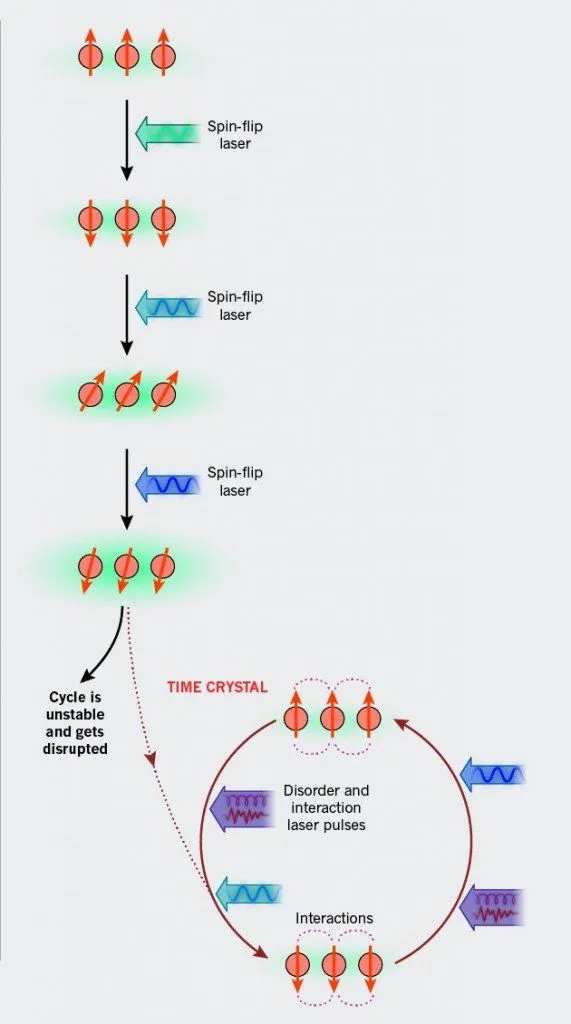
The version that has actually been built in a lab is called a discrete time crystal. You poke the system over and over with a steady, evenly spaced pulse (say, a microwave or laser pulse), and the strange part is that it does not simply keep time with that beat. Instead, the atoms’ spins flip only once for every two pulses (sometimes every three), so the pattern repeats at a fraction of the driving rhythm. Physicists call this a “subharmonic” response, and it is the telltale signature of a time crystal. There is also a rarer cousin, the continuous time crystal, which falls into its own rhythm without any external beat at all.
What Does This Mean?
Physical laws revolve around symmetries. One of the deepest is time-translation symmetry: the laws of physics work the same way today as they did yesterday and will tomorrow, regardless of the environment. This unchanging quality is one of the foundational ideas that govern how we perceive the universe.
Scientists wondered whether molecules could break the traditional time-translated symmetry that regulates the laws responsible for creating crystals. Normal crystals, like quartz and common salt, are three-dimensionally configured crystals. Their atoms/molecules are arranged in a predictable and periodic system.
Time crystals, on the other hand, are different at the atomic level. Their atoms spin periodically, changing directions as a pulsating force flips them, quite literally, like an old grandfather clock.
A Remarkable Type Of Matter
A time crystal can be regarded as an assemblage of quantum particles that are continually changing and never reaching a steady state. Such a system draws stability from random interactions that would typically disrupt other kinds of matter. And before you ask: no, this is not perpetual motion. A time crystal flips back and forth without soaking up any net energy from the pulses that drive it, so there is no free lunch to be extracted, and the laws of thermodynamics remain perfectly intact.
The known laws of physics apply equally and symmetrically to all points in space and time. However, certain systems violate that symmetry. In a magnet, atomic spins line up, rather than pointing ambiguously in all directions. Similarly, in mineral crystals, atoms occupy specific positions in space, but after some slight jolts, the crystal may no longer maintain its symmetry in space. When a transformation causes structural properties to change, physicists call it symmetry-breaking, and it is everywhere in our not-so-perfect natural world.
Interestingly enough, time crystals are ideal candidates for ongoing research, and have more potential than you could possibly imagine!
Isn't That Just A Swinging Pendulum?
When people first hear about time crystals, a fair question pops up: isn't that just a pendulum? A swing, a metronome, or the tiny quartz sliver inside a wristwatch all keep a steady rhythm too, so what makes a time crystal any different?

The answer comes down to one word: rigidity. Push a swing at a certain pace and it simply moves at the pace you set. Nudge it a little faster and its rhythm shifts to match. An ordinary oscillator faithfully copies whatever beat you feed it. A discrete time crystal is far more stubborn. You poke it with a steady pulse, and it flips only once for every two pulses, settling into a rhythm at half the beat you are providing. That is the subharmonic response we met earlier.
Here is the surprising part. You can make your pulses sloppy, speed them up, slow them down, or add a dash of noise, and the time crystal keeps marching to its own half-time beat regardless. A normal oscillator would fall out of step at once. Physicists have shown that the doubled rhythm of a single everyday oscillator does not survive these small imperfections, whereas a time crystal's beat holds firm across a whole range of conditions. That toughness is the fingerprint of a genuine phase of matter, much like a magnet holds its poles even when you jostle it.
And through all of this, the crystal never heats up or soaks up any net energy from the pulses driving it. It is not storing power like a wound-up spring, and it is certainly not a perpetual motion machine. It is simply a new and orderly way for matter to behave in time.
Who First Dreamed Up Time Crystals?
The idea has a surprisingly bumpy backstory. In 2012, the Nobel laureate Frank Wilczek was mulling over the deep symmetry behind ordinary crystals when he wondered whether the same symmetry-breaking that arranges atoms in space might also arrange motion in time. He worked out the math and proposed that a system could tick along forever in its lowest-energy state. On paper, at least, the time crystal was born.

There was a catch. Many physicists doubted that anything sitting quietly in its ground state could move on its own without bending the laws of thermodynamics. In 2015, Haruki Watanabe and Masaki Oshikawa settled the debate with a no-go theorem, proving that Wilczek's original version, a time crystal in equilibrium, simply cannot exist. The idea seemed dead on arrival.
Then came a clever escape route. Around 2016, several groups noticed that if you give up on equilibrium and instead keep prodding the system with a repeating pulse, the objection melts away. This periodically driven, or "Floquet," version is the discrete time crystal, and it was allowed to live where the original was not. Theory soon turned into hardware, and by 2017 the first real ones were ticking away in the lab. So the neat one-liner "theorized in 2012, built in 2017" hides a genuine plot twist: what physicists actually built was not quite the crystal Wilczek first imagined, but a driven cousin that slipped past the no-go rule.
Prospects Of Applications In The Real World
By now, you might be wondering what a time crystal might look like; does it actually exist in our space-time, or is it just a hypothetical entity, too promising to have its existence denied?
First of all, the most important thing to understand about time crystals is that they only exist in limited circumstances, particularly when given a nudge, which can set their oscillation in motion.
And this state has indeed been achieved, not just once but many times over. In 2017, two teams independently built the first discrete time crystals and published their results in the same issue of the journal Nature. Christopher Monroe’s group at the University of Maryland used a chain of trapped ytterbium ions, while Mikhail Lukin’s group at Harvard used the spins of nitrogen-vacancy centers locked inside a diamond. In both cases, the spins kept flipping at half the rhythm of the driving pulses, exactly the subharmonic beat that defines a time crystal.
Then, in 2021, Google did something that turned heads: it created a time crystal on its Sycamore quantum processor, using 20 of its qubits as the “atoms.” The trick that made it stable is a phenomenon called many-body localization, in which disorder traps the qubits so they can never settle into equilibrium or soak up energy from the drive. That work, published in Nature, was the most convincing time crystal yet, and a neat reminder that quantum computers are not just calculators but laboratories in their own right.
The story has not stood still since. In 2022, physicists at the University of Hamburg reported the first continuous time crystal, one that finds its own rhythm without any external beat, built from a cloud of ultracold atoms inside an optical cavity. In 2024, a team at TU Dortmund University coaxed a time crystal out of a chunk of the semiconductor indium gallium arsenide that lasted at least 40 minutes, roughly 10 million times longer than earlier examples. And in 2025, researchers at the University of Colorado Boulder made the first time crystal you can actually see: liquid crystals that swirl into never-ending, tiger-stripe patterns under a microscope when you shine blue light on them.
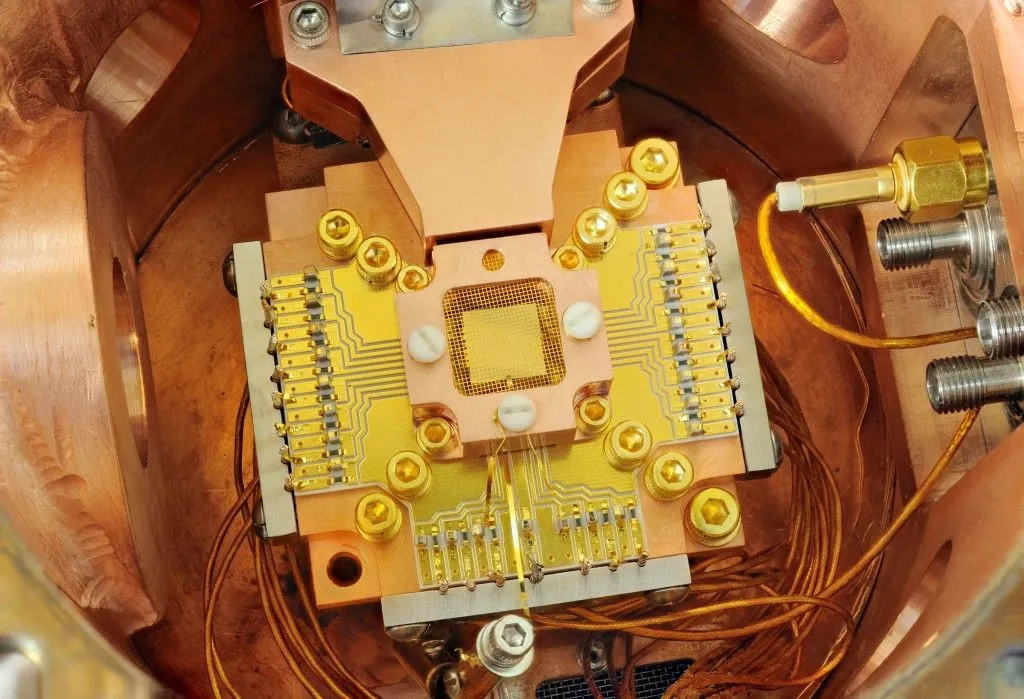
It is believed that studying these time crystals and diving deeper into their understanding will lead to breakthroughs in the accuracy of atomic clocks, gyroscopes and magnetometers, as well as aid us in building better quantum technologies that could one day be woven into our practical lives. Because a time crystal keeps such a faithful beat, it makes a natural reference for ultra-precise timekeeping and sensing. In fact, in 2026 a team led by UC Berkeley turned a diamond time crystal into a sensor for faint oscillating magnetic fields, picking up signals in a frequency band where ordinary quantum sensors struggle. Researchers also hope the same robustness could help quantum computers hold on to fragile information for longer, which would be of huge importance for technological advancement in our world.
Conclusion
This discovery of time crystals as a simple and wildly unexpected idea raises fundamental questions about how they form and what phases of matter they might occupy over time, while residing in our observable space. The depth and richness of phases of matter in this universe is apparently even more significant than we have thus far understood.
Time crystals have pointed out one thing without any doubt; we need to thoroughly re-evaluate some existing theories and understandings of phases of matter, namely those that exist beyond our observable realm. There are some potential applications of time crystals that might be even more sci-fi than their names imply. If you think that time crystals are nothing but a well-theorized hypothetical entity, allow me to point out that Quantum Physics is just as relevant as Newtonian Physics, even though perceiving objects on the quantum level is decidedly more challenging!
References (click to expand)
- Crystal. Encyclopaedia Britannica
- What are minerals, gems, and crystals made of?. The University of California, Santa Barbara
- Minerals, Crystals and Gems. Smithsonian Education
- Observation of a discrete time crystal. Nature (2017)
- Time-crystalline eigenstate order on a quantum processor. Nature (2021)
- Eternal Change for No Energy: A Time Crystal Finally Made Real. Quanta Magazine
- Space-time crystals from particle-like topological solitons. Nature Materials (2025)
- Quantum Time Crystals. Physical Review Letters (2012)
- Absence of Quantum Time Crystals. Physical Review Letters (2015)
- Floquet Time Crystals. Physical Review Letters (2016)
- Discrete Time Crystals. Annual Review of Condensed Matter Physics