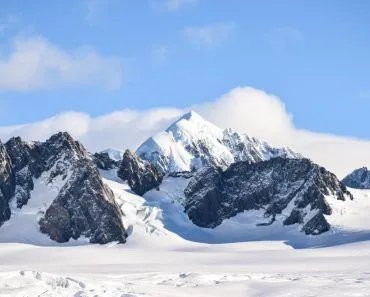
Waterfalls freeze when prolonged subfreezing air supercools the moving water to a fraction of a degree below 0 °C (32 °F). Tiny needle-shaped crystals called frazil ice form in the turbulent flow, then snag on rocks and overhangs as anchor ice, slowly building downward into a solid column.
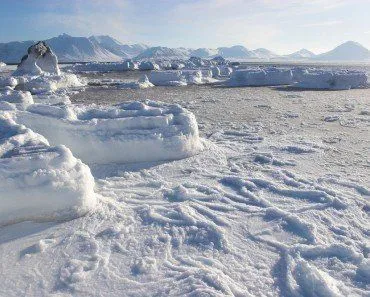
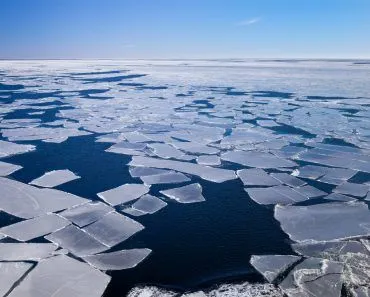
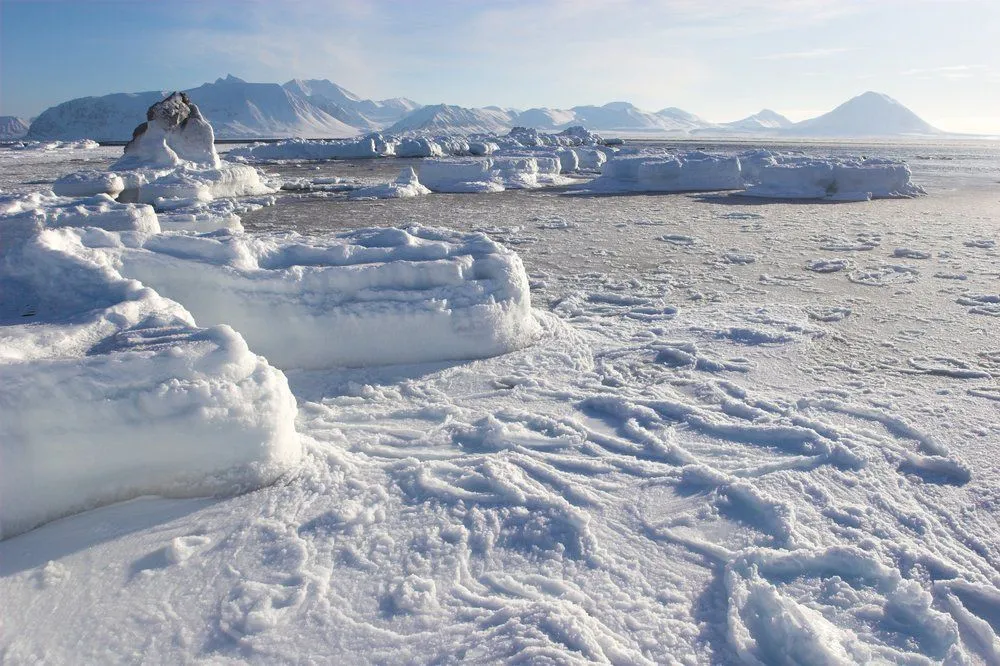
It’s not uncommon to see frozen ponds or lakes during the winter season. When the mercury dips even further, water bodies as large as an ocean can freeze too. You might be amazed to learn that the Arctic Ocean, one of the biggest oceans on the planet, remains partly covered by a thin layer of ice throughout the year and freezes almost completely on the surface during the winter.
The freezing of a lake or a pond still makes some sense, at least intuitively, because the water present in them remains stationary all the time, so it freezes when the temperature drops below zero. But how can you explain waterfalls, i.e. water bodies with a lot of turbulence that flow unidirectionally at a rapid rate, becoming frozen mid-flow?
How Does Water Freeze In Ponds/lakes?
Water turns to ice when small water molecules stick to each other in very cold conditions and stop moving around. This starts with a few molecules, but the neighboring molecules get attached to that ice too, making it larger and larger until the entire body of water eventually freezes.
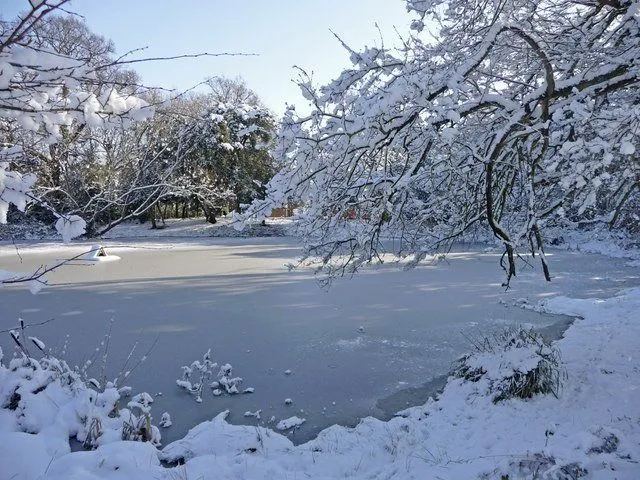
The freezing of water in this way is relatively easy in ponds and lakes, as water molecules remain more or less stationary, preventing other molecules from moving away from each other. This is the reason so many lakes freeze when the temperature falls to 0 degrees Celsius.
On the other hand, freezing a waterfall is not as easy, since the water molecules are continuously moving and can therefore easily detach from the bonds holding them together. Therefore, the conditions have to be a lot colder, which means that the ambient temperature must be well below freezing temperature to freeze a flowing waterfall. Furthermore, since the water in a waterfall is continuously mixing, the cooling takes place uniformly over the entire waterfall, so it takes longer for any readily noticeable changes to appear. This means that, unlike still water (where you can easily spot frozen patches of water floating on the surface), if a waterfall begins to freeze, it will take some time before you actually notice the effects.
How Does A Waterfall Freeze Mid-flow?

It happens like this: when the air stays well below freezing (often cited around -6 degrees Celsius / 21 degrees Fahrenheit, though it can vary) for long enough, the moving water in the river or stream that feeds the waterfall becomes supercooled. Supercooling is when water dips below its normal freezing point of 0 degrees Celsius (32 degrees Fahrenheit) without turning solid. In flowing, turbulent water the supercooling is tiny, typically just a few tenths of a degree below zero, but it is enough to kick-start ice formation. As water molecules begin to stick to each other, they form tiny, solid particles of ‘frazil ice’. Frazil ice, which has an oily appearance when seen on the surface of water, is a cluster of loose, randomly-oriented ice crystals shaped like tiny needles. It usually forms in rivers, lakes, oceans, and other water bodies containing turbulent, open and supercooled water.
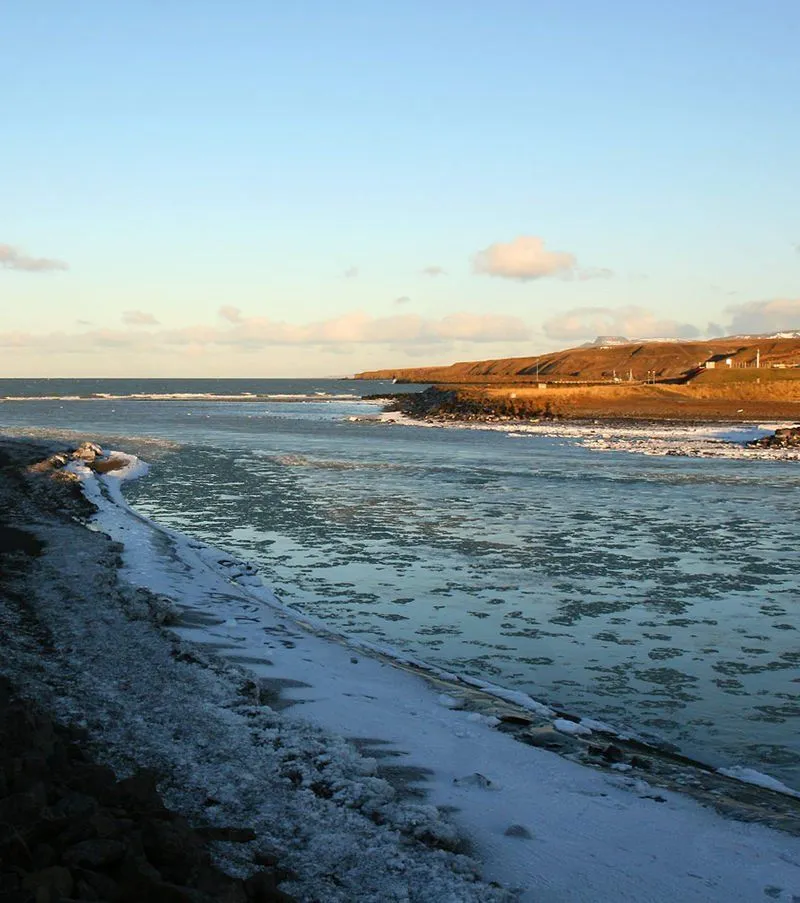
These frazil ice crystals cluster together and adhere to nearby surfaces, so in free-falling waterfalls, they attach to the overhang, whereas in waterfalls that flow down a cliff, they cling on to the cold rocks. Ice that grabs onto the rocks and bed this way is called anchor ice. Provided that the temperature stays low for a long enough time, the anchor ice forms a foothold at the spot where the water drops from the rocks and begins to grow downwards, creating a column as tall as the height from which the water falls! After enough time passes, the entire waterfall appears to have frozen, making for a picturesque, but extremely surreal sight.

Although the process only occurs under very cold conditions and takes quite a bit of time to bring a flowing water body to a complete standstill, the image of a frozen waterfall with long icicles hanging down from a cliff is truly something special to behold.
Does Niagara Falls Really Freeze Solid?
Every few winters, photos of an apparently frozen Niagara Falls go viral, and people assume the whole cataract has clanked to a halt. It hasn't. According to the official Niagara Falls USA tourism authority, the water has never truly stopped flowing in modern times. Even when winter diversions cut the river's volume by roughly half, some 20 million gallons (about 76 million litres) still pour over the crest every minute, and all that kinetic energy keeps the core of the flow liquid. It is the same battle between moving water and the cold that decides whether a whole ocean freezes over.

So what are we actually looking at? The dramatic white scenery is mostly frozen spray. As mist and droplets are flung off the falling water, they hit the bitterly cold air and freeze onto trees, railings, and rocks, and a thick crust called an ice bridge piles up in the gorge below, sometimes tens of feet deep. The last time the falls themselves genuinely froze over was back in 1848, when an ice jam upstream dammed the river for around 30 hours. Since 1964, an ice boom strung across the river above the falls has been used to break up the floes that once caused those blockages, so a full freeze is unlikely to happen again. The "frozen" Niagara, in other words, is an icy illusion wrapped around water that never quite stops moving.
What Is A Frozen Waterfall Called, And Can You Climb One?
There isn't a single official scientific name for a fully frozen waterfall, but the ice that forms it has a precise vocabulary. The vertical sheet or pillar left behind is essentially a giant mass of anchor ice and icicles, built up from the frazil ice we met earlier. Climbers and many photographers simply call the result an ice column or ice pillar. Famous named examples, such as The Fang in Vail, Colorado, draw climbers from around the world each winter.

And yes, people really do climb them. Frozen waterfalls are the playground of ice climbers, who scale the brittle columns with crampons and ice axes. The most celebrated example came in January 2015, when Canadian climber Will Gadd, with Sarah Hueniken, made the first known ascent of a frozen section of Niagara's Horseshoe Falls. Even then, they were climbing a narrow strip of built-up spray ice along the edge, not the falls themselves, because, as Niagara park officials note, Horseshoe Falls has never completely frozen. A frozen waterfall solid enough to support a climber tells you the same thing every time: the temperature has stayed brutally cold, for a very long stretch.
References (click to expand)
- Martin, S. (1981, January). Frazil Ice in Rivers and Oceans. Annual Review of Fluid Mechanics. Annual Reviews.
- HK BARROWS. DETERMINATION OF STREAM FLOW DURING THE FROZEN .... The United States Geological Survey
- Osterkamp, T. E. (1978, September). Frazil Ice Formation: A Review. Journal of the Hydraulics Division. American Society of Civil Engineers (ASCE).
- Do the Falls Really Freeze in the Winter? Niagara Falls USA.
- Pair of Ice Climbers Are First to Ascend Frozen Niagara Falls. National Geographic.
- Frazil Ice. Glossary. National Weather Service (NOAA).