Table of Contents (click to expand)
Yes, but only when majority rule is deliberately limited. Democracies protect minorities through a constitutional bill of rights, judicial review, separation of powers, federalism, and power-sharing rules that the majority cannot simply vote away. Without these safeguards, majority rule can slide into a “tyranny of the majority”, so the protection depends on strong institutions, not on goodwill.
A democracy is a system of governance in which the people themselves, or their chosen representatives, hold the power. Democracy is based on the idea of majority rule, but it also protects the rights of minorities.
Arguably, the most sought after and fundamental right in a democracy is the right to vote, and by voting for a popular majority, this system allows representatives (whether by election to a post or by implementation of a plebiscite) to act on the behalf of the people.
Hypothetically, if such a vote is exercised without any protection for minority voters, in a society where every eligible voter turns up for the vote, the popular majority would follow the will of the numerical majority, which is assumed to choose the option that represents their interests best.
Political equality, therefore, will lead to a majority rule. That said, the practice of voting in itself is a concern; particularly, who shows up to vote and how much of an impact that voting exercise can make are intrinsically linked.
Minorities In Democracies
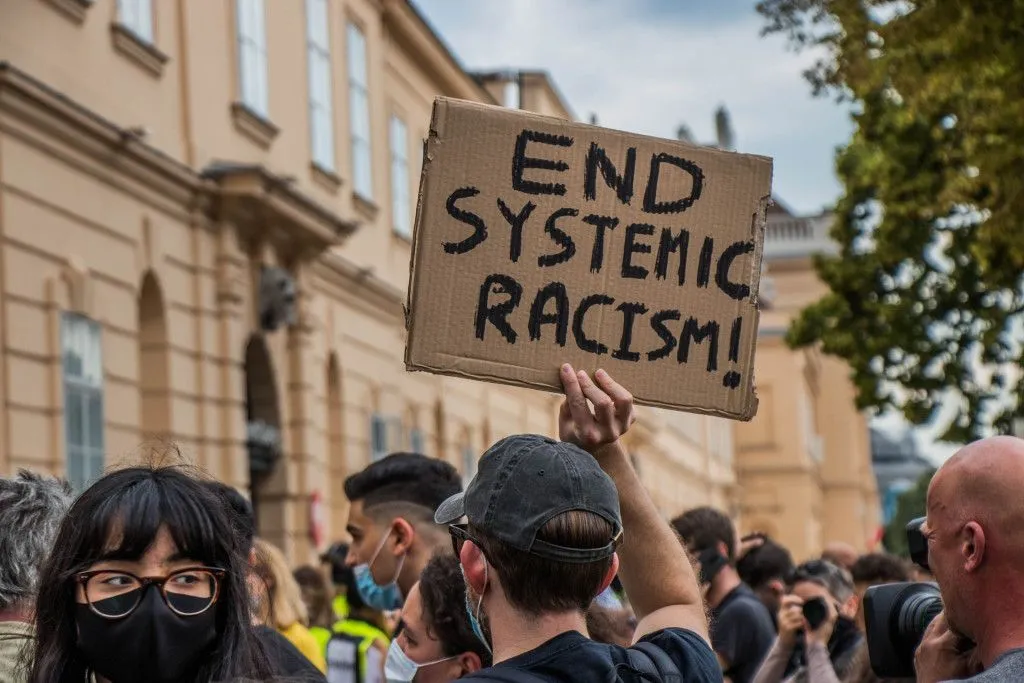
The protection of minority rights is not always a guarantee. The rights of minorities have regularly been violated by the majority. Prejudice and alienation have been experienced by minority groups in many other democratic societies, including immigrants, refugees, and members of particular religious groups. The identity of minorities is at risk of suppression if the majority exercises its will in public issues that affect those minority populations.
Does this all mean that minority rights are at the mercy of the majority-dominated legislative bodies?
Fortunately, not always. There are, of course, democratic barriers created by self-image, as well as what countries project into international domains. To deal with the homogeneity of political thought and action, group rights (wherein rights have been modified to suit the experience of communities and groups, even though the rights fall under an umbrella of more fundamental rights) have become an essential feature of democracies to effectively include diversity.

Tyranny Of The Majority
The internal conflict between the (voting) majority’s rule and the minority’s rights can also become a problem in democratic countries. The majority may occasionally enact laws or policies that harm minority groups through what has been dubbed “the tyranny of the majority”.
The phrase itself is not new. The French political thinker Alexis de Tocqueville coined it in Democracy in America (1835), worried that an unchecked majority could prove just as oppressive as any single tyrant. A generation later, the English philosopher John Stuart Mill took up the same anxiety in On Liberty (1859), arguing that society can tyrannize the individual not only through law, but through the sheer weight of majority opinion. Political theorists today add a related concern, the “persistent minority”: a group that always loses the vote, no matter how reasonable its case, simply because it is permanently outnumbered.
This argument, however, falls short when minority rights are seen as an intrinsic part of democratic structures built on the values of equality, freedom and justice.
The protection of minority rights is intimately linked to the existence of strong institutions and a thriving civil society. Minority rights are more likely to be upheld when independent institutions, like the court and the media, are empowered to hold the government responsible for its actions. A robust civil society made up of NGOs, advocacy groups, and other organizations can act as a check on the executive branch and guarantee the observance of minority rights.

How Democracies Protect Minorities
So how, in practice, does a democracy stop the majority from simply steamrolling everyone else? The answer is that mature democracies do not rely on majority rule alone. They deliberately fence it in with a set of institutional safeguards, each designed to put certain rights beyond the reach of a simple show of hands.
- A constitutional bill of rights. Fundamental freedoms (speech, religion, assembly, equal protection) are written into a constitution and placed above ordinary legislation. A 51% vote in the legislature cannot strip them away.
- Judicial review. Independent courts can strike down laws that violate those protected rights, even when those laws were passed by a clear majority. This has long been seen as one of the strongest shields a minority has against an overbearing majority.
- Separation of powers. Splitting authority between the legislature, the executive and the judiciary (with each able to check the others) makes it far harder for any single faction to capture the whole state and turn it against a minority.
- Federalism. Dividing power between national and regional governments lets a group that is a minority nationally still govern itself where it forms a local majority, as with linguistic or regional communities in federations such as Canada, Switzerland or Belgium.
- Supermajority requirements. For the most consequential decisions, such as amending the constitution, many systems demand far more than half the vote (two-thirds, three-quarters, or the agreement of multiple bodies), so the rules of the game cannot be rewritten on a narrow majority’s whim.
Voting rules themselves can also be designed to be more inclusive. Where a society is deeply divided along ethnic, religious or linguistic lines, political scientist Arend Lijphart argued that a winner-takes-all, “majoritarian” model can leave permanent minorities permanently shut out. His alternative, consociational (power-sharing) democracy, instead builds in a grand coalition of all major groups, a mutual veto on issues vital to each, proportional representation, and a degree of self-government for each community. Proportional electoral systems, used across much of Europe, work toward the same end: they give minority parties seats roughly in line with their share of the vote, rather than erasing them.
None of these mechanisms is foolproof, and democracies vary widely in how many they adopt. But together they explain why the honest answer to whether democracies can protect minorities is a qualified yes: they can, precisely to the extent that they constrain raw majority rule with rights, courts and power-sharing.
Democracy As The Lesser Of Two Evils
The catch is that there seems to be no other option than to cultivate trust in these methods. The risk posed by authoritarian governments to minority rights, if history has taught us anything, is far greater than the same threat in democracies (the Hitlers and Mussolinis of governance will be less kind towards minorities, needless to say). There is a compulsion to save face in democratic systems, so while systemic discrimination against minorities may exist, the possibility of outright social and legal elimination is low.
This is why, though many democracies may not legally recognize same-sex marriage (a sexual minority existing within a heterosexual framework, read more here), in democracies, unlike in pseudo-autocratic setups (as most nations will never admit to being autocratic, even if they are), homosexuality in itself is not criminalized. Autocracies are more rigid and less responsive to those who fall outside a particular bracket of citizens, whereas democracies are bound by constitutions, expectations, or precedents to look after as many citizens as possible.
No democracy, however, is perfect. Many seemingly harmless practices in democracies (and possibly other forms of government) are inherently assuming the rights of some over others. National and official languages, for example, often disadvantage those whose mother tongue is not included on the short list, whether they are aboriginals, immigrants or refugees.
Conclusion
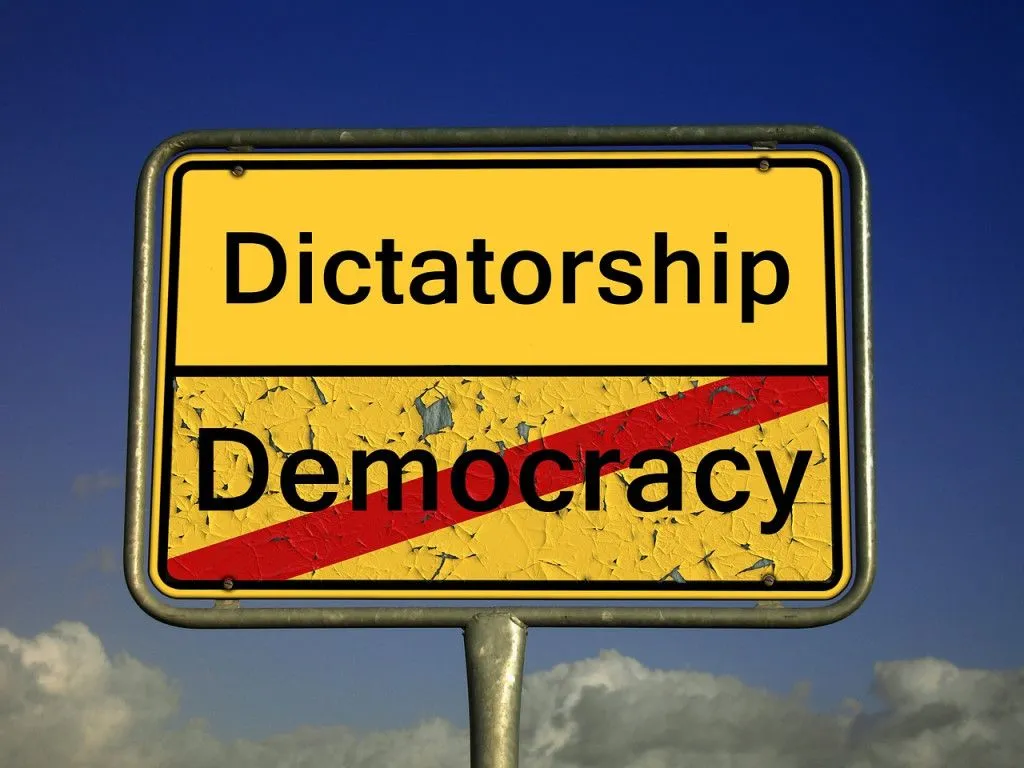
Democracy is not intrinsically hostile to minorities’ rights, but minority rights are not always guaranteed. Democracy relies on the majority rule premise, but this must be balanced with the robust defense of minority rights. Therefore, it is critical for democratic societies to recognize and actively combat the tyranny of the majority by putting safeguards in place to defend the rights of minorities.
This is obviously a simple take on a multidimensional problem (wherein certain minorities have historical differences with the majority, are oppressed successively by different forms of government, and may provide easy scapegoats to the regimes in power). The architecture of a democracy and the will of its citizens, along with their commitment to the ideals of democracy in practice, decide whether or not the state and sovereign people are averse to minority rights.
References (click to expand)
- (1998) Direct Democracy and Minority Rights: An Extension - JSTOR. JSTOR
- Haider-Markel, D. P., Querze, A., & Lindaman, K. (2007, June). Lose, Win, or Draw? A Reexamination of Direct Democracy and Minority Rights. Political Research Quarterly. SAGE Publications.
- (2005) The rights of minorities in international law - Hrčak - Srce. The University Computing Centre in Zagreb
- Democracy. Stanford Encyclopedia of Philosophy.
- Majority tyranny. Encyclopaedia Britannica.
- Majority Rule and Minority Rights. Annenberg Classroom (Annenberg Public Policy Center).