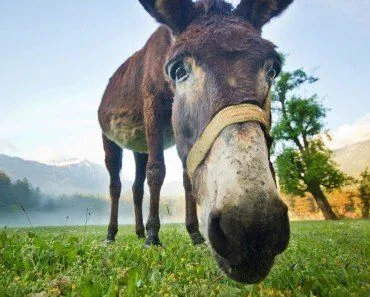
Many animals make group decisions in democratic, vote-like ways. Jackdaws and honeybees reach a quorum before moving, red deer set off once about 62% of the herd stands up, and baboons head wherever the most individuals want to go. It is collective decision-making rather than formal government, but the group, not a single ruler, usually decides where to travel and where to live.
Animals might not engage in extended debates in parliament houses or pass bills of legislation, but if you think politics is a human-made concept, think again! As it turns out, the notion of democracy might not be a purely human endeavor. Thus, when delving into the cooperative community and leadership-driven world of bees, elephants and certain aquatic mammals, you might be surprised at how tame the wild can be!
Animals tend to lean on these democratic, vote-like methods when faced with high-stakes choices: when and where the group as a whole will travel, who gets to lead the way, and what places they decide to call home. Biologists usually call it collective or consensus decision-making rather than true democracy, but the principle is strikingly familiar, with the group, not a single boss, calling the shots.
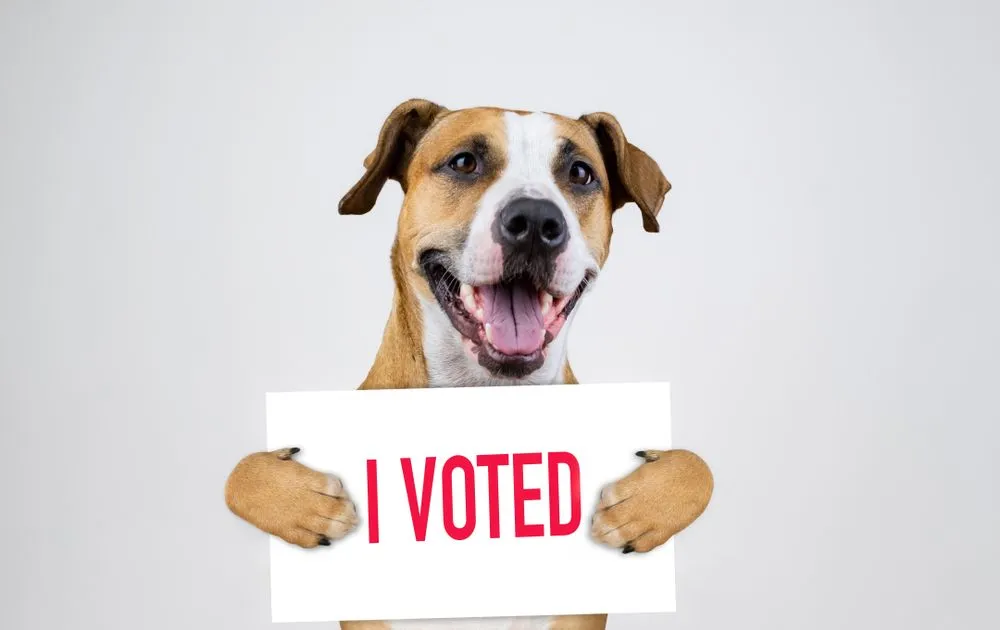
Birds That Fly Together, Stay Together
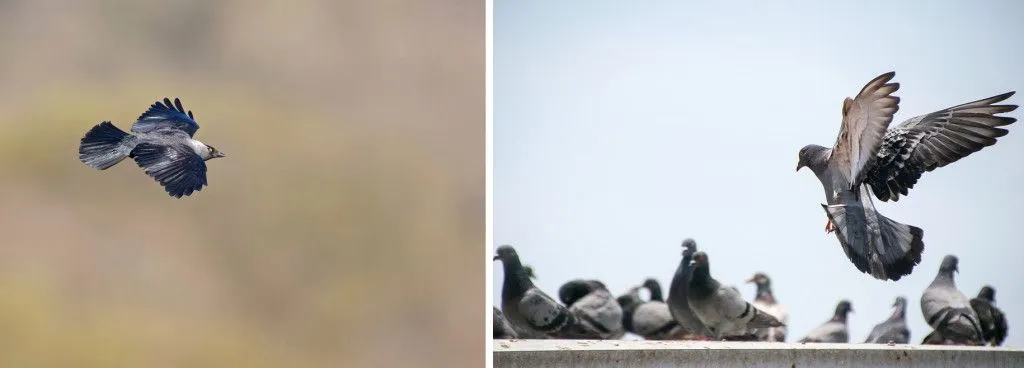
Birds seem to humbly recognize informed individuals of the flock. Before they take to the skies, they chat it out among the members of the flock, negotiating the best way to reach their destination.
Decision-making in Jackdaws creates quite a ruckus, with each individual calling out to signal their wish for departure with increasing crescendos. Take-off will only occur when the sound of the calls reaches a threshold volume. Based on this democratic vote, thousands of them will take flight in harmony, within seconds.
Similarly, highly social pigeon communities lean on the collective pull of the flock to settle on a heading, so the route they fly emerges from many birds nudging the group rather than from one bird barking orders.
Hive For The Win
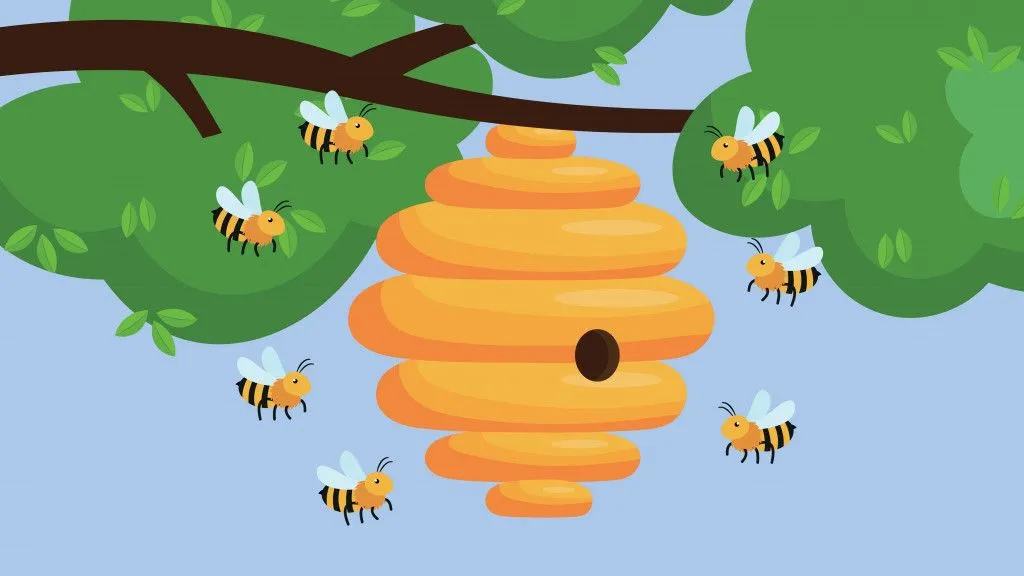
Perhaps one of the best examples of honeybee democracy comes from European honeybees, which leave some pivotal, life-or-death decisions to a committee of experienced foragers. When a hive grows too crowded, the colony splits, and a swarm of roughly 10,000 bees clusters on a nearby branch while a few hundred veteran scouts go house-hunting. As biologist Thomas Seeley has shown, each scout returns to perform a waggle dance advertising the spot she found, dancing harder for better sites, until enough scouts (a quorum of just 15 or so at one location) agree, and the whole swarm lifts off for its new home.
Rise Of The Planet Of The Apes
Given that our relatives, the chimpanzees, share almost 99% of their DNA with us, some behavioral similarities aren’t surprising. Chimps that want to climb up the power ladder spend their time building their reputation among other members, and making allies by offering perks like sharing meals, females and grooming services. Moreover, a group of chimps will also revolt to limit the power of the alpha, if he displays aggressive behavior in the society.
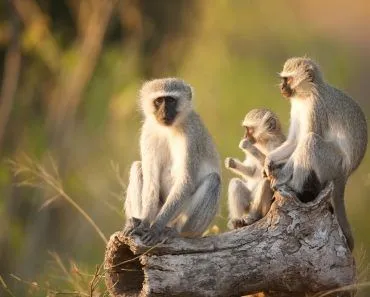
Wild olive baboons turn to democracy when they need to decide where to go. Decisions are made irrespective of social status or gender, and they adopt egalitarian methods as opposed to fisticuffs. One interesting study shows that when a group of baboons wants to take to the trails, a couple of ‘initiator’ baboons take the lead, and the initiator with the biggest posse will win and thus get to make the decision on which direction to head.
Deer-mocracy
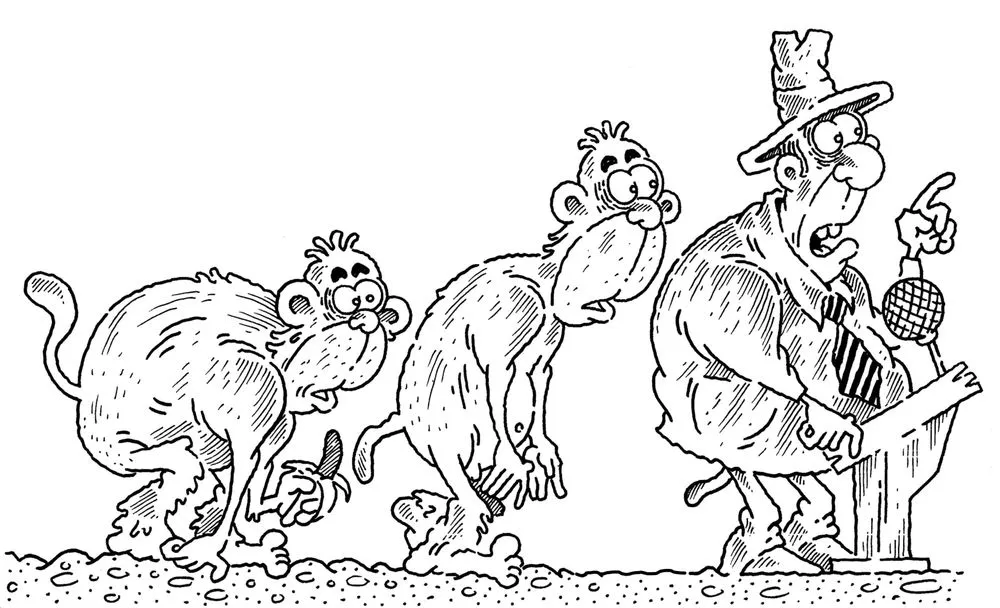
Red deer will put aside their own preferences and needs and accept the decision made by the group as a whole. When it’s time to leave, the herd will get a move on, but only once a clear majority votes by standing up. Biologists Larissa Conradt and Tim Roper found the tipping point sits around 62% of the adults on their feet, after which the whole herd ambles off together. Each individual forgoes the conflict of interest that is sure to arise, because each one tends to align their instincts to better fit the group’s synchronized movements. This hastens their search for food and prevents them from consequences that come from being abandoned, such as being targeted by predators.
The Bolder, The Better!
Personality isn’t only important for human politicians; fish take it seriously too! Sticklebacks will often switch leaders, which is largely dependent on the leader’s fan following and character. Thus, bold fish usually come out on top, while shy fish wait for their chance to rise to stardom.
Behold, The Matriarchs: Grandmas Rule
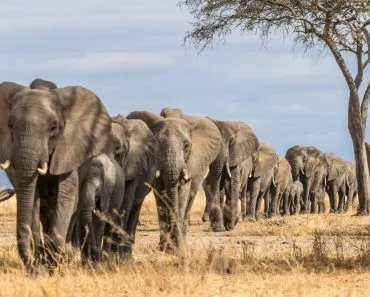
Elephants are probably the first species that come to mind when we think of matriarchal animal communities. Here the matriarch wins by seniority rather than by a show of hands: the herd defers to its oldest female as a living library of where to find water and how to dodge predators, and she leads the way on whatever journey lies ahead. Orcas revere their grandmothers in much the same way. The orca pod will follow an older female to guide them across the oceans in search of their favorite food, the Chinook salmon. Tellingly, these grandmother leaders matter most in lean years, and they take charge after menopause, which orcas hit in their 30s or 40s and then survive for decades beyond.
However, like we see in dirty human politics, not all animals play by the rules. Wolves emerge as leaders after beating and pummeling their way to the top of the pack, while termites are absolutely nepotistic, replacing their queens with exact clones.
To Sum It Up…
Some species of animals go all in to select a leader, but each group has their own way of doing so. There’s plenty of ways in which these politicking animals might surprise humans, and can probably teach us a thing or two along the way!
References (click to expand)
- Dibnah, A. J., Herbert-Read, J. E., Boogert, N. J., McIvor, G. E., Jolles, J. W., & Thornton, A. (2022, May). Vocally mediated consensus decisions govern mass departures from jackdaw roosts. Current Biology. Elsevier BV.
- Chen, D., Wang, Y., Wu, G., Kang, M., Sun, Y., & Yu, W. (2019, November). Inferring causal relationship in coordinated flight of pigeon flocks. Chaos: An Interdisciplinary Journal of Nonlinear Science. AIP Publishing.
- Dancing honeybees use democratic process when selecting a .... Science Daily
- Sandel, A. A., Reddy, R. B., & Mitani, J. C. (2016, July 5). Adolescent male chimpanzees do not form a dominance hierarchy with their peers. Primates. Springer Science and Business Media LLC.
- Strandburg-Peshkin, A., Farine, D. R., Couzin, I. D., & Crofoot, M. C. (2015, June 19). Shared decision-making drives collective movement in wild baboons. Science. American Association for the Advancement of Science (AAAS).
- (2000) Group decision-making in animals. Princeton University
- Nakayama, S., Harcourt, J. L., Johnstone, R. A., & Manica, A. (2016, May). Who directs group movement? Leader effort versus follower preference in stickleback fish of different personality. Biology Letters. The Royal Society.
- Nattrass, S., Croft, D. P., Ellis, S., Cant, M. A., Weiss, M. N., Wright, B. M., … Franks, D. W. (2019, December 9). Postreproductive killer whale grandmothers improve the survival of their grandoffspring. Proceedings of the National Academy of Sciences. Proceedings of the National Academy of Sciences.
- Brent, L. J. N., Franks, D. W., Foster, E. A., Balcomb, K. C., Cant, M. A., & Croft, D. P. (2015, March). Ecological knowledge, leadership, and the evolution of menopause in killer whales. Current Biology. Elsevier BV.
- McComb, K., Moss, C., Durant, S. M., Baker, L., & Sayialel, S. (2001, April 20). Matriarchs as repositories of social knowledge in African elephants. Science. American Association for the Advancement of Science (AAAS).