Table of Contents (click to expand)
Psychodynamic theory grew out of Sigmund Freud's psychoanalysis. Theorists like Carl Jung, Melanie Klein, Alfred Adler and Anna Freud kept his idea that unconscious drives shape behavior but dropped his strict focus on sex and childhood trauma. Yes, it is still used today: research shows psychodynamic therapy is as effective as other evidence-based treatments.
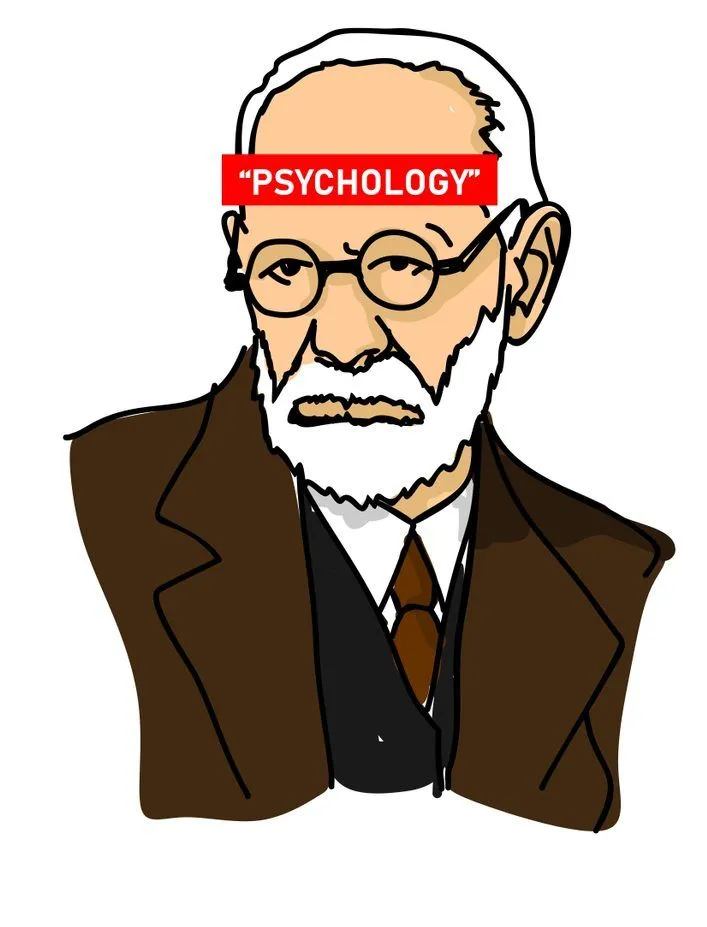
Freud.
The name prompts a million images, perspectives and arguments. For some it could be the meme. For others, the name could bring forth the concept of Oedipus Complex. For others, it could remind them of the concept of ice berg.
If you’re familiar with the field of psychology, you’d know that forming these associations was something Freud used in therapy. Freud was a rather innovative man. All his life he strived to be famous and put forth all kinds of theories. Early in his career he became an enthusiastic (and, it turned out, dangerously wrong) champion of cocaine, publishing a paper in 1884 praising it as a cure for everything from depression to morphine addiction. Today, though, he is better known as the ‘Father of Psychoanalysis’.
Out of the various theories he put forth, the iceberg model of personality and the psychosexual stages of development are the two things that put him where he is in the field.
But his theories also leaned heavily on the idea that humans were instinctual creatures (they only acted on impulse and instinct). Once you read that sentence, I’m sure you must have called nonsense on it… well, most of us here did. No one wants to be an emotional caveman, and even if you are impulsive, it doesn’t mean you are impulsive all the time. But Freud was hell-bent on proving his point, and when someone is that adamant, they’re always met with a bit of a backlash.
The Fall Of Freud’s Psychoanalysis
After being loyal supporters of his method, a bunch of theorists/therapists, started to question his ideas. They found loopholes and many unanswered questions in the stuff that he said and postulated. A few of the concerns that arose were:
- According to Freud every thought and consequently every action we took was associated with some kind of childhood trauma. We would always operate on this and never make conscious behavioral choices. Theorists who came after him believed that we were individuals capable of making free choices, and though some actions and thoughts could be governed by traumas that occurred in our childhood, if we were aware of them, we were capable of acting on them or letting them go.
- The second issue was that Freud was very pessimistic. He believed that we all came into the world conflicted and that we moved towards death. So, in a way, all life moved towards death. And this innate wish to die moves us towards being aggressive. Since we are not actively conscious about this ‘wish to move towards death’, it is channeled through us as aggressive energy. This aggressive energy can be negative emotions or thoughts like feelings of hatred and jealousy etc. And this causes us to behave negatively towards those around us.
- The third was the amount of control that the unconscious had on our behavior. Though the iceberg model showed a conscious aspect of the mind, Freud’s theories led us to believe that the conscious part of the mind was hardly functional, and in essence, useless.
The psychoanalysts who came after him began to question huge chunks of this theory, and began to postulate their own using Freud’s work as a base. Some theorists added on to his ideas while others diverged from them completely. The ones who built on his ideas were the psychodynamic theorists.
Some of the theorists who are considered psychodynamic theorists are Anna Freud, Melanie Klein, Alfred Adler, Carl Jung, Karen Horney, Erich Fromm and Erik Erikson, to name a few. Though each of the theorists mentioned made notable contributions to the field, Carl Jung’s theories on personality types and Klein’s work, which laid the groundwork for attachment styles, are the basis of much of modern psychology.
Carl Jung’s Analytical Theory
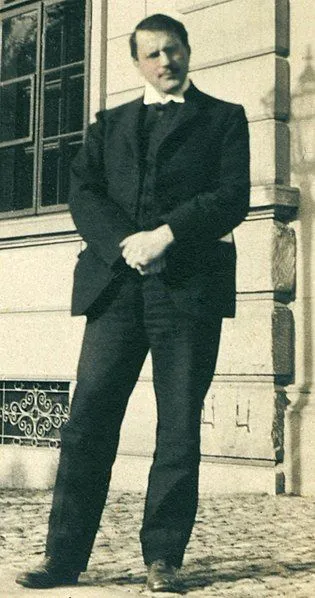
Freud was the founder of the first ever psychoanalytic society, and in Jung, he saw a successor. Jung was familiar with Freud’s model of the id, ego and super ego but added his own spin on the structure of the mind. He postulated that the psyche was made up of three parts: the ego (our conscious awareness), the personal unconscious (our own forgotten or repressed memories) and the collective unconscious.
That collective unconscious was where the two men really differed. Jung said the human mind doesn’t just hold our personal unconscious drives, but also a deeper layer of inherited memories and symbols shared by the whole species, which he called archetypes. In other words, he believed we were a product of not just our own thoughts and needs but also those of our ancestors. This collaboration between the two men continued until the concept of libido came up.
Differences With Freud On Interpretation Of Libido
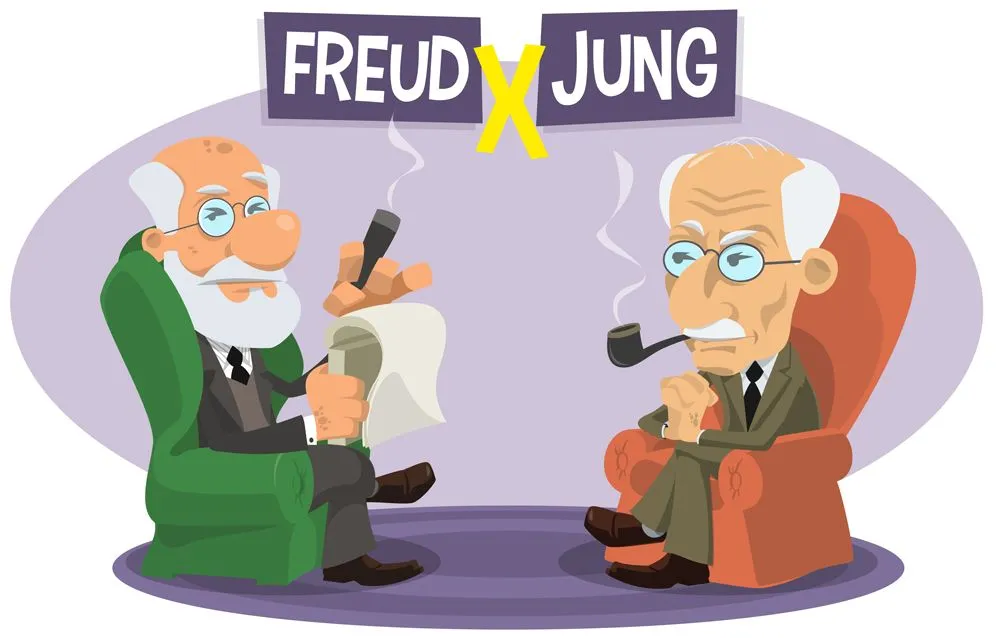
Freud said that libido was the driving force of all sexual energy. Jung, on the other hand, said that libido was general psychic energy, and was not purely sexual in nature. This difference of opinion (among others) led to the two men falling out and never speaking to each other again.
Psychic energy drove us to behave in certain ways and the environment/ situation that we were faced with determined how this energy was channeled. Jung is also the one who gave the world the concepts of introversion and extroversion. The MBTI (Myers-Briggs Personality Types) questionnaire is also based on the theories and concepts of Jung. The test has been used widely and is also a pop-psychology phenomenon. People use these personality types as a basis of their identity and even to connect with each other.
So, though he accepted many of the ideas Freud put forth, he didn’t think we were completely helpless. He felt that though we had instincts we could control how and when we showed them and our environment controlled how the energy was expressed.
Melanie Klein’s Object Relation’s Theory
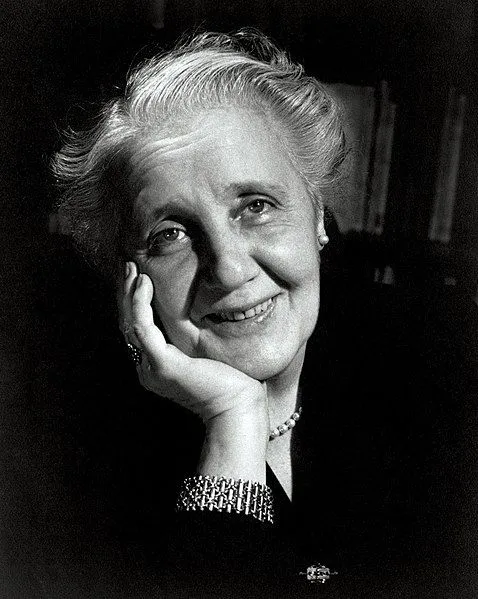
Melanie Klein can be considered one of the first women psychoanalysts to contribute something significant to the field. Klein opened up the possibility of psychoanalyzing children and infants, reading their play the way Freud read an adult’s words. Her theory was called the ‘Object Relations Theory’.
Klein’s theory moved away from Freud’s and saw all actions as a product of interpersonal relationships.
Secondly, she believed that all human contact gave rise to relatedness and was not motivated by fulfilment of sexual pleasure. And rather than focusing on paternal attitudes, Klein’s theory focused more on the mother and her attitude towards the child which would determine how the child sees the world. This was a first in the time, as Freud believed that everything revolved around the father and the child’s attitude towards him.
The Object Relations Theory postulated that all infants were born with an idea of good and bad. Initially they would see the world as all good or all bad, but later on they would begin to understand that the good and the bad can both be part of the same person. These ideas of good and bad were formed based on how often the child’s needs were met by the mother.
She postulated that the consistency with which the needs were met could indicate how the child’s personality would turn out. That is if the mother was inconsistent, then personality disorders would ensue.
Ramifications Of Klein’s Work
Klein’s theory was not met with a lot of acceptance during her time, but it was a pioneer in giving rise to attachment theories which are profoundly valued even today. Attachment theories look at parent child relationships and how they contribute to forming relationships later in life. A lot of self-healing and basis of couples therapy revolves around the same.
Conclusion
The theorists above used Freud’s ideas and built on them. There were others who moved away from the field completely and took an opposite stance. They ignored the role of instincts altogether and said that an individual was only a product of his environment, that none of his behavior was driven by childhood experiences. Since psychoanalysis was the first field of psychology to be explicitly named, every other field can be seen as originating from it, or opposing it completely.
Psychodynamics was once dismissed as something cooked up in an arm chair, lacking scientific proof. That charge has softened. Modern brain imaging has lent support to ideas like unconscious processing, and a landmark 2010 review by Jonathan Shedler in American Psychologist found that psychodynamic therapy produces benefits as large as those of other evidence-based treatments such as cognitive behavioral therapy, with effects that tend to grow after treatment ends. Psychodynamic therapies are still used widely, often in combination with other approaches. The theories have been used to explain human behavior, personality disorders and depression, and even to study organizational psychodynamics. In many ways, psychodynamic thinking is the root from which most other forms of therapy in psychology grew.
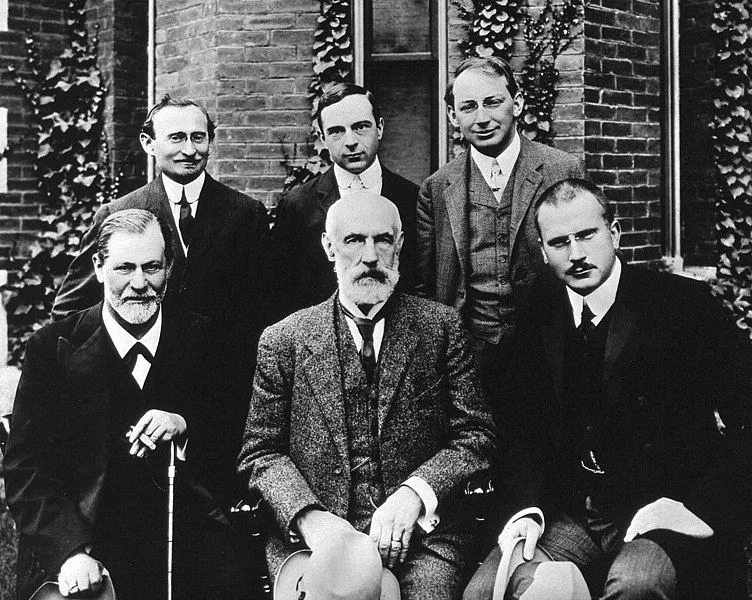
What was once called arm chair banter, is as alive as it was decades ago.
References (click to expand)
- Is Psychodynamic Therapy Right for Me? - Psych Central. Psych Central
- The Jungian Model of the Psyche. Psyche
- Schultz D. P., Duane S.,& Schultz S. E. (2013). Theories of Personality. Cengage Learning India Private Limited
- Shedler, J. (2010). The Efficacy of Psychodynamic Psychotherapy. American Psychologist. PubMed (NIH)
- Melanie Klein - British psychoanalyst. Encyclopaedia Britannica