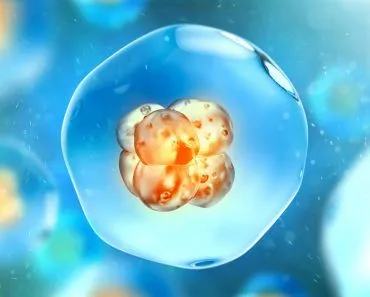
Single-celled organisms like amoeba and paramecium have no brain, neurons, or nervous system, so mainstream neuroscience says they are not conscious or sentient the way animals are. They sense and respond to their surroundings, and one minority theory (Arthur Reber's Cellular Basis of Consciousness) argues that counts as a primitive mind, but this remains contested.
Consciousness… it’s a can of worms.
No one can seem to reach a safe conclusion as to what it exactly means to be conscious. This is probably because debates rarely even get to the point of exploring what it actually is. Most of the time scholars can’t even agree if it’s a philosophical or scientific phenomenon!
Many famous scientists and philosophers have tried to crack the mystery of consciousness.
First came Aristotle. He simply attributed consciousness to a “soul”. Jump almost a millennium and a half ahead, and René Descartes came up with his (now) famous concept of Cartesian dualism (read: the famous mind-body problem). Even Francis Crick (yep, the DNA guy), tried his hand at defining consciousness!
Scientists generally try to define consciousness in terms they can physically experiment on. For neuroscientists, conscious awareness is to know what’s on one’s mind. This is easy for higher animals, like humans, dogs, or even octopi. A more formal definition of consciousness is nervous systems in complex life forms that can sense external and internal stimuli and form coherent and appropriate responses to each one. Thus, it should be safe to say that the brain or the nervous system is the seat of consciousness.
However, what about simpler life forms, especially those without a brain?

Are Simpler Life Forms Conscious?
That depends on the philosophical tradition you consider. Take panpsychism, which suggests that consciousness, or the “mind”, is a fundamental property of the universe. According to this theory, everything in the universe has some level of consciousness, from rocks and trees to humans and animals. According to this view, a single-celled organism would definitely be conscious.
That said, it doesn’t help us scientifically explain how and why that single-celled organism is conscious. According to the prevalent neuroscientific view of consciousness, single-celled organisms have no neurons to do any “thinking”, per se.
A cognitive psychologist by trade, Arthur Reber, published his book “The First Minds”, in which he proposed a theory known as the Cellular Basis of Consciousness or the CBC model.
Reber’s CBC model is actually quite recent in terms of consciousness research. After all, it was only published in 2018. In Reber’s theory, he placed a high level of importance on the process of decision-making. According to Reber, if an organism can alter its actions or behaviors in response to changing stimuli in its environment, then, technically, that could qualify as consciousness.
Reber believed that just because the brain can generate complex responses to stimuli doesn’t mean that you can’t generate such responses without a brain.
Single-celled organisms like amoeba or paramecium are technically “brainless”, yet they are capable of making complex decisions based on changes or variances in their external environments. They are, in a manner of speaking, “aware”.
Let’s consider the example of a microbial protozoan, Stentor roeselii.
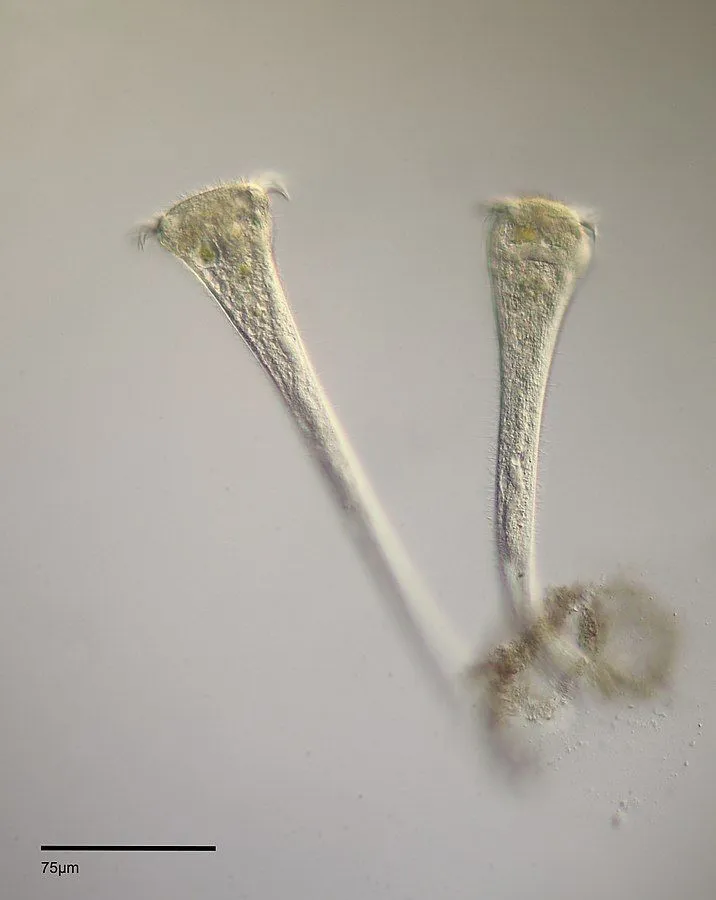
S. roeselii is an incredibly tiny and trumpet-shaped single-celled organism. It’s actually fairly common; you’ll probably find them in a river, pond, or ditch near your house.
Over a century ago, an American zoologist, Herbert Spencer Jennings, exposed S. roeselii to an irritant (carmine powder). He found that the protozoan actively avoided the irritant as much as possible. Why is this significant? Think about it like this… when a person is exposed to pepper spray, what do they do? They shield their face and try to avoid it.
Well, Stentor roeselii did pretty much the same thing. It identified and localized the irritation in the external environment (carmine). It then actively tried to stay away from it. That’s awareness and responsiveness.
Researchers at Harvard University recently re-ran the experiment. This time, however, they swapped carmine powder for tiny plastic beads. Why did they need to do this?
Well, when the team first tried carmine, their S. roeselii barely reacted to it. So, through trial and error, they switched to microscopic plastic beads, which reliably provoked the avoidance behaviors they wanted to study.
Why carmine no longer did the trick is anyone’s guess. Carmine isn’t a synthetic dye; it’s a natural pigment harvested from cochineal insects (scale insects, not beetles), so its exact makeup can vary. The cultured protozoans used in the lab may also simply respond differently from the wild ones Jennings worked with over a century ago.
So, What Did They Find Out?
Turns out, S. roeselii avoided the beads in pretty much the same way that Jennings had first described.
At first, they couldn’t classify the avoidance behaviors in the same way Jennings had. He had effectively published a hierarchy of behaviors. As the level of irritation increased, S. roeselli would switch from avoidance behavior level 1 to avoidance behavior level 2, and so on and so forth.
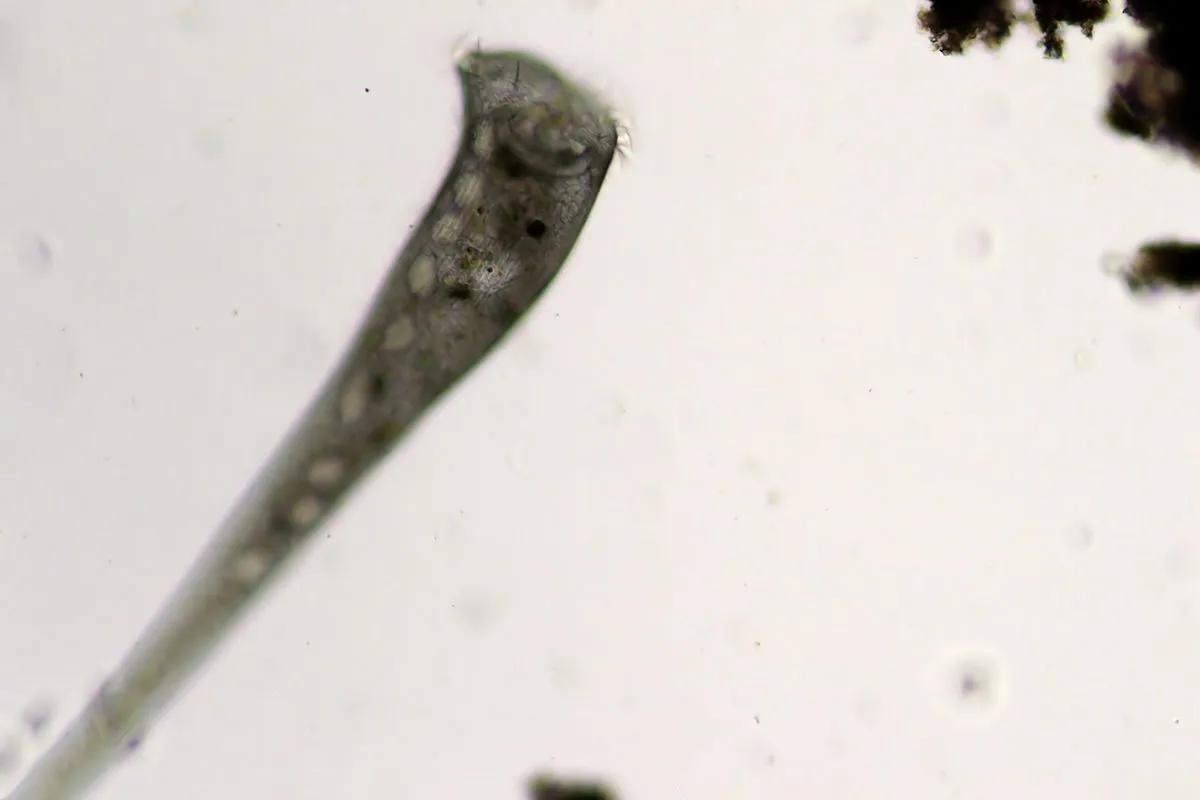
This time around, it wasn’t so straightforward. The team found that most of the time, when exposed to an irritant, the protozoan would simply alter the direction of their outstretched ciliary appendages.
If altering the direction of their cilia didn’t work, they could either contract their bodies or detach from the substrate they were attached to and swim away.
When they reached a stage of needing to choose between contraction and detachment, there was an equal chance of S. roeselii choosing one over the other. Effectively, they tossed a coin.
What astonished the team at Harvard was that it almost seemed as if the protozoan was “making decisions” and “changing its mind”.
The lead author of the study, Jeremy Gunawardena, had the following to say:”They do the simple things first, but if you keep stimulating, they ‘decide’ to try something else. S. roeselii has no brain, but there seems to be some mechanism that, in effect, lets it ‘change its mind’ once it feels like the irritation has gone on too long.“
Do Single-celled Organisms Feel Pain?
Here is where things get slippery. Watching Stentor recoil from an irritant, it is tempting to say it "hurts". But scientists draw a careful line between two very different things: nociception and pain.

Nociception is just the machinery for detecting and reacting to something harmful. The International Association for the Study of Pain (IASP) defines it as "the neural process of encoding noxious stimuli". Pain is something else entirely, which the IASP defines as "an unpleasant sensory and emotional experience". Put simply, nociception is the alarm going off, while pain is the unpleasant feeling of that alarm. The IASP is blunt about it: "pain and nociception are different phenomena", and one does not automatically imply the other.
So when an amoeba pulls away from a jab, or Stentor swims off from a cloud of plastic beads, it is genuinely reacting to a threat, but there is no brain to turn that reaction into a felt experience of suffering. Neuroscientist Joseph LeDoux frames it neatly: defensive, keep-me-alive behaviors are ancient and appear in the very first single cells, whereas the conscious feelings we pile on top of them (fear, the ache of pain) arrived far more recently, alongside complex nervous systems. By the mainstream view, then, a single-celled organism can sense harm and dodge it, but it almost certainly does not feel pain the way you or I do.
Do Single-celled Organisms Have a "Quantum Mind"?
There is an even stranger idea floating around, and it keeps turning up in searches: the claim that single-celled beings possess a kind of "quantum mind". Where on earth does that come from?

Blame (or thank) anesthesiologist Stuart Hameroff and physicist Roger Penrose. Hameroff was hooked on exactly the puzzle at the heart of this article. As he put it, "The paramecium has no central nervous system. No brain, no neurons, but it swims around, finds food, finds a mate and avoids danger." How? He zeroed in on the paramecium's internal scaffolding, tiny hollow protein tubes called microtubules, and wondered whether they were quietly doing the information-processing that neurons do in us.
Together, Hameroff and Penrose built this hunch into a full theory of consciousness called Orchestrated Objective Reduction, or "Orch OR". It proposes that consciousness bubbles up from quantum computations inside microtubules, not only in brains but, in principle, in any cell that has them (a broader version of the question of whether quantum physics applies to biological systems at all). If that were right, a lone paramecium really would be running something like a miniature quantum mind.
Here is the catch: most physicists and neuroscientists do not buy it. The stock objection is that a living cell is far too "warm, wet and noisy" for delicate quantum states to survive long enough to matter, and physicist Lawrence Krauss once told Hameroff, "From a physics perspective, everything you said is nonsense." Orch OR is a real, peer-reviewed theory, but it sits firmly on the fringe rather than in the textbooks.
A Final Word… Are Single-celled Organisms Conscious?
Most studies that attempt to conquer or answer consciousness approach it from a human- or animal-centric view. Neuroscientists generally study the structure and function of the animal brain in order to gain insights into how we perceive the world around us, how we make decisions, and how we form our sense of self.
This approach, although promising, provides us with a narrower and more materialistic definition of consciousness that we cannot extrapolate to other living organisms with lower neural organizations or even no neural organizations. This definition is also at odds with the CBC model, which posits that unicellular organisms can be considered conscious and sentient because of their ability to conduct decision-making processes.
However, this can also be considered one of the larger demerits of the CBC model, as it flies foul in the face of multiple conclusions that point to neuronal activity as the seat of consciousness.
For example, let’s consider how Joseph LeDoux, an American neuroscientist, views consciousness. For LeDoux, he differentiates between two types of consciousness, namely creature consciousness and mental state consciousness. For Ledoux, single-celled or lower organisms might not be conscious in the way that we are, nor lament and contemplate our consciousness in the ironic way that we do.
Thus, it is important to note that although other living creatures, like unicellular organisms, are alive and behaviorally responsive to environmental stimuli, this doesn’t correlate or equate to a mental state of consciousness like we (humans) experience. For LeDoux, mental state consciousness would relate to thinking about one’s place in the world and being aware of experiencing it, rather than just reacting to it.
According to the CBC model, unicellular organisms can be considered conscious due to their subjective decision-making processes, but this view is still quite at odds with the larger theory of consciousness that runs in neurobiology circles, namely that consciousness is a product of neuronal or synaptic activity.
A broader scope of research is required to better understand the nature and experience of what it means to be alive. By studying the very nature of consciousness, we may gain insights into the fundamental nature of reality itself.
References (click to expand)
- Koch, C. (2018, May 15). What Is Consciousness?. Scientific American. Springer Science and Business Media LLC.
- (2020) This Brainless, Single-Celled Blob Can Make Complex 'Decisions'. Live Science
- (2020) Unexpected Depths | Harvard Medical School. Harvard Medical School
- Dexter, J. P., Prabakaran, S., & Gunawardena, J. (2019, December). A Complex Hierarchy of Avoidance Behaviors in a Single-Cell Eukaryote. Current Biology. Elsevier BV.
- Baluška, F., Miller, W. B., Jr., & Reber, A. S. (2021, March 3). Biomolecular Basis of Cellular Consciousness via Subcellular Nanobrains. International Journal of Molecular Sciences. MDPI AG.
- Holly, P.-W. (2021, January 1). A unifying theory of physics and biological information through consciousness. Communicative & Integrative Biology. Informa UK Limited.
- KINGSLAND, S. (1987, August). A Man Out of Place: Herbert Spencer Jennings at Johns Hopkins, 1906–1938. American Zoologist. Oxford University Press (OUP).
- LeDoux, J. E. (2021, December 27). As soon as there was life, there was danger: the deep history of survival behaviours and the shallower history of consciousness. Philosophical Transactions of the Royal Society B: Biological Sciences. The Royal Society.
- The synaptic self - American Psychological Association. American Psychological Association
- Terminology - International Association for the Study of Pain (IASP).
- Can Quantum Physics Explain Consciousness? One Scientist Thinks It Might. Discover Magazine.
- Hameroff, S., & Penrose, R. (2014). Consciousness in the universe: A review of the 'Orch OR' theory. Physics of Life Reviews. Elsevier BV.