Table of Contents (click to expand)
A tragic hero is a noble protagonist whose downfall is brought about by a flaw or error in judgment, known as hamartia. Aristotle set out four criteria for the type in his Poetics: the character should be good, appropriate to his role, true to life, and consistent. By these measures, both Othello and Macbeth qualify as tragic heroes.
Although tragedies by definition don’t have a happy ending, we still like to watch them, right? They make us laugh and cry at the same time. Aristotle, who first analyzed tragedy in his Poetics, argued that the hero should be neither perfectly virtuous nor villainous, but a good person whose ruin is triggered by an error of judgment or a flaw, a quality he called hamartia. A tragic hero, then, is a character who holds great importance in a play, usually the protagonist, but who meets a tragic end because of that flaw in his or her character. In Othello and Macbeth, Shakespeare presented the downfall of two great heroes (the titular characters) because they possess certain character flaws, rendering the play tragic.
How Do You Decide If Someone Is A Tragic Hero?
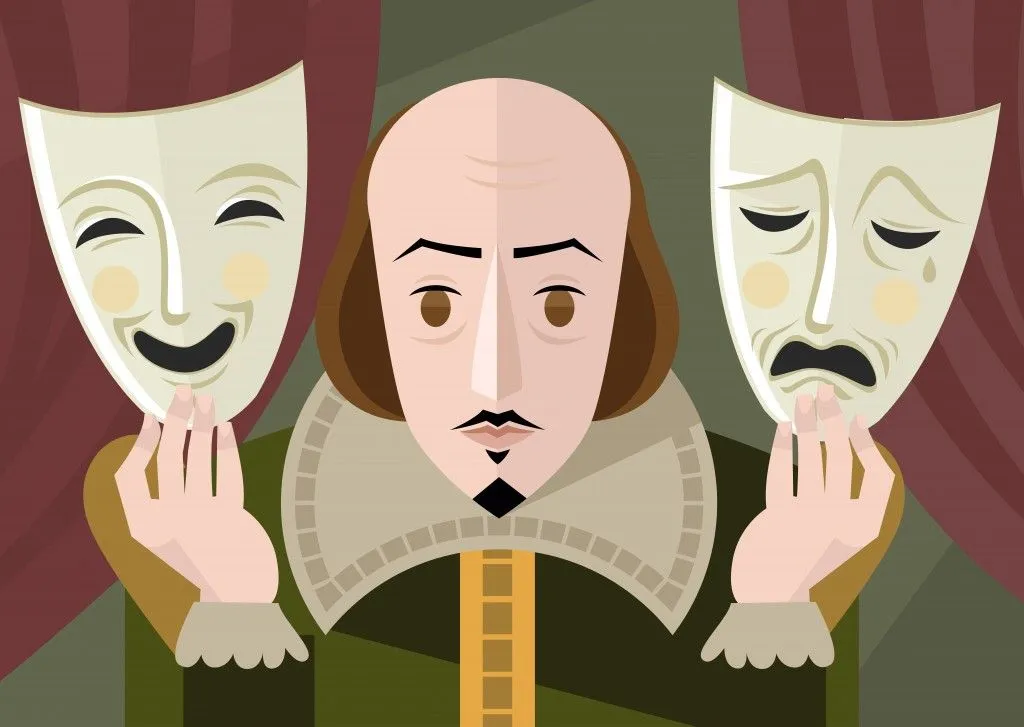
The Greek philosopher Aristotle established four main criteria for judging a hero as tragic.
Firstly, the hero should be an inherently good person from the beginning of the play. Second, the character must abide by the qualities of a hero, maintaining a nobler status. Third, the character must be true to life, his actions must have rationale involved. The final criterion is that the traits of the character must be somewhat consistent in his actions throughout the play, bringing about a sense of completeness.
Finally, while remaining believable, the character should be larger than life itself, which adds to his overall appeal to the audience. Another less discussed aspect of Aristotle’s theory of tragedy is the idea of catharsis. Catharsis is the arousing of fear and pity in the audience and the purging, or release, of those emotions, leaving the reader or observer with a sense of relief and wholeness. To quote Aristotle:
Tragedy is an imitation not only of a complete action, but of events that inspire fear and pity. Such an effect is best produced when the events come as a surprise, and the effect is heightened when, at the same time, they follow as cause and effect.
First Criteria
Othello undoubtedly fits in the first criteria of being an inherently good person. When Brabantio, Desdemona’s father, sends a troop of armed guards to attack Othello after learning from Iago that Othello has married his daughter, Othello does not become angry and treats both the soldiers and Brabantio with respect. Othello believes that he has done nothing wrong, and that his reputation will speak for itself.
Macbeth doesn’t fit well in Aristotle’s first criteria, as the audience is only vaguely able to see his good side. The only truly good virtues seen in Macbeth is that he is a military general and listens to his wife.
Second Criteria
Othello and Macbeth both fit Aristotle’s second criteria. Both had a dignified position in their country’s army, thus qualifying them as suitable heroes. Othello is a highly respected general of the army of Venice, while Macbeth was made the Thane of Cawdor out of respect for his great war prowess. Macbeth also had the complete trust of his king and the respect of all the other powerful generals in the Scottish army. Othello and Macbeth were both men of great power and influence who were respected by their peers and subjects alike, making them suitable tragic heroes.
Third Criteria
The third characteristic, as stated by Aristotle, is being true to life. Othello is very authentic, displaying emotions that most human beings would experience in reality. Like any man, he feels jealousy, love, anger, guilt and hate. Othello taking Iago’s words as a fact without checking their validity is a folly committed by all people at some point in their lives, especially when their spouse’s faithfulness comes into question.
Just as Othello was wrongly influenced by Iago (the antagonist in the play), Macbeth was influenced by his wife, making his character very raw and life-like as well. “Things without all remedy should be without regard: what’s done, is done.”– Lady Macbeth (Act III, Scene II)
Macbeth experiences an overdose of ambition and the need for power; he is eager to rise above his current rank and rule the world. It’s a very common trait to have grand ambitions in life, thus making his character quite close to reality. We all have ambitions to progress in our careers and achieve a higher social status.
The “need for power” (nPow) is a term popularized by renowned psychologist David McClelland in 1961. In McClelland’s book, The Achieving Society, McClelland defines the need for power (nPow) as a desire for “power either to control other people (for [one’s] own goals) or to achieve higher goals (for the greater good)…” A downside of having a high need for power is physical aggression, as pointed out by McClelland. Macbeth’s high need for power drives him to murder the king.
Fourth Criteria
The fourth and last criterion when it comes to deciding who is a tragic hero is the consistency of a person’s action. Othello consistently loves his wife Desdemona until he is sparked by jealousy. Othello is consistently shown as a valiant person and also feels bad that the Ottoman troops retreated, as he wanted to show Desdemona his bravery. Othello is consistent in calling Iago ‘honest’ and giving him many chances to prove Desdemona’s unfaithful character. He also remains consistent to his good character when he realizes the horrible crime he committed by not trusting his wife; as a result, he punishes himself and takes his own life.
However, Macbeth seems to lag behind in consistency. Macbeth is certainly seen as power-hungry, but he fails to manage the power for long, as it turns him insane. Thus, he is not able to exercise his power, even after becoming the king. When he kills the king, he immediately starts regretting it, which is another trait of inconsistency. He shouldn’t have killed him in the first place because he eventually lost his sanity, leaving him unable to perform any action or rule anyone. There is even some debate of whether Macbeth should be considered a hero in the first place for the heinous crime he committed. However, it is definitely a tragic play, but there is some uncertainty of whether he is a tragic hero, per se.
Catharsis

Catharsis is definitely achieved in Othello, culminating when Othello realizes at the end of the play that he had wrongly mistrusted Desdemona, his wife, for being unfaithful to him; in fact, he smothered her to death in their bed! Therefore, he feels immense guilt for his actions, creating a sense of pity amongst the audience, as he was wrongly fooled by Iago. He then kills himself, making the audience feel fear and pity at the same time.
However, it’s hard to feel any pity for Macbeth, given his cold and cruel nature. The audience is definitely fearful of the madness that Macbeth reaches due to paranoia and hallucinations, but they do not tend to feel pity, as they believed that it was his fate and destiny for murdering the king.
Who Wins?
In both cases, a flaw in their character led to the tragic end of both Othello and Macbeth. It is clear that Othello is more of a tragic hero than Macbeth is. Without a doubt, Othello meets all of Aristotle’s major and minor criteria. Macbeth, on the other hand, fits two of the criteria well, but only loosely meets the criteria of inherent goodness and consistency. However, despite being weak in two of the characteristics, he is still widely considered a tragic hero.
References (click to expand)
- Tragic Hero: Classical Definition. California State University, Sacramento.
- Representations of the Tragic Hero in Othello and Macbeth. California State University, Sacramento.
- Motivation: The Processes That Account for an Individual’s Intensity, Direction, and Persistence of Effort Toward Achieving a Goal. California State University, Sacramento.
- Tragedy - Aristotle: Poetics.
- Hamartia. Encyclopaedia Britannica.
- Catharsis. Encyclopaedia Britannica.