In the US, the Treasury actually makes money: its Bureau of Engraving and Printing prints the bills and its Mint strikes the coins. The Federal Reserve, the central bank, decides how much currency circulates. A note's value is the denomination printed on it, guaranteed not by gold but by the central bank under a fiat system.
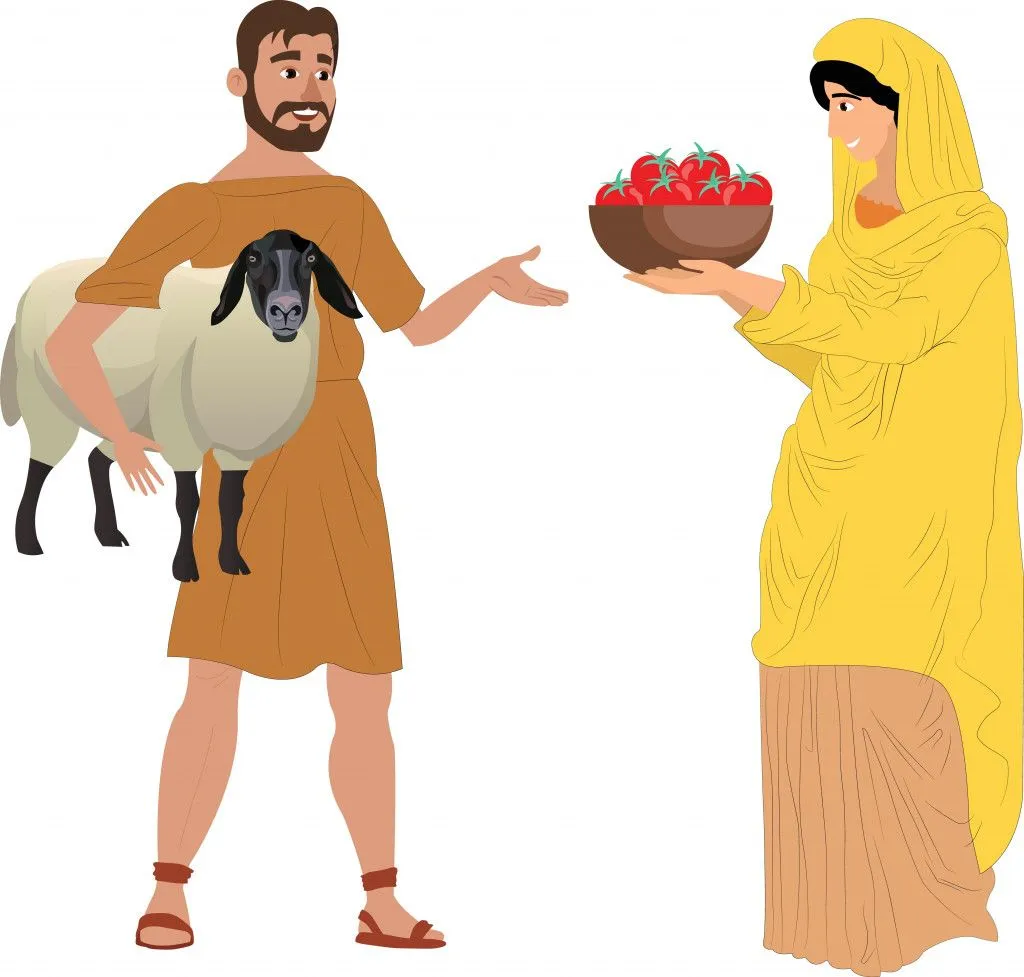
Imagine bringing a goat to a market to get a basket of apples. Think of the distress you’re bound to feel, both mentally and economically, to secure that food.
You need to arrange for transportation, a way to carry the goat, and food for it along the way. Once you reach the market, you also need to find someone willing to buy your goat in exchange for a basket of apples on mutual terms! It is a cumbersome process.
Under the barter system, commodities are facilitated as a medium of exchange. As you can see, it has several shortcomings.
Even commodities such as gold, silver, and cowrie shells invited another set of problems. For instance, precious metals are scarce in supply, which might drive their value higher than their face value.
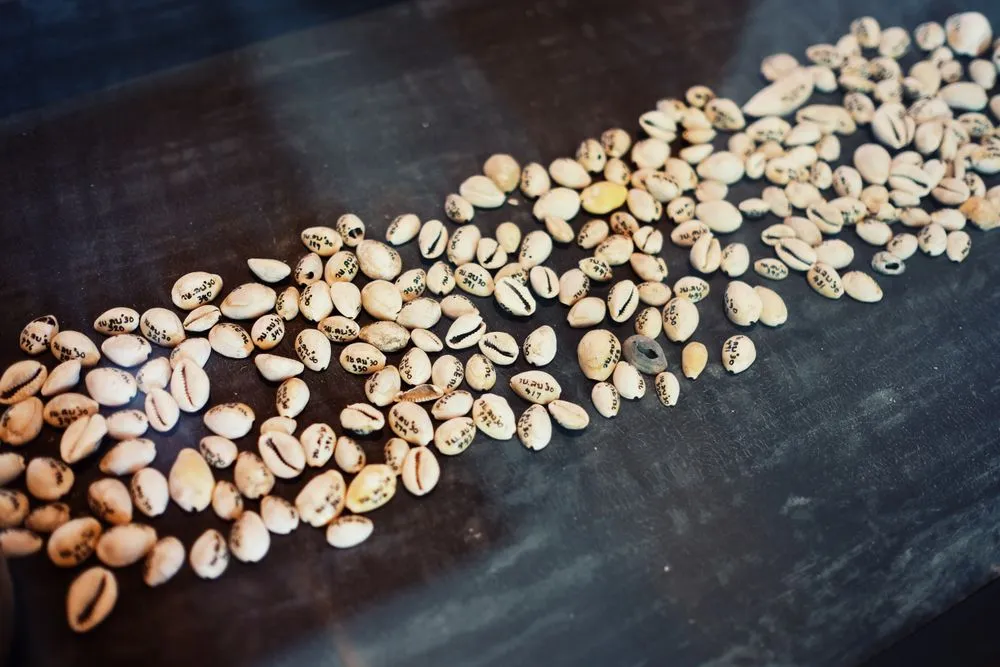
Additionally, precious metals are unevenly distributed worldwide, which poses another hurdle in arriving at a common value for one coin. Should the value base itself on the weight of the metal in the coin? Imagine carrying a huge bag of cowrie shells to buy a car. The storage and transportation costs associated with such a system are additional hassles.
That said, barter never fully disappeared. Even today people swap goods and favors directly, from neighborhood time banks to prisoners famously using cigarettes or tins of mackerel as informal money. It works in a pinch, but it could never run a modern, globalized economy.
Enter: Bills And Coins
The hunt for a standardized medium of exchange was always a priority, owing to the problems implicit with other mediums. Using commodities had its disadvantages related to their physical composition. Using precious metals posed problems related to purity and weight. Hence, we needed a medium of exchange exempted from such issues. It certainly did not happen overnight.
Just like humans, the medium of exchange has evolved and adapted to suit the needs of the time. However, the crux of it has always been to ease the exchange process. Electronic money that we use today is another move in the direction of easing the transaction process. The bills and coins we use today result from a complex process. Minting a coin and printing a bill is similar to creating any other form of art.
Today, it is replicated with precision through machines and produced en masse.
To begin the process, an artist first designs a note or coin.
Look closely at any currency bill. Notice the number of design elements on it, such as emblems, historical events, and mottos. Every aspect is the product of extensive thought. Once the design is finalized, it is engraved and sculpted on the metal to fine precision. It is then cast onto the machine, which stamps the ink on the notes.
For coins, the molding and stamping process is quite similar.
This is, however, a crude oversimplification of the intricate process behind creating currency.
The Bureau of Engraving and Printing prints the notes in the US, while the US Mint strikes the coins. Both sit under the federal Department of the Treasury.
However, the Federal Reserve, the central banking authority of the country, decides whether the amount of money in circulation needs to change. Thus, printing happens for only three reasons:
- To increase the money in circulation to meet rising currency demand.
- To replace old, worn-out notes. The Federal Reserve estimates that the large majority of its annual print order (roughly 85% in a typical year) simply replaces unfit currency pulled from circulation, with only the remainder, about 15%, meeting new demand.
- Redesigning of currency.
When Does A Country Redesign Its Currency? How Does It Decide?
Redesigning is mainly done to avoid counterfeiting. From another perspective, this is similar to “evolving” the currency. It’s a way for countries to express their identity or adopt more user-friendly ways to identify money. Redesigning doesn’t necessarily demand the return of old bills in circulation.
However, there are some instances where countries, while issuing new bills, have to withdraw the old bills in circulation. This is called demonetization. As the term signifies, it strips the currency status from a bill or coin.
The largest example in living memory came in 2002, when a dozen European countries withdrew national currencies like the German mark and French franc as the euro became their only legal tender. Demonetization is undertaken for several reasons, such as fighting counterfeiting, curbing illicit cash hoards, or, as with the euro, adjusting when a country joins a monetary union. India's abrupt 2016 move, which voided 86% of its banknotes by value overnight, shows how disruptive it can be. All in all, it is a very costly affair.
How Is The Value Of A Bill Or A Coin Decided?
The lifespan of a $10 bill is not the same as a $100 bill, because a $10 bill is exchanged far more often. The Federal Reserve estimates the average lifespan of a $10 bill at about 5.7 years, while a $100 bill lasts around 24 years before it wears out.
It is also remarkably cheap to make. According to the Federal Reserve, printing a single $1 note cost just 4.1 cents in 2025, while a far more elaborate $100 note cost 11.3 cents. The gap between a bill's face value and the cost of producing it is the government's profit, called seigniorage.
This profit matters because when a note wears out, the government effectively buys it back at face value by issuing a fresh replacement. That swap is free for the person handing in the worn bill, but the central bank still bears the cost. Some of the seigniorage therefore covers those operational costs, and the rest carries policy-level implications.
How Is The Denominated Value Of The Currency Guaranteed?
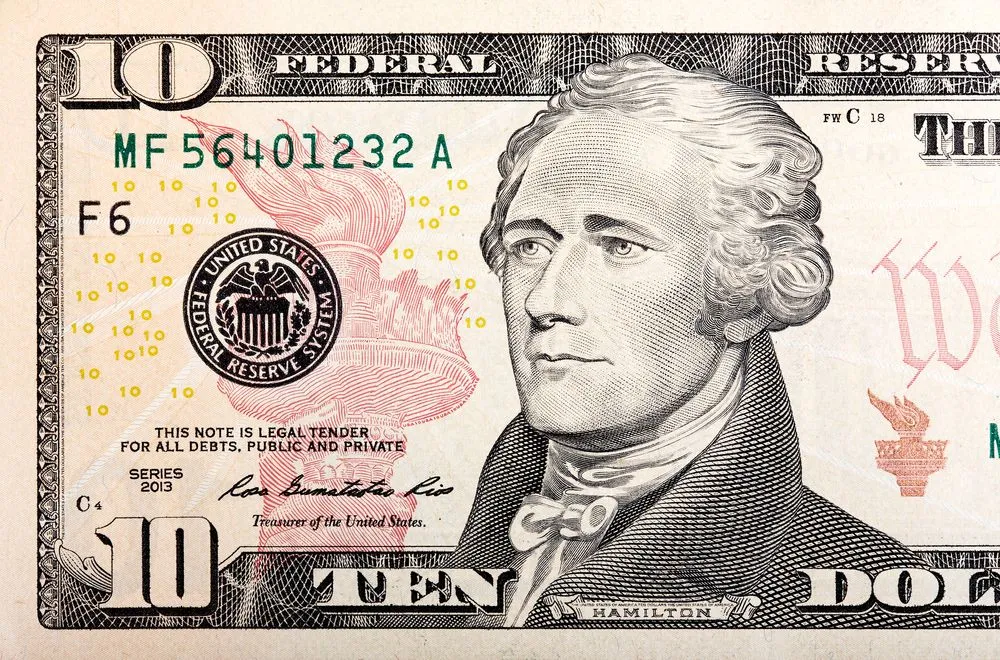
Take a close look at a US dollar bill; for instance, each one has “This note is legal tender for all debts, public and private” printed on it.
Other countries have different statements, though they imply the same idea.
The idea is that the parties must accept the denominated dollar to settle transactions. No law mandates that the payment must necessarily be accepted in cash. Still, whenever a bill is used to settle a transaction, the face value of the bill is guaranteed by the Federal Reserve.
Earlier in history that promise was literal. Well into the twentieth century, you could walk into a bank and swap your cash for a fixed weight of gold. The US ended that domestic gold convertibility in 1933 and severed the dollar's last link to gold internationally in 1971, the moment often called the "Nixon Shock." Since then, countries worldwide have run on a fiat system. Here, unlike under the gold standard, the guarantor is simply the central bank. People have placed their trust in that institution, which is the only thing standing behind the face value.
To sum it up, the government and central banks work together to decide and produce the currency circulating in an economy. The value of that currency is set by the denomination printed on each bill, which is backed by the central banking authority.
References (click to expand)
- How much does it cost to produce currency and coin? The Federal Reserve.
- How long is the lifespan of U.S. paper money? The Federal Reserve.
- How does the Federal Reserve Board determine how much currency to order each year? The Federal Reserve.
- Is it legal for a business to refuse cash as a form of payment? The Federal Reserve.
- Lahiri, A. (2020). The Great Indian Demonetization. Journal of Economic Perspectives. American Economic Association.
- Seigniorage: Overview, History, and Monetary Policy. Corporate Finance Institute.