Table of Contents (click to expand)
Economies favor manufacturing growth because it offers something agriculture and services cannot match: gains from the division of labor and increasing returns to scale. Unlike farming, which is capped by finite land and nature's pace, manufacturing output can be ramped up almost without limit. It also absorbs unskilled labor and supplies the machinery that services depend on.
The difference in the GDP of the current year and the previous year measures the growth of an economy. This growth is broken down and analyzed by sector. The sectorial composition of any economy is the proportionate contribution of different sectors of the economy in a given financial year. The other sectors are agriculture, industry and services sectors. Year after year, it is imperative to understand which sector contributes the most to GDP growth, as this helps policymakers understand how resources are used in the economy and design interventions.
For all major developed economies, the contribution of the services sector to the GDP is the highest. For perspective, in 2021, the service sector contributed 77.6% of GDP in the US and 72.2% in the UK. Even in a developing country like India, the service sector contributes 47.8% of GDP.1
We can safely assume that the services sector contributes immensely in increasing the “size of the pie”, more formally known as GDP growth.
The famous pin factory example by Adam Smith is a great illustration of this idea. Working alone, an untrained worker doing every step (drawing out the wire, straightening it, cutting and shaping it) could barely make one pin in a day. However, when Smith split pin-making into eighteen distinct operations spread across ten workers, those ten could turn out about 48,000 pins in a single day, or roughly 4,800 pins per worker.

Hence, specialization through division of labor increases the output capacity of every manufacturing agent. Agriculture, however, cannot experience gains from the division of labour because the production environment is not entirely under human control.
Why Could The Focus On Growth In The Service Sector Not Be Enough?
While there is no denying that incentivizing the service industry is the preferred choice to boost GDP growth, the industry relies heavily on the manufacturing sector. Think about it, any service, be it transportation or communication or hospitality, all depend on the industrial sector for sophisticated machinery and construction.
Additionally, unlike the services sector, the industrial sector has a comparatively low entry barrier for employment. Agriculture has the lowest barrier of all. Basic literacy, soft skills and etiquette constitute a significant part of providing any service experience. The industrial sector, on the other hand, for most of its activities like construction, factory hauling, and manufacturing, does not require a formal education.
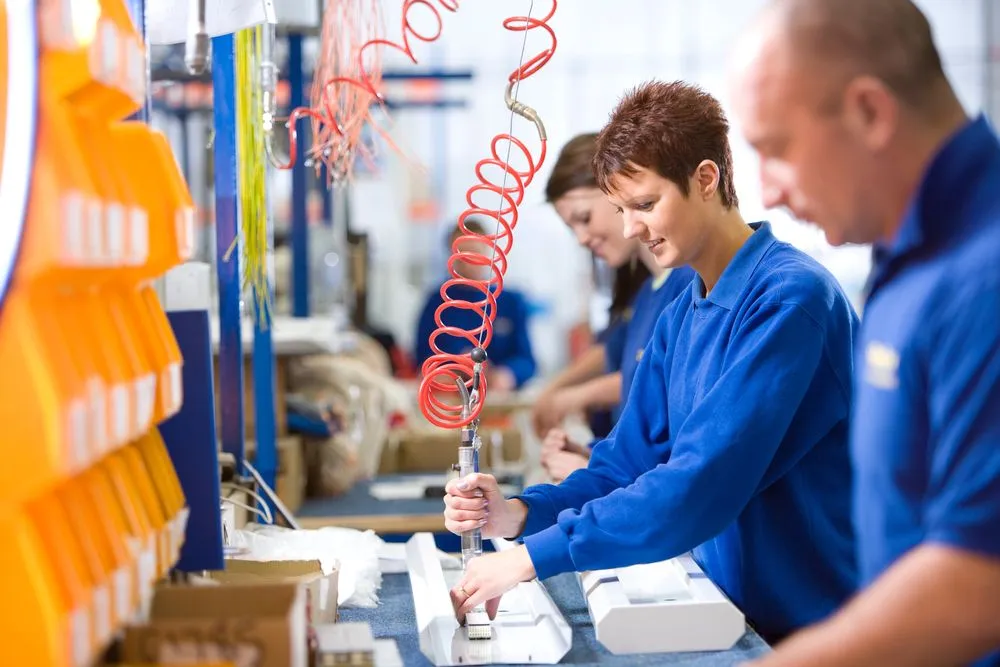
Hence, the industrial sector becomes the sponge that soaks up the majority of the unemployed population for an economy, regardless of their educational background. This helps citizens have a better standard of living for the coming generations than if they had decided to stay in agriculture.
One must exercise caution while accepting this notion. For developing any economy, equal cognizance must be given to the available resources, population size and other factors that may alter policy decisions. The choice to boost any industry relies on a wide range of factors, such as the availability of natural resources, workforce, and more. Blindly developing the industrial sector is not the panacea for growth.
Some economies rely solely on the services sector in terms of employment, without having a sound manufacturing sector. Their reliance is heavy on manufacturing economies. Again, this is alright if these economies make enough income through other agriculture or service industries to pay off their manufactured imports.
This reliance is highly possible in today’s globalized world, as the expansion of markets accompanies cost reduction. The United Arab Emirates is a good example: it built its wealth on oil but has since diversified heavily, and non-oil sectors (especially services like trade, finance, tourism and logistics) now account for roughly three-quarters of its GDP.
Why Can’t Agriculture Be The Solution For Growth?
Man cannot control the production environment for plants from sowing to maturity, regardless of the level of advancement of technology. When we think of inputs required for agriculture, one cannot speed up the growth of a plant.
This means that regardless of how much manure, pesticides or insecticides one uses, the growth of a plant is still largely dependent on factors outside human control. Think about sunlight, which is entirely out of our control. A farmer can only partially speed up growth by adding manure or any other input. The output can be increased, and growth can be hastened, but only to a certain extent.
Compare this with industry; a production assembly line is entirely under man’s control. The better one gets at it, the higher the productivity, which means higher the output. Time is fully under man’s control. Unlike a plant, which takes time to mature, no such natural barriers exist for a manufactured item.
On the other hand, agriculture is also heavily dependent on fertile land. Land, as we know, is finite. A country owns only so much fertile land. Agricultural farms cannot be stacked one on top of another. Manufacturing units, on the other hand, do not require as much land to increase output. A manufacturer can build multiple floors and divide their processes across those floors to increase their pace and productivity.

Agriculture is indeed the backbone of any economy, as it provides inputs to the industrial sector. However, the value-addition that a manufacturing unit has on agriculture inputs is where the money lies, as it increases the shelf-life of any commodity. This is also why countries that export primary goods, i.e., agricultural raw materials, are generally poorer than those that export finished goods. The profits realized in the market for a liter of processed orange juice is much higher than a kilo of oranges, despite the additional packaging and preservative costs for the latter.
Industrial production experiences what economists call increasing returns to scale. Increasing returns to scale means that with every addition of input, the resultant change in the output is much higher than the input. As and when inputs become more advanced, the output change is much higher. The increase indicates better technology.
There is little limit to how much industrial production can improve. Research and development can keep refining input technology almost indefinitely. Agriculture, by contrast, tends to run into diminishing returns: because of natural constraints, mainly fertile land, the gains from better technology eventually taper off. Land acts as a natural ceiling to its growth.
There are no potential natural factors that act as a hindrance to industrial production in today’s times.
Conclusion
History partly explains why developed nations are where they are today. Countries in Western Europe and the United States are much more developed for that reason.
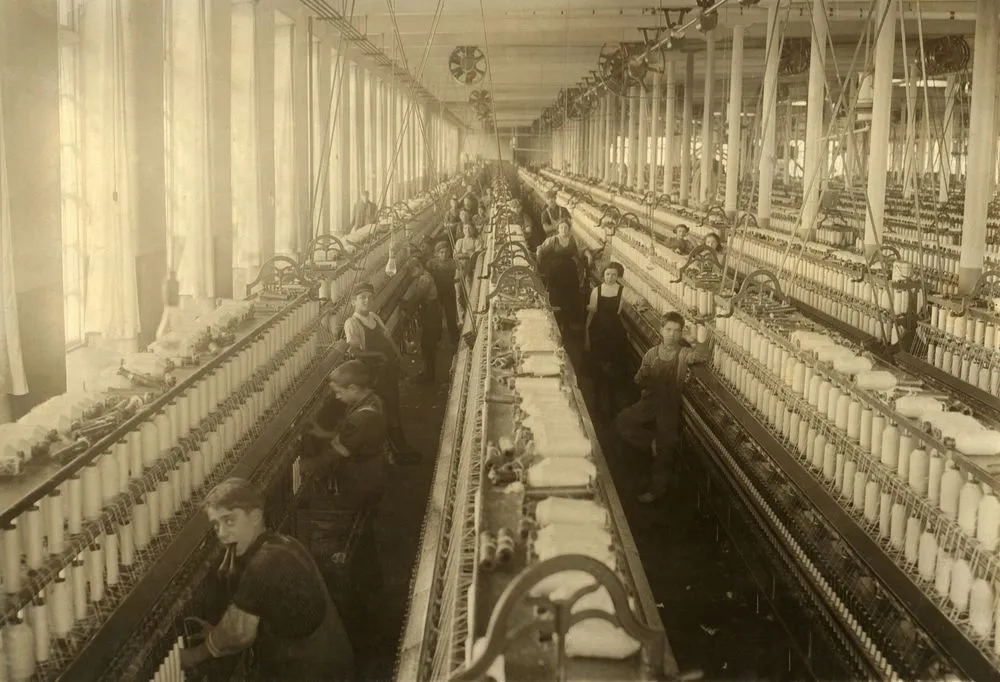
This is not to suggest that the natural trajectory to growth is agriculture first, followed by industry and the service sector. Nor does it suggest that policymakers must blindly adopt policies to incentivize only industrial production. This article is instead looking at the natural constraints to any activity that contributes to GDP.
Countries have and continue to survive solely by relying on agriculture or the service sector; however, the focus on manufacturing must also be contextualized. Suppose the focus is primarily on utilizing an increasing employable population and self-reliance. In that case, focusing on industrial sector is the way out for any country on the rise!