Table of Contents (click to expand)
The lipstick effect is the idea that shoppers keep buying small, affordable luxuries like lipstick during a recession even while cutting back on big purchases. The related "lipstick index," named by Estée Lauder chairman Leonard Lauder, treats rising lipstick sales as a recession indicator, though the correlation is weak and disputed.
Lipstick sales have often climbed during hard economic times, from the Great Depression of the 1930s to the dot-com crash of the early 2000s, the housing-market collapse that triggered the 2008 recession, the aftermath of the 9/11 attacks in the US, and most recently the COVID-19 pandemic.
Even during the pandemic, when masks covered most faces, beauty brands reported a spike in lipstick and cosmetics sales across markets like the US and UK.
Plenty of news outlets and retail analysts have flagged the same pattern. Some have noted a broader uptick in beauty and self-care spending during the events above.
Recession And The Lipstick Index
A common rule of thumb says a recession occurs when a country’s real GDP shrinks for two consecutive quarters, but the official call is more nuanced. In the US, the National Bureau of Economic Research (NBER) does not use a fixed numerical formula; instead it weighs the depth of the decline in economic activity, the diffusion (how widely it is spread across sectors of the economy), and the duration (how long the downturn lasts).
All these values are arrived at by looking at not just real GDP, but wholesale-retail sales, real incomes, employment and industrial production.
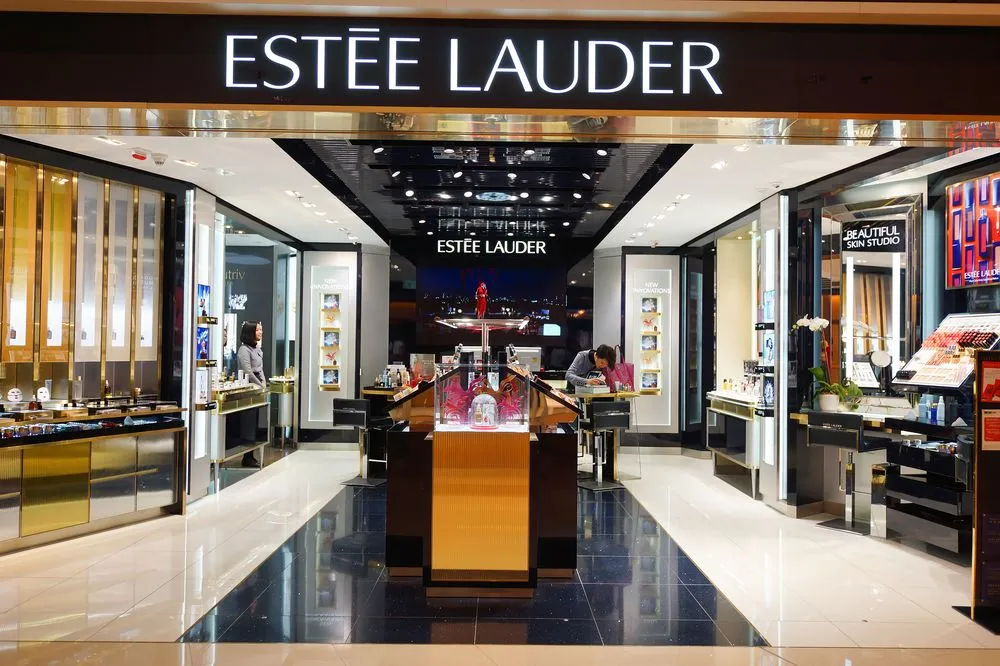
It was Leonard Lauder, then chairman of The Estée Lauder Companies, who turned this observation into a catchphrase. After the 9/11 attacks in 2001, he noted that his company’s lipstick sales had climbed even as the economy weakened, and he coined the “lipstick index” to describe the pattern. (Leonard Lauder, son of company founder Estée Lauder, died in June 2025 at the age of 92.)
The underlying idea predates the catchphrase: economist and sociologist Juliet Schor described this kind of compensatory spending on small luxuries in her 1998 book The Overspent American.
A consumer spending money on lipstick when personal disposable incomes are declining in the economy would be irrational. Conventional economic theory would classify this as irrational behavior.
Are consumers going mad, or is this the new normal?
Investigating The Rise In Lipstick Sales
Few studies have been conducted around this odd phenomenon, and there are contrasting views based on sample size, geography and choice of product within the beauty care segment. However, let’s delve into the probable reasons that have been highlighted.
One rather conservative and somewhat misogynistic study conducted by professors at Texas Christian University highlights that lipstick sales increase because women tend to feel the need to look good during interviews and search for potential mates during a recession.
Another study argued that the increase in sales is rooted in ‘women’s mating psychology’ for an escape during upsetting times due to the recession. There is a barrage of reasons where purchasing lipstick is considered a sweet indulgence that adds a little extra joy to women’s mating psychology. While all these are sociological and psychological lenses on the situation, they are also heavily contextual and differ from country to country.
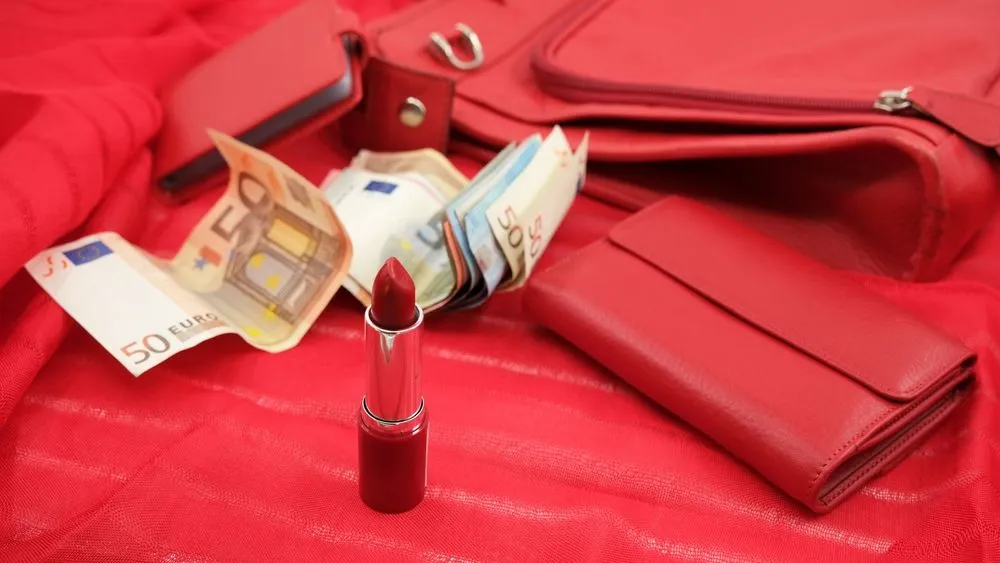
Larissa Jensen, vice president and beauty industry advisor at the market research firm NPD Group, has argued that the sales uptick comes down to the product itself: “Lipsticks are transformational. A single swipe on the lips makes your face pop.” That is unlike most other makeup, which takes more time and effort to apply.
Whether it is part of one’s everyday routine, indulgence, or whether consumers are substituting lipsticks for comparatively expensive goods remains a mystery, as studies reveal such diverse reasons. There is major disagreement over the mechanism that drives this phenomenon.
Economists categorize goods as substitutes or complementary. Substitute goods are used in place of each other when the price of one good rises. Complementary goods are jointly consumed to satisfy a consumer’s needs.
When viewed through this lens, lipstick is a substitute not only when purchasing other self-care items, such as eye makeup or a facial cleanser, but also for something like cars or vacations or furniture. To some extent, this explains that expenditure on lipstick is justified as compared to expenditures on more expensive indulgences.
These expensive indulgences could include buying a car, designer handbags, expensive electronics, furniture and more.
However, why does this not seem to affect other beauty care products? For this, the research results are rather diverse, as an increase in the sale of luxury fragrances, lip balms and false nails has also been observed in a few instances.
The lipstick effect has now been extended to all personal care product sales. This is because, for instance, in the US, in the data gathered by the Bureau of Labor Statistics’ Consumer Expenditure Surveys, lipstick is just one item in a broader cosmetics spending category.
Hence, the term is now applicable whenever the economy, despite experiencing a downturn, sees its citizens spending on luxury items.
Economic Impact
Over time, the lipstick effect has been expanded to include other cosmetic product indulgences. Although a spike in the sale of cosmetic or luxury items has been observed, economists would still not rely on this as a valid indicator for the economy. These trends can be helpful for brands to plan their inventory during downturns, but it might not necessarily be guaranteed.
Lipstick sales cannot be treated as a reliable indicator, because the link has been contested by statistical evidence. The Economist examined the claim in 2009 using sales figures from market-research group Kline & Company and concluded the effect had been overstated, finding no solid correlation between recessions and a rise in lipstick sales. The 2008 recession itself cut against the theory: industry sales actually fell as the economy contracted.
Simply put, consumers might indulge in expenditures that are easy on their wallets, but it might also happen in the form of going to see a movie over purchasing lipstick. To merely look at lipstick sales as an indicator for a downturn would be insufficient.
Recent years have muddied the picture further. Beauty held up well through the 2022–2023 cost-of-living squeeze, but by early 2025 growth was cooling: industry trackers reported that global beauty sales were rising mostly on higher prices rather than people buying more, and big players like LVMH saw cosmetics revenue go flat. Looming import tariffs on cosmetics from China, South Korea, Japan and the EU added pressure, since those costs can push even a “small” luxury out of reach. Tellingly, the strongest growth has shifted toward cheaper lip products, lip oils, balms and tinted glosses, a reminder that the lipstick effect is really about trading down to whatever counts as an affordable treat at the time.
Conclusion
The trend is exciting, with all its probable causes investigated by psychologists, sociologists and economists. Lipstick remains a substitute for other luxury goods, but while it is lipstick today, it could be some other indulgent product tomorrow, based largely on how media and culture direct us.
References (click to expand)
- Bahl, A., Garza, H. D. L., Lam, C., & Vashi, N. A. (2022, May). The lipstick effect during COVID-19 lockdown. Clinics in Dermatology. Elsevier BV.
- Business Cycle Dating | NBER. The National Bureau of Economic Research
- Schor, J. B. (1998). The Overspent American: Why We Want What We Don't Need. HarperCollins.
- Hill, S. E., Rodeheffer, C. D., Griskevicius, V., Durante, K., & White, A. E. (2012). Boosting beauty in an economic decline: Mating, spending, and the lipstick effect. Journal of Personality and Social Psychology. American Psychological Association (APA).
- MacDonald, D., & Dildar, Y. (2020, June). Social and psychological determinants of consumption: Evidence for the lipstick effect during the Great Recession. Journal of Behavioral and Experimental Economics. Elsevier BV.
- Business Cycle Dating Procedure: Frequently Asked Questions. The National Bureau of Economic Research (NBER).
- Leonard Lauder, billionaire heir to cosmetics empire, dies at 92. CNN Business (2025).
- Beauty’s Slowdown Goes Global. The Business of Fashion (2025).