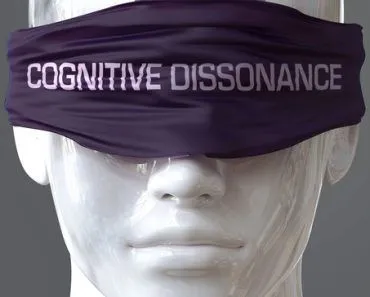
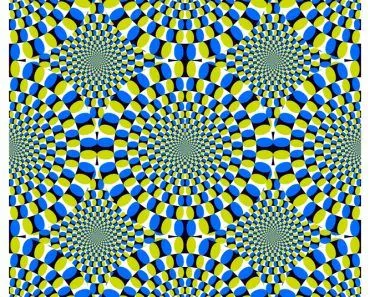
People believe in conspiracy theories largely because of three psychological needs: epistemic (to understand a confusing world), existential (to feel safe and in control), and social (to feel good about themselves and their group). Cognitive biases, such as confirmation bias, illusory pattern perception, and proportionality bias, along with social influences, reinforce these beliefs.
Why do some people believe that the moon landings were fake? Why do others believe that secret societies like the Illuminati control world events? Why do people believe that Earth is flat? What is it that drives individuals to embrace these alternate explanations, often in the face of overwhelming contradictory evidence? What attracts people to conspiracy theories?
In this article, we will explore the psychological factors that contribute to the widespread and growing belief in conspiracy theories. Psychologists who study the phenomenon (most notably Karen Douglas and her colleagues) trace these beliefs to three underlying needs: epistemic (the need to understand a confusing world), existential (the need to feel safe and in control), and social (the need to feel good about ourselves and the groups we belong to). By delving into these motives, along with the cognitive biases and social influences that reinforce them, we can gain a deeper understanding of a phenomenon that continues to captivate minds worldwide.
The Fascinating Nature Of Conspiracy Theories

Conspiracy theories are a natural response to a chaotic world. They are, after all, stories that conveniently connect disparate events with unproven and unprovable “facts”.
Conspiracy theories give their believers a sense of control and understanding in uncertain times. This speaks to those existential and epistemic needs. Whenever we are faced with complex events, these theories often simplify explanations by attributing them to a small, secretive group with hidden motives. They create a coherent narrative that offers a sense of order and comprehension in a seemingly random world.
Moreover, conspiracy theories offer a means to question authority and challenge the status quo. They provide an opportunity to assert individual autonomy and critical thinking by seeking alternative explanations beyond the mainstream narrative.
Research suggests that people tend to believe in conspiracy theories when they feel anxious, powerless, or when they don’t trust authorities (e.g., the government). For example, during times of political or economic instability, people may find comfort in conspiracy theories that propose a clear villain or group responsible for their hardship. The same study found that belief is strongest at both extremes of the political spectrum, on the far left and the far right alike, because extremists on either side tend to favor simple explanations for complex problems.
The Role Of Cognitive Biases
Cognitive biases are referred to as mental shortcuts or patterns of thinking that deviate from rational judgment or logical decision-making. These biases often occur automatically and unconsciously, shaping how we make sense of incoming information. Cognitive biases can influence our thoughts, beliefs, and actions, including how likely we are to believe in conspiracy theories.
One such bias, for example, is confirmation bias. Confirmation bias, for example, leads us to seek, consider, and remember information that aligns with our pre-existing beliefs, while disregarding or dismissing contradictory evidence.
Once someone has formed a conspiracy theory or an alternative explanation of an event, they tend to stick to this narrative. The way they do so is by selectively choosing and accepting information that confirms their worldview, thus reinforcing their beliefs. This bias creates an echo chamber where like-minded individuals reinforce each other’s viewpoints, further entrenching their conspiratorial beliefs.

Decades of research back this up. As psychologists Joshua Klayman and Young-Won Ha described in an influential 1987 paper, when people test a hunch they overwhelmingly look for evidence that would fit it, rather than for evidence that might prove it wrong. Applied to conspiracy theories, this means that once someone suspects a cover-up, they keep finding details that seem to confirm it, while explaining away anything that doesn’t.
This is confirmation bias in action, whereby individuals tend to seek, interpret, and remember information that aligns with their existing beliefs, while downplaying or ignoring contradictory information.
Another relevant example of cognitive bias is illusory pattern perception, which drives individuals to perceive meaningful patterns or connections even in random or unrelated events. In a 2008 study published in Science, Jennifer Whitson and Adam Galinsky found that people who were made to feel a lack of control were more likely to spot patterns in random noise and to perceive conspiracies where none existed.
People naturally seek patterns and connections to make sense of their surroundings. However, this bias can lead individuals to identify patterns related to the existence of a conspiracy theory, when none may exist. It can lead them to perceive hidden intentions or machinations behind seemingly unrelated events. For instance, many people “see” patterns in unrelated political events and interpret them as evidence of a larger conspiracy.
A third bias worth knowing is the proportionality bias, our tendency to assume that big events must have big causes. The clearest example is the assassination of President John F. Kennedy. Because his death was such a momentous event, many people find it hard to accept that it could have been the work of a single, lone gunman, and instead reach for explanations involving sprawling, powerful plots that feel proportionate to the outcome.
Social And Psychological Factors
Social dynamics and psychological factors also influence whether someone will believe in conspiracies or not. Research suggests that feelings of powerlessness, mistrust, and alienation from society can increase the likelihood of a person embracing conspiratorial beliefs.
When individuals feel disconnected or marginalized, conspiracy theories provide a sense of belonging and a community that shares and accepts their beliefs. These theories can offer a sense of empowerment and provide individuals with a way to challenge authority and assert their autonomy. This is the social motive in action.
More recent research has added another piece to the puzzle: the desire to feel special. People with a strong need for uniqueness, and those who score highly on measures of narcissism, are consistently more likely to embrace conspiracy theories, partly because believing you possess secret knowledge that the “sheep” have missed can feel flattering. The COVID-19 pandemic offered a vivid demonstration, as uncertainty and fear drove a global surge in conspiracy theories about the virus, vaccines, and the people behind them.
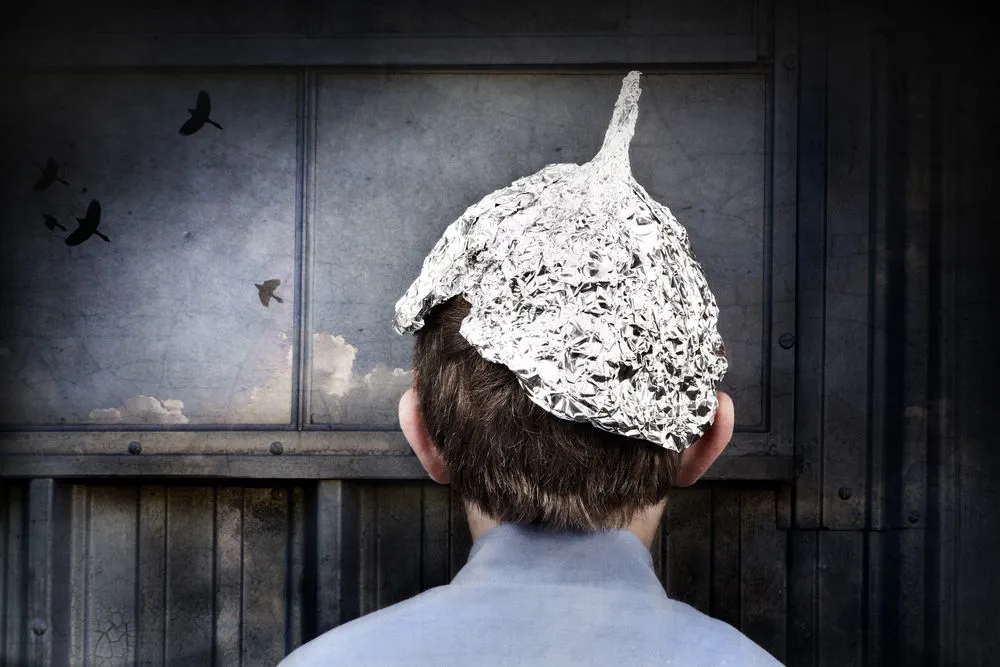
Furthermore, conspiracy theories often thrive within specific communities or online echo chambers. In these spaces, beliefs are reinforced and amplified through social influence. When individuals interact with like-minded individuals who validate their beliefs, it strengthens their own conviction in the conspiracy theories. Online platforms and social media play a significant role in the dissemination and reinforcement of conspiracy beliefs. They create echo chambers where misinformation can flourish and persist.
Real-World Impact
Conspiracy theories don’t just affect our personal well-being; they can also have far-reaching real-world consequences. For instance, the rampant spread of misinformation about vaccine safety, fueled by conspiracy theories, has contributed to declining vaccination rates and the resurgence of preventable diseases. As one experiment showed, simply exposing people to anti-vaccine conspiracy theories reduced their intention to vaccinate, directly endangering public health.
Similarly, conspiratorial thinking has been linked to the rejection of climate science, hindering collective action and delaying effective responses to the environmental crisis. By spreading uncertainty and disseminating false information, conspiracy theories have hindered progress in addressing and effectively dealing with the urgent challenges of climate change.
How To Break Free From Conspiracy Theories

Understanding why people believe in conspiracy theories is essential for developing strategies to counter misinformation and encourage critical thinking. Here are some ways in which we can counter conspiracy beliefs/theories:
- Embrace critical thinking: Take the time to think critically and question the information you come across. Consider the source, evidence, and alternative perspectives before accepting or sharing claims.
- Become media-savvy: Develop the skills to assess media sources for credibility and bias. Fact-check information and rely on reputable sources for accurate news and information.
- Stay curious and open-minded: Be open to exploring different viewpoints, even if they challenge your existing beliefs. Cultivate a sense of curiosity and embrace the opportunity to learn and grow.
- Learn about cognitive biases: Familiarize yourself with common cognitive biases that can impact your thinking. Recognize how biases like confirmation bias can influence belief formation, and actively work to counteract them.
- Seek diverse sources of information: Diversify your media diet by seeking out a variety of reputable sources with different viewpoints. Avoid relying solely on sources that reinforce your existing beliefs.
It is essential to understand that conspiracy theories can have real-world consequences, such as hindering progress in addressing important issues like climate change. As a responsible citizen of the world, consider the broader implications before endorsing or spreading potentially dangerous theories.
References (click to expand)
- van Prooijen, J.-W., Krouwel, A. P. M., & Pollet, T. V. (2015, January 12). Political Extremism Predicts Belief in Conspiracy Theories. Social Psychological and Personality Science. SAGE Publications.
- Leman, P. J., & Cinnirella, M. (2013). Beliefs in conspiracy theories and the need for cognitive closure. Frontiers in Psychology. Frontiers Media SA.
- Klayman, J., & Ha, Y.-. won . (1987, April). Confirmation, disconfirmation, and information in hypothesis testing. Psychological Review. American Psychological Association (APA).
- Whitson, J. A., & Galinsky, A. D. (2008, October 3). Lacking Control Increases Illusory Pattern Perception. Science. American Association for the Advancement of Science (AAAS).
- van Prooijen, J.-W. (2016, November 28). Why Education Predicts Decreased Belief in Conspiracy Theories. Applied Cognitive Psychology. Wiley.
- Del Vicario, M., Vivaldo, G., Bessi, A., Zollo, F., Scala, A., Caldarelli, G., & Quattrociocchi, W. (2016, December 1). Echo Chambers: Emotional Contagion and Group Polarization on Facebook. Scientific Reports. Springer Science and Business Media LLC.
- Jolley, D., & Douglas, K. M. (2014, February 20). The Effects of Anti-Vaccine Conspiracy Theories on Vaccination Intentions. (R. Tripp, Ed.), PLoS ONE. Public Library of Science (PLoS).
- Lewandowsky, S., Oberauer, K., & Gignac, G. E. (2013). NASA Faked the Moon Landing, Therefore (Climate) Science Is a Hoax: An Anatomy of the Motivated Rejection of Science. Psychological Science. SAGE Publications.
- Douglas, K. M., Sutton, R. M., & Cichocka, A. (2017). The Psychology of Conspiracy Theories. Current Directions in Psychological Science, 26(6), 538–542.