Optical illusions are images or scenes that the brain interprets differently from physical reality, tricking the viewer into seeing something that isn’t actually there. Psychologist Richard Gregory grouped them into three types: physical illusions (such as mirages), physiological illusions (such as afterimages), and cognitive illusions (such as the Necker cube or Penrose triangle).
Our perceptions are the window to our world; they are the tools with which we interact and gain an understanding of the space surrounding us. The brain is the seat of perception, taking information in through our senses and computing a model of the world as we experience it. This model of reality is generally accurate and on par with what we construe as “real”. However, there is sometimes a gap between the way our brain views the incoming information and actual reality.
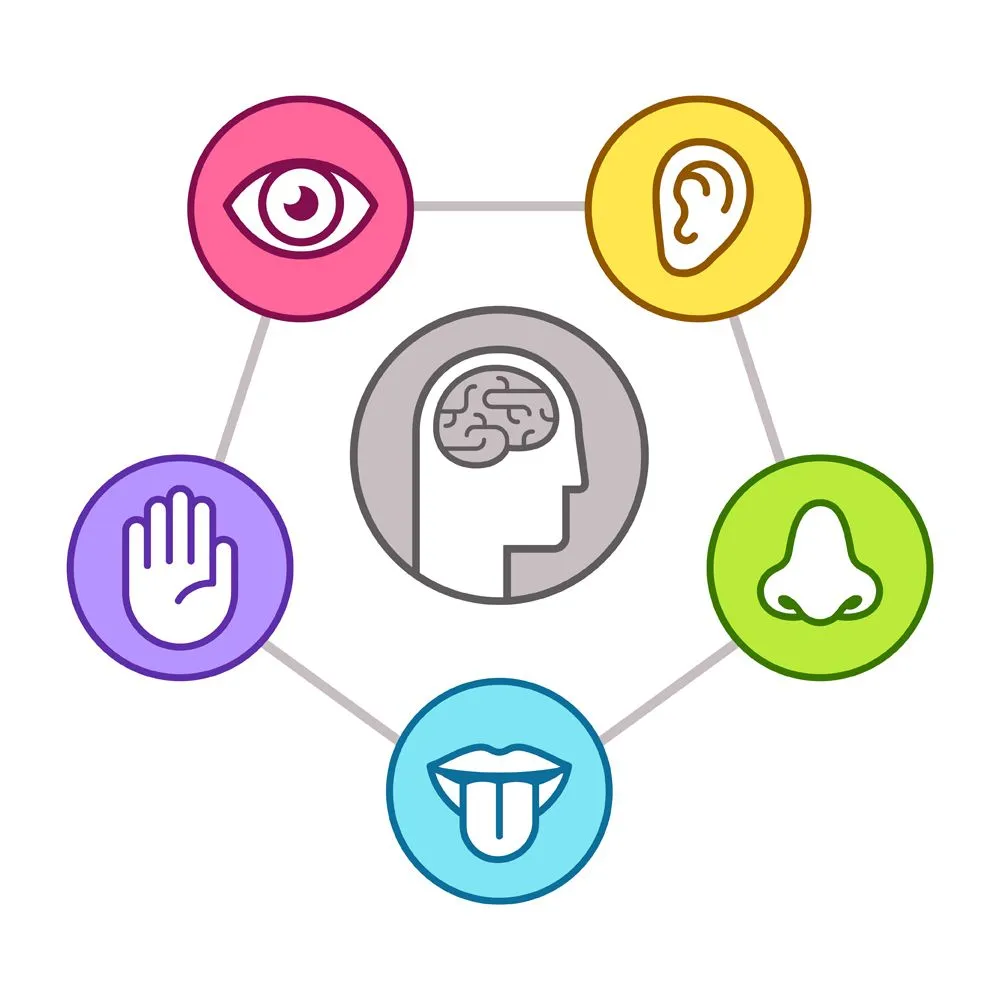
This lapse can result in some fascinating effects and individual experiences, including the mystifying phenomenon of Optical Illusions!
Optical Illusions And Their Types
The human brain, considered the most complex piece of machinery in the universe we have yet to encounter, is the source of constant fascination for experts and laymen alike. It functions in astounding ways to ensure the functioning and survival of an individual, while also coming up with creative ways to manipulate the environment to its utmost benefit.
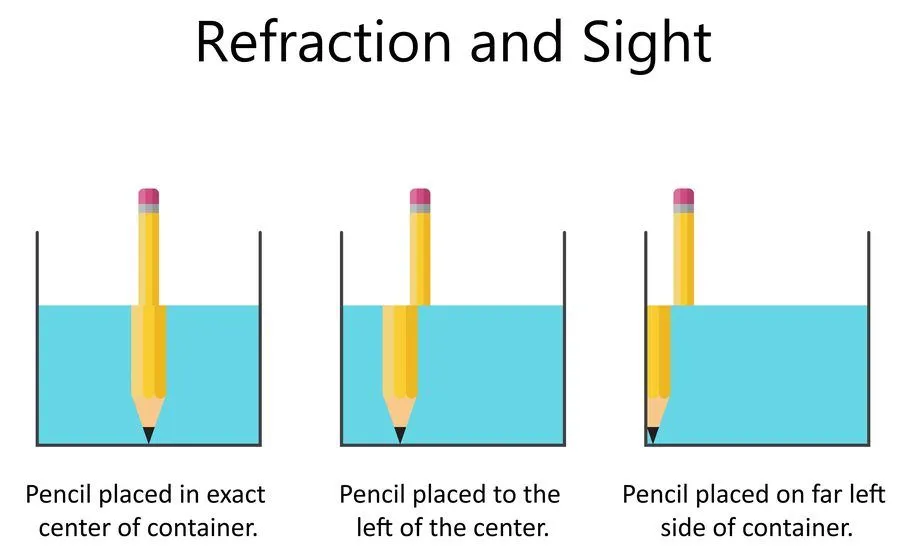
The brain does come with a few bugs, though, one of which you may have encountered after putting a pencil in a cup of glass. In this simple at-home experiment, you would see that the part of the pencil in the water actually moved away from the part of the pencil in the air, making the pencil appear to be bent. This is an optical illusion caused by the visual system of the brain and is called an ‘illusion’ because it is not aligned with reality.

There are three types of optical illusions, as noted by British Psychologist Richard Gregory. These are physical, physiological and cognitive illusions. Physical illusions are often distortions of scale, such as when a huge mountain appears closer in clear weather, but is actually quite far away. This happens because there are no signals for the depth, such as clouds in between, which help to give some reference to the brain.
Physiological illusions occur when the visual system gets overstimulated, often occurring like imprints when bright sources of light are viewed for a long time. This occurs in the form of patterns and patches of “afterimage” once the visual system is exposed to a different stimulus of movement, brightness, color, shape, etc.
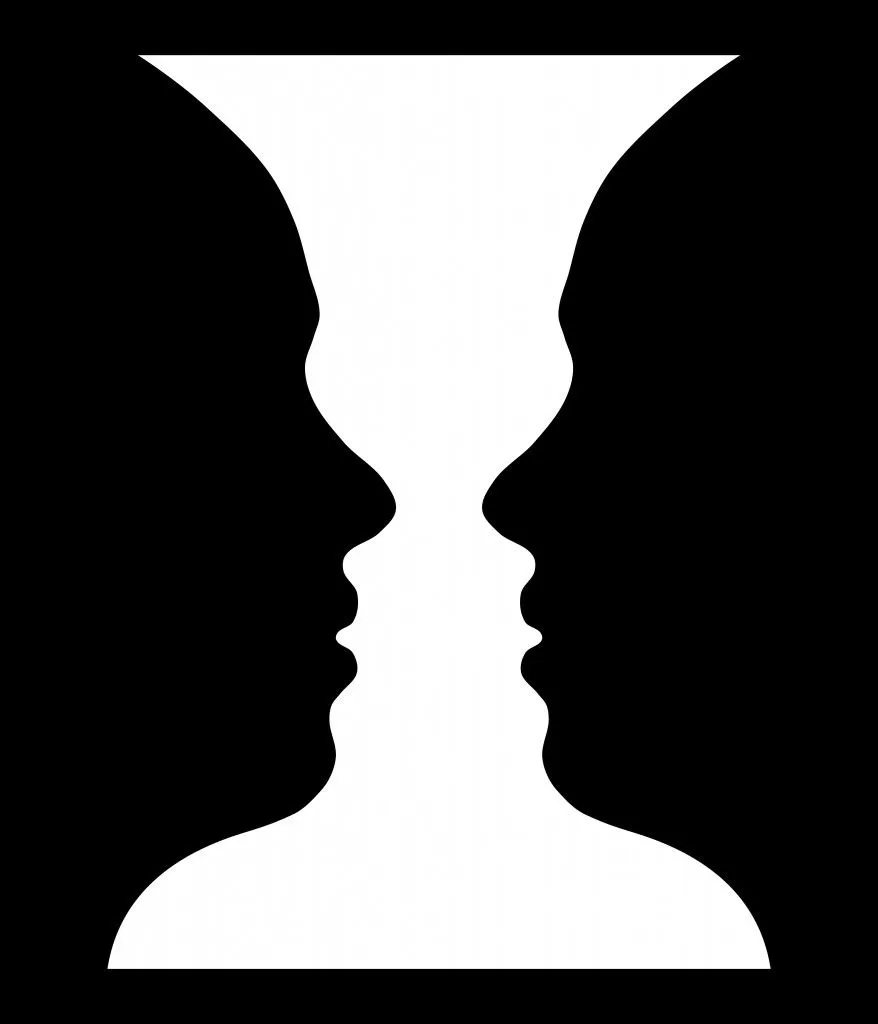
Cognitive illusions are when there is a mismatch between actual reality and the assumptions a person has about reality. Consider the image of the Rubin vase below, where a person alternates between two interpretations of the images, depending on the assumptions of the person. These are further divided into four subtypes: paradoxes, fictions, ambiguities and distortion.
The best way to understand these different types of illusions is to check out some examples, so let’s look at some famous optical illusions!
Mirages
Mirages occur when people see what looks like a pool of water on a hot asphalt road, or an oasis shimmering on the horizon of a desert; mirages are perhaps the most famous physical optical illusion. They happen because light bends (refracts) as it passes through air layers of different temperature. Very hot ground heats a thin layer of air right above it, making that air less dense than the cooler air higher up. Light from the sky curves through these layers, and to your eyes it looks like the sky is being reflected off the ground. (Confusingly, this “inferior mirage” is not actually caused by a temperature inversion; an inversion produces the rarer “superior mirage,” in which distant ships can appear to float above the sea.)

The Bent Pencil In The Glass Phenomenon
The pencil appears to bend or split when it is kept half-submerged in the water and half in the air, which is obviously not the case. This occurs due to the phenomenon of refraction, where light rays bend through the change from one medium (air) to another (water). The density of the two mediums is different (water being denser than air), which changes the speed of light, thus creating a distortion in the visual system.
Grid Illusions
This illusion was first pointed out by German physiologist Ludimar Hermann in 1870 and is also called a Hermann grid. This illusion occurs when one sees an image with crisscross patterns of contrasting colors. In the case of a black-and-white grid, dark blobs appear and disappear at the intersections of two lines.
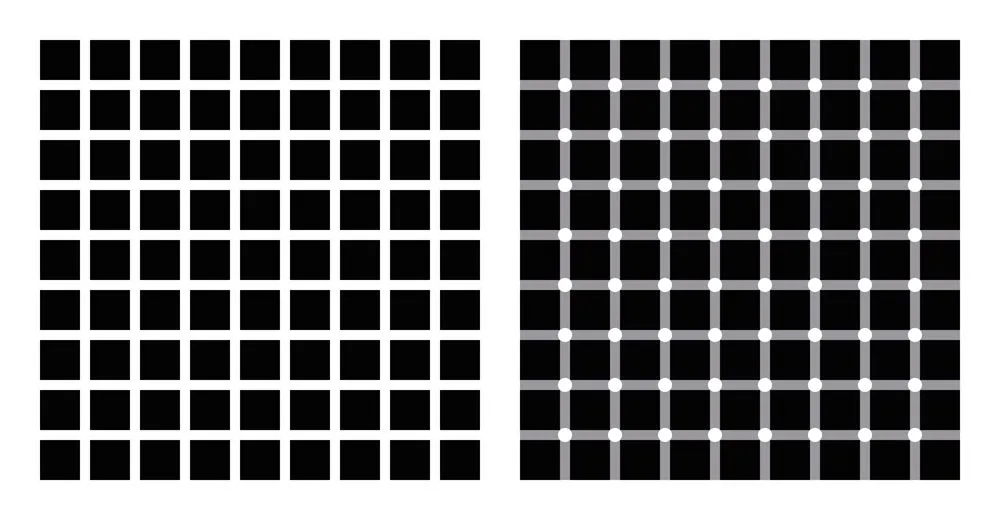
This is a psychological illusion and comes in another flavor, called a scintillating grid. In this grid, the dark blobs appear and disappear more rapidly because, in the scintillating illusion, the dots are already placed between two crisscrossing lines.
Afterimages
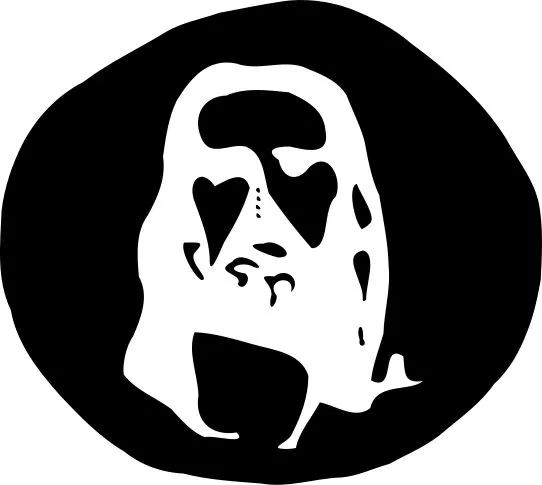
When a very dominant stimulus is repeatedly exposed to the visual system for an extended period, afterimages will appear as patterns of colors, imprints of images, lines and blobs, among other things. This initial stimulus that gets displayed is usually contrasting, and may have dominant colors, brightness, shapes, etc. In the viral illusion below, you see a black-and-white image. Focus on the image for one minute; when you then look somewhere else, you will see the negative of the image appear in your visual field as Jesus Christ!
The Necker Cube Illusion
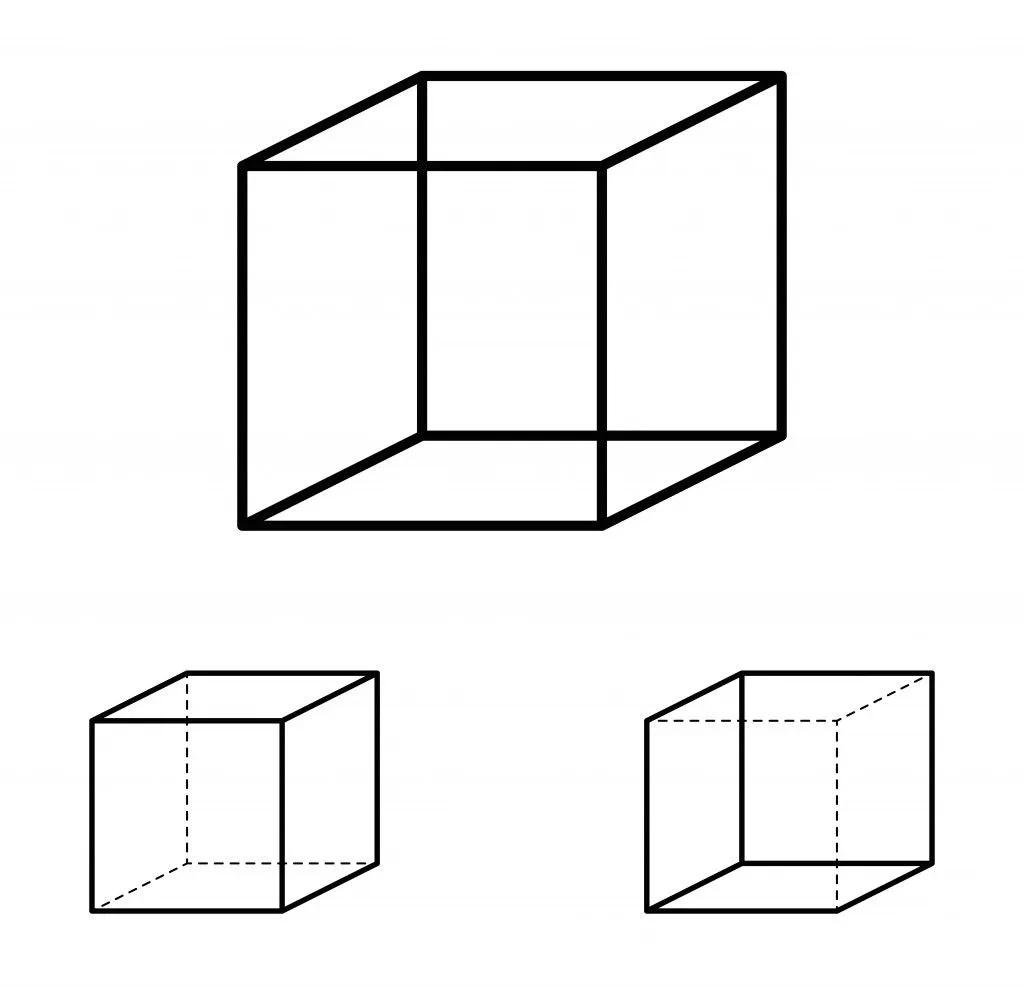
The Necker cube is an example of an ambiguous cognitive illusion. It is this way because there is ambiguity between two possible interpretations of the cube (which way the cube is placed), but interestingly, the onus of the interpretation rests on the viewer. This illusion becomes apparent as you shift focus from one interpretation to the other while giving yourself some mental exercise.
Café Wall Illusion
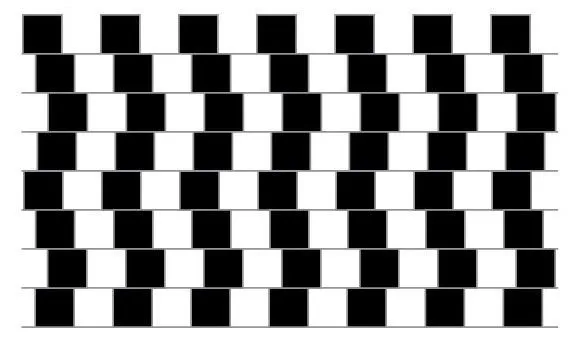
Below is another classic illusion you may recognize. Parallel horizontal lines are divided into staggering vertical lines. This can also be viewed as bricks of black and white that are staggered on each horizontal line. This has a very profound effect on the viewer, as the parallel horizontal will appear very tilted, so it takes a while to wrap your head around it. The illusion is enhanced by the contrasting color, which in this case is black and white.
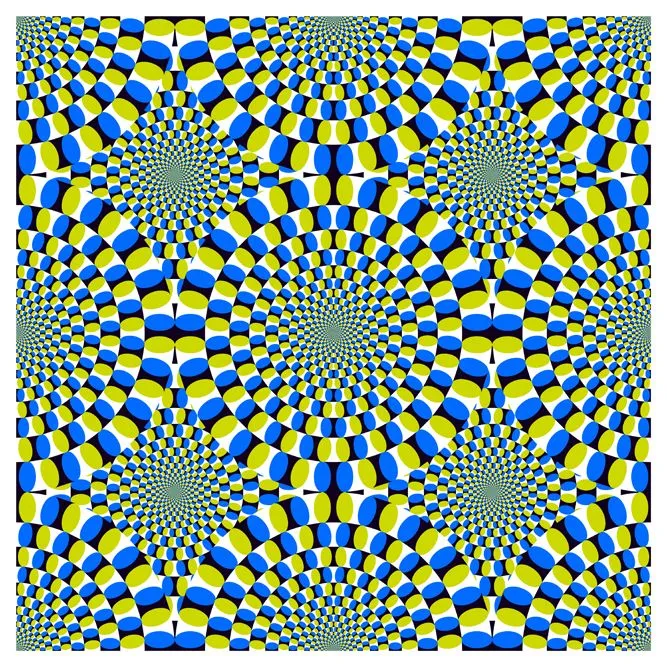
A similar example are the trippy and colorful illusions that seem to rotate when you’re not focusing directly on them.
Penrose Triangle And M.C Escher’s Ascending And Descending
The Penrose triangle is an impossible shape that will make you dizzy; it seems to wrap around itself in a mind-boggling way!
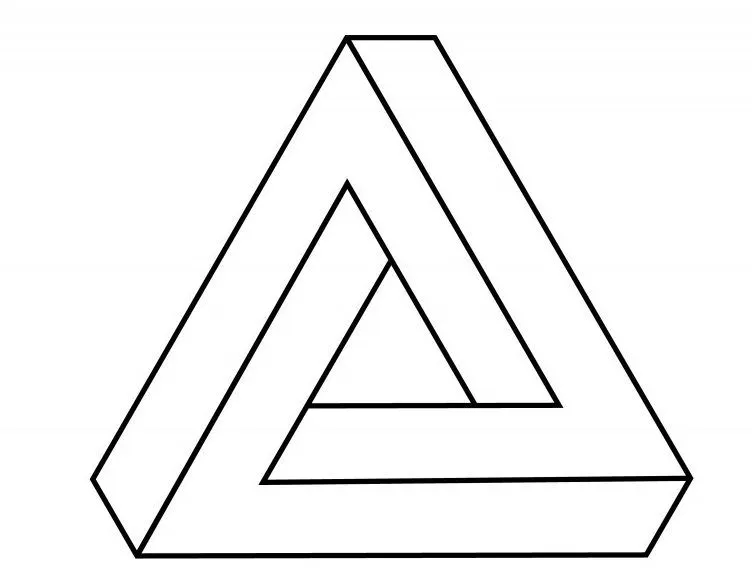
First drawn by Swedish artist Oscar Reutersvärd in 1934 and later independently devised in the 1950s by Lionel Penrose and his son Roger Penrose, the triangle can be viewed as an illusion of depth perception once it is rotated.
Penrose rotated (Photo Credit : Tomruen/Wikipedia Commons)
Dutch artist M.C. Escher made a similarly intricate drawing of an impossible shape in his 1960 lithograph Ascending and Descending, showing a staircase that somehow wraps around itself, fascinating art fans and optical illusion lovers for decades.
Fictions
Fiction is a type of cognitive illusion that tries to form patterns and images where there are none. This could be a person’s ability to see animals and shapes in the constellations of the stars, or the tendency to see a face in the moon.
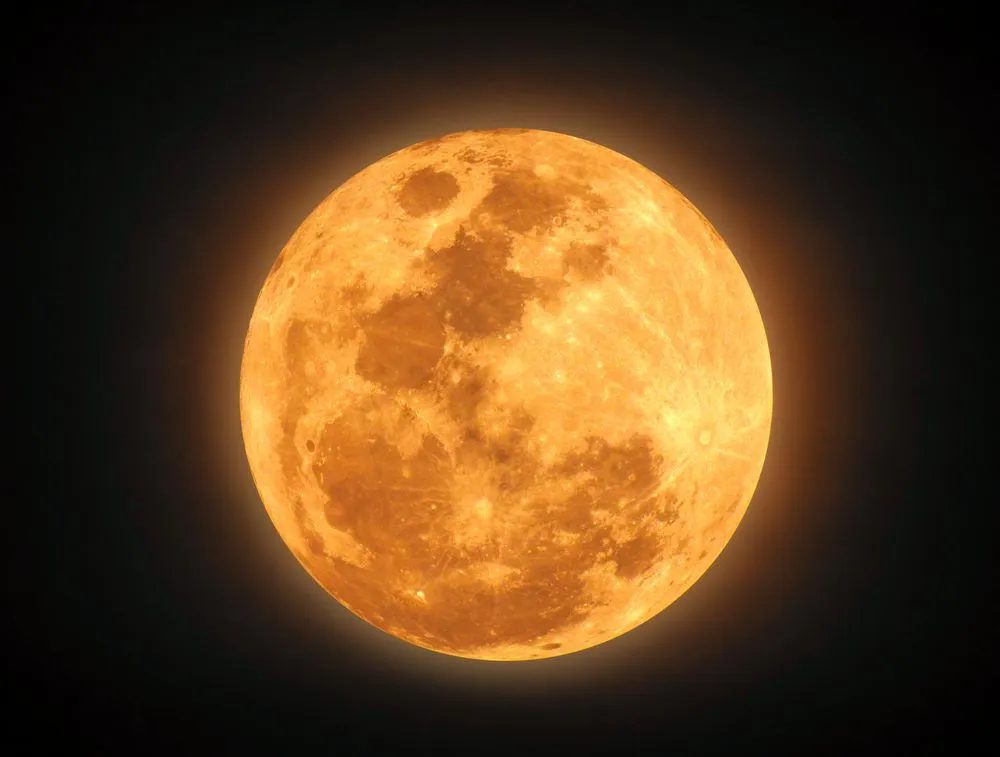
Our brain is weird, right? Just because it is a complex machine, remember that everything may not always be as it seems!
References (click to expand)
- What causes optical illusions? - Ask A Biologist |. Ask A Biologist
- Professor Richard Gregory on-line. richardgregory.org
- Seckel A. (2006). The Ultimate Book of Optical Illusions. Sterling
- Optical illusion. Encyclopaedia Britannica
- Grid illusion (history of the Hermann grid). Wikipedia
- Penrose triangle (Reutersvärd and Penrose history). Wikipedia