We stay up even when we are sleepy because of revenge bedtime procrastination: when our days feel out of our control, we delay sleep to claw back a few hours of personal time. It feels like freedom, but the lost sleep quietly chips away at our mood, focus, and health.
Have you ever been bone-tired and sleepy, but instead of lying down, you find yourself burning those hours on unproductive activities late into the night? This is known as revenge bedtime procrastination.
The phrase went viral in 2020 after writer Daphne K. Lee shared it on Twitter, translating a Chinese expression for the habit of refusing to sleep early to reclaim some freedom after a day with no control over your own time. Psychologists had already been studying the plainer version, simply called bedtime procrastination, since at least 2014.
There is a very good reason why this happens. In a fast-paced world where we have little freedom over our schedules, we crave and cherish personal time. The only window many of us get is at night. So we skimp on sleep to grab a few hours of uninhibited freedom.
What’s driving this behavior?
What Is Revenge Bedtime Procrastination?
Revenge bedtime procrastination is when we intentionally delay sleep as a means of reclaiming our personal time.
We’re all trying to take back control of our schedules, and there’s a good reason for that. We yearn for autonomy in our lives, wanting to call the shots on how we spend our time.
Our generation faces unique challenges that fuel this desire. Many of us are caught up in the never-ending cycle of work, trying to balance being parents while holding down full-time jobs, or even juggling the pressures of college alongside a work schedule. It’s a lot to handle, and it creates that feeling of stress that always seems to linger in the background.
In response, we seek out moments of freedom, even if it means sacrificing our sleep.
There are several psychological factors that contribute to revenge bedtime procrastination. Some of them are stress, anxiety, and the urge to escape. As stress levels rise, we reach for temporary distractions. One study found that, on stressful days, people who believe willpower is easily used up tended to procrastinate more at bedtime. In other words, the more drained we feel, the harder it becomes to make ourselves switch off the lights.
Timing plays a part too. Many researchers frame bedtime procrastination as a self-regulation problem, and self-control tends to run lowest at the end of a long day, exactly when the choice to keep scrolling instead of sleeping is being made.
The consequences of revenge bedtime procrastination are far-reaching. Because we are consistently sacrificing sleep, it disrupts our sleep patterns, the quality of sleep we get, and can have several negative effects on our well-being. Research reveals that inadequate sleep and low-quality sleep can lead to generalized anxiety, depression, low immunity, mood disturbances like anger outbursts, and overall low mental health hygiene.
What Does Revenge Bedtime Procrastination Look Like?
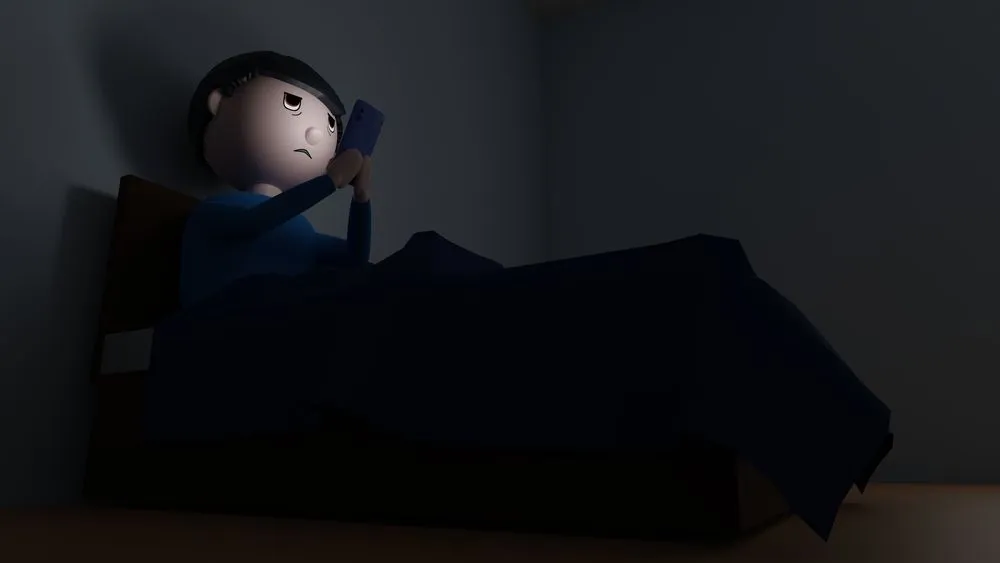
We’re all hooked on our smartphones, tablets, laptops, TVs, and other electronic devices. These have made it far easier to slip into revenge bedtime procrastination.
The constant connectivity and availability of digital entertainment easily traps people in a loop of late-night scrolling or binge-watching. Research has found that excessive screen time before bed can disrupt one’s sleeping patterns. It can also lead to delayed sleep onset and can negatively impact your quality of sleep.
This is why setting boundaries with technology and ensuring a device-free zone in the bedroom is known to address chronic sleep issues.
Revenge Bedtime Procrastination, Productivity, And The Importance Of Prioritizing Sleep

Beyond immunity and mental health, sleep deprivation also impacts your productivity. Don’t believe those motivational blogs that talk about sacrificing sleep to increase productivity. In this matter, hustle culture is wrong.
Inadequate sleep can impair decision-making, problem-solving, and attention, claims that are backed up by research. Prioritizing sleep can enhance productivity and improve your cognitive abilities.
Prioritizing sleep is crucial for our overall well-being. A good night of sleep allows the body to recharge, repair, and optimize our physiological processes. It can increase our concentration and memory, boost our immunity, and also lead to emotional well-being.
The 2014 study that first put bedtime procrastination on the research map found that it overlaps strongly with general procrastination and goes hand in hand with weaker self-regulation. Traits often linked to procrastinating, such as impulsivity and low conscientiousness, tend to show up in people who exhibit this behavior.
Let’s consider the example of Jane, a working professional who often used to fall victim to revenge bedtime procrastination. She would stay up late watching TV shows, believing it was her only time for leisure. However, after recognizing the toll it took on her well-being, she committed to making a change. Jane established a consistent sleep schedule, implemented a relaxing bedtime routine, and consciously reduced screen time before bed. As a result, she experienced improved sleep quality, increased daytime energy, and enhanced overall productivity.
A recent study found that the above scenario had some credence.
The researchers delved into the phenomenon of bedtime procrastination and its impact on sleep quality. Their goal was to uncover effective strategies to tackle this behavior, with a specific focus on the role of mindfulness. The study involved 220 participants aged 17 to 30, who completed various questionnaires pertaining to mindfulness, boredom, bedtime procrastination, and sleep quality.
The outcomes of the study lent support to the researchers’ initial hypothesis, revealing an interesting pattern known as a serial mediation model.
Essentially, the link between mindfulness and improved sleep quality was found to be influenced by two key factors: decreased levels of boredom and reduced instances of bedtime procrastination. These findings underscore the significance of practicing mindfulness as a means of combating bedtime procrastination and its adverse effects on sleep. By adopting mindfulness techniques and actively working to reduce bedtime procrastination, individuals may find themselves experiencing better sleep and overall well-being.
How To Improve Sleep Quality?

To escape the clutches of revenge bedtime procrastination, it is crucial to create a sleep-friendly environment. To do this, ensure that you keep all technological devices away from your bed.
Create a routine to not check your phone starting at least an hour before you plan to sleep.
Try to set a regular bedtime and wake-up time, even on weekends. This helps regulate your body’s internal clock and promote better sleep quality.
Lastly, prioritize relaxation techniques, such as meditation or deep breathing exercises, in order to reduce stress and promote a sense of calm before bedtime.
Revenge bedtime procrastination may provide fleeting moments of personal time, but the long-term consequences on sleep and overall well-being are significant. By understanding the impact of chronic sleep deprivation, setting boundaries with technology, and implementing relaxation techniques to create a sleep-friendly environment, we can escape the trap of revenge bedtime procrastination. It is important to prioritize the power of rest and it is essential not to sacrifice sleep in exchange for personal time or autonomy.
References (click to expand)
- Exelmans, L., & Van den Bulck, J. (2017, August 15). Binge Viewing, Sleep, and the Role of Pre-Sleep Arousal. Journal of Clinical Sleep Medicine. American Academy of Sleep Medicine (AASM).
- Hafner, M., Stepanek, M., Taylor, J., Troxel, W. M., & Van Stolk, C. (2017). Why Sleep Matters: The Economic Costs of Insufficient Sleep. RAND Health Quarterly, 6(4), 11.
- Bernecker, K., & Job, V. (2019, March 10). Too exhausted to go to bed: Implicit theories about willpower and stress predict bedtime procrastination. British Journal of Psychology. Wiley.
- Scott, A. J., Webb, T. L., & Rowse, G. (2017, September). Does improving sleep lead to better mental health? A protocol for a meta-analytic review of randomised controlled trials. BMJ Open. BMJ.
- Saghir, Z., Syeda, J. N., Muhammad, A. S., & Balla Abdalla, T. H. (2018, July 2). The Amygdala, Sleep Debt, Sleep Deprivation, and the Emotion of Anger: A Possible Connection?. Cureus. Cureus, Inc.
- Shanahan, L., Copeland, W. E., Angold, A., Bondy, C. L., & Costello, E. J. (2014, May). Sleep Problems Predict and Are Predicted by Generalized Anxiety/Depression and Oppositional Defiant Disorder. Journal of the American Academy of Child & Adolescent Psychiatry. Elsevier BV.
- Bryant, P. A., Trinder, J., & Curtis, N. (2004, June). Sick and tired: does sleep have a vital role in the immune system?. Nature Reviews Immunology. Springer Science and Business Media LLC.
- Kroese, F. M., De Ridder, D. T. D., Evers, C., & Adriaanse, M. A. (2014, June 19). Bedtime procrastination: introducing a new area of procrastination. Frontiers in Psychology. Frontiers Media SA.
- Teoh, A. N., & Wong, J. W. K. (2022, January 31). Mindfulness is Associated with Better Sleep Quality in Young Adults by Reducing Boredom and Bedtime Procrastination. Behavioral Sleep Medicine. Informa UK Limited.