Table of Contents (click to expand)
A person standing upright in a 160 km/h (100 mph) wind faces roughly 200 pounds (900 N) of force, enough to knock them down. A rider clocking the same speed on a fast bike feels only a fraction of that, because the motorcycle's fairing deflects the air and the rider tucks into an aerodynamic posture that shrinks their cross-sectional area, cutting drag.
A few months ago, I was mindlessly scrolling away through the news feed on one of my social media accounts when I came across a rather bizarre news story:
“A reputed international cycle racing event, which attracts thousands of riders and is held annually in Cape Town, South Africa, is cancelled following strong winds.”
At first, my reaction was:

However, when I clicked on that news story and read the whole thing, only then could I get the whole picture. The gusts of wind were so strong that they blew participants off their bikes and sent portable toilets careening down the streets! Of course, the organizers had to cancel the event (Source).
According to that news story, winds of up to 100 kmph (62 mph) had blown people off their bikes in Cape Town in March, 2017. That news story aside, it is, in fact, true that people can be knocked off their feet and lifted off the ground if the wind blows hard enough. You might have heard of (or even seen) instances of people being blown away during hurricanes.
That makes me think: we ride motorcycles, right? More importantly, motorcycles can go up to 160 km/h (100 mph) and beyond when we feel the need for speed. Yet riders being blown off their super-fast bikes is a fairly rare occurrence. So, the question is, why do people (standing on the ground) get blown off in very fast winds, but not when they ride their bikes at super-fast speeds?

The answer lies in drag. Aerodynamic drag.
Aerodynamic Drag
Aerodynamic drag is the force that a moving object produces as the air moves around it. Another way of saying it is that it’s the air resistance or force of the wind that acts in the opposite direction from which the object is moving. You can think of drag as aerodynamic friction. Not only air, but also objects, experience drag in other fluids (like water).
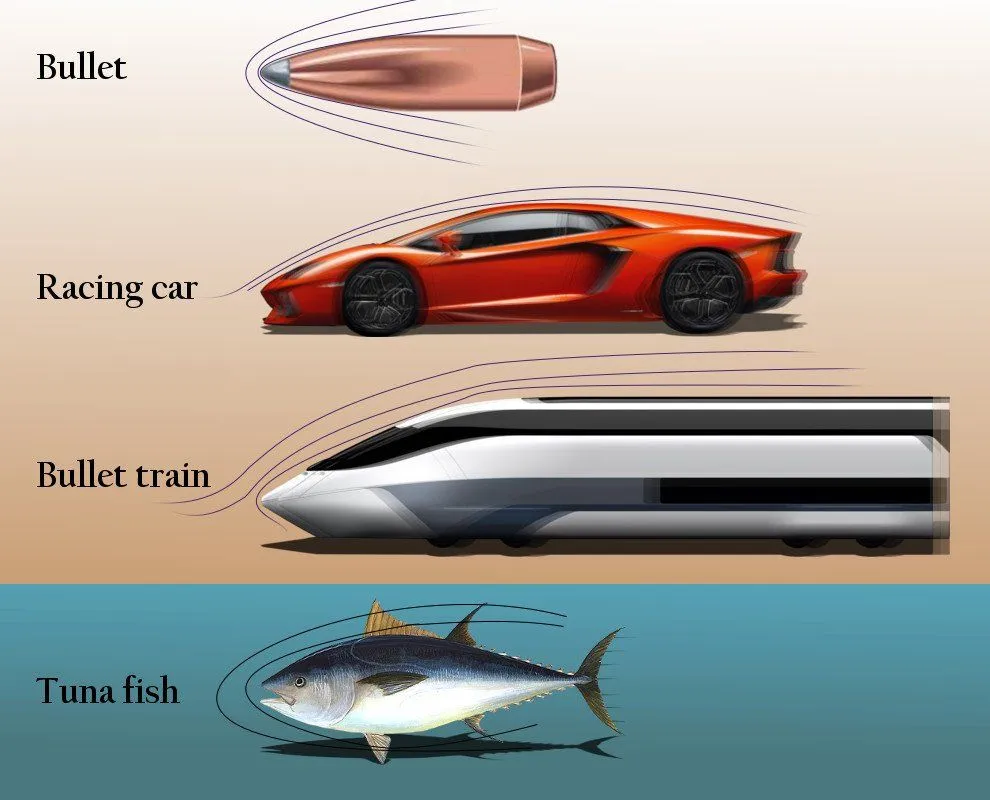
The amount of drag exerted on an object depends on two important factors: its shape and cross-sectional area. A streamlined object experiences less drag than a flat, boxy object. No wonder so many fast-moving things in the world are streamlined in their design.
The cross-sectional area of a body also affects the drag that it experiences. In our case, the cross-sectional area is simply the size of a person facing the wind. Normally, an average person presents around 8 square feet of blockage to the passage of air, but when the person stands sideways or rolls themselves up into a ball, they essentially reduce the size of their body that is blocking the air by decreasing their cross-sectional area.
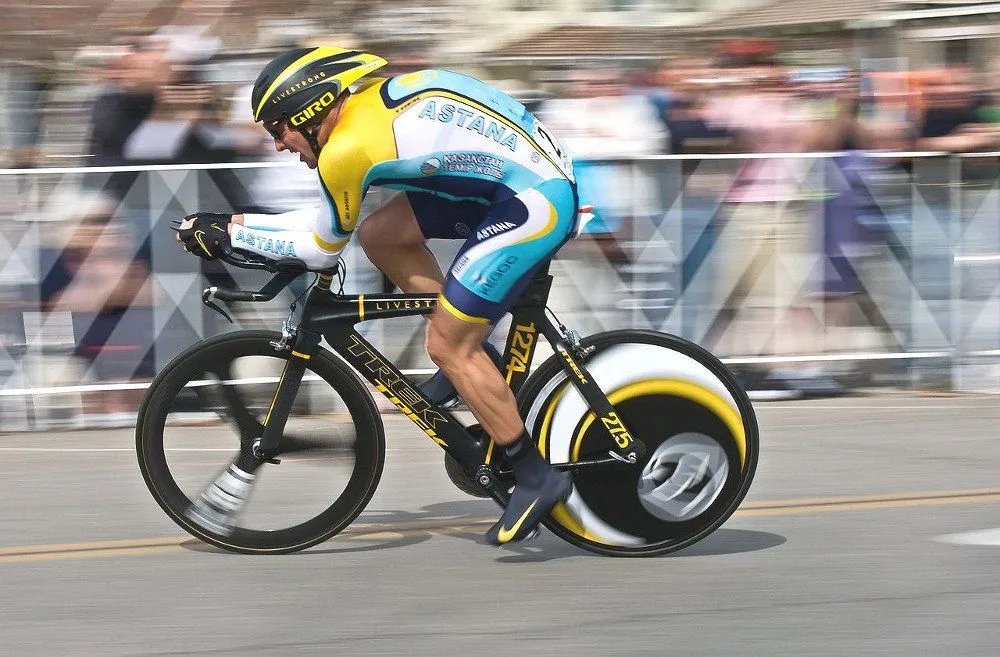
That’s the reason cyclists pull their knees up and put their heads and shoulders down during racing events in a bid to minimize their cross-sectional area and consequently decrease the drag they experience.
A man standing in very strong winds all by himself can do little to deflect the air that hits him from the front, and is therefore more vulnerable to be blown away during particularly powerful hurricanes or tornadoes. His (relatively) small mass doesn’t help either.
However, the situation changes when the same man clocks 160 km/h (100 mph) on a motorcycle, thanks to the fairing of the motorcycle. A fairing is a shell installed over the frame of particularly fast motorcycles (like sport bikes) with the primary purpose of reducing air drag.
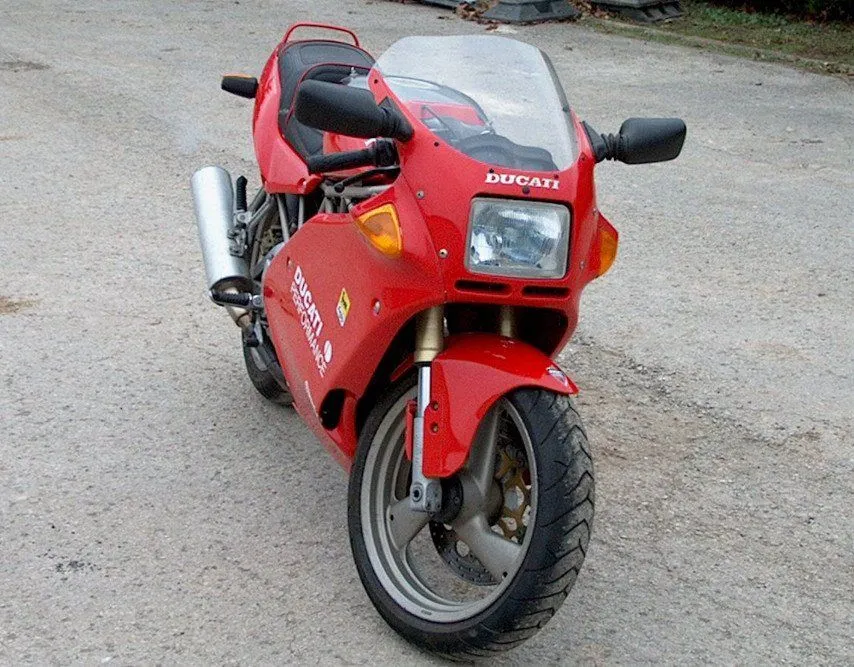
These contoured pieces of plastic and metal covering the front of a motorcycle ensure that the oncoming air is smoothly deflected, rather than being stopped or creating turbulence (which leads to even more drag). Therefore, the fairing helps reduce drag and helps the rider stay on the bike.
Furthermore, riders of sport bikes also assume a particular aerodynamically favorable posture to minimize their cross-sectional area, which further helps to reduce drag. Obviously, they also hold onto the bike tightly, making it very difficult for the oncoming air to blow away the combined mass of the rider and his motorcycle.

Just how big is that difference? At 160 km/h (100 mph), the wind pushes with about 25 pounds of force on every square foot it hits. An upright person presents roughly 8 square feet of blockage, so the math is simple: 8 square feet multiplied by 25 pounds works out to 200 pounds (about 900 N) shoving against them, more than enough to topple anyone. Thus, a man standing on the ground braving those same 160 km/h (100 mph) winds takes the full 200 pounds, but the same man, while riding a bike at that speed, only experiences a fraction of that force, thanks to his aerodynamic posture and the fairing of his motorcycle.
References (click to expand)
- What is Drag? - www.grc.nasa.gov
- Factors That Affect Drag. NASA Glenn Research Center
- How can a person ride a motorcycle 100 mph but not stand up .... The MIT School of Engineering
- Aerodynamic Drag - www.cs.wmich.edu
- (2017) Riding against the wind: a review of competition cycling aerodynamics. Sports Engineering
- (2017) The Impact of Active Aerodynamics on Motorcycles Using .... Minnesota State University, Mankato
- Aerodynamics & Wind Resistance - Science of Cycling. The Exploratorium
- The Drag Equation. NASA Glenn Research Center