AA, AAA, C, and D batteries all share the same nominal voltage of 1.5 volts. Their different sizes don't change that voltage. A bigger cell simply holds more chemicals, so it stores more energy (capacity, measured in mAh) and can deliver more current. A D cell lasts far longer than a AA, but both push at 1.5 volts. The 9-volt battery is the main exception, since it stacks six 1.5-volt cells inside.
Somewhere in your house, there is a drawer that “catches” all the junk that doesn’t have a proper place – pens, keychains, unidentified receipts, matchbooks, and of course, batteries! Although most of our newest technologies have internal batteries (smartphones, tablets etc.), there are still thousands of products and devices that require traditional batteries, so it’s a good thing we have that junk drawer. Who knows, maybe you even have a cat in there!
The problem is, whenever you go to find a new battery, you need to sift through batteries of all different shapes and sizes. Each battery is labeled with a different letter, it seems, AA, AAA, C, D…the list goes on and on.
It begs the question, why are there so many different types of batteries? Aren’t they all doing the same thing?
A Brief History Of The Battery
Benjamin Franklin borrowed the term “battery” from the military around 1748 to describe a row of linked glass capacitors, but the first true working battery didn’t appear until 1800, when Alessandro Volta stacked discs of copper and zinc separated by brine-soaked cloth into his famous “voltaic pile.” Back then, it was very large and didn’t have much power. However, the concept of a battery remains the same today, an electrochemical cell that creates electrical energy from chemical energy. By establishing a negative and positive differential within the battery, an electrical charge can be induced to move. That energy is a result of chemical reactions occurring at the positive and negative terminals, thus generating a charge that can be harnessed to accomplish work.
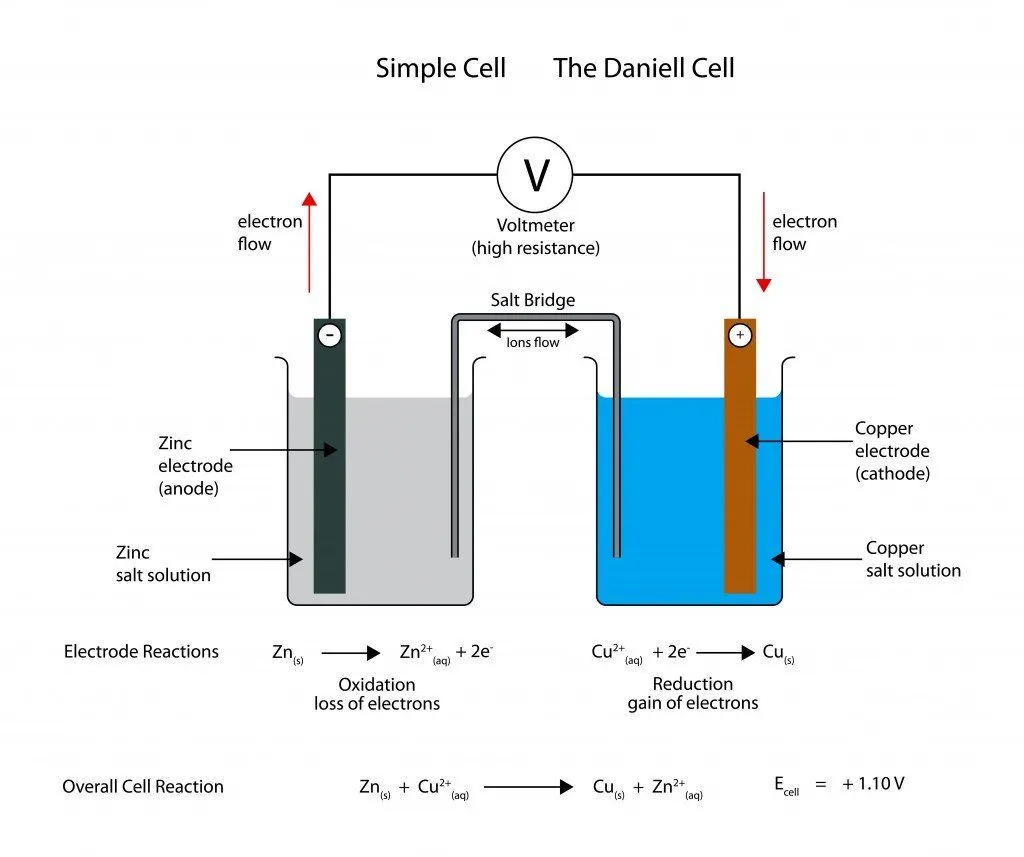
It sounds pretty confusing, but the concept is fundamentally brilliant, and is still the foundation of many batteries that we use today. The two main types of batteries are primary and secondary batteries, the difference being that primary batteries can produce a charge immediately, while secondary batteries must be charged first before any work can be done. Fortunately, these second types of batteries can be recharged, which makes them more versatile and desirable.
Since the first batteries were created, we’ve made incredible advances in battery cell types, capacity, life span, and efficiency, but that still doesn’t answer the question of why we have so many different types? Why the various shapes? Big, small, flat, thin, alkaline, molten salt, zinc-carbon, lithium? What’s the explanation?

The Wide World Of Batteries
Given the broad use of and dependence upon electricity in our modern, on-the-go, technologically tuned in world, we have had to create a vast array of different batteries to effectively store and discharge energy for a huge variety of tasks. You have a battery in your car, lawnmower, alarm clock, watch, smartphone, television remote, and hearing aid. Think of the energy consumed or expended by most of those devices… a pretty wide range, right?
Well, common sense would tell us that powering larger, more complex objects would require more power. A submarine would need more power than a hearing aid, don’t you think? Therefore, people began developing batteries that were customized to the power requirements of their inventions. Unfortunately, this led to hundreds of different batteries being produced that were only good for a limited amount of objects.
This was obviously inefficient, so the head honchos of the battery industry, along with various government agencies and manufacturers, decided to standardize battery sizes. Instead of hundreds of different product-specific batteries, there would be a much shorter list. Their naming system was simple: A, B, C, D, E.
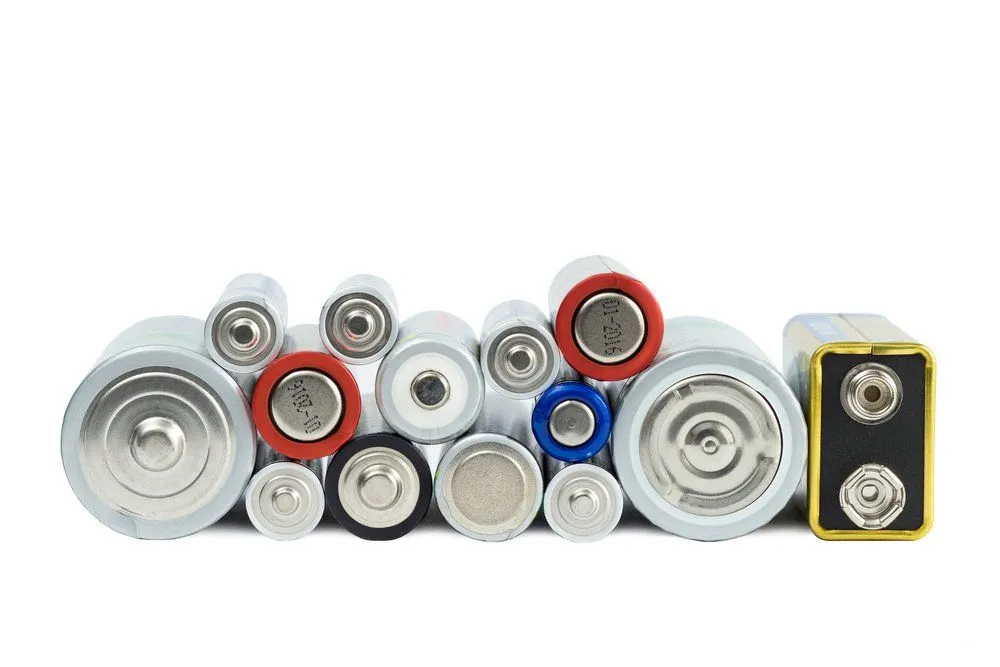
We still have many of those batteries today, in addition to some smaller varieties (AA and AAA), which were developed for smaller devices in the second half of the 20th century. Some of you may be asking, what the heck are A and B batteries? Their names actually come from the early days of vacuum-tube radios, long before today’s size codes existed. An “A battery” powered the tube’s filament, a “B battery” supplied the much higher plate voltage, and a “C battery” set the grid bias. So those letters originally described a battery’s job in the circuit, not its physical size. When the American Standards Association (a forerunner of ANSI) published its first cell-size standard in 1928, it reused the same letters, roughly from smallest (A) upward, which is why you’ll spot C and D on store shelves but almost never a standalone A or B.
Each battery type served their purpose at different times, but the need for such a variety is based on the type of chemical reactions relied on to create the charge, and the job or workload that each battery was expected to handle.
So Where Are The A And B Batteries?
If the standard sizes really do run A, B, C, D and E, one question nags at almost everyone who stares into that junk drawer: where on earth are the A and B batteries? You can grab a C or a D at any store, yet you have probably never once held a battery simply labeled “A” or “B”. They were not skipped, and they were not a mistake. Both sizes are perfectly real, standardized cylinders. A size A cell measures about 17 by 50 mm (a hair chunkier than a AA), and a size B is roughly 21.5 by 60 mm, sitting neatly between a AA and a C.

Part of the confusion is that the “B battery” you may have heard of was not this cell at all. In the vacuum-tube radios of the early 20th century, a “B battery” was a bulky block that supplied the high plate voltage for the tubes. The Eveready No. 762-S pictured here delivered a hefty 45 volts, worlds away from a single 1.5-volt cell. Those radio A, B and C batteries were named for their job in the circuit, not their size, which is exactly why the letters feel so muddled today.
So why did the cylindrical A and B sizes never make it onto shelves? Simply put, they never caught on with consumers. When manufacturers settled on standard sizes, the shapes that happened to fit the most popular gadgets were AA, AAA, C and D, so those are the ones that got mass produced by the billion, while A and B quietly faded from the shopping aisle.
They are not entirely extinct, though. Size A cells live on inside some older laptop battery packs and hobby packs, usually as rechargeable NiCd or NiMH cells rather than throwaway alkalines. And the size B lives out its quiet retirement mostly inside the flat 4.5-volt lantern battery that is still common in Europe. So the next time someone insists B batteries do not exist, you can tell them they are just hiding.
AA Vs D: Same Voltage, Different Capacity
Here is the part that surprises most people: a tiny AAA and a chunky D battery push out exactly the same voltage. Pull a fresh AAA, AA, C, or D off the shelf and a multimeter will read about 1.5 volts on every single one. The size has nothing to do with the “pressure” of the electricity. That voltage is fixed by the chemistry inside (for a standard alkaline cell, the zinc and manganese-dioxide reaction settles at roughly 1.5 volts no matter how big the can is).
So if the voltage is identical, what does a bigger battery actually buy you? Two things: more capacity and more current. A larger cell is simply a bigger tank of reactive chemicals, so it stores more energy and can keep a device running for longer. Capacity is measured in milliamp-hours (mAh), and the jump from one size to the next is dramatic:
- A typical alkaline AAA holds around 1,000 to 1,200 mAh
- An AA roughly 1,800 to 2,800 mAh
- A C cell about 6,000 to 8,000 mAh
- A D cell roughly 12,000 to 18,000 mAh
That is why a flashlight or a portable radio asks for D cells, while a TV remote happily runs on AAAs for a year. Both run at 1.5 volts, but the D cell can pour out more current and store roughly ten times the energy of a AAA. Swapping a D for a AAA wouldn’t change the voltage your device sees, it would just run flat much sooner (and physically wouldn’t fit the slot).
There are a couple of footnotes worth knowing. The familiar rectangular 9-volt battery is the obvious oddball: crack one open and you’ll find six little 1.5-volt cells wired in series, which is how it reaches 9 volts. And if you use rechargeable NiMH or NiCd cells in a AA or AAA shape, those read about 1.2 volts rather than 1.5, because nickel-based chemistry simply produces a lower cell voltage. Most gadgets are designed to run fine on that slightly lower figure.
Alkaline, Lithium, NiMH: How Many Types Of Batteries Are There?
So far we have talked about size, but there is a second way batteries differ, and it hides in tiny print on the label: the chemistry inside. Two AA cells can look identical and drop into the same slot, yet behave very differently depending on what they are made of. Here are the ones you will actually meet in that junk drawer.

Zinc-carbon cells are the old-timers, the cheap batteries that often come bundled free with a new remote or a child's toy. They put out 1.5 volts, but they hold the least energy and fade quickly under load, so they only really make sense in low-drain, occasional-use gadgets like a wall clock.
Alkaline batteries are the household default, and for good reason. They run on the same 1.5-volt zinc and manganese-dioxide reaction we met earlier, but they pack far more energy than zinc-carbon, resist leaking, and can sit in a drawer for roughly ten years before going flat. For most remotes, flashlights, and toys, this is the sweet spot of price and performance.
Lithium cells in the AA and AAA shape (technically lithium iron disulfide) also read 1.5 volts, so they slot straight into the same devices, but they are the overachievers. They are about a third lighter, shrug off freezing temperatures, and can hold their charge for up to fifteen years, which is why they are favored in digital cameras and cold-weather gear where an ordinary alkaline would struggle. You simply pay more up front for that stamina. Don't confuse these with the flat 3-volt lithium coin cells like the CR2032 that live in car key fobs and computer clocks, which use a different lithium chemistry entirely.
NiMH (nickel-metal hydride) cells are the rechargeable option, and the one big exception to the 1.5-volt rule, since they settle at about 1.2 volts. A single NiMH cell can be recharged hundreds of times, which quickly pays for itself in a game controller or a camera flash that you feed constantly. The trade-off is that they slowly leak charge just sitting on a shelf. There are niche members too, like the 1.55-volt silver-oxide button cells prized in wristwatches for their rock-steady voltage. But between zinc-carbon, alkaline, lithium, and rechargeable NiMH, you have covered almost everything rattling around that drawer.
What Will The Future Of Batteries Be Like?
As we continue to progress technologically and socially, our need for mobile energy has increased. Imagine the billions of smartphones in pockets all around the world, not to mention laptops and tablets! We expect our devices to be reliable and powerful, as well as portable and convenient, which has meant a resurgence in battery development technology.
The leader in the industry right now is lithium-ion batteries, which are secondary batteries that can be recharged again and again. You will find lithium-ion batteries in most laptops and cell phones now, which can be extremely small, while also holding a charge very efficiently. Some people are thinking much bigger…

On the horizon is a world where we have severed our dependence on fossil fuels. That means that oil-guzzling automobiles will be a thing of the past, replaced (hopefully) by electric cars and a global society that is more environmentally conscious. Electric cars are one of the driving forces behind battery research in recent years; the desire to drive further between charging up is universal in this growing industry!
Tesla Motors, founded by undeniable genius and game-changer Elon Musk, is one of the most exciting electric car companies on the market, but his vision for batteries extends beyond the roads. His lithium-ion home battery, the Powerwall, can effectively draw energy from solar panels on your home and store it in a wall-mounted box for use after dark or during an outage. The latest version, the Powerwall 3, weighs about 132 kg (291 lb) and stores 13.5 kWh of energy, enough to run essential appliances for hours, and several units can be linked together for a bigger home. It isn't cheap (hardware runs into the thousands of dollars before installation), but it can meaningfully cut your power costs over the years, while helping to heal the environment.
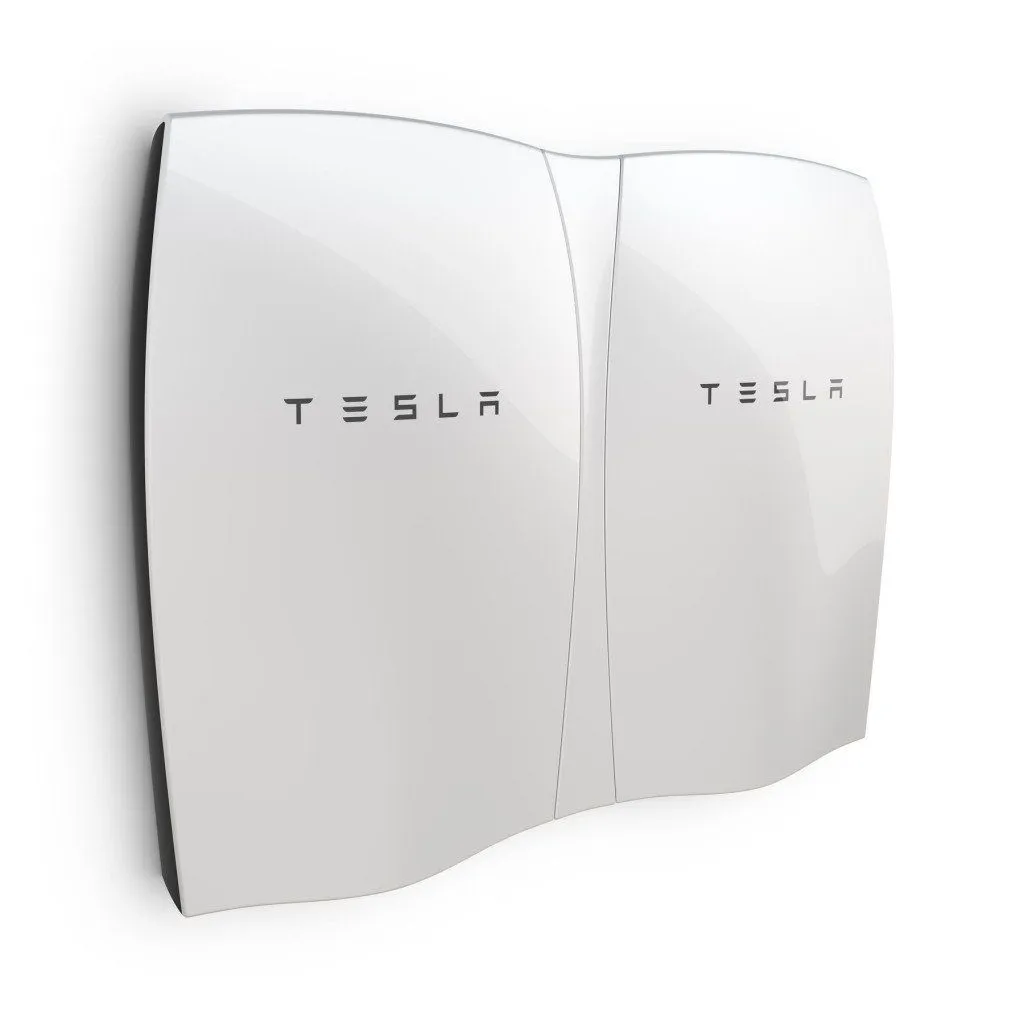
This can allow you to go “off the grid” by powering your house with free sunlight that you efficiently store until you need it. This could be the first step in getting the world to go green by lowering dependence on large power companies and fossil fuels.
In other words, whether you prefer AAA, B or D, batteries are evolving, and making a real comeback!