No, not all chicken eggs are fertilized. Hens lay eggs whether or not a rooster is around, just like human women ovulate without a partner. Commercial farms keep only hens (no roosters), so almost every store-bought egg is unfertilized and can never hatch into a chick, even if you warm it.
Egg eaters have often panicked at the thought of cracking an egg open and finding a tiny chick inside. You have probably never been in such a situation, but is it possible?
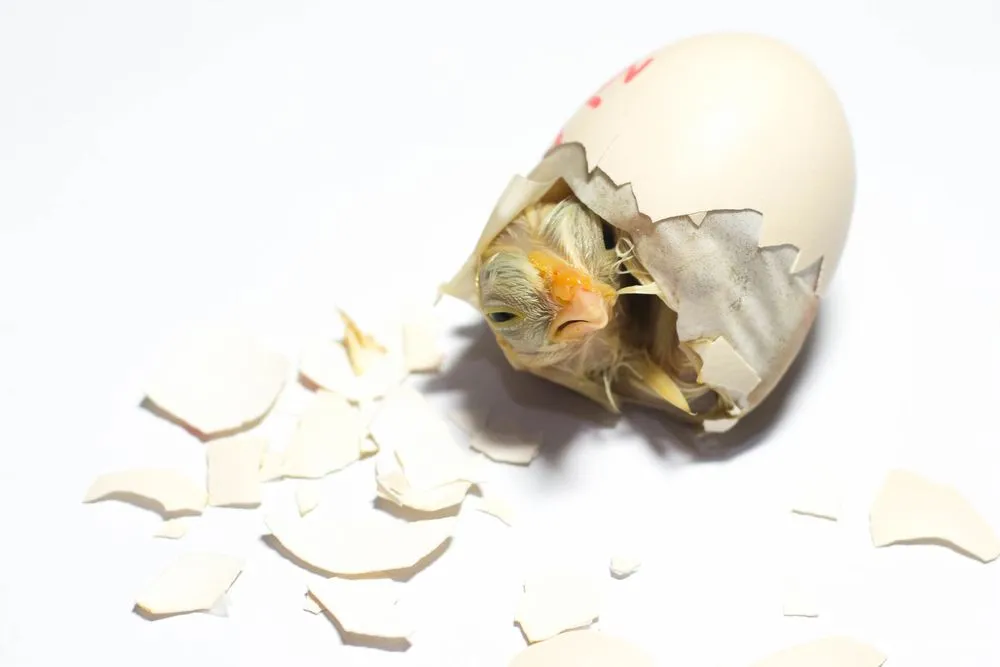
We’ve all tried, at least once, to try to hatch a store-bought egg by keeping it warm. Can you blame us? However, almost all commercially sold eggs are not fertilized! This means that there is, in fact, no tiny chick embryo developing inside the egg.
Allow me to eggsplain a bit further…
The Biological Recipe Of An Egg
A chicken embryo’s life starts inside the hen even before an egg is laid. Eggs of various sizes and maturity levels are present in the hen’s ovary. Only the hen’s left ovary is functional (true for most female birds, though kiwis and several raptors are exceptions, retaining a working right ovary too).
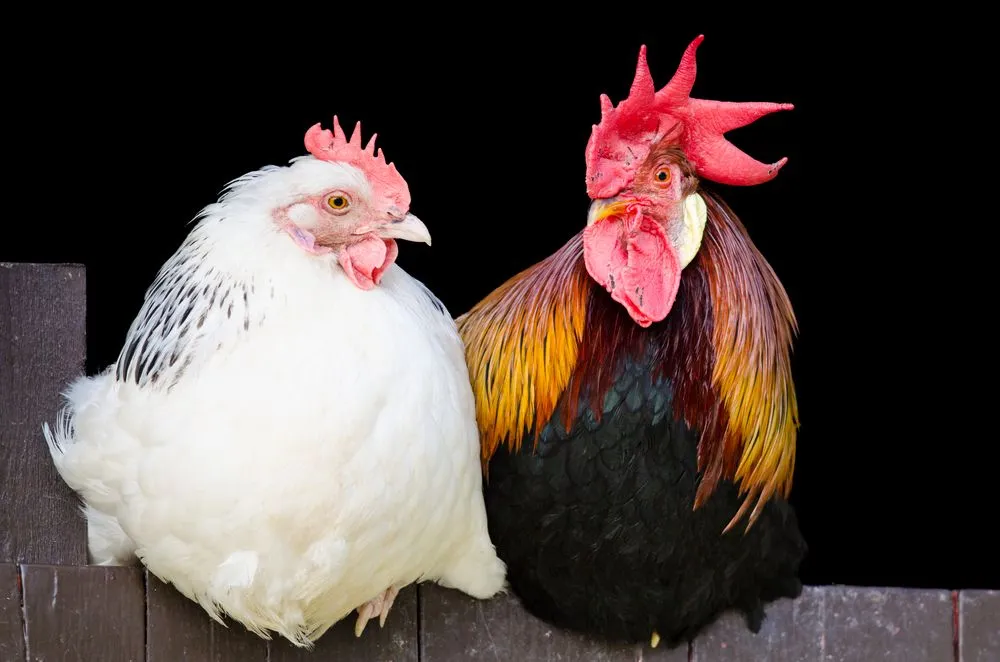
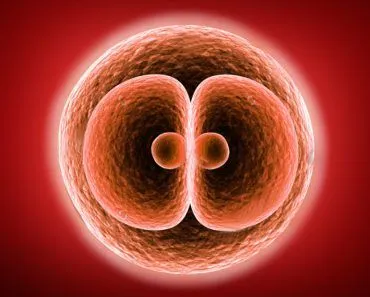
When the yolk (the hen’s egg cell) is released, it enters the infundibulum, the funnel-shaped top of the oviduct. If a rooster has been around, sperm stored in the hen’s reproductive tract fertilize the yolk here, within about 15 minutes of ovulation. The fully-formed egg, hard shell and all, is then laid roughly 24 to 26 hours later.
Hens do not know if the egg is fertilized and must go through with the egg-laying process either way. A hen will sit on the egg day and night in hopes of hatching it. Such hens are called broody hens and they are so dedicated that they only leave their eggs once per day!
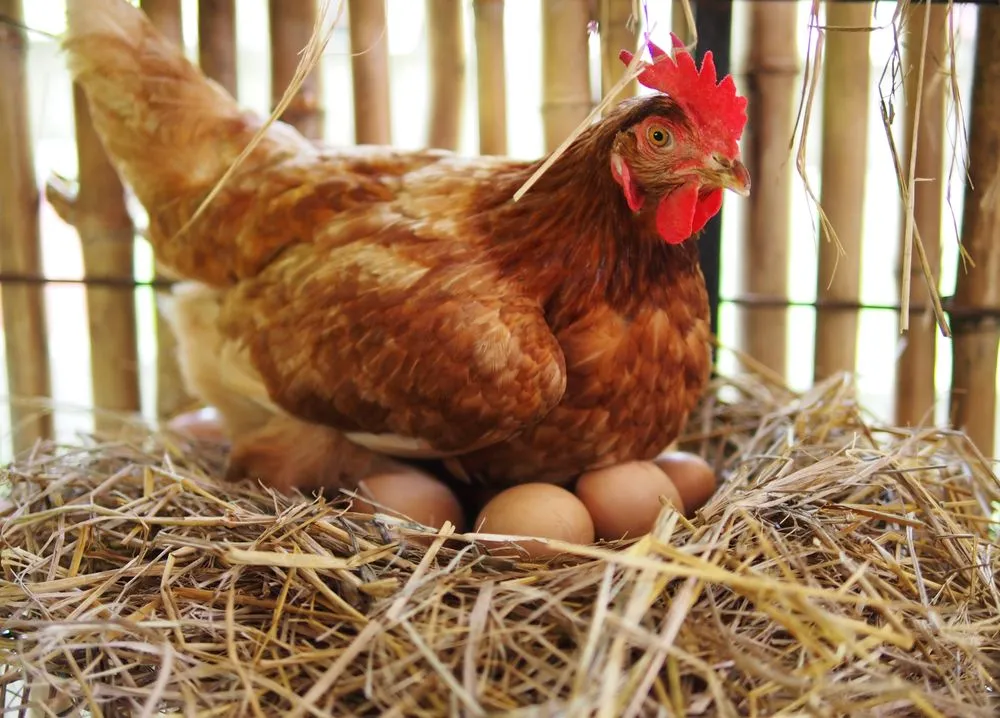
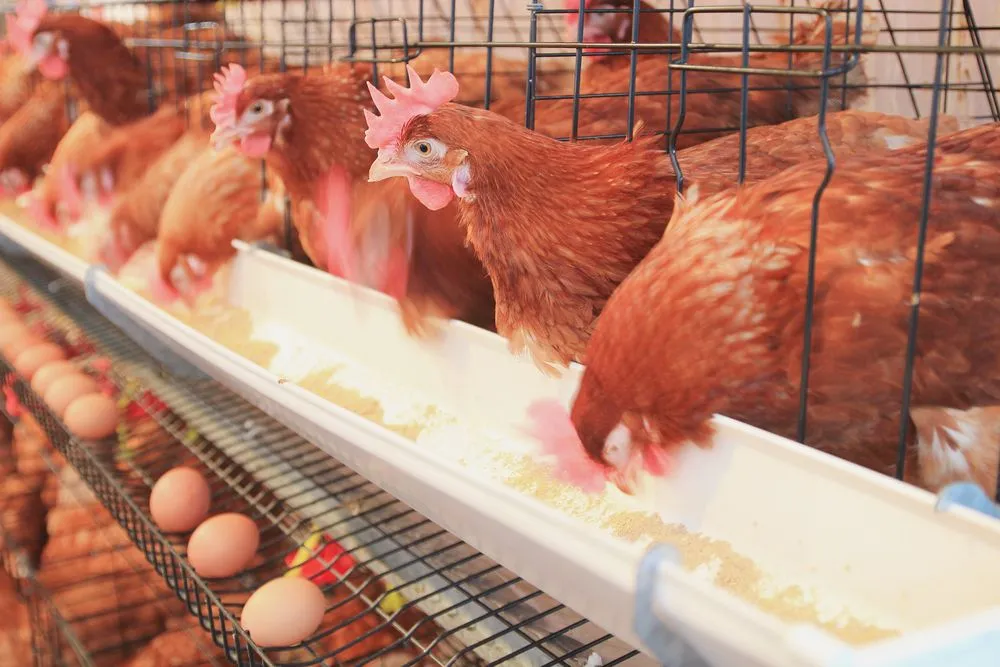
Interestingly, hens are capable of laying eggs without a rooster’s involvement! That’s right, an egg is produced by ‘laying hens’ in poultry farms once every 24 to 27 hours! All they require are the correct nutrients, namely calcium and vitamin D3 and the right physical conditions. Light stimulates the laying process, and some farms even use artificial lighting to regulate the process during winter months.
Even though there is no difference in the nutrient content or taste between a fertilized and an unfertilized egg, most commercial farms prefer to have only hens in their coops. This is because a single rooster can mate with 10 to 12 hens, and if proper care is not taken, the flock numbers can get out of hand very quickly!
How Is A Chicken Egg Formed Inside The Hen?
We just saw that a hen lays an egg roughly a day after the yolk is released, but what is actually happening during those 24-odd hours? The yolk is gradually built up into a finished egg as it travels down a long tube called the oviduct, a bit like a product moving along a factory line.

After the yolk leaves the infundibulum (the funnel where fertilization would happen, if a rooster were involved), it moves into the magnum. It lingers here for around 3 hours, and this is where the thick egg white, or albumen, is layered around the yolk. Next comes the isthmus, a shorter stretch where the egg spends roughly 75 minutes and gains its two papery shell membranes.
The longest stop by far is the shell gland, also called the uterus. The egg parks here for about 20 hours while a hard shell made mostly of calcium carbonate is deposited around it. Add it all up, and the whole assembly takes about 25 to 26 hours before the egg is finally laid.
Artificial Selection
In the wild, hens lay eggs until they form a clutch, a group of eggs that are hatched together. The clutch size differs from bird to bird. Hens usually have a clutch size of around a dozen eggs, after which the hen stops laying more eggs. Female fowl also stop releasing eggs in the harsh winter months, as it is difficult to raise offspring when food is in short supply. The shortened daylight hours also hamper egg production.
This brings down the total egg production of wild hens, since they only lay in the spring. The Red Jungle Fowl variety lays only 10-15 eggs per year. It is important to note that most of these eggs will be fertilized, since roosters and hens are almost always found together in the wild. Therefore, most eggs will hatch into chicks after 21 days of incubation. On the contrary, hens that are specially bred for egg-laying generate around 280-300 unfertilized eggs every year (the 2024-2025 USDA average sat right at 288-290 eggs per layer)!
However, doesn’t the process of laying unfertilized eggs seem futile? Natural selection is supposed to favor reproductive fitness. This means that the evolutionary principle of ‘survival of the fittest’ assures the survival of the species with high reproductive success. A basket full of unfertilized eggs does not scream “reproductive success”, so how have hens survived natural selection?
The answer is that they haven’t! Over thousands of years, humans have selected those species of hens that produced more eggs. This is called selective breeding, ‘Human-caused evolution’, or artificial selection.
Through selective breeding, humans choose individuals carrying advantageous traits as parents, which increases the frequency of those traits in following generations. The underlying genetic variation comes from spontaneous mutations and sexual recombination that happen on their own. Selection pressure doesn’t create the mutations; it simply favors the variants that are already there.
Laying hens have been modified over time to guarantee yield consistency and peak egg production. Broiler chickens, on the other hand, have been engineered for the purpose of meat consumption and are therefore very fleshy and full. Compared to their cousins, laying hens have little flesh and concentrate all their energy on producing an egg each day. This shows how humans have artificially selected traits to optimize different species of chickens for different purposes.
The discrepancy between the number of eggs produced by wild hens and farm hens also occurs because farmers collect eggs every day. This prevents the hen from forming a clutch, so she continues to lay one egg daily.
Another reason is photoperiod. Hens are naturally seasonal layers: light entering the eye stimulates the pituitary gland, which releases hormones that drive ovulation, so as days shorten in autumn, laying drops or stops. Modern commercial breeds have been selected to lay more consistently year-round, but poultry farms still supplement natural daylight with artificial lighting (typically 14 to 16 hours per day) to keep hens laying through the winter. A few traditional breeds do still go ‘off-lay’ when the days get short.
All of the above reasons have led laying hens to produce an unnaturally huge number of eggs. The deliberate exclusion of roosters on poultry farms is the sole reason why these eggs are unfertilized.
Do All Chicken Eggs Hatch?
Given how many eggs a hen can churn out, it is natural to wonder whether every one of them could, in principle, turn into a chick. The short answer is no, and two separate things have to line up first.
To begin with, the egg has to be fertile, which means a rooster must have mated with the hen. Even then, a fertile egg does nothing on its own. Left on a kitchen counter, it will never develop, because the embryo needs steady warmth for days on end. A broody hen provides this by sitting on her clutch, while farmers use an incubator to do the same job artificially. Chicken eggs take about 21 days to hatch, and the conditions are surprisingly fussy. Forced-air incubators are held at roughly 37.5 degrees Celsius (about 99.5 to 100 degrees Fahrenheit), the humidity is kept near 58 to 60 percent and then raised to 65 percent or more for the final hatch, and the eggs are turned at least four to six times a day so the embryo does not stick to the shell membrane. This turning is usually stopped around day 18.
Even when everything is done correctly, not every fertile egg hatches. Infertility, a temperature or humidity that drifts off target, too little turning, or eggs that sat in storage too long before incubation can all quietly bring development to a halt.
Eggs We Eat Vs. Eggs That Hatch: What Is The Difference?
By now the gap between the eggs in your fridge and the eggs a breeder tucks under a hen should be coming into focus. They are really two different products.

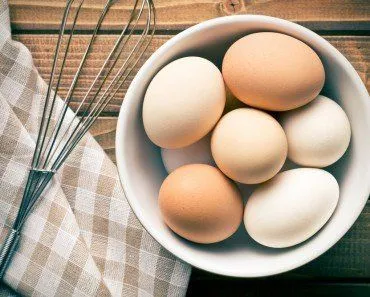
The eggs we eat, often called table eggs, come from flocks of hens kept without any roosters, so they are unfertilized from the very start. They are sold purely as food and handled to stay fresh, whether through the washing and refrigeration used in the United States or the unwashed, cuticle-protected storage common in the United Kingdom, Europe, and Australia. Either way, no chick is ever going to appear.
Hatching eggs are handled with a future chick in mind. They come from breeding flocks that do include roosters, so they are fertile, and instead of being chilled in a fridge they are kept somewhere cool but not cold (in the region of 13 to 18 degrees Celsius, or roughly 55 to 65 degrees Fahrenheit) and set to incubate within about a week, since hatchability falls off the longer they are stored.
And if you are wondering: yes, a fertile egg is perfectly safe and pleasant to eat. It tastes the same and offers the same nutrition as an unfertilized one, as long as it was collected and chilled promptly rather than left to warm up.
Is My Egg Actually An Embryo?
If you are still curious to know whether the egg you just cracked is fertilized or not, here’s how you can tell. A 24-hour-old fertilized egg will have a small white spot on the yellow yolk. As the chick, if there is one, develops, you’ll notice blood vessels forming around a comma-shaped fetus chick.
That being said, blood doesn’t indicate an embryo. A blood spot within an egg can be due to a rupture in a blood vessel. This can happen at any point in the reproductive system as the result of a deficiency in vitamin A.
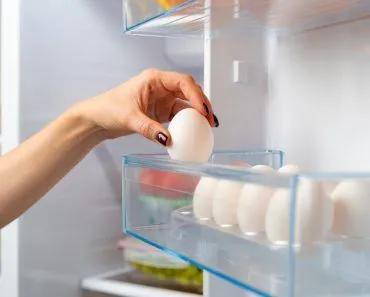
Now, is there a chance that a fertilized egg might end up in the dozen eggs you bought? Even if we consider the off-chance, there is no possibility of cracking open a developing chick at breakfast. In the United States, eggs are washed and refrigerated before sale, which keeps them too cold for any embryo to develop. In the United Kingdom, the European Union, and much of Australia, eggs are not washed, so the natural cuticle stays intact, and they sit at room temperature on shelves; cool ambient storage and the cuticle together stop both bacteria and any meaningful embryo development.
Additionally, food safety measures dictate the inspecting of the interior of eggs meant for sale. This is achieved by a process called candling in which a bright light is held against the shell. Candling highlights any anomalies, including developing chicks.
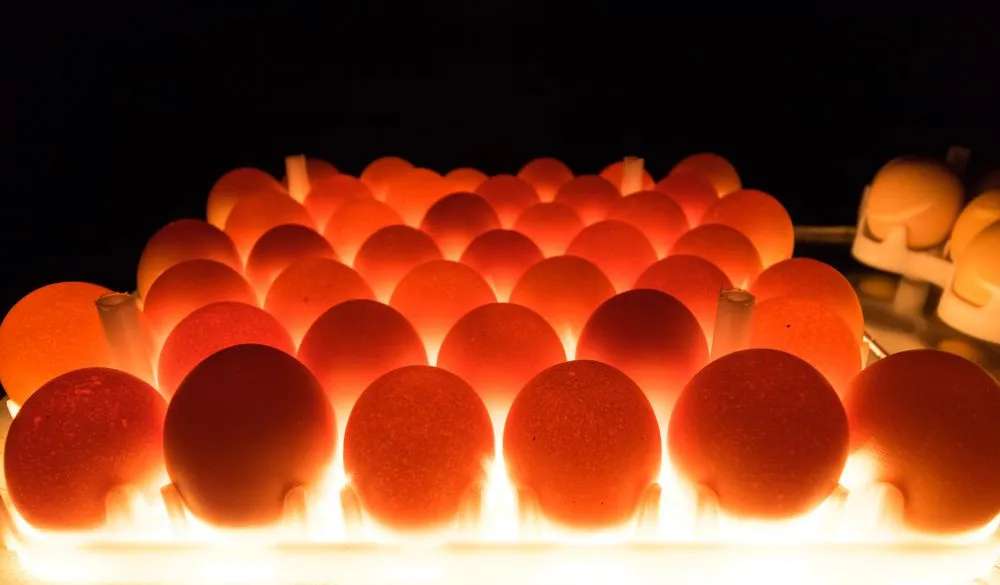
In short, you can keep all your worries at bay and eat your breakfast sunny-side up with a smile on your face!
References (click to expand)
- Why did evolution create a chicken that lays so many unfertilized eggs? West Texas A&M University
- Can you hatch an egg bought from the store? Michigan State University
- Chickens and Eggs 2025 Summary. USDA NASS
- Chick Embryo Development. Virginia Tech
- Artificial Lighting for Laying Hens. Penn State Extension
- Decreasing daylight and its effect on laying hens. Michigan State University
- About Chickens. Humane World for Animals
- How many eggs a day does a hen lay, and how? British Hen Welfare Trust
- Avian Reproductive System – Female. Poultry Extension
- Important incubation factors. Mississippi State University Extension Service
- Handling Eggs After They Are Laid. University of Georgia Extension