Table of Contents (click to expand)
In the US, eggs are washed before sale (which strips their protective cuticle), so they must be kept in the fridge at 4°C (40°F) or below to slow Salmonella. In the UK and Europe, hens are vaccinated and eggs are left unwashed, so they keep safely at room temperature. Either way, store eggs in their carton on a main shelf, not the fridge door.
Eggs are a globally loved ingredient. Whether it’s a fluffy bacon and cheese omelette, a scrambled egg on toast or a fried egg on top of a juicy burger, eggs are an excellent protein source. However, you have to be careful when handling eggs, whether they’re farm to table or store-bought.
Eggs are easy to spoil if not handled correctly. Depending on your location and the container instructions, you may be told to keep them in a cool and dry place or in the fridge… but why is it so necessary to store eggs correctly?
Why Do Eggs Need Proper Storage?
Why are eggs so great to eat? It’s not just because they’re delicious. Eggs are rich in lipids, proteins, minerals and vitamins. The protein is split fairly evenly between the white and the yolk (the white actually holds a little more than half), and there are hundreds of different kinds. The lipids, most minerals and the fat-soluble vitamins, however, are concentrated in the yolk. In fact, an egg contains every vitamin except vitamin C, and it’s one of the few natural foods that delivers vitamin D.

Eggs are so nutritious that our microscopic friends, bacteria, love them too. Of the potentially hundreds of bacteria that could be found in an egg, the one we primarily need to be wary of is Salmonella enteritidis. It’s a bacteria that can cause food poisoning and upsets our tummies if it infects us.
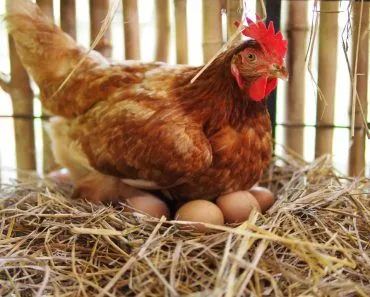
Chickens lay eggs through a vent-like opening called a cloaca, which is the equivalent of our anus. It’s also the same opening that they use to poop and pee. Salmonella species are found in chicken poop and a chicken’s reproductive tract. Because of this, the eggs can come in contact with Salmonella as it passes through the cloaca or from the chicken poop lying around in the nest.
It doesn’t end there though. Eggshells are also porous to allow oxygen from the environment to pass through to the baby embryo inside the shell. These bacteria can also penetrate these pores and infect the inner layers of the egg. That’s why it’s safer to always cook your eggs before eating them.
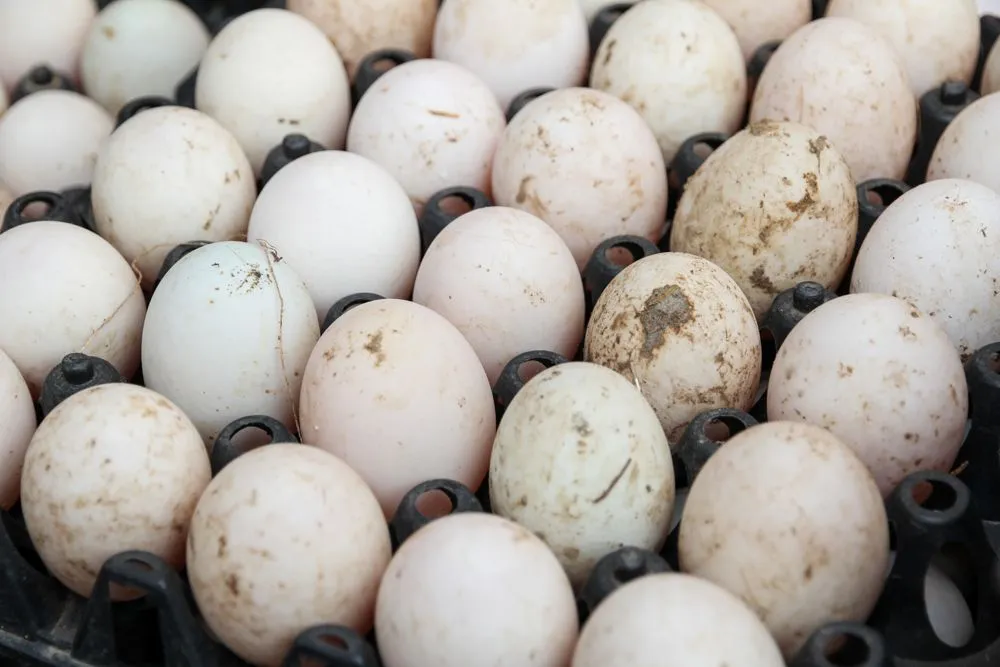
Don’t be alarmed though. In the U.S., commercial eggs are washed and sanitized thoroughly before being packed and sold, under strict food safety regulations that egg sellers must follow. There’s a catch, however: that washing also scrubs away a thin natural coating on the shell called the cuticle (or “bloom”). Without it, the shell is left more exposed, so a washed egg may be bacteria-free at the store yet still vulnerable to future invasions. That’s exactly why U.S. eggs have to live in the fridge.
What if you’re buying unwashed farm-to-table eggs or collecting your own from the coop? Here’s the counterintuitive part: don’t wash them. The FDA advises against it, because the porous shell can actually “suck” the wash water (and any bacteria in it) inward through its pores, and scrubbing damages that protective cuticle. If an egg is visibly dirty, gently buff it with a dry cloth and pop it in the fridge.
Washing can only do so much anyway. It can rinse away the bacteria lying on the shell, but not the ones that found safety inside the eggshell’s pores. Those are particularly hard to get rid of.
That’s why, in the U.S. at least, it’s recommended that you store eggs in the fridge.
Why Does Refrigeration Help?
Are you a cold-weather fan? Well, bacteria aren’t. They usually don’t grow well in the cold. They use all their energy to stay warm, rather than grow and multiply.
The FDA recommends keeping eggs at fridge temperature, 4°C (40°F) or below. Studies have shown that storing eggs at 4°C inhibits Salmonella growth. It’s not just Salmonella; other food-spoiling bacteria like E.coli don’t grow at such cold temperatures either.
So, later on, if any bacteria were to come in contact with the eggshells, they won’t grow and infect the eggs if they’re kept in the fridge. On the other hand, eggs kept in the open are more favorable to bacterial growth. It’s a more comfortable temperature for them.
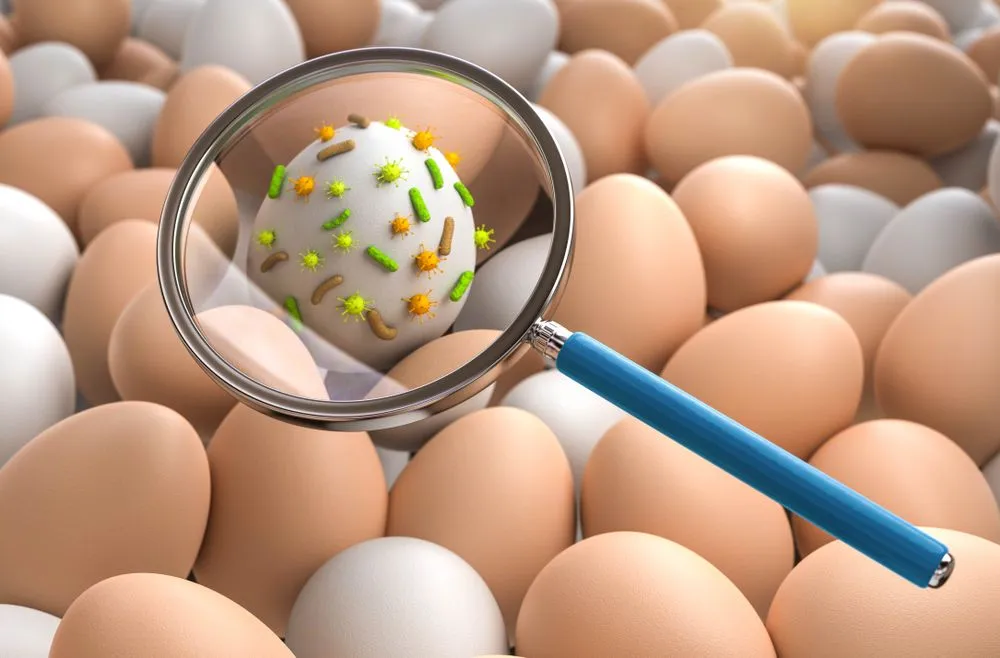
Now, this doesn’t mean bacteria don’t grow at all in the fridge, but they grow SLOWLY. The USDA says raw shell eggs keep for about three to five weeks in the refrigerator. Please don’t use two-month-old refrigerated eggs for baking a cake… they’ll probably be rotten by then!
In the U.K., Europe and much of Australia, people happily keep their eggs out on the counter. Their case is a little different, for two reasons. First, hens in the U.K. (under the British Lion scheme) are vaccinated against Salmonella and their health is strictly monitored, so the eggs are far less likely to carry it in the first place. Second, these eggs are never washed, which means the cuticle that seals the shell stays intact and continues to keep bacteria out. That combination makes them safe to store at room temperature in a cool, dry spot like the kitchen pantry. They still won’t last forever there though, so if you want them to keep for several weeks, the fridge is your friend.
In the U.S., Salmonella is much more common, which is why the FDA recommends buying eggs from a refrigerated store and storing them in the fridge as soon as you get home. This point is crucial if you’re buying refrigerated eggs. Once they’re kept in the refrigerator, they should not be left out for too long.
Why Should You Not Leave Refrigerated Eggs Outside?
Have you ever sat in a freezing air-conditioned room or car, only to step out in the open and find your glasses, phone screen or watch fogging up? That’s the result of condensation. The same phenomenon occurs when you keep a refrigerated egg outside. The surrounding water vapor condenses and a water layer forms on the eggshell.
This sudden temperature fluctuation and water formation is a thriving space for bacteria. This is an excellent environment for them to grow… and they grow fast! Salmonella species can double in number at room temperature in a couple of hours. Additionally, the moisture makes it easier for the bacteria to penetrate the eggs.
So, if you’re buying cold eggs from your local grocery store, don’t wait too long to put them in your kitchen fridge.
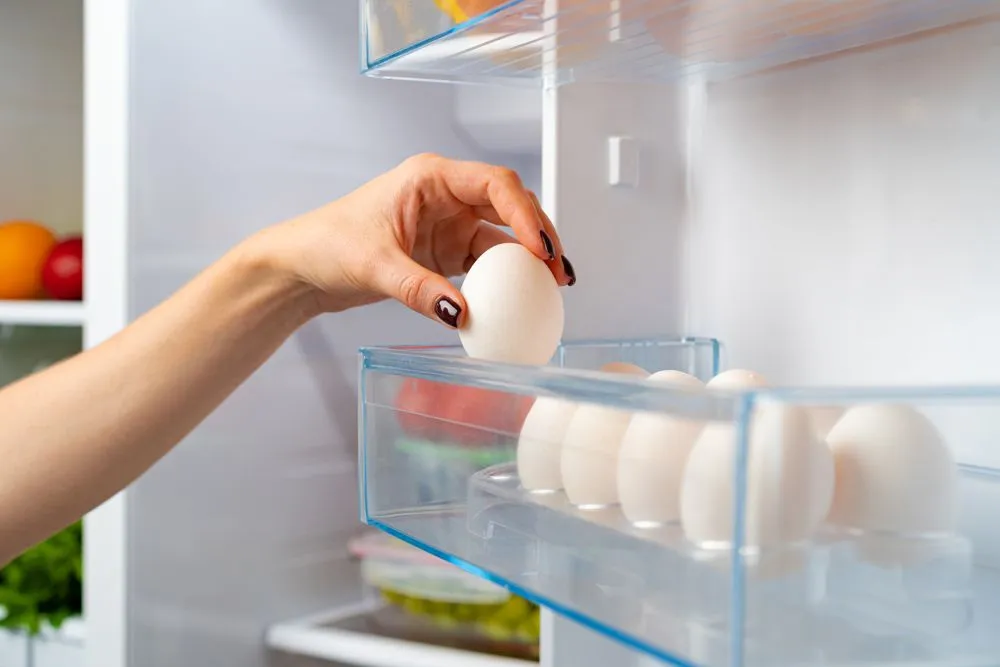
Another helpful tip is to store eggs in their carton on a main shelf, ideally toward the back of the fridge. Don’t keep them in the molded egg tray on the door, even though that’s exactly where most fridges seem to invite you to put them. The door is the warmest part of the fridge, and every time you open it, outside air and moisture rush in. That temperature swing is what fogs the eggs with condensation. Keeping the eggs in their original carton shields them from that moisture and stops strong odors from neighboring food (last night’s leftovers or that block of cheese) from seeping through the porous shell. In short, eggs stay fresher when they stay in the carton.
One more small habit pays off: store the eggs pointy end down, with the rounder end facing up. The wide end of the shell houses a small air pocket, and keeping it on top helps the air cell stay put and the yolk stay centered, which keeps the egg fresher for longer. Conveniently, this is exactly how eggs already sit in a standard carton, so simply leaving them in their box does the job for you.
Conclusion
Keeping eggs in the fridge preserves them for roughly three to five weeks. That doesn’t mean throwing them in the freezer buys you more time in the shell. Never freeze eggs in their shells, as the liquid inside expands as it freezes and cracks the shell wide open. Raw yolks are tricky too: frozen on their own they turn thick and gel-like, which is why the USDA suggests beating in a pinch of salt or a little sugar (depending on whether you’ll use them for savory or sweet dishes) before freezing. Cracked into an airtight container and treated this way, eggs can keep in the freezer for up to a year, though their quality does slowly decline.
So the right answer really depends on where you live. If your eggs were washed and sold refrigerated (as they are across the U.S.), keep them in the fridge and don’t leave them sitting out for more than a couple of hours. If you’re in the U.K., Europe or Australia with unwashed, Lion-marked eggs, a cool, dry pantry is perfectly fine, though the fridge still wins if you want them to last for several weeks. Just don’t flip-flop: once an egg has been chilled, condensation makes leaving it out at room temperature risky, so keep it cold.
Eggs are always a source of interest because they’re a cheap source of nutrients. A future possibility that may arise is designer eggs. These eggs are scientifically enriched with omega-3 fatty acids and antioxidants. This modification would make eggs more nutritious, easier to store and safer to eat!
References (click to expand)
- Réhault-Godbert, S., Guyot, N., & Nys, Y. (2019, March 22). The Golden Egg: Nutritional Value, Bioactivities, and Emerging Benefits for Human Health. Nutrients. MDPI AG.
- Koppel, K., Suwonsichon, S., Chitra, U., Lee, J., & Chambers IV, E. (2014, January 16). Eggs and Poultry Purchase, Storage, and Preparation Practices of Consumers in Selected Asian Countries. Foods. MDPI AG.
- Cardoso, M. J., Nicolau, A. I., Borda, D., Nielsen, L., Maia, R. L., Møretrø, T., … Teixeira, P. (2021, May). Salmonella in eggs: From shopping to consumption—A review providing an evidence‐based analysis of risk factors. Comprehensive Reviews in Food Science and Food Safety. Wiley.
- Shell Eggs from Farm to Table | Food Safety and Inspection .... The Food Safety and Inspection Service
- What You Need to Know About Egg Safety - FDA. The United States Food and Drug Administration
- Salmonella enteritis Infection - CDC WONDER. The Centers for Disease Control and Prevention