Laser hair removal works through selective photothermolysis. The laser light is absorbed by melanin, the pigment inside the hair, and turns into heat that damages the follicle so it grows back finer or not at all. Because only actively growing hairs respond, several sessions are needed, and the result is long-term hair reduction rather than truly permanent removal.
Shaving, threading, waxing, using epilators or applying hair-removal creams are all good ways to remove hair. Yet, they all have one problem in common… within a few days, the hair starts to grow back and returns to its original state. This cycle repeats itself… endlessly.
Fortunately, the end of this vicious cycle has been found: laser hair removal.
The recent use of lasers to rid people of unwanted facial and body hair is a much longer-lasting option. If you haven’t heard of it or tried it before, don’t worry. It’s not a sci-fi super laser that burns the hair off your skin, but rather a tiny and highly effective one!
How Does Laser Hair Removal Work?
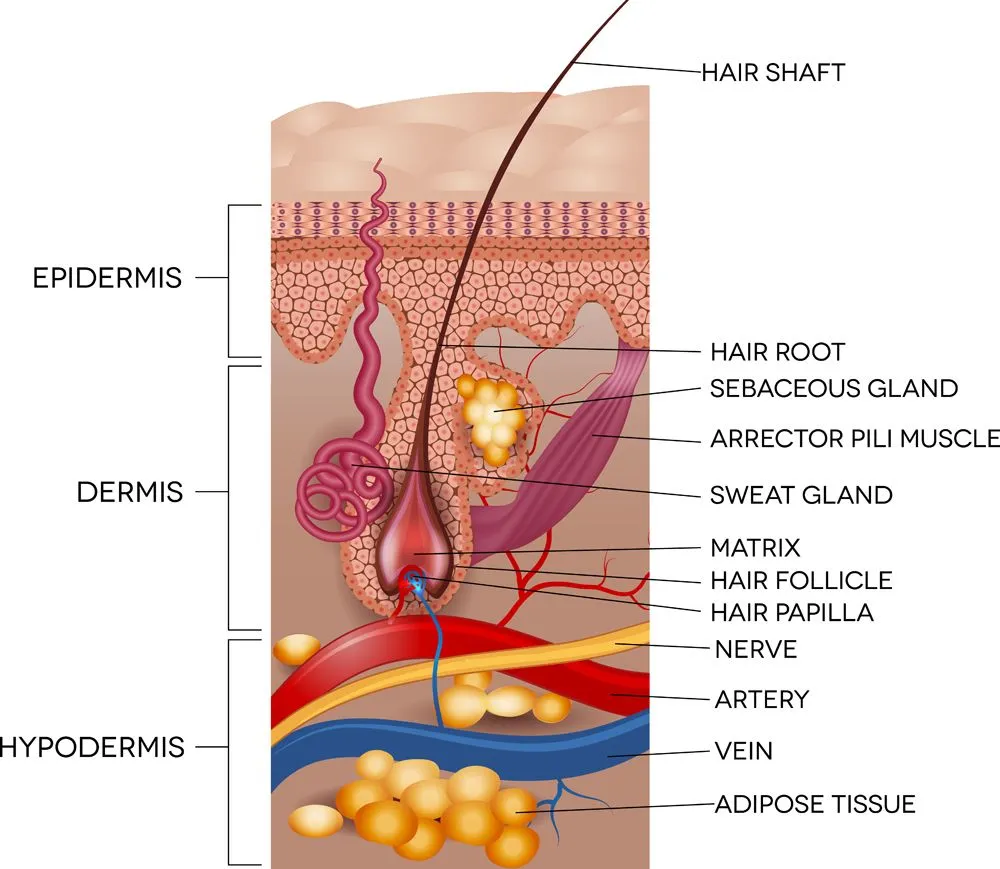
Human skin contains thousands of tiny tunnel-shaped pores called follicles. Hair grows from the bottom of these follicles, with each hair root embedded deep within this tunnel.
Photothermolysis
Lasers fired in short and quick bursts remove the hair by damaging the follicles, albeit in an indirect manner. The laser doesn’t just zap the follicle; instead, the hair breaks because of a light-dependent process called selective photothermolysis. The idea is to deliver a wavelength and pulse that heat one target while sparing the tissue around it.
That target is melanin, the same pigment that gives our skin and hair their color. The more melanin the body makes, the darker the skin and hair will be. Crucially, the melanin packed inside the hair shaft and the base of the follicle absorbs laser light far better than the surrounding skin does, which is why the energy ends up concentrated right where the hair grows.
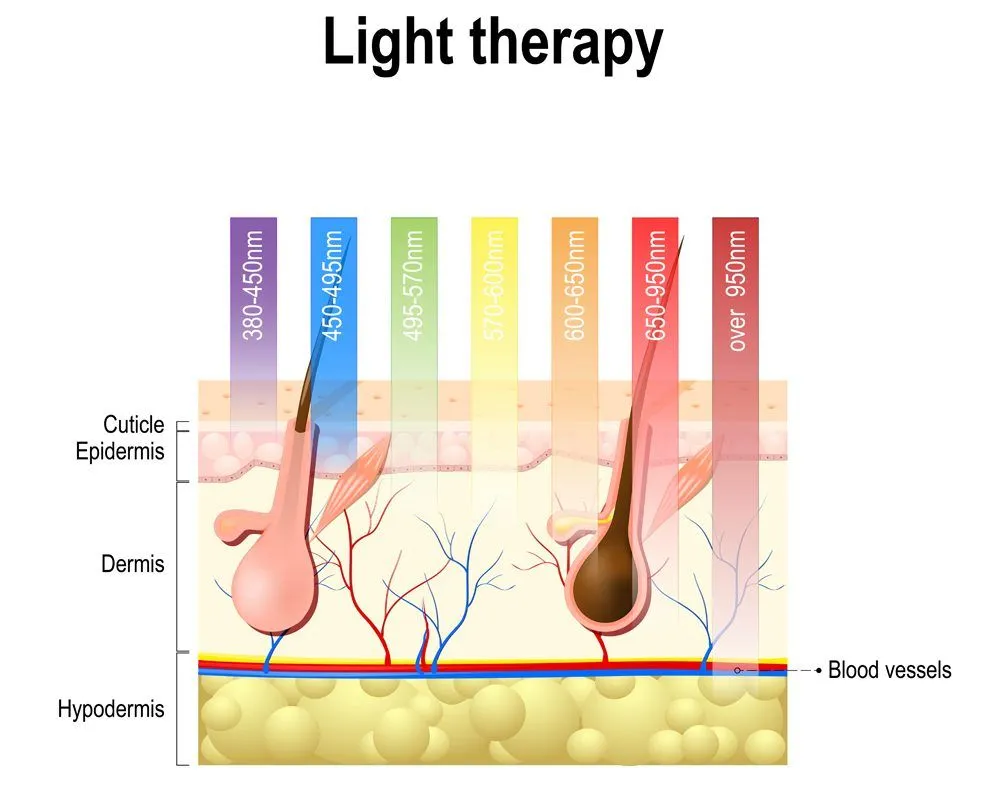
The lasers emit light in the 600-1200 nm wavelength range, and melanin absorbs wavelengths between 300-1200 nm. Upon absorbing the light, the melanin heats up, and that heat destroys the follicle. Think of this approach like gently burning your hair follicles.
The Method Of Hair Removal Using Laser
Any hair will interfere with the laser light reaching the follicles, so the target area must first be shaved.
This is followed by applying a cold gel to contract the skin pores, making the hair removal procedure more precise and reducing the post-laser swelling that can occur.
The laser gun is placed on top of the gel and moved all over the skin, while the laser zaps in quick, continuous succession. This part is slightly painful, and feels like multiple simultaneous pin pricks!

Types Of Lasers Used In Hair Removal
There are different types of lasers that differ in efficacy and power. A few examples are the Ruby laser, Alexandrite laser, Diode laser and Nd:YAG laser. Each of these emits light of a different wavelength and each has different efficiencies that are particularly suited to a certain skin type.
For example, people with darker skin are treated with lasers emitting higher wavelengths of light. The greater the wavelength, the deeper it pokes through the skin. Ruby lasers have the shortest wavelength (694 nm), followed by the Alexandrite laser (755 nm), diode laser (810 nm) and the Nd:YAG laser (1064 nm). That long 1064 nm beam reaches the follicle while being absorbed less strongly by skin melanin, so the Nd:YAG is the safest choice for darker skin tones. You may also see clinics offer IPL (intense pulsed light), which works on the same melanin-heating principle but is technically not a laser. Instead of a single wavelength, it fires a broad band of light, so it is less focused than a true laser.
Why Does Laser Hair Removal Take Multiple Sessions?
Here’s the catch that surprises most first-timers: one session won’t do it. The reason comes down to the hair growth cycle.
At any given moment, your hairs aren’t all growing in sync. Each follicle cycles through an active growth phase (called anagen), a brief transition phase, and a resting phase. The laser only really damages a follicle when its hair is in that active anagen phase, because that’s when the hair is full of the melanin the laser needs to latch onto. Follicles caught resting during your appointment sail through untouched and sprout new hair later.
Since only a portion of your hairs sit in anagen at once, no single treatment can hit them all. That’s why clinics space out a course of several sessions a few weeks apart, so each round catches a different batch of follicles as they rotate back into growth. Most people need roughly four to six sittings, plus the occasional maintenance touch-up down the line, to see the bulk of their hair thinned out.
Are Lasers Better Than Waxing?
Lasers basically heat the hair follicles to suppress hair growth. Waxing, on the other hand, simply yanks out the hair from the follicle, allowing the follicle to remake the hair.
Waxing targets the hair, rather than the follicle, which is why its effects don’t last as long as laser hair removal. However, that’s also why waxing doesn’t affect your skin tone, nor does it cause rashes or swelling, aside from the few pimple-like bumps that sometimes appear after waxing.
In short, laser removal slows new hair from growing back and leaves what does return finer and sparser. Whether it’s “better” than waxing depends on each individual’s hair type and skin. It would be wise to consult your dermatologist before deciding between these two popular hair removal methods.
Although permanently ridding the human body of hair is not as simple as it sounds, laser therapy has come a long way towards achieving this outcome, with many tech advancements in just the past decade or two. This is why the FDA clears these devices for permanent hair reduction rather than permanent hair removal, meaning a lasting drop in how many hairs grow back rather than a hair-free guarantee. There are, of course, many other factors that affect how well these treatments will work. A person’s skin color, hair thickness and hair color all affect the outcome.
How Effective Is Laser Hair Removal?
Around 80% of people report a decrease in hair growth after laser treatment, meaning that it doesn’t work for about 20% of people. Obviously, laser therapy isn’t for everyone. Some resilient bodies have follicles that can continue sprouting hair, despite being fired upon by lasers. On top of that, not everyone shows the same proportion of hair loss. The amount you lose can range from 4% to 70%.
The single biggest predictor is contrast: the treatment works best on dark hair against light skin, because that combination lets the beam home in on the hair’s melanin and skip the skin. That also explains its weak spot. Gray, white and very blonde hairs carry little or no melanin, so the laser has almost nothing to grab onto, and they respond poorly no matter how many sessions you book.
If you consider going for laser hair removal, consult your dermatologist to determine which laser is best suited to your skin type. Not to mention, the darker your hair, the more painful it may be. You should also know that using the laser on your “sensitive areas” may be quite excruciating, so consider yourself warned!
Severe complications like burns, scarring, increased acne and rashes are rare and uncommon, but it can happen. Even early greying of hair is a possible side effect. With that in mind, you can consider the risks and rewards before deciding if laser hair removal is worth the effort for a smooth, hair-free body.
References (click to expand)
- Lepselter, J., & Elman, M. (2004, April 1). Biological and clinical aspects in laser hair removal. Journal of Dermatological Treatment. Informa UK Limited.
- Wanner, M. (2005, May). Laser hair removal. Dermatologic Therapy. Hindawi Limited.
- Gan, S. D., & Graber, E. M. (2013, June). Laser Hair Removal: A Review. Dermatologic Surgery. Ovid Technologies (Wolters Kluwer Health).
- Ibrahimi, O. A., Avram, M. M., Hanke, C. W., Kilmer, S. L., & Anderson, R. R. (2011, January). Laser hair removal. Dermatologic Therapy. Hindawi Limited.
- LASK, G., ELMAN, M., SLATKINE, M., WALDMAN, A., & ROZENBERG, Z. (1997, September). Laser-assisted Hair Removal by Selective Photothermolysis Preliminary Results. Dermatologic Surgery. Ovid Technologies (Wolters Kluwer Health).
- Goldberg, D. J. (2002, July). Laser hair removal. Dermatologic Clinics. Elsevier BV.
- Clatici, V. G., Voicu, C., Barinova, E., Mihai, L., & Tatu, A. L. (2020, May 19). Complications of laser hair removal—How we could reduce them?. Dermatologic Therapy. Hindawi Limited.
- Dierickx, C. (2000, January). Laser‐assisted hair removal: state of the art. Dermatologic Therapy. Hindawi Limited.
- Vaidya, T., Hohman, M. H., & Kumar D, D. Laser Hair Removal. StatPearls. NCBI Bookshelf.