Table of Contents (click to expand)
Yes, we can generate electricity from rain in several ways: storing rainwater at height to spin hydroelectric turbines, and tapping a raindrop's impact directly with piezoelectric or droplet-based generators. The direct methods stay tiny, though, a piezoelectric harvester pulls only about 12 milliwatts from a single drop, so rain power remains largely experimental rather than a practical grid source.
Have you ever looked at falling rain and wondered about the untapped potential in those small drops of water? Well, if you have, then you have a good mind for science and physics. Researchers around the world are currently investigating the viability of using rainfall as a source of energy and have already made a lot of progress in this increasingly important area.
How Much Energy Do Raindrops Possess?
Water in a cloud possesses potential energy as a virtue of its height. The gravitational potential energy of an object can be measured by multiplying its height (with respect to Earth’s surface) by its weight and the gravitational constant (9.8 m/s2). Let’s look at this in a more straightforward way.
Suppose that your city receives 100cm of rainfall annually (average annual precipitation in the USA is about 77 cm – climate report) and your house has a roof of about 20 squares or 2000 square feet (standard size). Doing some math based on these numbers, you will see that this amounts to roughly 111 kWh of lost potential energy. The number seems small, but when considered over an area of about 1 km2, the amount of energy “falling” would be enough to power around 1000 houses.
What Is The Ultimate Source Of This Energy?
Just like most other sources of power on our planet, rainfall derives its energy from the Sun. The Sun is the ultimate pump that fuels all forms of life and resources. At Earth’s surface, the energy density of the Sun is about 1,000 W/m2. To put this in perspective, if all the sunlight energy irradiating the Earth’s surface in Texas alone could be converted to electricity, the power generated would be equivalent to 300 times the total power produced by all the power plants in the world!
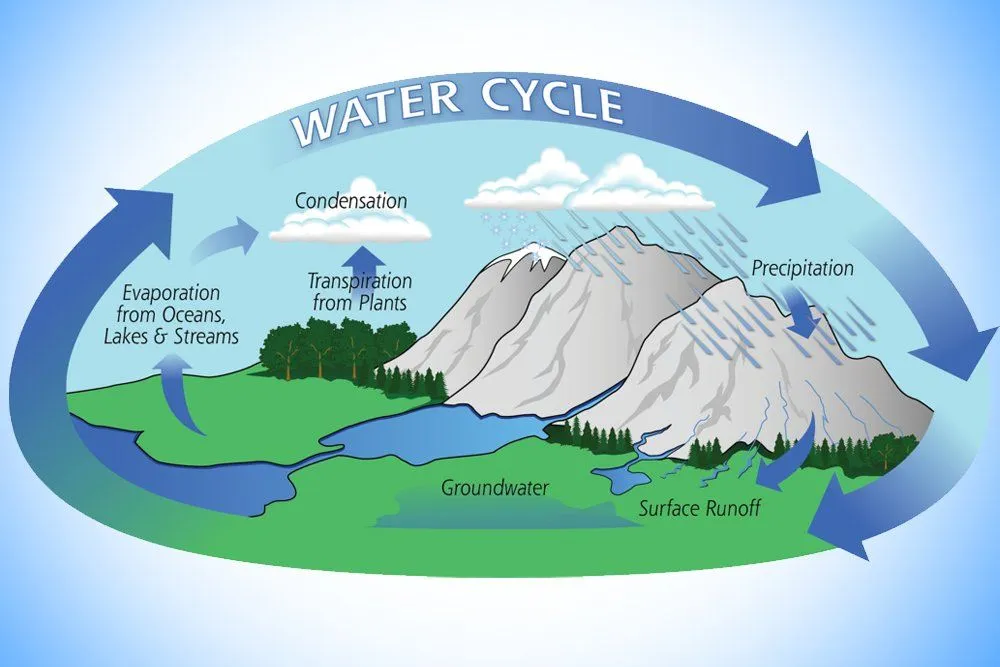
A major part of the solar radiation striking our planet is used to evaporate water from the oceans, seas and rivers. The temperature difference created in the atmosphere, again due to different parts of the atmosphere absorbing different amounts of solar heat, acts as a pump and pulls the evaporated water up, filling it with potential energy in the process.
Energy From Storing Rainfall
Hydroelectric power plants generate about 6% of the electricity consumed in the United States, and more than half in hydro-rich countries like Canada. Hydroelectricity is one of the cleanest forms of energy around, and producing it is fairly simple. Water falling from a suitable height onto a turbine drives it into motion. The turbine is connected to a generator, which converts the mechanical energy into electricity.
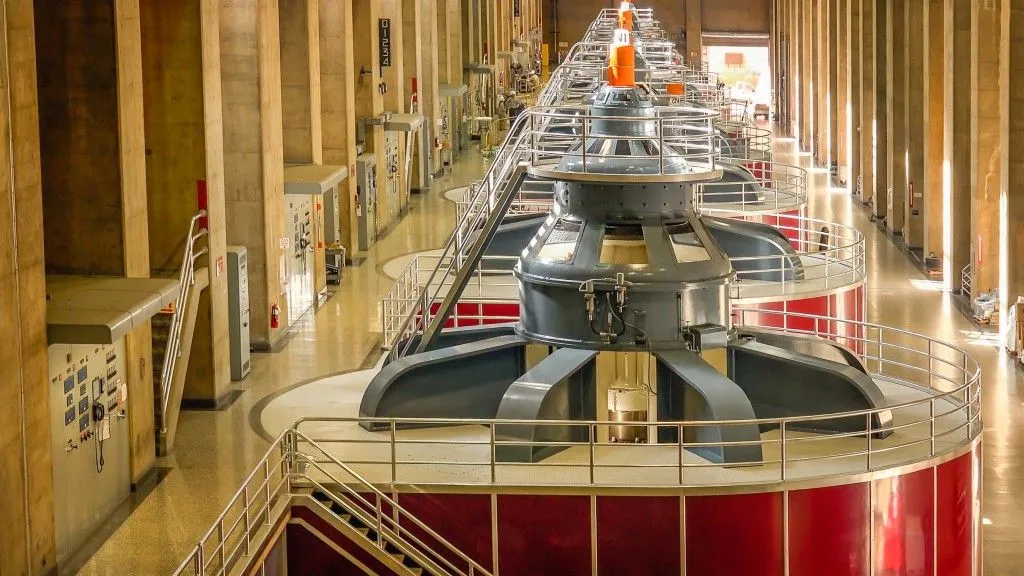
By using a method similar to that used in hydroelectric power plants, scientists discovered that a large reservoir placed high above the ground collecting rain could then use that falling water to power turbines. This method would be highly effective in rainy seasons, when a relatively continuous supply of water is available.
Harnessing The Kinetic Energy Of Rainfall
Any object traveling at some velocity possesses kinetic energy. The same is true for raindrops. A large drop of rain, about 6 mm (one-quarter of an inch) across, has a terminal fall speed of roughly 9 meters per second (20 mph). Research has shown that the kinetic energy of raindrops can be tapped using certain materials, such as PVDF (polyvinylidene fluoride), which possess piezoelectric properties.
What Are Piezoelectric Materials?
Piezo is Greek for “to squeeze or press”. Hence, piezoelectric materials are those that generate electrical voltage (or electricity) in response to applied mechanical stress. Materials demonstrating a piezoelectric effect also demonstrate the opposite effect, called the converse piezoelectric effect. This means that upon the application of an electric charge, they become deformed. These materials can be crystalline, ceramic or even biological matter, such as bones and proteins.
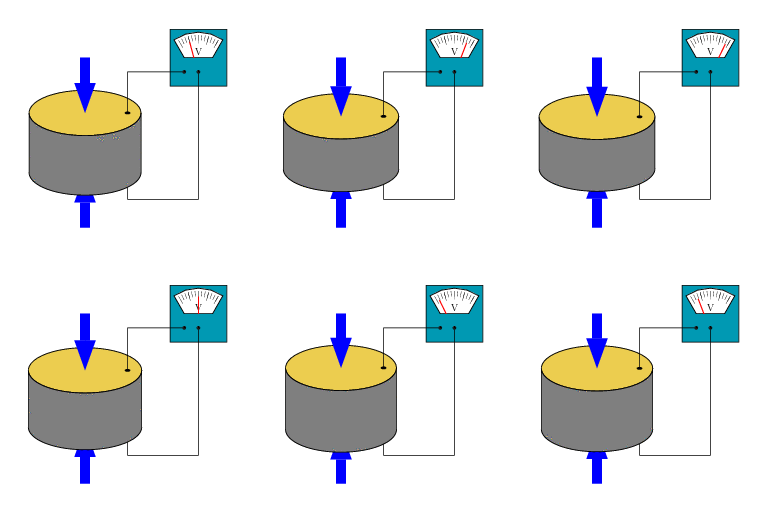
Piezoelectrics are standard crystalline materials with asymmetric structures. Still, they are electrically neutral, as the positive charges present are equal to the negative loads, and they balance each other out. However, when such materials are squeezed, their structure is deformed, pushing some atoms closer and others apart. This upsets the balance of positive and negative charge, thereby creating an electric potential. Quartz is one of the most common piezoelectric materials around, and small quartz crystals are used to keep time in clocks and electronic devices, such as laptops.
How Do Piezoelectrics Convert Rainfall Into Electricity?
The vibrations caused by water droplets falling onto piezoelectric materials will generate pressure. This pressure will result in an inelastic hiccup (difference in potential) above the surface of the piezoelectric material, such as lead zirconate titanate (PZT), thus converting mechanical energy from raindrops into electrical energy.
Piezoelectric materials are specifically useful for collecting and storing small electric charges, such as those produced by electrical instruments or, in our case, falling drops of water. By this point, you may be wondering…. if harnessing energy from rainfall is this easy, why isn’t it being used more frequently? Well, here’s why.
Problems With Rain Energy
The first issue is the conversion rate. In one widely cited study, a PVDF piezoelectric harvester recovered at most about 12 milliwatts from a single large "downpour" raindrop, and only as a brief spike at the instant the drop strikes. Averaged over a real rainfall, the steady output is far smaller, basically enough to trickle-charge a remote sensor. These devices are also relatively expensive and need regular maintenance.
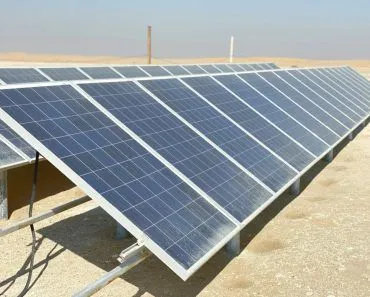
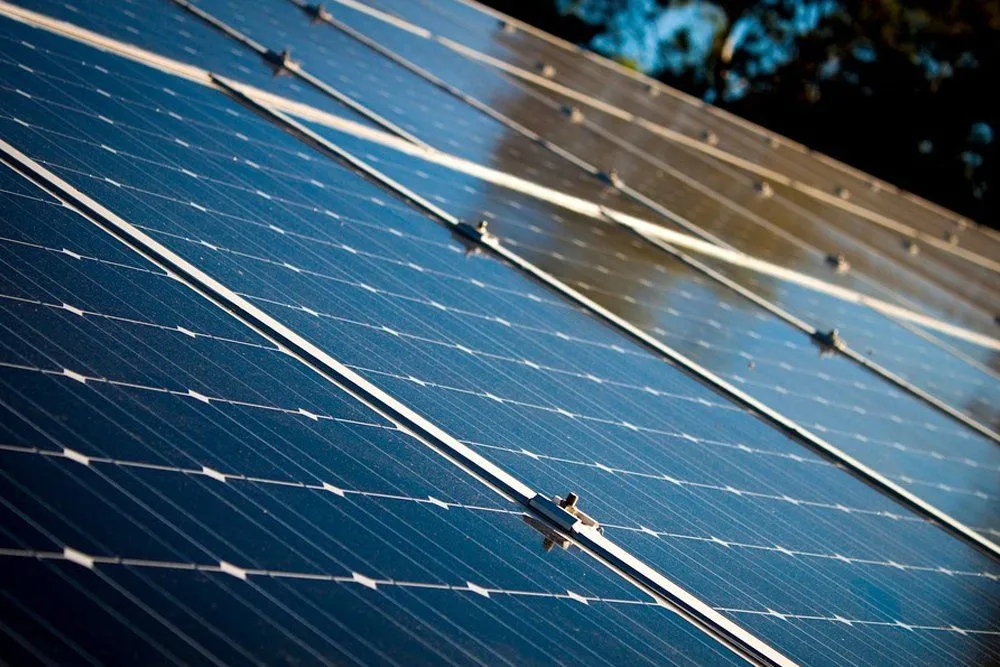
Solar panels are much more efficient than all the methods mentioned above. To match the efficiency of solar cells, we would need to construct reservoirs at the height of 1 km or more! Building a container that high off the ground is not economically viable, especially when compared to the cost of covering the same area in photovoltaic cells.
A Final Word
Newer approaches are pushing the numbers up. In 2020, researchers led by City University of Hong Kong reported a droplet-based electricity generator in Nature that uses a transistor-like design to turn the impact of a single drop into a much bigger jolt. A 100-microliter drop falling from just 15 cm produced over 140 volts and briefly lit up 100 small LEDs, with a peak instantaneous power density of 50.1 W/m2, thousands of times higher than earlier raindrop devices. Related triboelectric "droplet" generators have since climbed past 1 W/m2 in lab tests. Other groups have experimented with graphene-coated solar cells that squeeze a little extra current from the salt ions dissolved in rainwater. None of this is grid-scale yet, but it shows there is more than one way to tap the potential of rainwater.
In terms of the power being produced, raindrops will probably never be able to compete with a hydroelectric plant or solar cells. However, they do have one major advantage: they’re free. And who knows, with our ever-evolving technology, generating clean power could soon be as simple as taking a stroll in spring rain!
References (click to expand)
- Guigon, R. et al. Harvesting raindrop energy: experimental study. Smart Materials and Structures (IOP Publishing).
- Xu, W. et al. A droplet-based electricity generator with high instantaneous power density. Nature (2020). PubMed / NCBI.
- Rain Power: Harvesting Energy from the Sky. Phys.org
- C. Harting. Rainfall as an Energy Source. Stanford University.
- Where hydropower is generated. U.S. Energy Information Administration (EIA).
- Graphene layer could allow solar cells to generate power when it rains. ScienceDaily.