Table of Contents (click to expand)
As permafrost melts, ancient bacteria and viruses dormant for thousands of years can become active again. This has already happened: thawing ground triggered Siberia's 2016 anthrax outbreak, and scientists have revived a 48,500-year-old virus. So far the revived viruses infect only amoebae, so a direct human pandemic is plausible but not yet demonstrated.
Remember the arrival of the two prehistoric sea monsters in the movie “Ice Age: The Meltdown”? They remained frozen and preserved in the glaciers for a long time, but once the ice began to melt, they returned to the waters to continue their hunt for prey.
In the real world, can life forms remain preserved in ice for long periods of time? Do the ice caps act as a freezer for these ancient life forms? And will the melting of Earth’s ice bring them back?
In short, the answer is Yes! The ice that covers a large part of the earth is like a Pandora’s box just waiting to be opened. The scary fact is that it has been opened, and some ancient microorganisms have already been unleashed.

Siberia – The Revival Of A Bacteria
In 2016, in the cold Russian region of Siberia, a 12-year-old boy died of a mysterious disease. Around 90 people were hospitalized and roughly 2,000 reindeer perished, throwing the remote Yamal Peninsula into chaos.
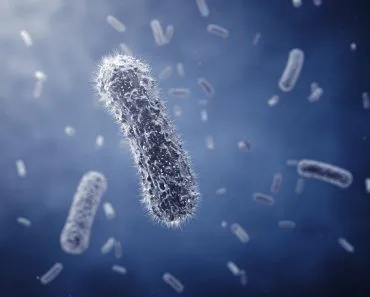
Anthrax, a rare disease in the region, was the culprit behind this deadly outbreak. It had spread to humans from infected reindeer, but the strange fact is that this corner of Siberia had not seen an anthrax case in roughly 75 years. How then did the bacteria ‘Bacillus anthracis‘ resurface?
The answer has something to do with the melting of Arctic ice as the result of global warming.
Life Preserved In The Ice
Some species of frogs, toads, and turtles can survive in extremely cold climates for a couple of months or years, but microorganisms like bacteria, viruses, spores, and some fungi can stay viable in ice for thousands or even millions of years. Rather than staying fully active, they slow their metabolism almost to a standstill, entering a state of “sleep” or dormancy until they escape from such harsh conditions. The Variola virus that causes smallpox is often raised as a worry here, although researchers have so far recovered only fragments of its DNA (not live, infectious virus) from Siberian permafrost burials.
On Earth, the major ‘freezers’ that preserve these organisms are glaciers and permafrost. When they begin to melt (and many of them already have), the frozen organisms resurface.
Permafrost
In colder parts of the planet, near the Arctic and Antarctic regions, the earth itself is frozen. The soil, sand, and rocks are glued together by ice throughout the year.
This frozen ground that remains in sub-zero temperatures for at least two years is called Permafrost.
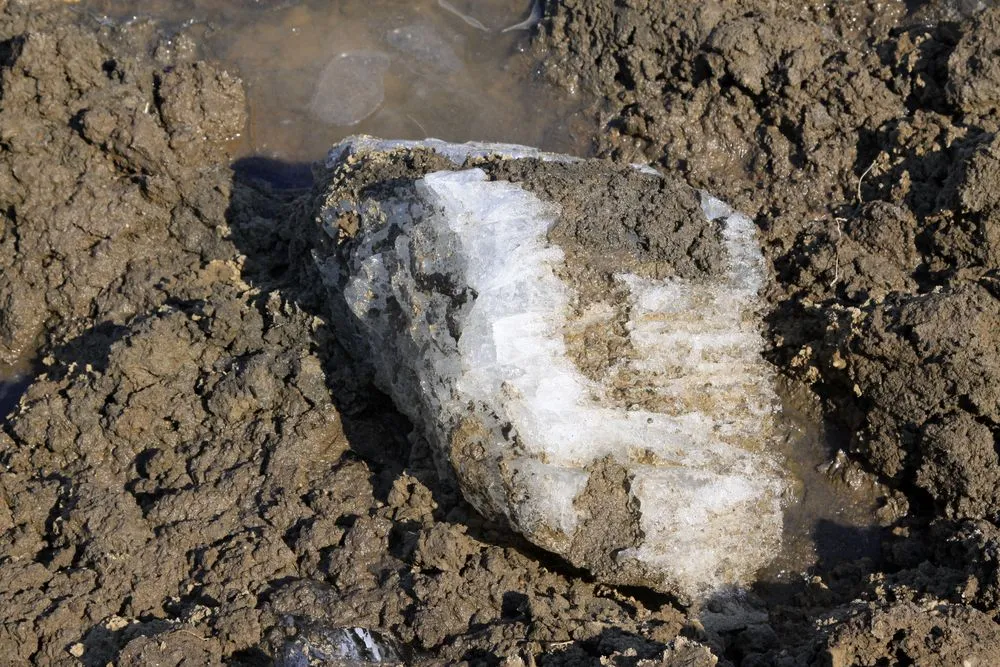
The top layer of permafrost can either be ice or soil. This top layer, called the active layer, is not always frozen. It freezes in the winter and thaws in the summer and has a rich biodiversity. Therefore, such regions may look normal to us from the outside, but underneath, these frozen structures hold countless secrets. When the plants and animals in such regions die, they do not decompose immediately. Instead, they move down the active layer and get frozen and mummified in the permafrost. As time passes, more life dies, and deposits accumulate, so the earlier remains move deeper down into the earth. Thus, permafrost can be 1000 m to 1600 m deep, which is almost twice the height of Burj Khalifa, the tallest building in the world!
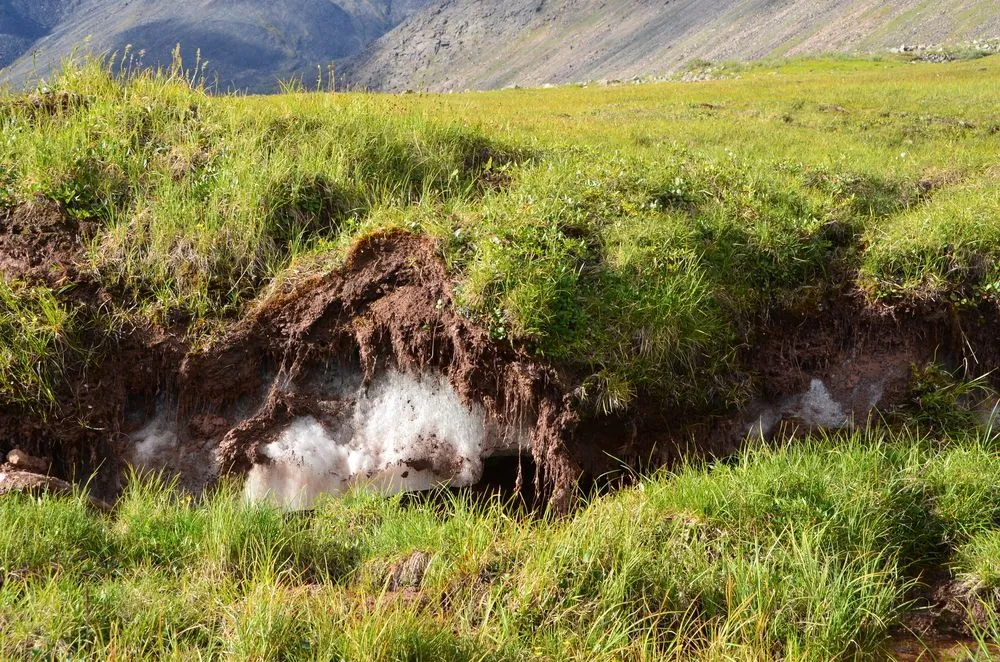
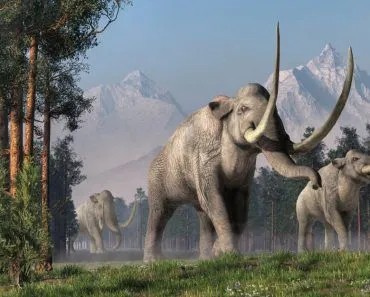
Thus, the deeper you go into the permafrost, the older the preserved organisms are. Plants, animals, and humans dating back thousands of years remain intactly buried in this frozen mass. Such preserved remains of animals may contain millions of harmful microbes and pathogens, life forms that modern humans have never encountered.
Deadly Outbreaks
With global warming on our doorstep, the permafrost and glaciers are melting. We are aware that this can lead to a rise in sea levels, landslides, and the collapsing of structures, but this has another serious repercussion.
As the permafrost melts, the thickness of the active layer increases and that of the frozen layer decreases. This thawing exposes the frozen remains of old plants, animals, and humans. They begin to decompose and release huge amounts of greenhouse gases, like carbon dioxide and methane, which further accelerate the process of global warming.
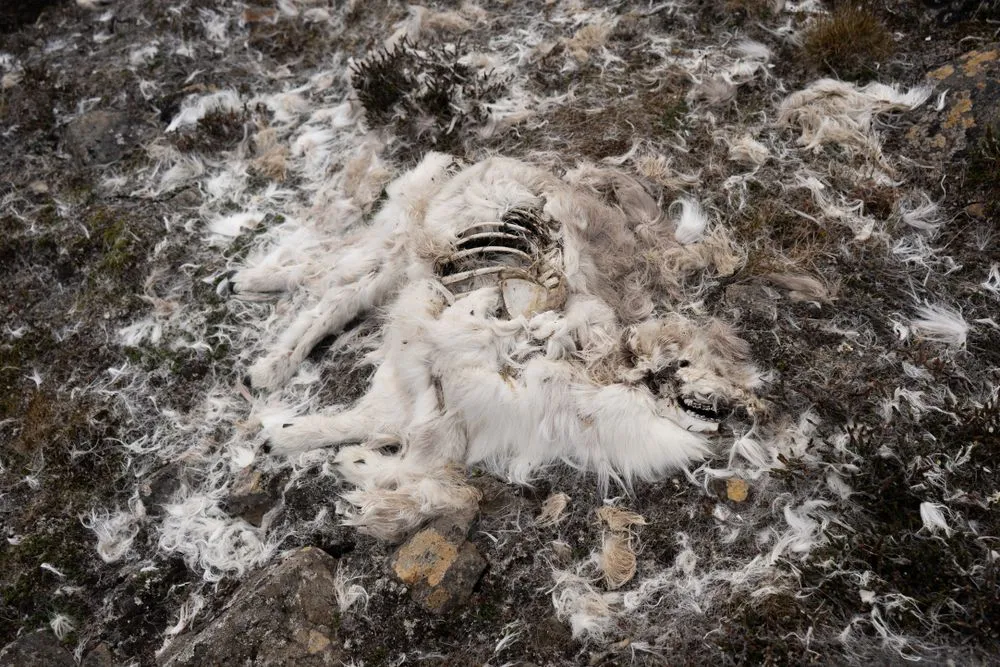
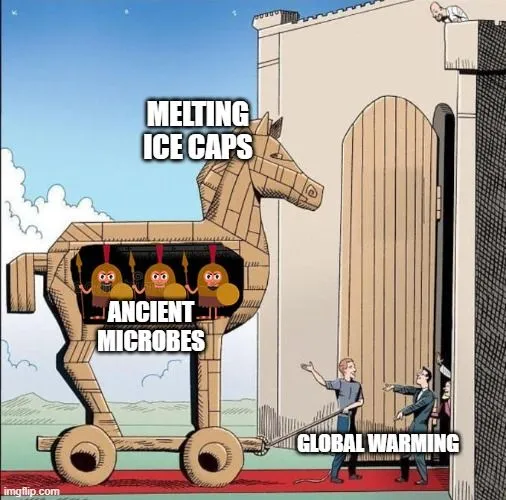
Finally, they also release a wide range of microbes that have been trapped in the ice over the years. Thus, the melting of permafrost may lead to the return of deadly pathogens that were once eradicated or simply died off. This may lead to new outbreaks of diseases like the plague or smallpox.
Scientists have revived bacteria from ice estimated to be as old as 8 million years in the Antarctic, later identified as Arthrobacter roseus and considered among the oldest living organisms on Earth. Similarly, a 30,000-year-old giant virus named Pithovirus sibericum, discovered in the Siberian permafrost, was still infectious when it was found, although it attacks only single-celled amoebae and not humans or animals. This implies that the process has already begun.
The work has continued. In 2023, a team led by virologist Jean-Michel Claverie revived several “zombie viruses” from Siberian permafrost, including a strain of Pandoravirus yedoma that had been frozen for roughly 48,500 years, the oldest virus ever brought back to life. Like Pithovirus, every one of these revived giant viruses infects only amoebae, so they pose no direct danger to people. Their significance is what they hint at: if these survived tens of thousands of years and could still replicate, viruses capable of infecting humans or animals might be lying frozen alongside them.
Now we can understand what happened in Siberia.
Siberia is home to the deepest permafrost in the world (1650 m). Studies show that the increasing temperature due to global warming led to the thawing of the permafrost, which resulted in the exposure of an old ‘reindeer carcass’ infected with anthrax. The anthrax bacteria, Bacillus anthracis, spread from the preserved body to other reindeers in the region, which initiated the outbreak of the disease.
Conclusion
Thus, global warming and the resulting degradation of permafrost and glaciers can have serious consequences, and things are only going to get worse. They can unleash organisms from the past that may lead to pandemics and diseases that are completely novel to humankind. An army of reactivated pathogens is not something we wish to witness, so the least we can do is try to reduce our carbon footprint, lead a sustainable, responsible life, and hope that this mysterious archive of the past remains closed.
References (click to expand)
- El-Sayed, A., & Kamel, M. (2020, October 17). Future threat from the past. Environmental Science and Pollution Research. Springer Science and Business Media LLC.
- About Anthrax | CDC. The Centers for Disease Control and Prevention
- Permafrost | National Geographic Society
- What Is Permafrost? - NASA Climate Kids. The National Aeronautics and Space Administration
- How Thawing Permafrost Is Beginning to Transform the Arctic. Yale Environment 360
- Ezhova, E., Orlov, D., Suhonen, E., Kaverin, D., Mahura, A., Gennadinik, V., … Kulmala, M. (2021, June). Climatic Factors Influencing the Anthrax Outbreak of 2016 in Siberia, Russia. EcoHealth. Springer Science and Business Media LLC.
- Legendre, M., et al. (2014). Thirty-thousand-year-old distant relative of giant icosahedral DNA viruses with a pandoravirus morphology. PNAS.
- Alempic, J.-M., et al. (2023). An Update on Eukaryotic Viruses Revived from Ancient Permafrost. Viruses. MDPI.
- Cooling perspectives on the risk of pathogenic viruses from thawing permafrost. mSystems. American Society for Microbiology.