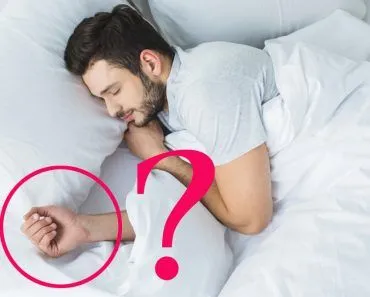
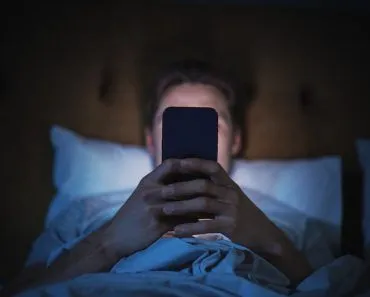
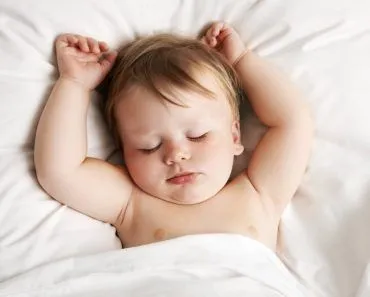
You struggle to effortlessly make a fist for similar reason as why you feel stiff after sitting for too long: inactivity. Low blood pressure, lack of muscle movement and low core body temperature during sleep can make the joints stiff.
Balling up your palm and making a fist is easy enough, isn’t it? But try doing that right after you wake up from a deep sleep. It’s a simple enough task, yet it is tough to complete immediately after pulling out of slumber. Why is that?
Note: This is not a universal thing. Not everyone experiences difficulty clenching their palms into a fist right after waking up. Moreover, this little symptom may be a sign of a more serious condition that requires medical attention.

Changes In Your Body As You Sleep
Your body is not the same when you sleep as when you are awake. There are two phases of sleep: Non-rapid eye movement, or NREM, and rapid eye movement, or REM. You progress through different cycles of NREM and REM, with about 70 to 80% of total sleep being NREM and the rest being REM sleep.
You first enter NREM sleep, during which your muscles become increasingly “loose” and limp, your eyes get droopy, and you drift off into an unconscious space. As you drift off into deeper sleep, entering the later stages of NREM, your muscles lose even more of their tone. Muscle tone is nothing but how much the muscles can actively contract. In low muscle tone, the muscles are stretched out and relaxed. When you’re awake, muscles in the body remain contracted, even if you just lay on the couch. The act of laying comfortably requires your muscles to contract to maintain that posture.
In addition to lying limp, your core body temperature also drops.
The most obvious change is that you’re lying limp. As you enter deeper stages of sleep, your muscles relax and become unmoving (which is why most of us are not living out our dreams). For the most part, we lay in the same position that we slept in, only turning and twisting occasionally.
Low Body Temperature And Muscle Stiffness
When it’s time to go to bed, our body will begin to cool itself down. Most mammals have such a temperature shift before they sleep. This is one reason we love to snuggle in blankets when we sleep or find nests and huddle for rats, dogs, and cats; it keeps us warm as our bodies cool down from the inside. It might also be why we fall asleep easier when snuggly tucked during the winters than during the sweltering heat of the summers when our bodies find it difficult to cool off enough.
Our internal temperature drops by almost 2 degrees C. This might not sound like much, but for your muscles and joints, it is an impactful drop.
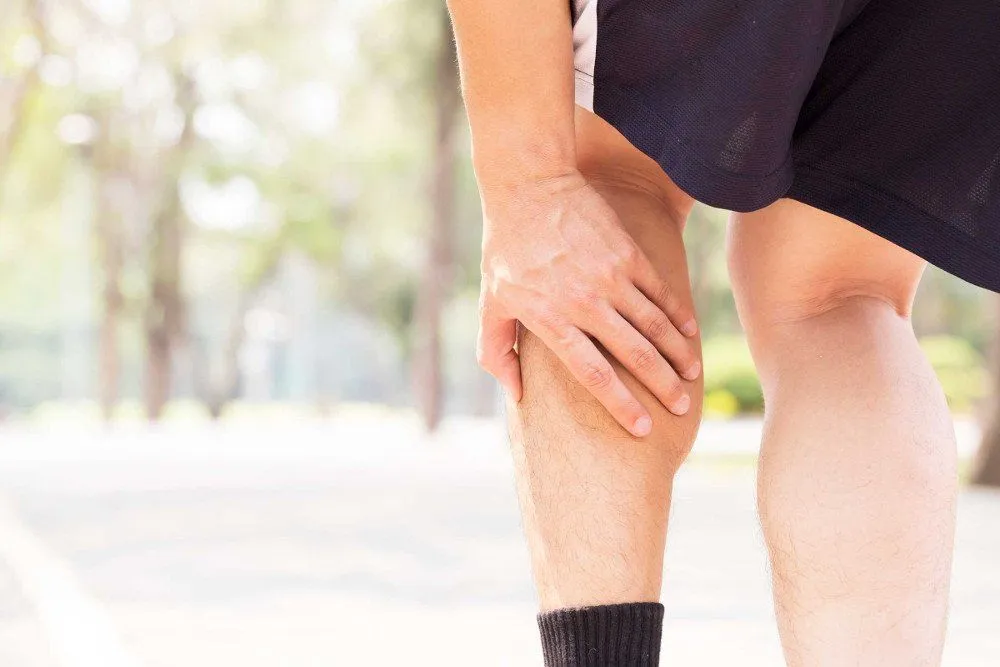
Heat makes muscles more flexible. It’s easier for you to touch your toes when your core temperature is warmer, such as in the evening or after some cardio, than it is early in the morning. Heat causes certain metabolic changes in the muscle that make it easier for the muscle to engage in agile movement.
So far, there is little direct causation that this also contributes to the feeling of stiffness after you wake up. But it is worth considering.
Lack Of Blood Flow And Stiff Joints
You struggle to effortlessly make a fist for a similar reason as why you feel stiff after sitting for too long: inactivity.
Not using your muscles, coupled with lower blood pressure, affects joint flexibility.
Your joints, the connection between two bones, are the key to moving your body uninhibited.
Between two bones is a thick fluid called synovial fluid. The fluid helps lubricate the joint and prevents friction between the bones, just like one would oil a creaking door hinge. But with low blood flow (from the low heart rate and immobility), the cartilage that covers the bones absorbs the synovial fluid. This results in the fluid getting thicker, contributing to stiffness.
Good blood flow recycles the synovial fluid. Blood brings with it plasma, oxygen, and nutrients. It also picks up any waste molecules and leads to macromolecules making their way into the lymphatic system.
The lymphatic system, a secondary circulatory that carries clear lymph fluid, flows throughout the body, picking up waste molecules. Its flow depends on blood pressure
and muscle movement. As you lay limp, the lymph accumulates, which is why you appear a little puffy when you wake up. It is also this lack of lymph circulation that leads to creaky joints.
Why Do Some People Clench Their Fists While They Sleep?
There’s a flip side to all of this. Some people have the opposite complaint: instead of waking up unable to make a fist, they wake up to find their hands already balled into tight ones, or a partner mentions that they spend the night with their fingers curled in.
This is a different phenomenon from the morning stiffness we’ve covered so far. Stiffness is your muscles being too relaxed and under-circulated to spring into action. Clenching during sleep is the reverse: muscles that stay switched on when they’re supposed to be powering down.

So why would that happen? The short answer is tension that follows you to bed. Sleep isn’t one flat state. As we saw, you cycle through NREM and REM, and those cycles are punctuated by brief micro-arousals, tiny surfacings toward wakefulness that you never remember in the morning. Muscle activity tends to spike during these moments. If your nervous system is already running hot from daytime stress or anxiety, that leftover tension can show up as clenching each time one of these arousals comes and goes.
Researchers haven’t studied fist-clenching at night as closely as they’ve studied its better-known cousin, sleep bruxism (the involuntary grinding and clenching of the jaw during sleep). But the two likely share the same roots. Bruxism is described as an exaggerated version of the body’s normal response to those sleep arousals, and anxiety is one of its most commonly identified risk factors. Whatever keeps a jaw working in the small hours can keep a hand doing the same.
What Are Clenched Fists A Sign Of?
Most of the time, waking up with clenched hands is harmless. It usually traces back to stress, anxiety, or simply a tense sleeping posture, the same everyday culprits behind a clenched jaw or hunched shoulders. It’s your body holding onto the day’s tension, not a signal that something is wrong.
That said, it’s worth paying attention if the clenching comes packaged with other symptoms: persistent hand or wrist pain, numbness and tingling, fingers that lock or won’t straighten, or jerking movements that disturb your sleep. Tight, painful hands in the morning can also overlap with conditions like carpal tunnel syndrome or arthritis, and in rarer cases, involuntary nighttime movements have a neurological cause. If any of that sounds familiar, or a partner notices you thrashing or seeming to act out your dreams, it’s a conversation worth having with a doctor.
For the ordinary, stress-driven kind, the fixes are the same ones that calm the rest of your nervous system before bed. A few minutes of slow breathing, some light stretching for the hands and forearms, or anything that lowers your overall stress during the day gives those muscles permission to switch off at night. Some people find that a soft splint or simply a looser sleeping position keeps the fingers from curling. And, as with the morning stiffness above, staying hydrated and well-rested never hurts.
In Conclusion, What Can You Do To Avoid This?
For one, stretching and exercising regularly will increase the maximum you can stretch even when your body is “cold.” Stretching regularly trains not only the muscles to stretch more but also the nervous system linked to the muscles. When you wake up, even if you feel a little stiff, you’ll still have a decent range of motion.
Hydration is also important. Drinking enough water will improve joint health.
Your joints can also become stiff if you’re sleep-deprived. Getting less sleep than your body requires causes inflammation and dehydration, among other symptoms. Both inflammation and dehydration (and the electrolyte imbalance that results from it) will impact your joints and muscles, impacting the range of motion you can achieve with it.
But, if it worsens over time, it could be a symptom of an underlying medical condition, such as rheumatoid arthritis or Lambert-Eaton myasthenic syndrome.
References (click to expand)
- 26.3 Electrolyte Balance – Anatomy & Physiology.
- Physiology of Sleep - StatPearls.
- Harding, E. C., Franks, N. P., & Wisden, W. (2019, April 24). The Temperature Dependence of Sleep. Frontiers in Neuroscience. Frontiers Media SA.
- Lee, H. (2013). Effect of heat and cold on tendon flexibility and force to flex the human knee. Medical Science Monitor. International Scientific Information, Inc.
- Dehydration and Joint Pain: How Your Hydration is ....
- Cao, M., Ong, M. T. Y., Yung, P. S. H., Tuan, R. S., & Jiang, Y. (2022, September). Role of synovial lymphatic function in osteoarthritis. Osteoarthritis and Cartilage. Elsevier BV.
- Sleep and Body Fluids : International Journal of Nutrition ....
- Bruxism Management - StatPearls. NCBI Bookshelf.
- Flueraşu, M. I., Bocşan, I. C., Țig, I. A., Iacob, S. M., Popa, D., & Buduru, S. (2022). The Epidemiology of Bruxism in Relation to Psychological Factors. International Journal of Environmental Research and Public Health.