Sitting for long periods of time can cause blood clots due to impeded flow of blood. The lack of movement can cause the blood to clot according to the effects of gravity. This doesn’t happen during sleep since we do move our bodies during our night’s sleep. Sleeping can also cause blood clots and bed sores if done for a very long time.
Sit in the same spot without changing your position for even an hour, and your legs begin to feel…weird. It’s a strange sensation indeed; some feel ticklish, while others feel pain or discomfort, others feel an uncontrollable urge to move their feet, and some partially lose sensation in their legs.

But when we sleep, we usually lie down and remain still (for the most part) for 6-7 hours. However, this does not seem to harm us or lead to the symptoms mentioned above.
Sitting for a few hours can cause discomfort or even lead to blood clots (which could potentially be deadly) in the body, but sleeping does not seem to have the same effect on the body. Why is that?
How Blood Flows In The Body
As you know, the heart is the most important part of the human circulatory system. Blood begins its journey from the heart. After leaving the heart, blood enters the aorta and arterial system. Arteries are much thicker than veins because they consist of thick layers of muscle and elastic fibres.
The thickness of the arteries is actually very important, as they have to withstand the pressure of the heart pumping blood through them. Their elasticity is useful for pushing the blood and allowing it to flow smoothly.
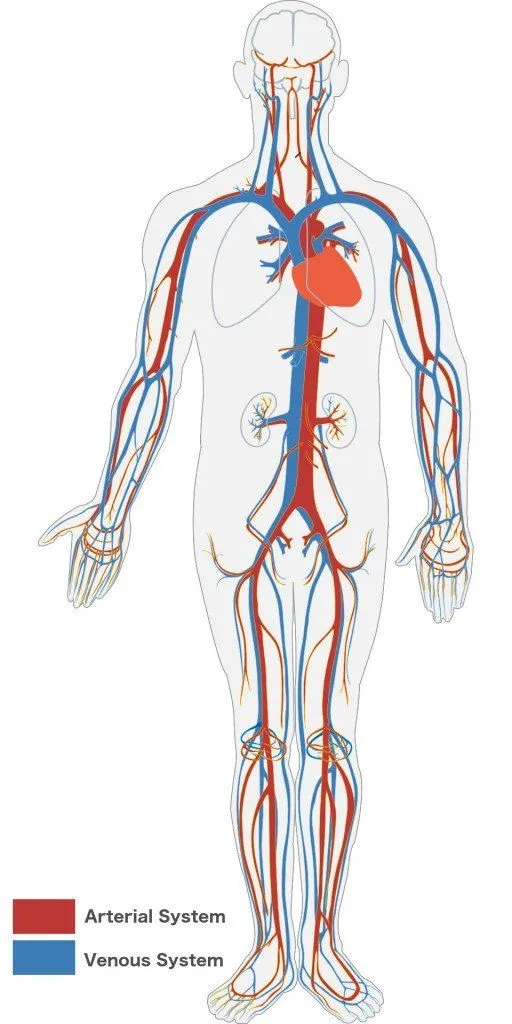
After passing through the capillaries (the thinnest blood vessel), the blood enters the venous system and returns to the lungs and heart.
The venous system contains veins which are floppy tubes with valves that help prevent the backflow of blood. It has a significantly thinner tunica media (the middle layer of the vein). As such, it relies on the contraction of the skeletal muscles – the same muscles that you use while walking – to ensure proper blood flow when the blood has to flow against gravity (from the legs up to the heart).
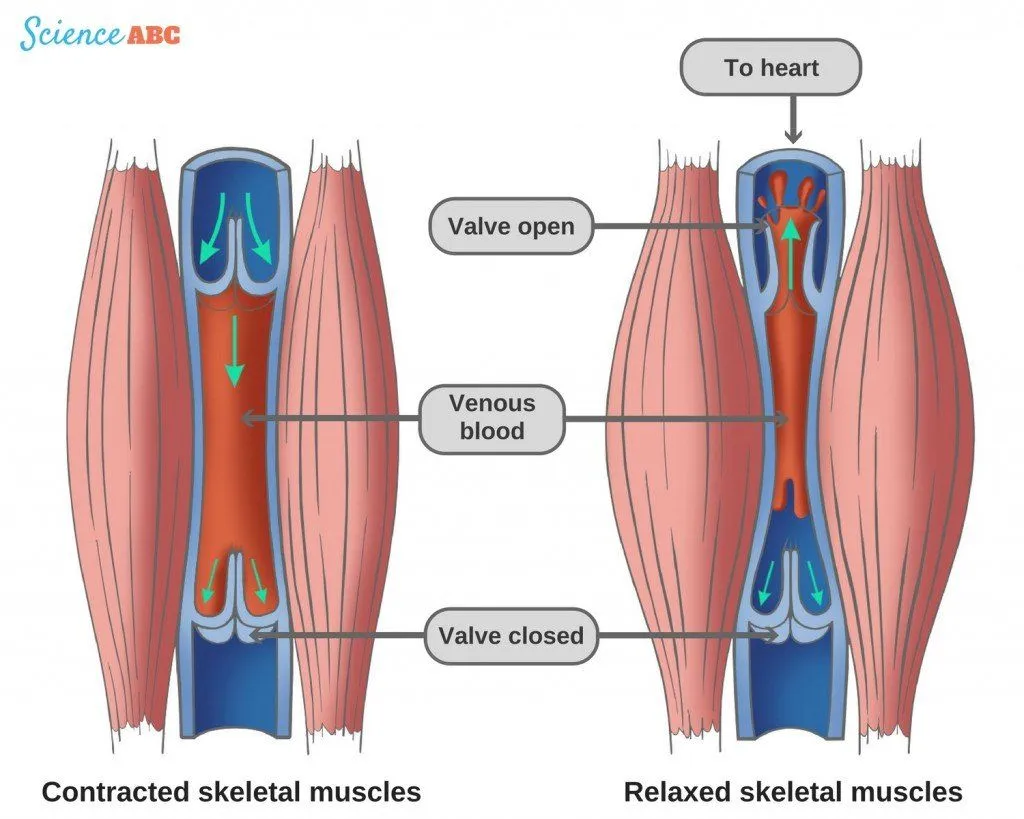
Because blood in the veins has to work against gravity to move upwards (towards the heart and lungs), the blood may not move fast enough when one remains in a sitting position for too long. This could trigger the clotting mechanisms in the body, potentially forming a blood clot (or, in biological terms, a thrombus).
Circulation During Sleep
In the ‘lying down’ or ‘sleeping’ position, the legs are more or less on the same horizontal plane as the heart. As a result, the blood does not have to work very hard to fight gravity to reach the lungs and heart. Hence, the ‘return flow’ of the blood becomes relatively easier.

You move ever so slightly while sleeping, but this does not cause any blood circulatory problems because your body is mostly flat, and the blood does not have to flow upwards.
However, this does not mean that you can lie down indefinitely. Even when lying down, gravity is still the most influential variable for blood flow. However, gravity is partially alleviated when lying down, making it less problematic for 8-15 hours.
That being said, if you stay in the same lying down position for more than 20 hours without any movement, you may begin to face problems. Doctors consider this issue when treating bedridden patients, so that blood clots don’t develop in their blood.
Circulation During Sitting
The dynamics change while you’re sitting. Being in the ‘sitting’ position for an extended period of time, for example, if you travel long distances, the skeletal muscle activity is low.
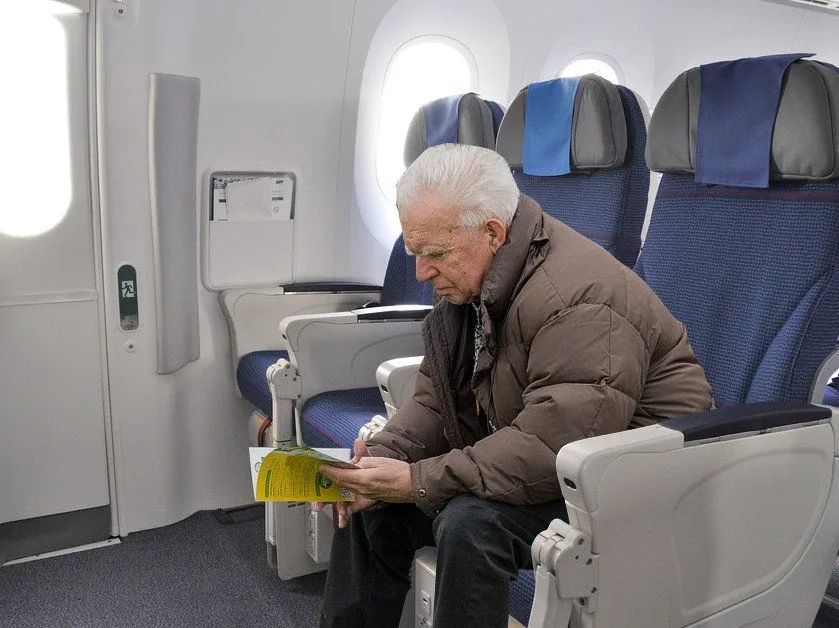
In this position, the legs also aren’t moved very much, and they are often angled. As such, the blood flow fights against gravity. Due to certain biological processes that occur, the velocity of blood flow in the upwards direction (against gravity) is reduced. This can potentially lead to the formation of blood clots in the body.
The thing about such a blood clot is that it can float through the veins and reach the lungs, where it could severely damage a part of the lung (a condition called pulmonary embolism) before it’s treated. That’s why it is always recommended to get up frequently and move around a bit while travelling on particularly long flights or bus/train journeys.
What Is The Best Sleeping Position To Prevent Blood Clots?
If you go looking for a magic side or angle to sleep in, you won’t find one. There is no single position that has been shown to stop a clot from forming. The thing that actually matters is the same thing we discussed above: gravity and movement. Lying down already does most of the work for you, because your legs sit roughly level with your heart, so blood barely has to climb against gravity to get back.

For people who already have a swollen leg, doctors do recommend something extra: raising the affected leg. In the BMJ, vascular surgeon Charles McCollum noted that ‘raising the leg and applying elastic compression prevents stasis and reduces both oedema and postphlebitic symptoms’, and that ‘sitting encourages venous stasis’, so patients ‘should return to bed with the leg raised’. In plain terms, propping your leg up on a pillow so the foot is a little higher than the hip helps drain pooled blood back toward the heart.
One caution though: do not read ‘stay still’ into any of this. As we saw, the calf muscle pump is what squeezes blood up your legs, and it only works when you move. So the genuinely useful bedtime habit is not a clever posture, it is a short walk or some ankle flexes before you lie down, plus getting up and moving the next morning rather than lounging for hours.
Can A Blood Clot Kill You In Your Sleep?
This is the worry that brings a lot of people to this question, so let’s be honest about it. A clot sitting quietly in a leg vein is not, by itself, going to stop overnight. The real danger is what happens if a piece of that clot breaks loose. It can drift through the veins, travel up through the right side of the heart, and lodge in an artery in the lungs. That blockage is called a pulmonary embolism, and it can happen at any time, including while you are asleep.

A pulmonary embolism is a genuine emergency. According to the Cleveland Clinic, ‘about 1 in 3 people with a PE die within a few hours of when symptoms begin, often before they can get a diagnosis or treatment’. That sounds terrifying, but notice the key word: symptoms. A clot almost never strikes without warning. The classic signs are sudden shortness of breath even while resting, sharp chest pain that worsens when you breathe in, a racing heartbeat, and sometimes a cough or lightheadedness.
So the realistic answer to ‘can it kill you in your sleep?’ is that the lethal event is sudden, but it is not silent. If you or someone nearby wakes up gasping for air or clutching their chest, that is not something to sleep off. Call your local emergency number straight away, because fast treatment with clot-dissolving or anticoagulant drugs is exactly what tips the odds back in your favour.
Can Lack Of Sleep Cause Blood Clots?
A single rough night, or even a stretch of short nights, has not been shown to give you a clot. Normal sleep is the safe part of this whole story, not the risky part, because lying flat is the position that helps your circulation. So a person who simply sleeps too little is not, on that basis alone, growing a thrombus.
The picture changes when the problem is not too little sleep but disordered sleep, specifically obstructive sleep apnea, in which the airway repeatedly collapses during the night and breathing keeps stopping and starting. A 2022 systematic review in the journal Cureus gathered the evidence and found that the risk of a venous clot ran roughly two to three times higher in people with sleep apnea than in those without it. The proposed reasons fit neatly with what causes clots in the first place: the repeated drops in oxygen trigger inflammation and make the blood more prone to clotting, while raised blood thickness slows flow, which is venous stasis by another name.
The takeaway is reassuring but specific. Losing an hour of sleep before a deadline is not a clotting risk. Loud, choppy, apnea-style sleep that leaves you exhausted every morning is worth mentioning to a doctor, both for your daytime energy and for your veins.
References (click to expand)
- Understanding Your Risk for Blood Clots with Travel. Centers for Disease Control and Prevention
- Stafford, N. (2006, May 16). What causes blood clots on long-haul flights?. Nature. Springer Science and Business Media LLC.
- Air travel health tips - Harvard Health. Harvard University
- Avoiding Blood Clots When Flying Before and After Surgery. Hospital for Special Surgery
- McCollum, C. (1998). Avoiding the consequences of deep vein thrombosis. BMJ, 317(7160), 696-697.
- Pulmonary Embolism (PE): Signs, Symptoms & Treatment. Cleveland Clinic
- Obstructive Sleep Apnea as a Risk Factor for Venous Thromboembolism: A Systematic Review. Cureus (2022).