Table of Contents (click to expand)
Since 1967, one second has been defined as the duration of 9,192,631,770 oscillations of the radiation emitted when a cesium-133 atom transitions between two hyperfine levels of its ground state. Optical atomic clocks are now far more precise, and metrologists are working toward redefining the second using them, with adoption targeted for around 2030.
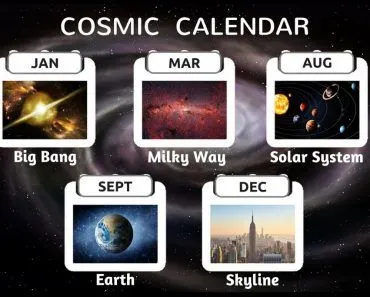
It has been about 13.8 billion years since the Big Bang, and since it’s pointless to wonder what happened before it, we can assume that the Big Bang was the event where the concept of time was born. Humans have been using time as a tool to keep track of events and differentiate the past, present and future for thousands of years. However, if it was measured as an absolute, with the Big Bang taking place as the first second, then it would be incredibly tedious to keep track of. Therefore, time measurement is actually the process of comparing the duration and intervals between events, not the actual sequence of events.
To understand the true importance of time, consider one simple real-life problem. If you had to meet someone and explain to them where the meeting would take place, you would probably tell them your exact address and the time you’ll be available. The address explains your position in the universe and represents the three spatial dimensions. The fourth dimension, time, is also a required piece of information in order to know whether you would be there to meet them or not. These four dimensions must be specified and can be used to correctly predict the position of an object in space-time.
Definition Of A Second
There are two major contrasting interpretations of time. One view is that time is a fundamental part of the universe, a dimension in which events occur, although time itself is independent of these events. The second viewpoint is that time is neither measurable nor can it be traversed. Whether the passage of time is ’felt’ as a sensation is still a matter of debate.
Temporal measurement started about 6,000 years ago, when the moon was used to keep track of passing time. Calendars then began to appear, featuring the apparent movement of the Sun as the method of measurement. Gradually, people felt the need to keep track of time change during a single day, so the ‘clock’ was born. The numbers twelve and thirteen came to feature prominently in many cultures, at least partly due to their similarity with the number of months in a year.
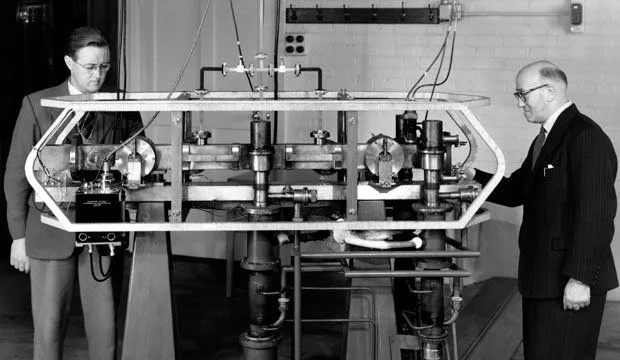
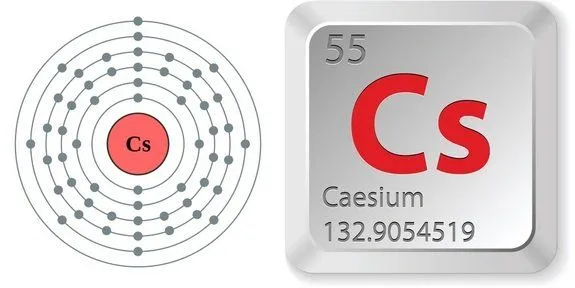
Since 1967, the base unit for time has been chosen as the ‘second’. Under the International System of Units, which assigns SI units to physical quantities, one second is defined in relation to the natural rhythm of a cesium atom. Just to be technically accurate, the second is defined by fixing the cesium-133 atom’s unperturbed ground-state hyperfine transition frequency at exactly 9,192,631,770 hertz. In plainer terms, one second is the time it takes for that radiation to complete 9,192,631,770 oscillations. (The wording was tidied up in 2019, when the SI base units were overhauled, but the number itself stayed the same.) While this might be a bit too difficult to grasp, what it actually conveys is that the cesium clock is incredibly precise. A modern cesium fountain clock is so stable that it would take tens of millions of years for it to drift off by a single second.
Importance Of The Precision Of A Second’s Measurement?
While the accuracy of such methods of measurement can hardly be noticed by humans, it is very significant for GPS navigation. A constellation of satellites circling the Earth in medium orbit (roughly 20,200 km, or 12,550 mi, up, completing two laps a day) is used for navigation purposes. This technological advancement, used by us in the form of GPS, is especially dependent on time measurement. The reason why clocks behave differently aboard satellites is actually quite interesting. To understand that, however, we need to delve into something more technical called ‘The Theory of Relativity’.
Relativity actually pulls on these clocks in two opposite directions. Because each satellite is racing around the Earth at thousands of kilometers per hour, Einstein’s special theory of relativity predicts that its onboard atomic clock should tick slower than a clock on the ground, falling behind by about 7 microseconds per day thanks to the time dilation caused by its motion. At the same time, general relativity says that a clock sitting higher up in the Earth’s weaker gravity runs faster, and out at orbital altitude this effect is larger: it speeds the satellite clocks up by about 45 microseconds per day. These effects arise not from any flaw in the clocks or from signal travel time, but from the nature of space-time itself. Add the two together, and the onboard clocks end up running roughly 38 microseconds per day faster than clocks on the Earth’s surface.
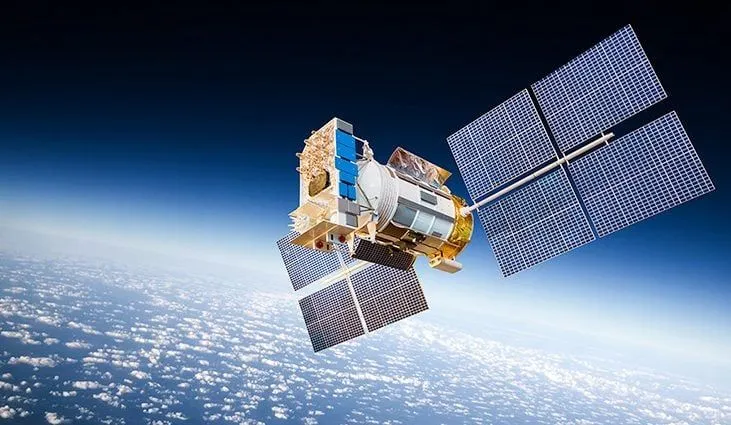
Extreme precision is required for a GPS system, so if these relativistic effects were not accounted for, errors in global positioning would pile up at a rate of about 10 kilometers (6 mi) per day! The whole system would be utterly worthless in a very short time. To compensate, the satellite clocks are deliberately set to tick at a slightly offset rate before launch, and the ground control stations keep nudging them, so that once in orbit they stay in step with clocks on the ground. A drift of 38 microseconds per day might not seem like much on the human time scale, but an atomic clock like the one using cesium-133 can easily detect it.
Change In The Definition Of A Second

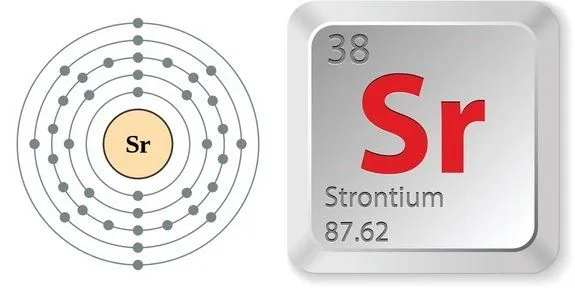
So… we know that the SI system pegs the second to the oscillations of a cesium-133 atom, but physicists at Germany’s national metrology institute (PTB) demonstrated one of the most accurate clocks ever built. This kind of clock uses strontium atoms instead, whose chosen transition oscillates far faster than cesium’s. If a second were defined in terms of strontium, it would correspond to roughly 429,000 billion cycles (about 429 trillion oscillations of light at 429 terahertz), some 47,000 times more than the cesium count. Where a cesium clock might slip by 1 nanosecond over 30 days, this strontium clock would slip by only about 0.2 nanoseconds in the same span. That five-fold jump in accuracy is exactly the kind of timekeeping that high-frequency financial trading, power grids, and telecom networks increasingly rely on.
In other words, if this strontium clock had been ticking since the Big Bang, it would have drifted by only about 100 seconds across the entire 13.8 billion years since. The very best optical clocks built since then are sharper still, accurate to better than one second over the whole age of the universe. This kind of accuracy alters the length of seconds, minutes and hours by an imperceptible amount, yet it sharpens the precision of an atomic clock enormously. Folding optical clocks into satellites and timing networks would mean fewer corrections and steadier positioning technology. So is the official definition of the second actually going to change? Almost certainly. In 2022, the General Conference on Weights and Measures (the body that governs the SI units) adopted Resolution 5, formally laying out a roadmap to redefine the second using optical clocks. It sets strict conditions first: several optical clocks of different types, at independent laboratories, must agree to extraordinary precision and be shown capable of steering international time. If those milestones are met, the redefinition is targeted for adoption around 2030, at the 29th meeting of the Conference.
Technically, time would move slower for all intents and purposes due to this simple change in time measurement. It can be said that these German scientists took one particular saying way too seriously: “It’s not about having time, it’s about making it.” Also, this might come as good news to all the procrastinators out there, although as we said, this change will probably never be noticed by you!
References (click to expand)
- The second (SI base unit). International Bureau of Weights and Measures (BIPM)
- Resolution 5 of the 27th CGPM (2022): roadmap toward redefining the second. BIPM
- Second: The Future. National Institute of Standards and Technology (NIST)
- How does one arrive at the exact number of cycles of radiation? Scientific American
- Second. Wikipedia