The Cosmic Calendar is a thought experiment popularised by astronomer Carl Sagan in his 1977 book The Dragons of Eden and the 1980 series Cosmos: it compresses the universe's full 13.8-billion-year history into a single year. The Big Bang lands at midnight on January 1, the Milky Way forms in March, the Solar System and Earth in early September, dinosaurs appear on December 25, and all of recorded human history occupies just the last few seconds of December 31.
The Sun is older than the Earth, but it’s difficult to comprehend the massive age difference. Saying that the Earth’s age is 4.5 billion years, while the Sun’s age is 4.6 billion years, doesn’t actually seem to express how large that gap really is! It’s difficult for humans to wrap their heads around such time intervals thanks to our puny lifespan of barely 100 years.
For example, if someone were to ask an 8-year-old kid how much older his elder sister is, he’d probably give the answer correctly as 4 or maybe 5 years between them. However, that age difference looks huge to his 8-year-old self. However, it might not seem like a big deal to him when he’s fifty and there is no observable different between his and his sister’s age.
Similarly, wouldn’t it be easier if we had the whole history of the Universe condensed down to a more relatable time scale so that we could actually appreciate the time differences between cosmological events?

What Is The Cosmic Calendar?
The concept of the cosmic calendar was popularized by famous astronomer Carl Sagan to help people understand just how far apart on a time scale events in the Universe are. He chronologically arranged the 13.8 billion years of the Universe’s age into a single year. In this visualization, the Big Bang took place on January 1st at 12 a.m., while the present moment is midnight at the end of December 31st. However, this doesn’t mean that the Universe is going to end in this final second; the scale just continues condensing itself to accommodate the increasing age of the cosmos.
Obviously the condensation of 13.8 billion years into 365 days causes calendar time to speed up – a lot! At this rate, there are 438 years per second, 1.58 million years per hour and 37.8 million years per day. In other words, an actual second is 13,812,768,000 times longer than a Cosmic Calendar second.
January 1: 13.8 billion years ago: Big Bang
The Big Bang and the creation of the Universe occurred here, as determined using cosmic background radiation from the explosion. This is as far back as the Calendar can go. It is pointless to try to go any further.
January 22: 12.85 billion years ago: First Galaxies
After roughly a billion years (a value pushed earlier still by recent JWST observations of galaxies as old as 290 million years after the Big Bang), the first galaxies in the universe were formed. Gases began to come together and coalesce to form stars, which in turn began to cluster as a result of their own gravity.
March 16: 11 billion years ago: Milky Way
The Milky Way, our neighborhood, was finally born after a million-year process of stars coming together to live in tandem after the first galaxies were formed.
August 28: 4.57 billion years: Solar System
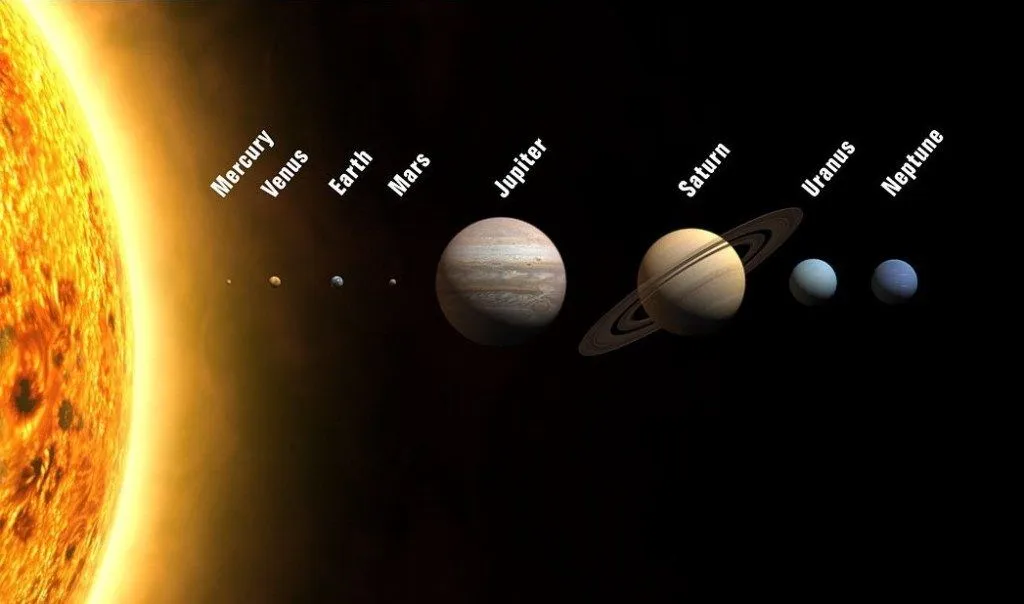
Our Solar System was formed when the Sun came into existence. Looking at this, it is surprising to observe that the Sun, born in late August, is still incredibly young when compared to the age of the Milky Way.
September 6: 4.54 billion years ago: Earth
The oldest rocks on Earth have been dated to be about 4.4 billion years old, which approximates Earth’s formation in the cosmic calendar just 4 days after the formation of the Solar System.
September 7: 4.53 billion years ago: Moon
Just one day after us, our loyal satellite was formed and has been orbiting the Earth ever since.
September 14: 4.1 billion years ago: Life on Earth
Remains of biotic life on Earth was found in 4.1 billion-year-old rocks. Most prominently, single-celled primitive bacteria signified the birth of life on the primordial Earth.
September 30: 3.8 billion years ago: Photosynthesis
This might be the most essential breakthrough for life, since it signified the direct use of the Sun’s light to produce oxygen necessary for carbon-based life forms. All the earlier forms of life utilized only the Earth’s resources, but without photosynthesis, the atmosphere of Earth couldn’t be filled with oxygen.
December 5: 0.8 billion years ago: Multi-cellular life

The evolutionary jump from primitive bacteria to multi-cellular organisms took a very long time, but is responsible for life on Earth as we know it. This interval of almost 3 months is even longer than the time it took the first galaxies to form.
December 20: 0.45 billion years ago: Land Plants
The Earth began its journey to become lush and green when life took its first step onto land. The world was then being populated by amphibians and reptiles.
December 25: 0.23 billion years ago: Dinosaurs

It has only been 5 days on the cosmic calendar since dinosaurs roamed the Earth.
December 30: 0.066 billion years ago: Dinosaur Extinction
The Cretaceous–Paleogene extinction event, when a roughly 10-km-wide asteroid struck what is now the Yucatán Peninsula and wiped out about three-quarters of plant and animal species on Earth. The non-avian dinosaurs died out, paving the way for mammals to conquer the world.
What Happened On December 31?
December 31, 12 a.m.: 40 million years ago: Dawn of the primates
Whatever we have heard about the history of mankind on Earth happened on December 31st of the cosmic calendar. This truly shows us the insignificance of our time spent here on Earth. The dinosaurs had roamed the Earth for 5 days, and we were still living in trees on the dawn of that final day. Humanity is quite literally a blip on this calendar, as everything that follows happened on the final day of the year. For more specificity, the time has been shown instead of the date.
14:24 hrs – Primitive Humans were born.
22:24 hrs – Stone tools were used by humans and fire was domesticated.
23:59 hrs and 48 seconds – The Pyramids were built by the Egyptians.
23:59 hrs and 54 seconds – Buddha was born and the Roman Empire was formed.
23:59 hrs and 55 seconds – The traditional birth date of Jesus Christ, which became the basis for the Anno Domini (AD) calendar, first established by the monk Dionysius Exiguus in 525 AD, not by the Romans.
23:59 hrs and 58 seconds – Christopher Columbus discovered America
23:59 hrs and 59 seconds – The world as we know it… with Justin Bieber in it.
How Much Time Does Each Month, Day And Second Represent?
Once you accept that the whole 13.8-billion-year story is squeezed into 365 days, every tick of the clock ends up carrying a staggering amount of real time. We already saw that one cosmic second is worth about 438 years. Scale that up and the numbers get dizzying very quickly.

| Cosmic Calendar unit | Real time it represents |
|---|---|
| 1 second | ~438 years |
| 1 minute | ~26,000 years |
| 1 hour | ~1.58 million years |
| 1 day | ~37.8 million years |
| 1 week | ~265 million years |
| 1 month | ~1.15 billion years |
So a single month on this calendar swallows more than a billion years of real history. That is why the long stretch from the Big Bang to the birth of the Sun fills roughly two-thirds of the year, while everything you have ever read about in a history book is crammed into the closing seconds.
How few seconds? The final 14 seconds of December 31 cover roughly the last 6,100 years (14 multiplied by 438), which is essentially all of recorded human history, from the first cities and written language onward. Carl Sagan famously noted that it was "not even two seconds" before midnight that the two halves of the world found each other, when the civilizations of Europe and the Americas first made contact a little over five centuries ago. On this scale, the voyages of Columbus land barely one second before the year runs out.
How Is The Cosmic Calendar Different From The Geologic Time Scale?
People often lump the cosmic calendar together with the geologic time scale, but the two do very different jobs. The cosmic calendar is a teaching analogy. It takes the entire age of the universe and spreads it evenly across the year, so every day and every hour stands for exactly the same chunk of real time. Its whole purpose is to make 13.8 billion years feel relatable.

The geologic time scale is something else entirely. It is the working framework that geologists actually use, and it covers only Earth's roughly 4.54-billion-year history rather than the whole universe. Instead of equal slices, it is carved into eons, eras, periods and epochs whose boundaries mark genuine turning points in the rock and fossil record, such as mass extinctions or sudden bursts of new life. That is why its divisions are so unequal in length: the Precambrian alone accounts for about 87% of all geologic time, while the eras filled with familiar animals make up barely an eighth of it.
In short, the cosmic calendar answers the question "how do these events compare in scale?" with a single, evenly ruled year, whereas the geologic time scale answers "what actually happened, and when?" using boundaries defined by the planet itself. One is a visualization aid; the other is a scientific measuring stick that has been refined for two centuries and is still updated as radiometric dating improves.