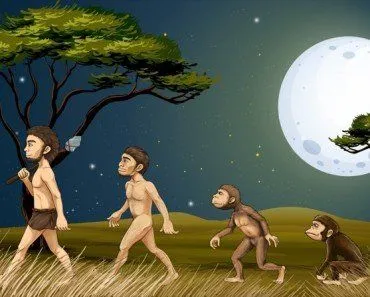
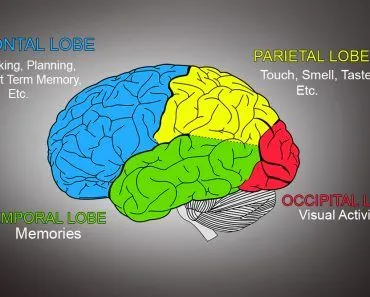
Encephalization is the evolutionary increase in brain size relative to body mass. The encephalization quotient (EQ) measures it by comparing an animal's actual brain size to the size predicted for its body. Humans have the highest EQ of any species (about 7), meaning our brains are roughly 7 times larger than expected for a mammal our size.
Humans are getting smarter and more advanced by the day. Our ancestors must be incredibly proud of the advancements we’ve made. From living in caves or beneath trees to building settlements on Mars, we’ve a come a very long way. Much of the credit for such achievements goes to this big beautiful brain of ours, which has led to scientific innovation and exploration for centuries and has driven the extraordinary story of our evolution.
However, looking back at these achievements today, we have to ask ourselves, how did we get here? How did we manage to surpass millions of other species and emerge as the pinnacle of life on this planet? Are we more intelligent than all these other species? Do we have larger brains? Let’s take a closer look at the answers to these critical questions.
What Is Intelligence?
There is no agreed-upon definition of intelligence accepted throughout the world. According to the Collins English Dictionary, intelligence is “the ability to think, reason, and understand instead of doing things automatically or by instinct”. For generations, humans have linked intelligence to the size of our brains.
Aristotle once said, “Of all animals, man has the largest brain in proportion to his size”, and for a large part of early human civilization, we believed that we had the largest brains, until scientific research proved us wrong. As it turns out, humans don’t even have the highest brain-to-body mass ratio. Tiny animals like shrews and some ants devote a far larger fraction of their body to brain tissue (a shrew’s brain can be around 10% of its body weight, while ours is closer to 2%). So, was Aristotle wrong, and if so, why aren’t shrews running the planet?
Well, some researchers claim that we might have misunderstood Aristotle, arguing that he might have been trying to point out something known as the Encephalization Quotient. After all, a simple brain-to-body ratio rewards being small more than being smart, which is exactly the problem the Encephalization Quotient was invented to fix.
What Is The Encephalization Quotient?
The Encephalization Quotient is the ratio between the actual or measured brain size of a species to the size predicted in reference to its body mass. Naturally, the next question is, how do they predict the sizes of brains? Well, scientists use something called linear regression (a technique similar to taking an average, but involving a few more parameters) on the data obtained from multiple species of the same type (mammals, for instance) and then use this to form a reference table. For example, if the table suggests that a species weighing 30 kg should have a brain weighing 1 kg, while a 50 kg species should have a brain of 3 kg, then the predicted brain mass of a species weighing 40 kilograms would be 2 kg.
In practice, scientists capture this with a simple power-law formula: predicted brain mass = 0.12 × (body mass)2/3, with both masses in grams. An animal’s EQ is then just its actual brain mass divided by that predicted value.
The encephalization quotient has therefore drawn an imaginary line, and its values correspond to the distance above or below this line. An EQ value of 1 implies that the brain mass is as expected for this group. Modern humans (Homo sapiens) have an EQ of roughly 7 (most estimates fall between 7 and 7.8), the highest of any species, meaning our brain mass is about 7 times greater than that of a typical mammal our size. For comparison, bottlenose dolphins come in around 5.3, while chimpanzees sit near 2.2 to 2.5, so even our closest relatives are not in the same league.
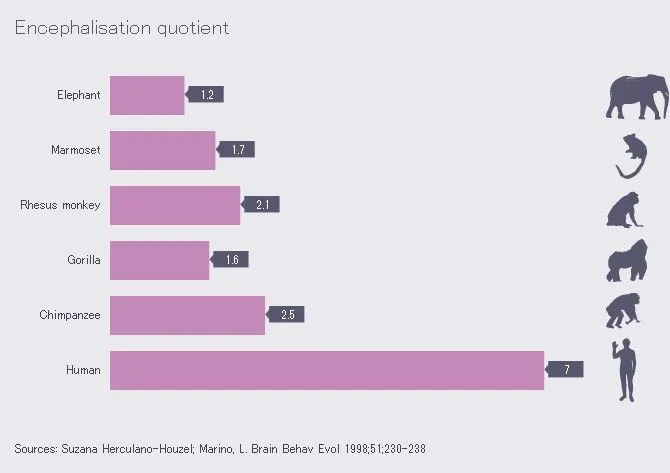
This method of comparing brain size and its relation to intelligence is more precise, as it takes into account the size and mass of a given animal’s body. The brain has many important involuntary tasks that it performs discreetly. Pumping blood, the production of several different hormones, and fighting antigens that attack the body are just a few of the brain’s tasks on its massive daily To Do List. A significant part of the brain is utilized in performing these functions. As a result, the part of our brain that forms our consciousness and so-called intelligence is relatively small and differs for different types of species. Due to all of this, brain size must be measured relative to the species’ body mass.
Encephalization Quotient: How Do Animals Compare?
If humans sit at the top with an EQ of around 7, where does everyone else land? Because the scale is anchored so that a typical mammal scores 1 (the domestic cat is often used as the reference point), the number tells you at a glance whether an animal is carrying more or less brain than its body would predict. The figures below are drawn from the widely cited reference dataset compiled by neurobiologists Gerhard Roth and Ursula Dicke, and they line up with the classic brain-versus-body-mass plot: species that sit above the diagonal line have an EQ greater than 1.

| Species | Approximate EQ |
|---|---|
| Human (Homo sapiens) | 7.4–7.8 |
| Bottlenose dolphin | 5.3 |
| Killer whale (orca) | 2.6–3.3 |
| Chimpanzee | 2.2–2.5 |
| Rhesus monkey | 2.1 |
| Elephant | 1.75–2.36 |
| Dog | 1.2 |
| Cat | 1.0 |
| Horse | 0.9 |
| Sheep | 0.8 |
| Mouse | 0.5 |
| Rat | 0.4 |
| Rabbit | 0.4 |
A few things jump out of this ranking. Humans are the runaway leader, with a brain roughly seven times larger than expected for a mammal of our build. The next tier belongs to the ocean: bottlenose dolphins and other toothed whales post some of the highest values outside our own species, which is part of why they show up so often in studies of animal cognition. Great apes and monkeys form the group just below, comfortably above the baseline, while familiar companion and farm animals such as dogs, cats and horses hover right around an EQ of 1. Small rodents and rabbits sit at the bottom, devoting proportionally little of their body to brain tissue.
Two cautions are worth keeping in mind when reading any EQ table. First, the values are approximate and are often quoted as ranges, because they depend on the exact brain and body masses a particular study uses (a heavier-than-average individual, for instance, will pull the number down). Second, a higher EQ does not automatically make one animal “smarter” than another; it is a measure of relative brain size, not a direct readout of intelligence, and researchers treat it as just one clue among many.
You may notice that famously clever invertebrates such as the octopus are missing from the table. That is not an oversight. The EQ formula was calibrated on mammals, so it does not transfer cleanly to a body plan as different as a cephalopod’s. Even so, octopuses are regularly described as among the most neurologically complex invertebrates, carrying hundreds of millions of neurons spread through a nervous system that is largely distributed along their arms (more on that unusual arrangement below).
Is The Human Brain Growing?
In the past seven million years, the human brain has tripled in size, and most of this growth has occurred in the past two million years. Measuring these changes is a difficult task, as we don’t have any “reference brains” for comparison. The human brain is made up of tissues and neurons that decompose within 30 days. The only way to estimate the size of ancient brains is to look at early skulls and various other fossils that have survived the forces of nature.

The more recent picture is murkier, and genuinely debated. Many researchers report that average human cranial capacity has actually shrunk by roughly 10% since the end of the last Ice Age, with the most cited estimates pointing to a drop of about 100 to 150 cubic centimeters. Proposed explanations include changes in nutrition and disease, the cooling and then warming of the climate (a leaner body sheds heat more easily, and the brain may have shrunk along with overall body size), and even the idea that storing knowledge in groups and, later, in writing eased the load on any single brain. But the claim is contested: a 2022 reanalysis argued the supposed shrinkage was an artifact of skewed, unevenly dated skull samples, and that human brain size has been remarkably stable over the past few hundred thousand years. In short, whether (and why) our brains got smaller after the Ice Age is still an open question.
Did Someone Say 32 Brains?
You heard that correctly. A leech is often said to have 32 brains. Its body is built from repeating segments, and along its length runs a chain of 32 ganglia (clusters of nerve cells): a head ganglion, 21 body ganglia, and 7 fused together in the tail. Each ganglion acts as a local control center for its segment, handling movement, reflexes and sensation, which is where the catchy “32 brains” figure comes from, even though biologists would call them nerve centers rather than 32 truly independent brains.
Leeches are not the only animals with brainpower spread around the body. An octopus is famous for having “nine brains”: one central brain plus a cluster of nerves in each of its eight arms. About two-thirds of an octopus’s neurons actually sit in those arms, which lets each arm reach, grasp, taste and react largely on its own while the central brain handles the bigger decisions.
A Final Word
Many people believe that we use only 10% of our brain, but neurologists have recently debunked these claims, stating that most of our brain is always active and performing various functions. The percentage of the brain in an active state at any given time varies from person to person, depending on what a person is doing or thinking about.
Having said this, most neurological researchers also believe that we have yet to witness the full potential of the human brain on display. Like any other organ in our body, the brain is heavily affected by a person’s diet, lifestyle, and the amount that they exercise. In other words, maintain a healthy lifestyle and who knows… we may find the next Einstein in you!
References (click to expand)
- Encephalization Quotient - an overview.
- Jerison, H. J. (1977, September). The Theory Of Encephalization. Annals of the New York Academy of Sciences. Wiley.
- Shultz, S., & Dunbar, R. (2010, November 22). Encephalization is not a universal macroevolutionary phenomenon in mammals but is associated with sociality. Proceedings of the National Academy of Sciences. Proceedings of the National Academy of Sciences.
- DeSilva, J. M., et al. (2023). Human brains have shrunk: the questions are when and why. Frontiers in Ecology and Evolution.
- Human evolution - Increasing Brain Size. Encyclopaedia Britannica.
- Roth, G., & Dicke, U. (2005). Evolution of the brain and intelligence. Trends in Cognitive Sciences, 9(5), 250-257.