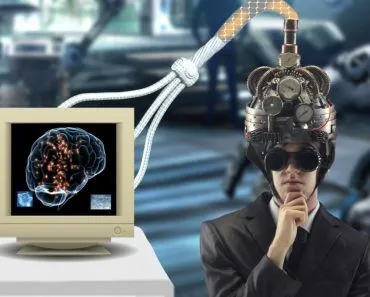
For the first time in history, supercomputers have caught up with the human brain on raw speed. The world’s fastest machine, El Capitan, runs at 1.8 exaFLOPS — roughly the same ballpark as the brain’s estimated ~1 exaFLOP. But the brain still wins on efficiency: it does that work on about 20 watts, while El Capitan needs around 30 megawatts — a million times more power.
Have you ever tried to match your wits with a computer? Perhaps you’ve tried playing it in a game of chess or raced to perform a calculation before your laptop could spit out the correct answer.
You have probably lost the chess game, and the computer has definitely beaten you in the math race. If you take the human brain’s ability against a computer at face value, it seems as if a computer is faster and smarter, but in fact, there is much more to the story.
If you had asked the same question a few decades ago, there would be no question… the human brain could circle around computers, but is that still true? Has technology begun to catch up with the most remarkable and reverent organ in the human body?
Evolution Of Computers
Since the birth of the first computers, there has been a direct comparison between these “calculating machines” and the human brain. One of the common phrases circulating for decades, promoting the idea of a “brain versus computer” argument, is “brains are analog, computers are digital.”
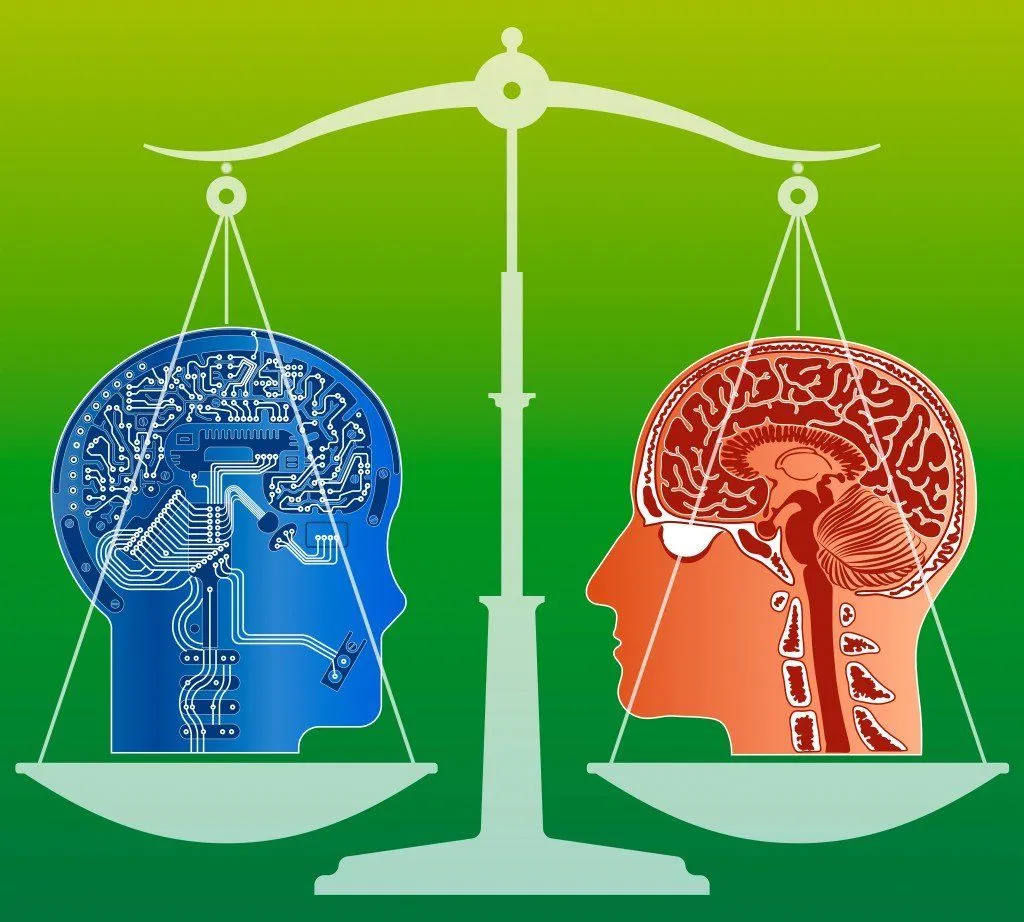
This makes it seem as if computers are superior, but the truth is that the human brain is much more advanced and efficient and has more raw computing power than the most impressive supercomputers ever built.
The supercomputer landscape has been transformed in the last decade. As of the November 2025 TOP500 list, the world’s fastest machine is El Capitan at Lawrence Livermore National Laboratory in California, clocking in at 1.809 exaFLOPS — that’s 1,809 petaFLOPS, or more than 33 times the speed of the old champion Tianhe-2. An exaFLOP is a billion billion (10¹⁸) floating-point calculations per second. For perspective, the top three machines on the list (El Capitan, Oak Ridge’s Frontier, and Argonne’s Aurora) are all now in exascale territory.
And how does our miraculous brain compare? Estimates of the brain’s computational throughput vary wildly depending on what you count as a “operation,” with published values spanning roughly 10¹⁵ to 10¹⁸ operations per second (1 petaFLOP to 1 exaFLOP). The commonly cited heuristic puts the brain at roughly 1 exaFLOP — a billion billion calculations per second — which now sits right in the neighbourhood of today’s top supercomputers. For decades, the brain was unambiguously ahead; in 2026, the race is essentially neck-and-neck on raw speed for the first time ever.
Back in 2013, researchers in Japan and Germany tried to simulate just 1% of the human brain using NEST software on the K Computer, then the world’s fourth-fastest supercomputer (and since decommissioned, in 2019). It took the K Computer a sweaty 40 minutes to crunch the equivalent of a single second of brain activity — a stark reminder of how staggeringly parallel a real brain is.
Brains Are VERY Different From Computers.
When we talk about computers, we refer to carefully designed machines based on logic, reproducibility, predictability, and mathematics; on the other hand, the human brain is a confused, seemingly random jumble of neurons that behave unpredictably.
Biology is a beautiful thing, and life itself is much smarter than computers. Thus, the brain is both hardware and software. The same interconnected areas, connected by billions of neurons and perhaps trillions of glial cells, can simultaneously perceive, interpret, store, analyze, and distribute.
By their very definition and basic construction, computers have some parts for processing and others for memory; the brain does not do this separation, which makes them enormously efficient.
The same calculations and processes that a computer might take a few million steps to perform can be accomplished through a few hundred neuron transmissions — and the energy cost difference is staggering. The human brain runs on about 20 watts (less than a dim light bulb). El Capitan, by contrast, draws roughly 30 megawatts at peak — enough to power a small town. Per watt, the brain is on the order of a million times more energy-efficient than even the world’s fastest exascale silicon. This is the most durable advantage biology still holds over Moore’s Law.
Biological processes have taken billions of years to develop perfect, efficient organs that far outpace technology, and we are beginning to reach these artificial “limits.”
Apart from their clear advantage in raw computing power, one of the things that really distinguish brains is the flexibility they show. Essentially, the human brain can rewire itself, a feat formally known as neuroplasticity. Neurons can separate and reconnect with others and even change their basic properties, which a carefully constructed computer cannot.
We see this amazing transformative feat in a wide variety of brain functions, such as the formation of memory, knowledge acquisition, physical development, and even recovery from brain damage. When the brain identifies a more efficient or effective way to compute and function, it can morph and alter its physical and neuronal structure, hence the term “plasticity”. The old line that supercomputers are “static” while only brains can rewire themselves doesn’t quite hold anymore: modern large language models (think GPT, Claude, and Gemini) and neuromorphic chips like Intel’s Hala Point (1.15 billion artificial neurons, 2024) and IBM’s NorthPole are slowly chipping away at that gap. Still, the brain’s real edges — energy efficiency, embodied learning, and the ability to generalise from a handful of examples — remain unmatched.
Is A Computer Smarter Than A Human Brain?
Here is where a lot of people trip up: being faster is not the same as being smarter. A pocket calculator has thrashed every human at long division since the 1970s, and that didn’t make it intelligent. Raw speed (the FLOPS we have been talking about) measures how many sums a machine can grind through per second. Intelligence is a much broader thing: understanding context, reasoning about cause and effect, handling a situation you have never seen before, and reading the intentions of the person across the table. On those measures, the human brain is still in a league of its own.

The clearest gap is what researchers call common sense. Peter Gärdenfors, a cognitive scientist at Lund University, points out that a two-year-old child can do things no artificial system can. A toddler grasps causal thinking: it knows that knocking a glass off a table is what made the water spill. It can also read why you waved your hand (to greet a friend, or to swat a fly) from context alone, while a machine just sees a hand moving. Today’s artificial intelligence, by contrast, is “backward-looking” in Gärdenfors’ words, because it works only with the material it was trained on, and it stumbles the moment a genuinely new situation falls outside that training.
The other giveaway is how little data a brain needs. A child can learn a new word, or recognise a new face, from a single encounter. A large AI model typically needs to be shown thousands or millions of examples first. So when someone asks whether a computer is smarter than the human brain, the honest answer in 2026 is: it is faster at arithmetic and brute-force pattern matching, but it does not yet understand the world the way you do, and on flexible, common-sense intelligence, the brain still wins comfortably.
Is The Human Brain Actually A Computer?
If brains and computers are so different, why do we keep calling the brain a “computer” at all? It turns out this is one of the oldest arguments in neuroscience, and the short answer is that the brain-as-computer idea is mostly a useful metaphor rather than a literal fact. In a 2022 review in Frontiers in Ecology and Evolution, neuroscientist Romain Brette argues that we borrow words like “algorithm,” “code” and “computation” from computer science and bolt them onto the brain without ever defining them in biological terms. A computer, strictly speaking, is a programmable machine that someone else programs; the brain has no external programmer loading it with instructions, so it is not literally a computer in that sense.

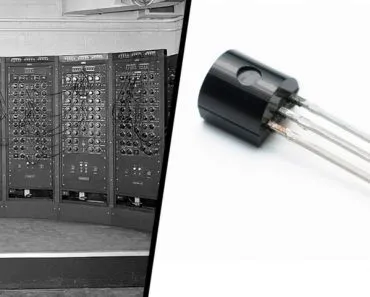
The hardware tells the same story. The human brain has roughly 86 billion neurons wired together by about 100 trillion synapses, as neuroscientist Peter Gebicke-Haerter laid out in a 2023 paper on the brain’s computational power. A computer chip is built from transistors, and a transistor is a simple switch with a handful of connections. A single biological synapse is nothing like that humble switch; it is a noisy, chemical, analog junction whose strength shifts with experience, closer in complexity to a thousand transistors than to one. Crucially, the brain does all of this in parallel, with every region working at once, whereas a classical processor marches through instructions far more sequentially.
So is the human brain a computer? In the loose sense that it takes in information and produces useful behaviour, sure, the analogy can be handy. But if you mean a literal silicon machine running a program, the answer is no. The brain is a living, self-rewiring biological network that happens to share some jobs with our machines, and reaching for the computer metaphor too eagerly can hide just how strange and powerful the real thing is.
What Does The Future Hold?
If there is one thing about humans, they do not like to be told that something is impossible. The exaFLOP goal that seemed impossibly far away when this article was first written is no longer a goal at all — Frontier broke the exascale barrier in May 2022, and four exascale systems are now in operation (Frontier, Aurora, El Capitan, and Europe’s JUPITER at Jülich, online late 2025). The conversation has shifted from “can we build a brain-class machine?” to “how do we build one that doesn’t need its own power plant?”
The EU’s flagship Human Brain Project (HBP) spent ten years (2013–2023) and roughly €600 million pursuing this exact vision — computing at the same processing power and speed as the human brain; an artificial brain, so to speak. The HBP formally concluded on September 30, 2023, leaving behind EBRAINS, an open digital research infrastructure that continues to support neuroscience and brain-inspired computing.
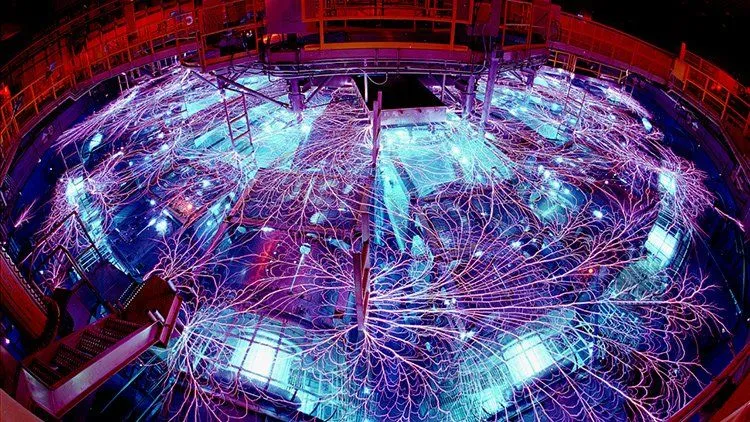
That picture has flipped completely. Modern leading systems aren’t stuck below 50 petaflops anymore; the November 2025 top three (El Capitan, Frontier, Aurora) are each roughly 35 times faster than 50 PF and finally rival the brain’s estimated ~1 exaFLOP throughput — though, yes, they’re still massive (El Capitan fills several rooms and weighs more than a Boeing 747).
Predictions of when exascale computing would arrive were endlessly missed in the 2010s, with Intel famously promising it by 2018. The actual milestone arrived in May 2022 at Oak Ridge’s Frontier. The next frontier (no pun intended) is useful, energy-realistic, real-time brain-scale modelling — something even our shiny exascale machines can’t quite do yet without consuming city-sized amounts of power.
Moreover, the key interests of everything from engineering and basic research to national security agencies and telecommunications giants are eager to see what this dreamed-of level of technological progress will bring.
However, as we have explained above, there are some serious problems in achieving this level of technical sophistication, namely energy, memory, and physical limitations. Even with new advances in graphene transistors and the complex capabilities of quantum computers, a purely artificial brain seems out of reach with the real thing – for now.
Far from a stall, the top of the “Fastest List” has been re-written multiple times in just the last four years — Frontier (2022), Aurora (2024), El Capitan (2024) and Europe’s JUPITER (2025) have each leapfrogged the previous champion. The answer to “who would win, the human brain or a supercomputer?” is no longer the slam-dunk it once was: on raw FLOPS, supercomputers have caught up. On energy, elegance, and the ability to learn a new face from one glimpse, the brain still wins by a country mile.
References (click to expand)
- . (2004). Getting Up to Speed. []. National Academies Press.
- Human Brain Project. The Human Brain Project
- A Comparison of Human and Computer Information Processing. ResearchGate
- 176: Brains vs Computers - Duke Physics. Duke University
- AI lacks common sense - why programs cannot think. Lund University
- Brette, R. (2022). Brains as Computers: Metaphor, Analogy, Theory or Fact? Frontiers in Ecology and Evolution.
- Gebicke-Haerter, P. J. (2023). The computational power of the human brain. Frontiers in Cellular Neuroscience. PMC, NCBI.